
Table of Contents
Yeongwol: Where Cinematic Scenes Meet Real History
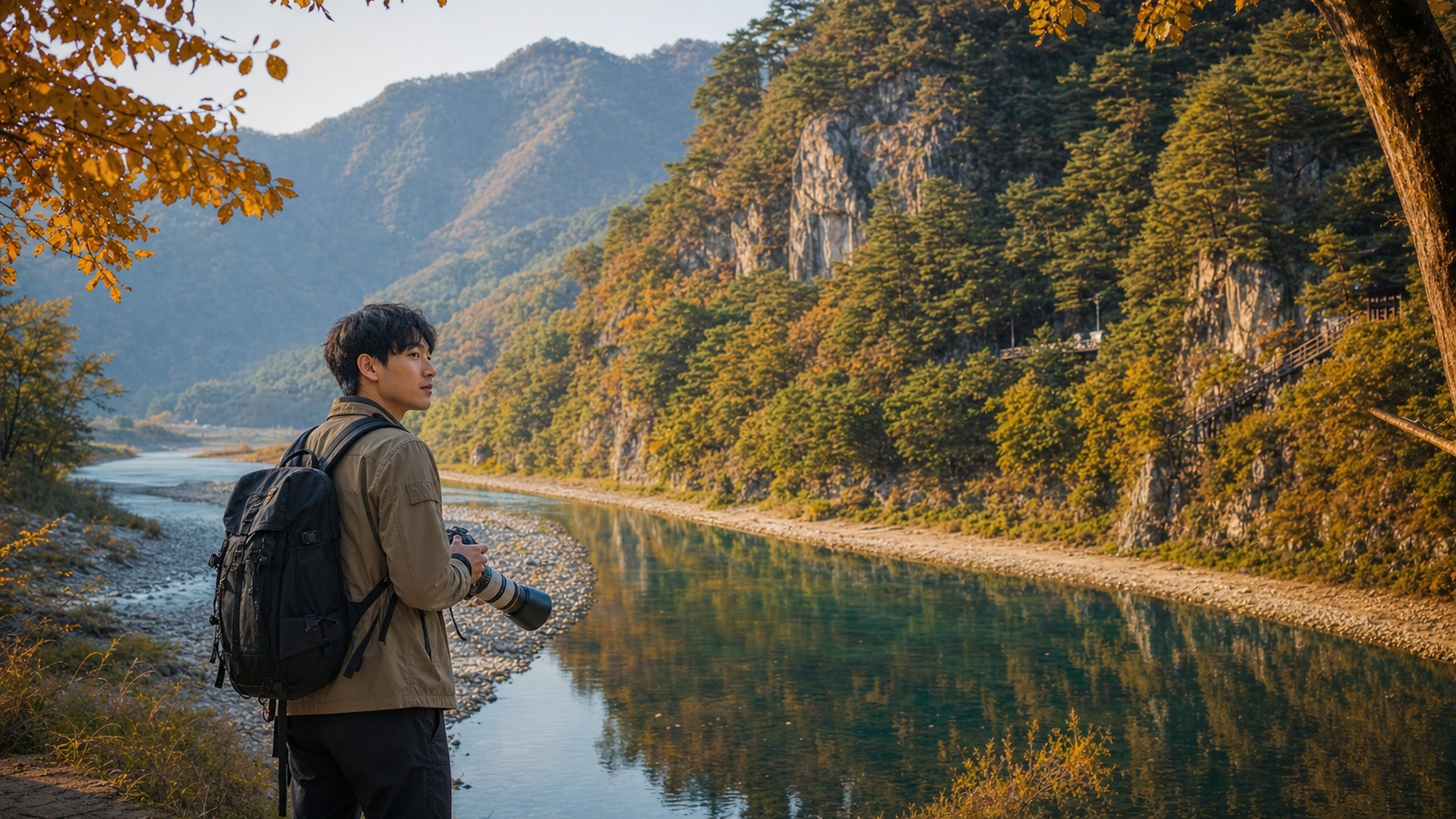
Cheongnyeongpo and Jangneung in Yeongwol, Gangwon-do, are tied to the exile and death of King Danjong, the sixth monarch of the Joseon Dynasty. Travelers visiting these sites today come for the history, but increasingly they come for the film scenes too. The blockbuster ‘The Man Who Lives with the King’, seen by 16.8 million viewers, used Yeongwol as a primary filming location, and the places tied to Danjong’s story are back in the spotlight as a movie backdrop.
According to data compiled by the digital travel platform Agoda from January to April 2026, searches for accommodations in Yeongwol rose 190% compared to the same period last year, the largest jump among the five regions in this survey. Interest from moviegoers carried over to real places like Cheongnyeongpo and Jangneung, King Danjong’s tomb, and people started looking for somewhere to stay so they could see them in person.
Traveling to real locations that appear in movies or dramas is often called screen tourism. Visitors walk the streets, buildings, and landscapes that served as backdrops, connecting what they watched on screen to the physical space. In Yeongwol, the film’s plot, Danjong’s actual history, and the local heritage sites overlap in the same place. Content gives visitors a new reason to look at a site they might otherwise pass by.
The Surge in Searches Leads to Small Regional Towns
What stands out in Agoda’s data is that screen tourism isn’t limited to major cities or well-known tourist spots. Comparing accommodation searches by domestic and international travelers between January and April 2026 with the year before, the increase showed up in Goryeong, Yesan, Suwon, and Jangheung as well as Yeongwol. Each region drew interest through a different genre or filming location.
Search volume isn’t the same as completed bookings, but it shows how much travelers are weighing a region as a destination and checking on places to stay. It captures the moment a production’s release or success raises a region’s profile and that curiosity turns into early travel planning. For regional towns that tourists don’t usually think of, content can be the first thing that puts them on the map.
Lee Jun-hwan, Agoda’s director for North Asia, said K-drama and film locations are drawing strong interest from travelers both in Korea and abroad, and that screen tourism is generating fresh interest in these areas and helping their local economies. The numbers from these five regions show fictional backdrops turning into real travel data.
In Goryeong, One Film Connects to Multiple Dramas
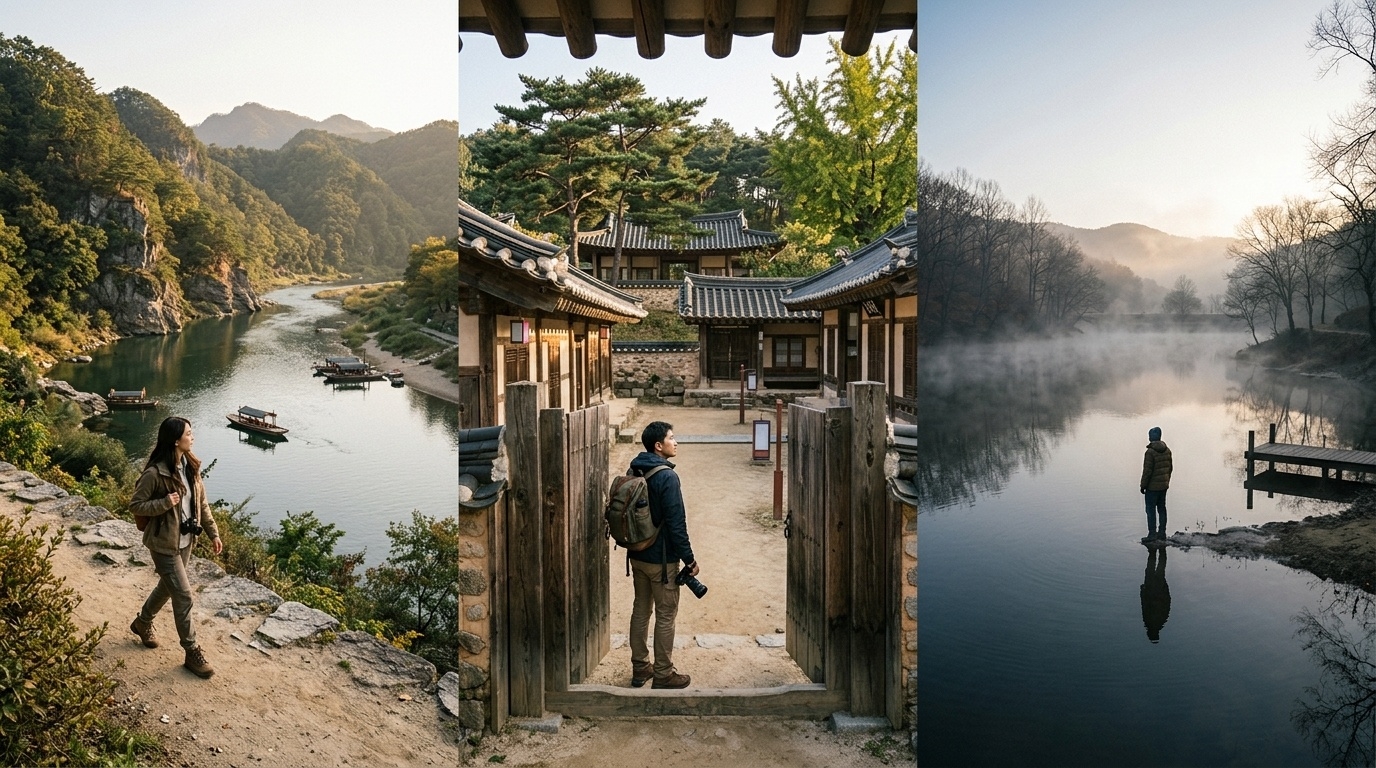
Goryeong in North Gyeongsang Province is another filming site for ‘The Man Who Lives with the King’. The local government office where the conflict between Han Myung-hoe and King Danjong plays out in the film is here. Following the same movie to two different towns produces two different trips: Yeongwol centers on the real historical sites tied to Danjong’s exile, while Goryeong centers on the actual set that built the film’s tension. One film, two distinct reasons to travel.
Goryeong’s pull as a filming location isn’t limited to this one movie. The dramas ‘My Beloved Thief’ and ‘The Tyrant’s Chef’ were also shot here. With scenes from several historical dramas and films layered over the same town, visitors can trace more than one show in a single trip. Accommodation searches for Goryeong on Agoda doubled, a 100% increase, from January to April 2026 versus the year before.
Yeongwol and Goryeong show how the same production can lead to very different trips depending on the region. Yeongwol is where the film and actual history sit side by side at Cheongnyeongpo and Jangneung. Goryeong is where visitors trace several dramas alongside the film’s government office set. Same title, different experience on the ground.
Yesan’s Salmokji: The Real-Life Backdrop of a Horror Film
In Yesan, South Chungcheong Province, a horror movie is driving travel interest. The recently released film ‘Salmokji’ used the actual Salmokji Reservoir in Yesan as its setting, not a set built for the film. Title and location share the same name, and the fact that the unsettling atmosphere on screen exists in a real place is enough to pull in curious viewers.
Accommodation searches for Yesan on Agoda rose 35% compared to the same period last year. That’s a smaller jump than Yeongwol’s or Goryeong’s, but it’s notable because a niche genre like horror still moved the needle. Instead of a well-known heritage site like a palace or fortress, a quiet reservoir has become a destination because of a film.
Yesan shows that screen tourism isn’t limited to scenic spots or romantic drama locations. Wanting to feel the tension of a horror film in person can be just as strong a reason to travel. But whatever the genre, the places shown on screen are often real natural environments or places where local residents actually live. The more a trip is built around chasing content, the more it matters to treat those places with some care.
Suwon Layers Multiple Dramas Within a Single City
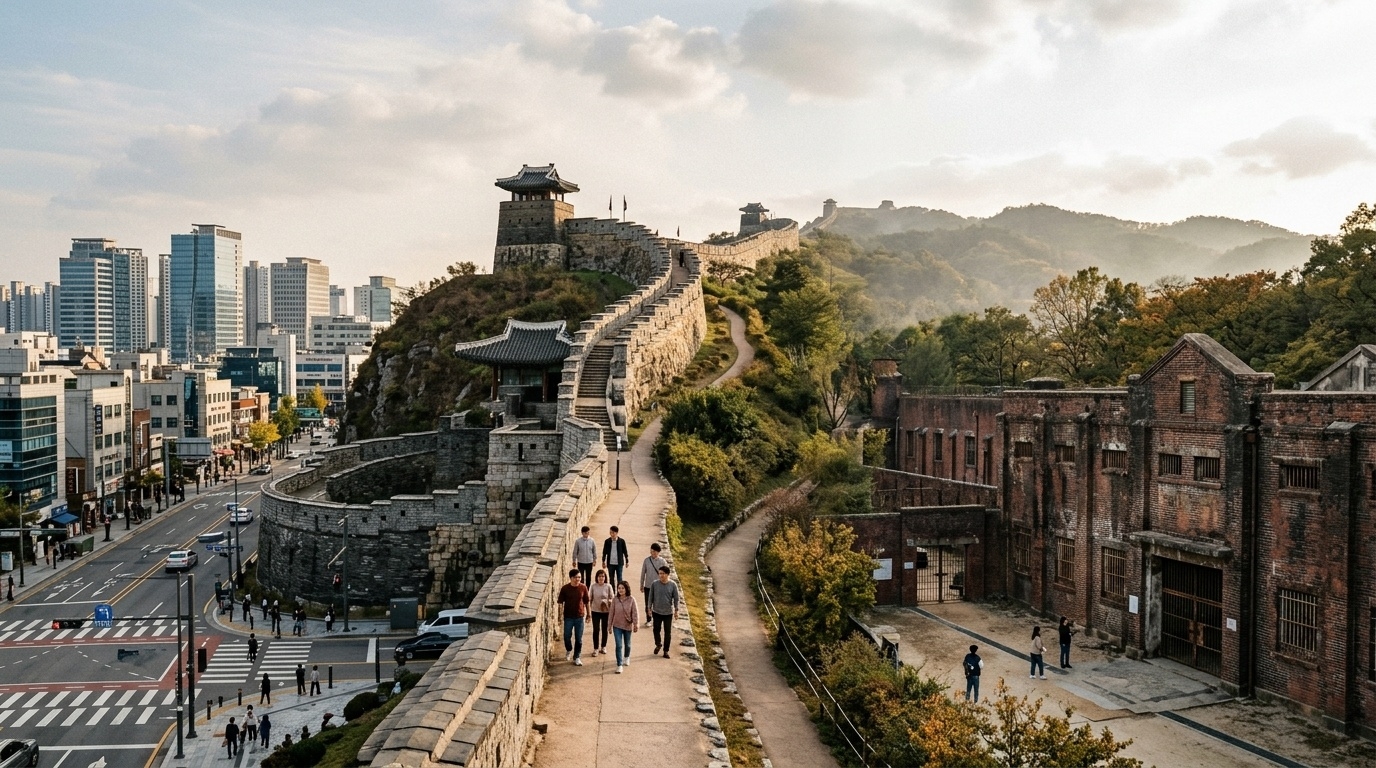
Suwon in Gyeonggi Province doesn’t depend on one hit production; it has built up a collection of K-drama filming locations over time. Scenes from ‘Our Beloved Summer’, ‘Lovely Runner’, and ‘Extraordinary Attorney Woo’ were all shot here, giving both single-show fans and multi-drama tourists plenty to work with.
Searches for Suwon accommodations grew 21% from January to April 2026 compared with the year before. Suwon holds onto traditional heritage, like Hwaseong Fortress, alongside a modern city. Because older and newer parts of the city sit close together, it has worked as a backdrop for productions from very different eras and genres. Travelers don’t have to choose between the old sites and the filming locations; a single itinerary can cover both.
What screen tourism adds to Suwon isn’t a new landmark so much as a new reason to look at what’s already there. Someone who comes for Hwaseong Fortress might add a drama location to the day, and someone chasing the dramas gets the traditional sites along the way. The content and the existing attractions end up filling out the same trip.
Jangheung’s Former Prison Transforms into a Filming Hub
In Jangheung, South Jeolla Province, a very different kind of space is drawing attention. The ‘Papillon House’, the former Jangheung Prison, is the only real prison used as a filming location in the country. Productions use the actual structure instead of building a set, which has made it a repeat backdrop for prison scenes.
‘Waiting for Gyeongdo’, ‘The Price of Confession’, ‘I’m Human from Today’, and ‘Sculptured City’ were all filmed here. Jangheung isn’t tied to one title; being used again and again has given it its own identity as the country’s real-prison filming location. Searches for stays in Jangheung on Agoda rose 18% compared to the same period last year.
Yeongwol’s historical sites, Goryeong’s government office, Yesan’s reservoir, Suwon’s streets, and Jangheung’s old prison had nothing to do with each other before films and dramas gave each one a story. The rise in accommodation searches shows that watching the content is turning into the early stages of an actual trip.
The Region’s Next Story Begins Off-Screen
The five regions show very different growth rates: 190% for Yeongwol, 100% for Goryeong, 35% for Yesan, 21% for Suwon, and 18% for Jangheung. Those numbers don’t represent equal tourism impact; search volume depends on a region’s existing search baseline, how much lodging is available, and when a show or film came out. Even so, every region moved up, which points to a real link between content and travel demand.
Screen tourism is more than a filming-location sign on a street corner. Visitors take in the history and current use of a place along with the scene they recognize from the screen. In Yeongwol that’s Danjong’s actual history, in Suwon it’s old and new sitting side by side, and in Jangheung it’s a former prison now working as filming infrastructure. Content gets people to show up; what’s already there gives them a reason to stay a while.
A spark of interest that starts at Cheongnyeongpo and Jangneung in Yeongwol reaches the government office in Goryeong, the Salmokji Reservoir in Yesan, the drama locations in Suwon, and the Papillon House in Jangheung. Wanting to see a scene in real life is now showing up directly in accommodation searches. What happens next depends on whether these towns can turn a moment of on-screen attention into repeat visits built on what makes each place worth staying in longer.
Source: Agoda Press Release, June 3, 2026.