Table of Contents
Hagahi grew overseas sales sixfold in two years
Korean womenswear brand Hagahi has kept landing orders and reorders from international buyers, working through New York Coterie and local showrooms. Its overseas revenue has grown more than sixfold over the past two years. The brand shows what it looks like to turn a first trade show meeting into an actual sales relationship by locking in follow-up orders.
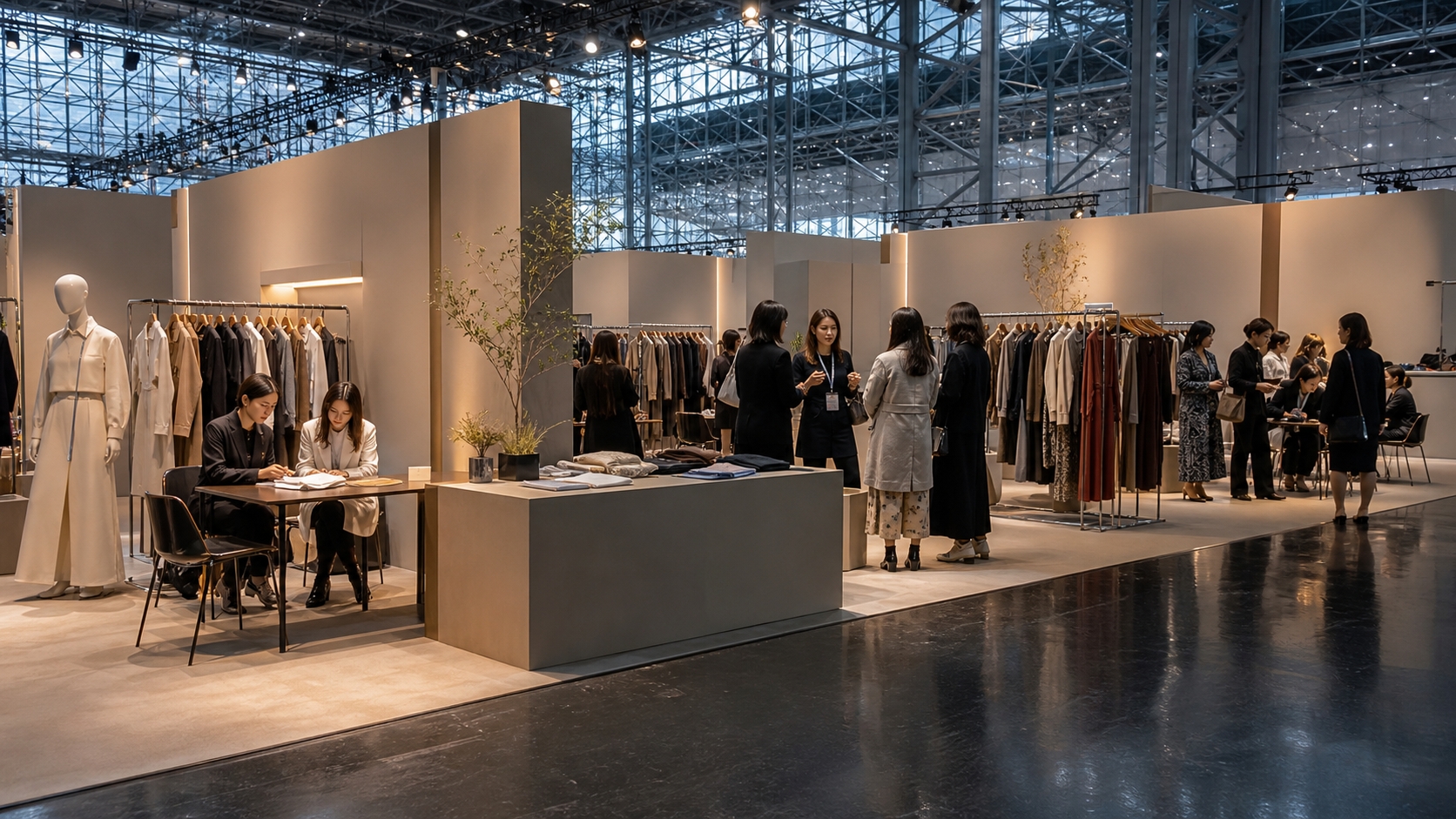
Building on that, Hagahi took part in “New York Coterie 2027 Spring/Summer,” held at the Javits Center from September 9 to 11, 2026. It showed at the Ledome joint pavilion, a K-fashion showroom run by the Korea Fashion Association with support from the Ministry of Trade and Industry. The event ended a few days ago, but this year’s participation stands out because the pavilion grew, built directly on last year’s order numbers.
The “2027 Spring/Summer” in the show’s name refers to the collection season being sold, not the year of the event. At fashion trade shows, brands present next year’s pieces months ahead of time to take buyer orders. So even though this event dealt in 2027 collections, it happened in September 2026.
Five brands became six
This year’s Ledome pavilion held six Korean womenswear brands: The Author, Loe, Asparagus, TKEB, Freno, and Hagahi. Last year it was five. That’s one more brand on paper, but the lineup covers more ground: some brands already have a track record of overseas orders, others are just starting their US push. The Korea Fashion Association aimed to strengthen ties with existing buyers, find new ones, and create real contract opportunities between the brands and North American retailers.
Loe, Freno, The Author, and Hagahi are back after last year’s show. Loe took part in New York Coterie in both 2024 and 2025 and landed real orders both times; this year was about building on those relationships and finding new retail partners. Freno has built an order history across several cities, and The Author has shown at multiple international fairs, including Paris Who’s Next and New York Coterie.
Showing up at these fairs repeatedly isn’t really about a one-time splash. It’s about building relationships with buyers over time. Succeeding overseas means keeping a brand’s design identity intact while still meeting the merchandising and terms buyers expect, and prior experience helps brands make that adjustment with fewer missteps. Adding Asparagus and TKEB brought together brands with established track records and brands just building their buyer networks.
Last year’s numbers: 300 buyers, 100 consultations, $270,000
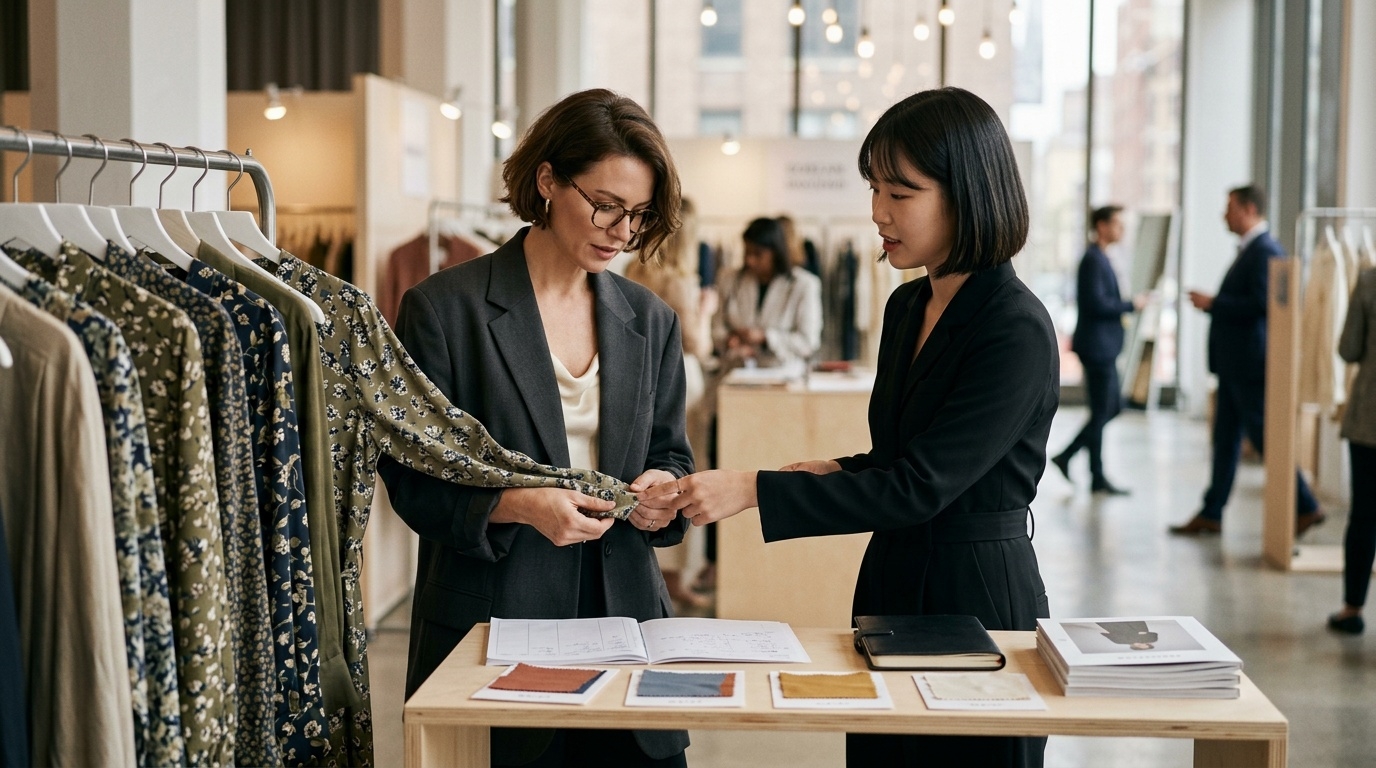
Ledome’s expansion this year rests on demand it confirmed last year. In September 2025, Ledome brought five Korean womenswear brands to “New York Coterie 2026 Spring/Summer.” It met roughly 300 buyers on the floor, held 100 consultations, and booked about $270,000 in on-site orders.
These on-site orders aren’t retail sales to shoppers walking the floor. They’re wholesale orders placed by buyers from department stores, select shops, and online retailers stocking up for the coming season. The consultations cover more than how much a buyer likes a design; they get into order volume, wholesale pricing, and delivery schedules. For the brands, it’s a direct read on which pieces local retailers actually want, information they can use in the next round of pitches.
Roughly 300 buyer contacts turning into 100 consultations and a quarter-million dollars in orders shows Ledome working as a real trading venue, not just a display booth. The Korea Fashion Association said this result helped expand US distribution, both online and offline, and surface new buyers. Growing this year’s roster from five brands to six follows directly from that track record.
Brands at different stages in the US market
Among this year’s brands, Hagahi is working to widen an already-healthy cycle of orders and reorders. Its task is turning the momentum from New York Coterie and its local showrooms into ongoing deals with more North American buyers. Growing overseas revenue sixfold in two years shows the brand can keep business going well past the first order.
Asparagus works with more than 25 international buyers and select shops, including in the US, and has held steady overseas orders for three seasons running. Since that’s sustained business across multiple seasons rather than one lucky order, this Coterie was a chance to build a bigger share of the North American market on that foundation.
TKEB is at the stage of generating new overseas revenue, through moves like joining Coterie and running pop-ups in New York. A pop-up is a temporary storefront that shows how consumers actually react; Coterie is where wholesale deals get made with buyers. For TKEB, the point of this trip was connecting those two kinds of experience to find new American buyers and grow exports.
Ledome lowers the first barrier, but reorders are harder
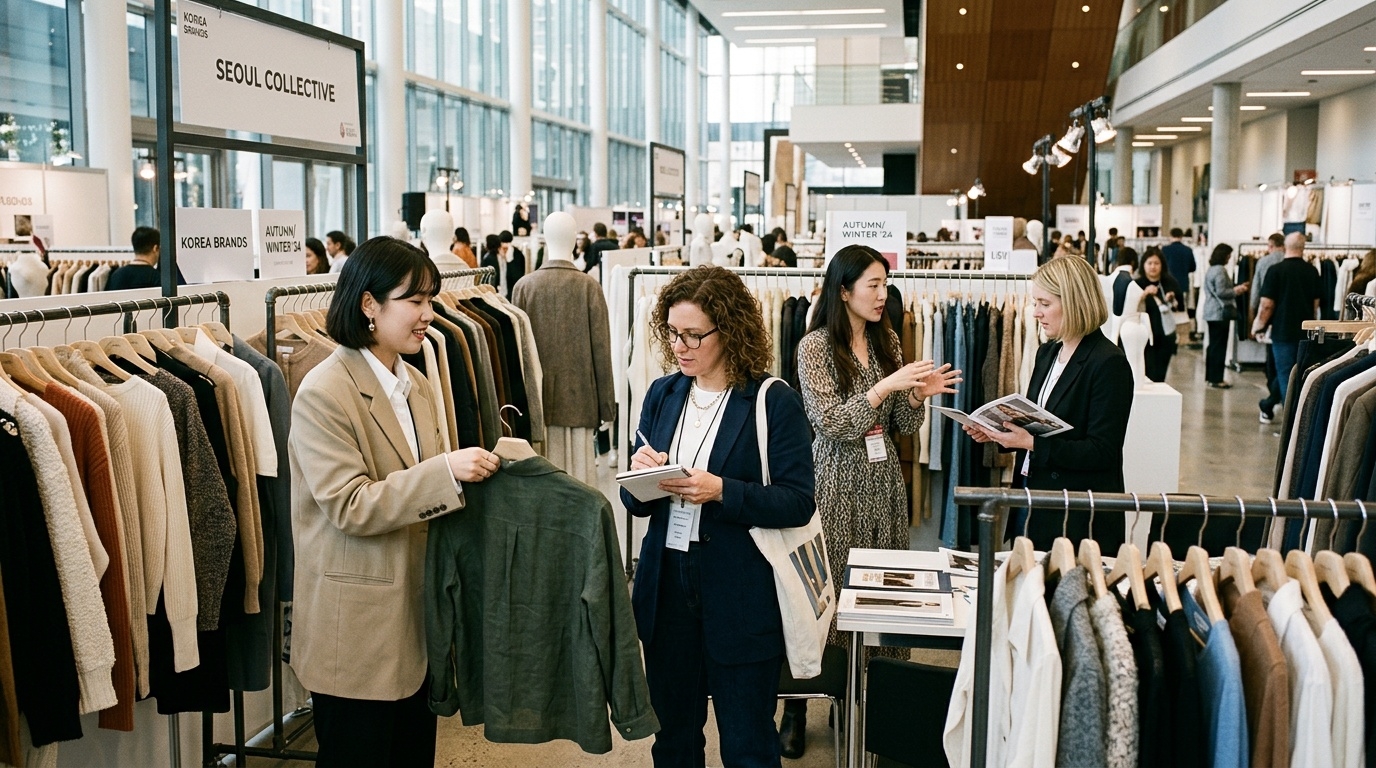
New York Coterie is a major womenswear trade show where buyers from big department stores, boutiques, and online retailers look for new brands and negotiate orders. A public-facing runway show is mostly about image and collection; a trade show is a business-to-business market built around pricing, product mix, delivery windows, and contract terms. A small or midsize brand going it alone at an overseas fair has to handle booth setup, logistics, buyer outreach, and pitch prep on its own. The Ledome pavilion lowers that barrier by putting several Korean brands under one roof with a built-in way to meet international buyers.
But a spot in a joint pavilion, or even a first order from an overseas buyer, doesn’t guarantee lasting export business. Once interest turns into a contract, the brand still has to deliver on time and to spec. Missing a delivery deadline, or seeing the goods sit on the shelf without a restock, can turn a promising deal into a one-off. A first order is often just a buyer testing whether a brand sells; whether they come back next season depends on how the clothes actually move. Brands need to do more than ship the order. They need to maintain the relationship and pitch the next collection.
That’s why Hagahi’s reorders and Loe’s order history matter: they show a brand can keep the business going, not just show up. Asparagus holding orders for three straight seasons fits the same pattern. For a brand like TKEB, just starting to generate overseas revenue, the next step is turning those early orders into repeat business. Sung Rae-eun, president of the Korea Fashion Association, called New York Coterie a strategic venue for real business with key North American buyers, and said she hopes participating brands will grow their local networks and keep their export momentum going.
From sixfold growth to next season’s orders
Hagahi’s sixfold growth in overseas sales over two years is where this trip started, not where it ends. What matters now is whether the buyers it already has keep ordering, and whether the buyers it just met turn into regular accounts. Asparagus’s network of more than 25 partners and three-season streak, and TKEB’s new overseas sales, are being measured by the same standard as they look toward what’s next.
The $270,000 in on-site orders Ledome booked last year is what justified expanding this year’s pavilion to six brands. This year’s event ended on September 11, and specific consultation and order numbers haven’t been released yet. What matters going forward isn’t how many brands were in the pavilion, but how many of these new contacts turn into orders, reorders, and a wider footprint in US retail.
Fashion trade shows always run a season ahead. The clothes shown in New York in September 2026 were built for the spring and summer market of 2027. What the six brands, Hagahi included, got out of these few days will come down to what happens after the booths come down: the negotiating, the ordering, the delivery.
Sources: Korea Textile News, September 7, 2026; Asia Today citing Korea Fashion Association data, September 4, 2026; FashionN, September 5, 2026.