
Table of Contents
The Scene of Busan’s Film Industry, Beyond the Screening Rooms
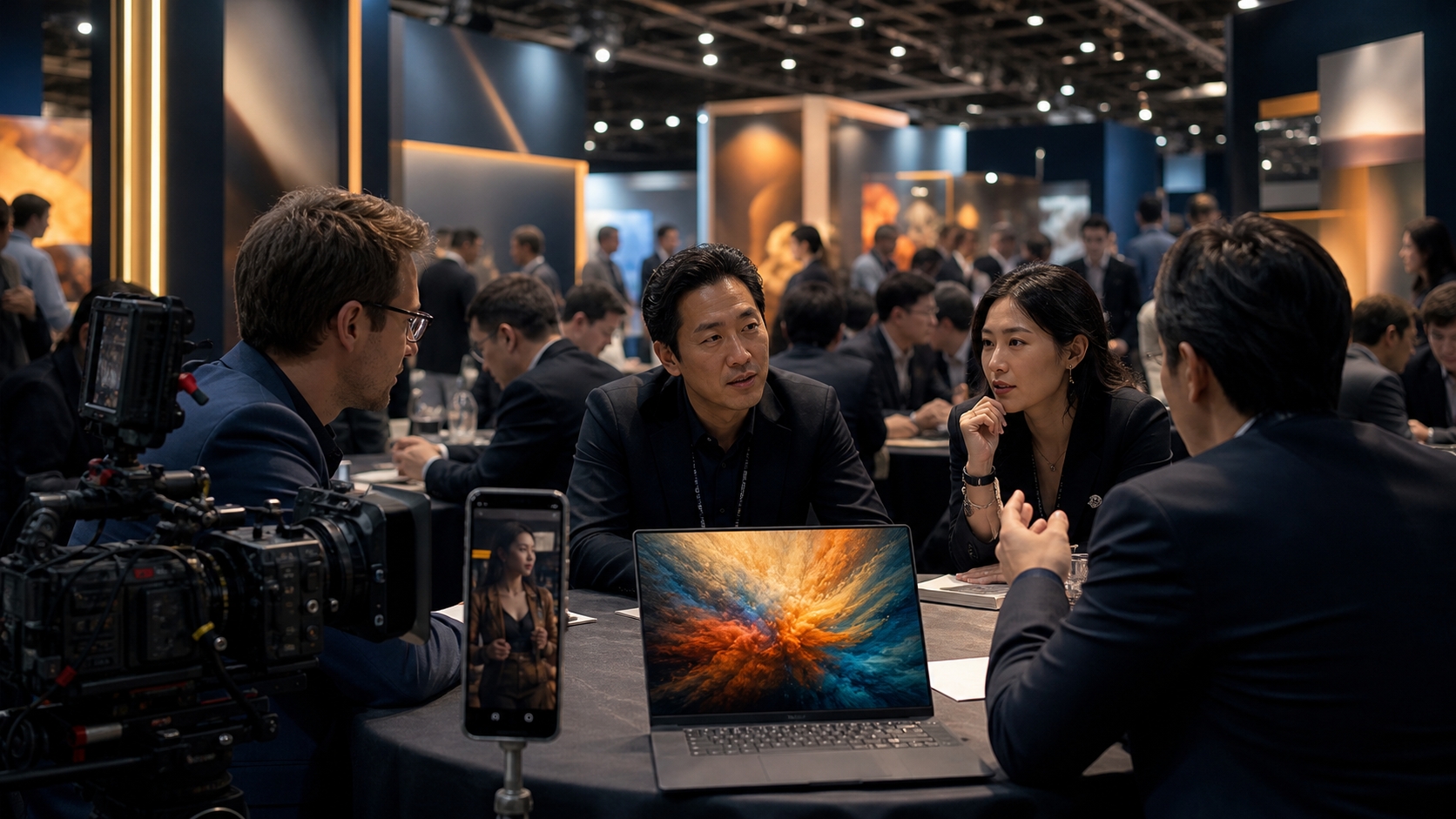
During the festival, Exhibition Center 2 at Busan’s BEXCO plays a very different role than the theaters where audiences watch films. This is where companies looking to sell their content meet industry professionals searching for fresh projects. The 21st Asian Contents & Film Market (ACFM), which opened on October 10 and runs through the 13th, is the official business market of the Busan International Film Festival (BIFF). To understand what happens here, it helps to separate a festival’s screenings from a market’s deals.
A film festival connects completed works with audiences. A market is about the logistics of production and distribution across different regions. Conversations here cover more than selling finished films: they also involve investments and collaborations for projects still in early stages. Because of that, the market’s lineup shows industry trends that a current movie roster can’t, pointing to what companies plan to make next and who they want to work with.
The changes in this year’s ACFM aren’t fully captured by attendance numbers alone. Pre-opening reports from the Green Economic Daily projected around 3,000 industry professionals and 1,200 participating companies from 58 countries. Those are notable preliminary figures, but the more useful question is what kinds of content and production methods are actually dominating the discussions on the floor.
Production Companies Looking Beyond Traditional Film Deals
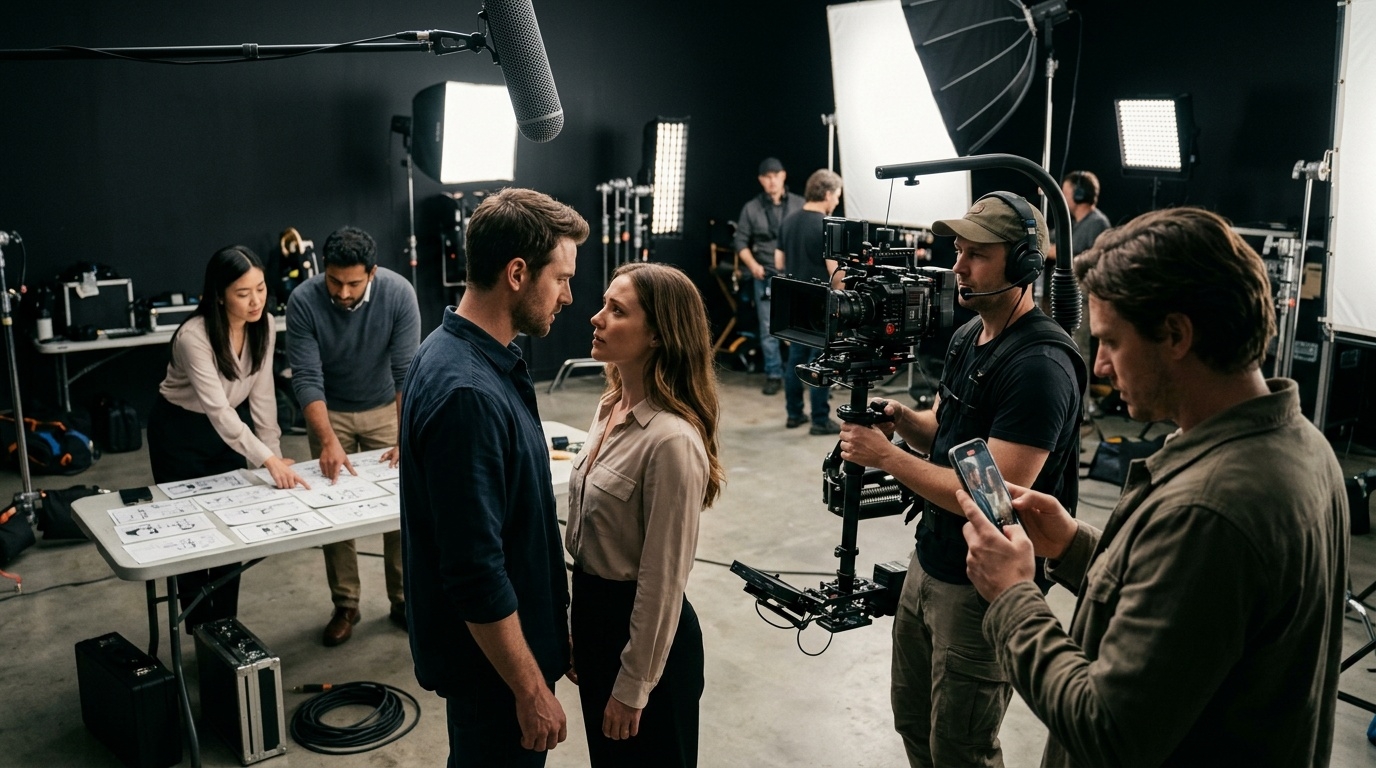
One case worth noting before looking at the market’s specific offerings is the recent collaboration between Showbox and the global short-form drama platform ReelShort. Yonhap News reported in June that Showbox, a major player in film investment and distribution, signed a co-production agreement with ReelShort. A film investment and distribution company joining forces with a short-form drama platform at the production stage is a different kind of business connection than simply selling finished films overseas.
The agreement starts with co-producing short-form dramas based on ReelShort’s existing intellectual properties, with plans to later expand into original short-form content made by Showbox. That doesn’t mean these original works are already finished or released. The more notable part is the starting point and the plan: a traditional production company and a digital platform agreeing to develop new formats together, rather than just trading finished products.
Short dramas and micro-dramas are serialized narratives told in bite-sized episodes. Unlike promotional clips cut from full-length features, these short episodes work as complete narrative units on their own. As this format’s market grows, production companies have more partners to consider. They’re no longer looking only at traditional distributors to import films; platforms that specialize in these quick-hit series are now potential co-production partners too.
The Production and Distribution Hurdles Behind Market Growth
The Korea Creative Content Agency (KOCCA) also treated short dramas as a distinct subject for industry analysis this year. Its July issue of “Broadcast Media & OTT Trends,” released in August, focused on the growing global short drama market and the production and distribution strategies of Korean businesses. What matters here isn’t whether this is the first analysis of its kind, but that short-form drama is now being treated as its own business sector, separate from film and television.
That distinction matters because a growing market doesn’t automatically mean success for individual companies. Even when a Korean production studio signs a contract with a foreign platform, choosing the right stories and the right production format remains a separate challenge. Cutting a story into shorter episodes doesn’t by itself carry over the competitive edge of traditional films or dramas. Production and distribution still have to be worked out together.
Reading KOCCA’s analysis alongside Showbox’s deal shows the order of events. Growing interest in the market leads to new collaborations between production companies, and those collaborations then require a fresh look at production and distribution strategy. That’s part of why ACFM is giving short dramas this much attention. As business relationships form that go beyond selling finished films, the range of topics the market has to cover grows with them.
Bringing Intellectual Property and AI into the Program
The official ACFM program lineup announced in September shows how these shifts have shaped the market. This year’s event runs 64 programs across seven categories, centered on sales, projects, intellectual property, and investment. “Sales” refers to trading content and distribution rights; “projects” are works still in development or production. Intellectual property (IP) covers original works and the rights to adapt or expand them into new formats.
These categories widen the point at which deals actually happen. Buying a finished movie calls for a different kind of judgment than investing in a story that hasn’t been filmed yet. Discussing whether to adapt an original IP into a screen production is its own separate question from selling a finished feature. This year’s program isn’t so much a pivot away from film as an attempt to connect every stage of content, from early development through what happens after release, inside one market.
The announced lineup also includes sessions on micro-dramas and generative AI. Generative AI is technology that produces new output, like video, from given inputs. If short dramas are a shift in what formats and lengths of content get made, AI is a shift in how that content gets made. The two topics are separate, but they come up together when production companies and platforms sit down to talk about future collaborations.

The Expanding Scope of Deals Forged in Busan
This October, the market also brought in Thailand through its newly introduced Country in Focus program. That’s not the same as simply adding another nation to the attendee list; it sets aside dedicated space to look closely at one country’s content industry and its work. In a market built around finding partners across borders, that kind of setup gives content and companies another way to connect.
Put together, this year’s ACFM shows a consistent pattern. A growing global short drama market pushed studios and platforms into new partnerships, and industry analysis then treated the format as its own business concern. The market folded that trend into wider discussions on IP, projects, investment, and AI in production. Film hasn’t become less important. What changed is that a market built mainly around film now covers a wider range of content formats and every stage of the production process.
Being on the program doesn’t guarantee that new deals get signed. The number of participating companies and scheduled sessions shows the scale of networking, but it’s not the same as signed contracts and finished productions. What happens next is whether the connections made in Busan actually turn into co-productions and distribution deals. Whether short dramas and AI end up as a passing trend or a lasting part of how business gets done here is something only the results after the market closes will show.
Sources: Green Economic Daily, October 9, 2026 (https://www.greened.kr/news/articleView.html?idxno=351748); ACFM Program Guide published by Korea Economic Daily, September 22, 2026 (https://www.hankyung.com/article/202609229765P); KOCCA Press Release, August 12, 2026 (https://www.kocca.kr/kocca/koccanews/reportview.do?nttNo=1187&menuNo=204767); Yonhap News, June 15, 2026 (https://www.yna.co.kr/view/AKR20260615044400005).


