
Table of Contents
Less rice, more gukbap
Koreans are eating plain rice less often, but they are eating more gukbap, rice and soup served together in one bowl. That is a small step away from the familiar picture of a Korean meal laid out with many side dishes. In an analysis of what Koreans eat, Seoul National University’s Food Business Lab found that stews (jjigae) and traditional soups are being eaten less, while ready-to-eat gukbap and simple sides such as eggs and tofu are growing. Even within Korean food, habits are splitting depending on how dishes are combined and how they are prepared.
The findings were presented on November 4 at the 2027 Food and Dining Industry Outlook, held at COEX in Seoul by the Ministry of Agriculture, Food and Rural Affairs and the Korea Agro-Fisheries & Food Trade Corporation. There, Professor Moon Junghoon of the Food Business Lab presented “Food Trend 2027.” Rather than predicting next year’s hit menu items, the talk started from how often people now eat and how their meals are put together.
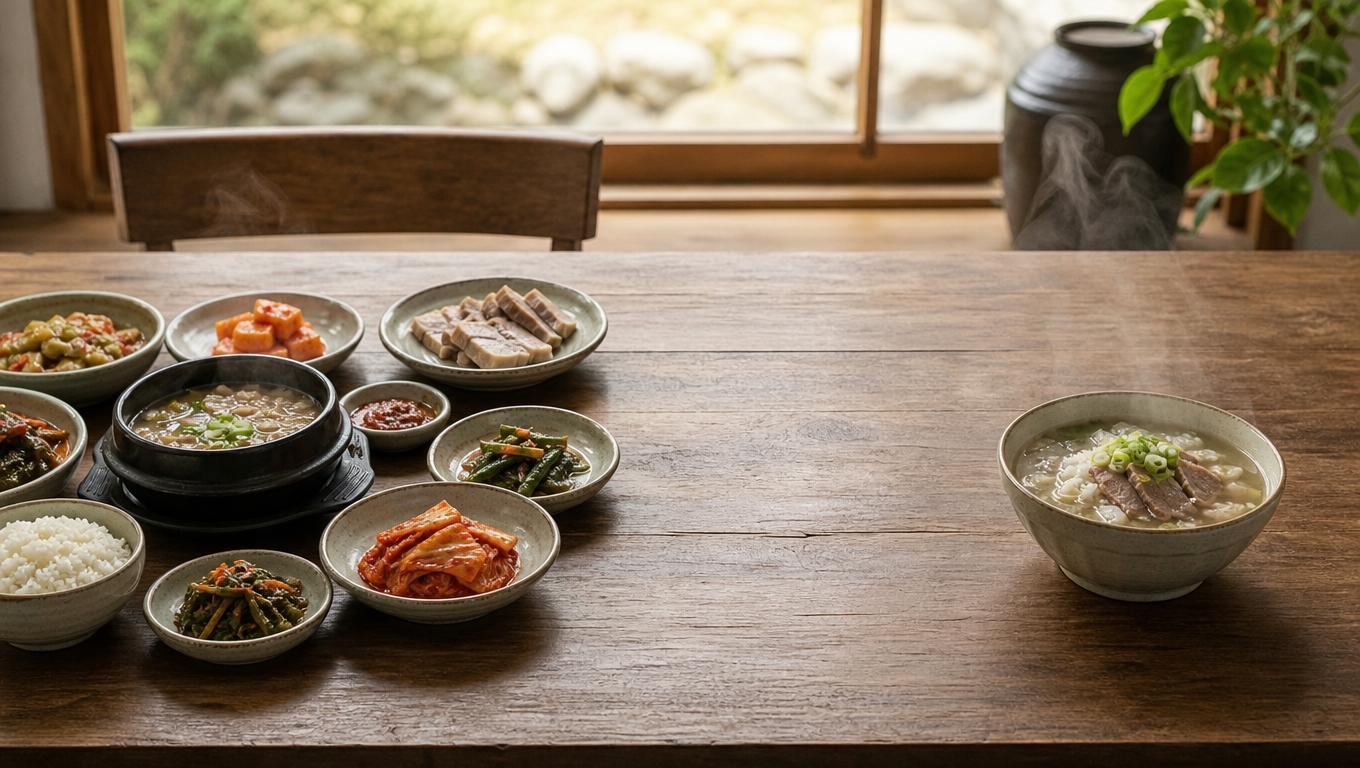
For readers abroad, the best-known image of a Korean meal may be a crowded table covered with shared side dishes. The analysis does not say that image is wrong. It asks where everyday eating is heading now. Seen that way, the rise of things as different as a bowl of gukbap and a boiled egg starts to look like one story about how Koreans set the table.
Where it started: “solo wellness meals”
In its previous report, “2026 Food Trend,” the team described honwelsik, solo meals shaped by wellness goals. Since then, the researchers say, that pattern has deepened: people eating alone serve fewer side dishes and deliberately choose or skip certain foods for their own health or beauty goals. Meals that used to be planned around who was at the table are now being planned around the individual.
The observation rests on data about what people actually eat and buy. The researchers used meal records from OpenSurvey’s Food Diary, which logs what, where and how people eat over a long period, and looked at grocery purchase data as well. So the presentation was less about why one restaurant or product is popular and more about the direction that shows up in repeated, everyday choices.
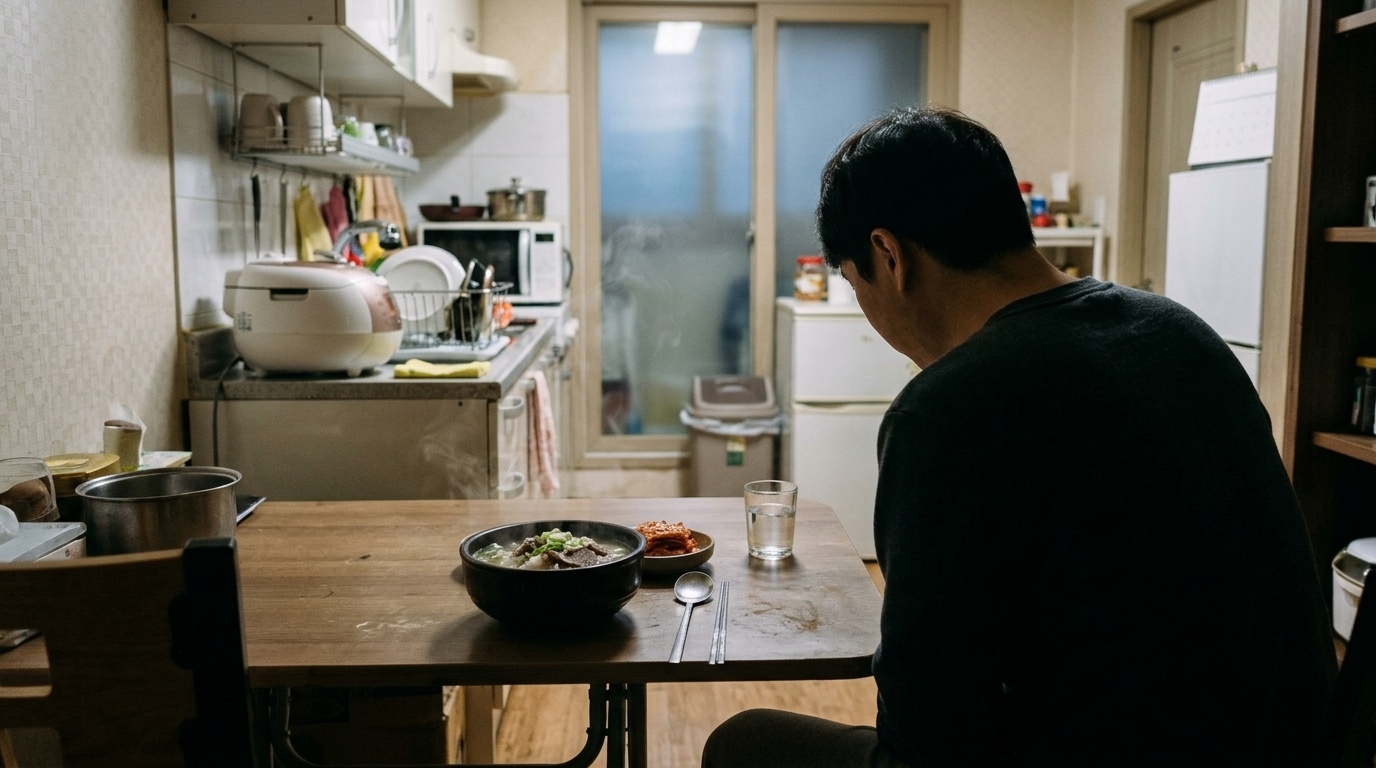
The team does not treat honbap, eating alone, as just a picture of someone at a table by themselves. When you eat alone, the person choosing the menu, cooking and eating is often the same person. Looking at which foods stay on that table and which drop off shows, in concrete terms, how eating with fewer people changes what a meal is made of.
Meals that disappeared from the food diaries
According to reports on the analysis, the number of meals eaten per year fell by 24.8 over the latest year compared with the earlier baseline, more than two meals a month. Everyday staples were eaten less often: plain rice by 8.6%, stews by 9.0% and soups by 5.7%. Ramyeon and gimbap each fell 2.3%. Company dinners (hoesik) and late-night snacking shrank too, which suggests the change is not limited to a single dish.
Not every familiar food went down. Ready-to-eat gukbap, the kind that is heated or quickly cooked at home, rose 55.1% compared with the past. The research team read the rise of gukbap as a sign of the spatial and emotional comfort it offers people eating alone.
The gukbap exception makes “eating less” more specific. Cutting back on everything, rice included, is different from choices bunching around one way of eating. Rice and broth served as separate dishes need different preparation from a one-bowl meal, even when the ingredients are the same. That gap is the next clue to which dishes hold up while overall eating declines.
Choices move to convenience foods and simple sides
Convenience foods also grew among noodles. Compared with the past, ready-to-eat pasta rose 27.9%, Chinese-style noodles 18.5%, warm Korean noodle soups 17.2% and cold Korean noodles (naengmyeon) 12.4%. Looking only at convenience foods eaten alone, grilled fish rose 58.1%, warm Korean noodle soups 55.0%, hamburgers 45.3%, boiled pork 45.0%, pasta 42.9% and gukbap 34.5%. The overall convenience-food figures and the solo-meal figures come from different slices of the data.
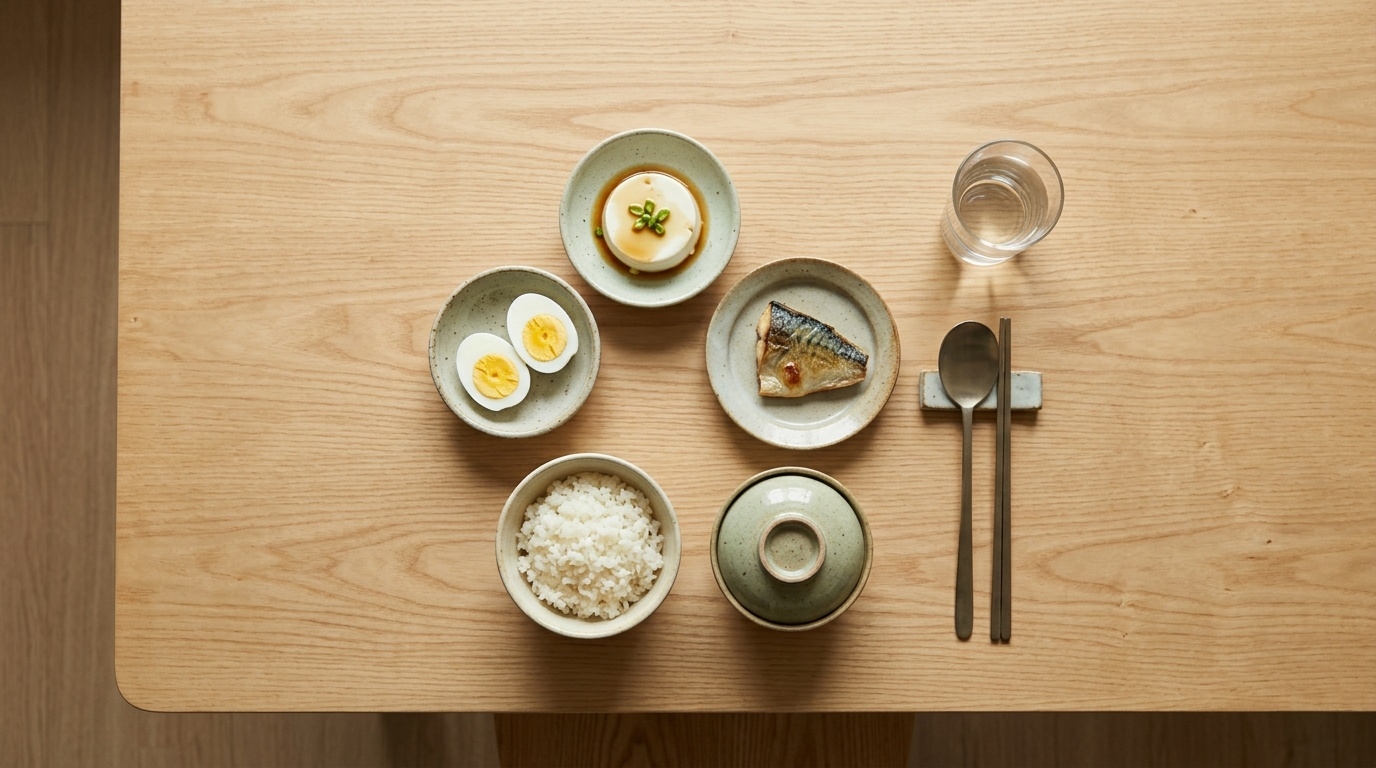
Side dishes followed a similar pattern. Labor-intensive traditional banchan declined, while sides made from raw ingredients or needing only simple heating grew 19.7%, rising 24.6% at home and falling 6.1% when eating out. Boiled eggs rose 45.2%, roasted eggs 20.7% and soft tofu (sundubu) 13.2%. Foods that need little preparation are gaining on sides that take several steps to make.
So the change on the table is as much about cooking steps as about dish names. Grilled fish and boiled pork are not new, but eaten alone as convenience food they play a new role. Eggs and tofu stay on the table as side dishes, minus the prep work. People are not dropping Korean food for something unfamiliar. They are fitting familiar foods into meals in simpler ways.
Selective eating reaches protein and desserts
Protein sources are shifting as well. Purchases and consumption of fresh red meat such as beef and pork went down. With chicken, buying moved from whole birds toward cuts such as breasts and thighs. Lamb was the one meat that rose. The team described this as a move toward cheaper and lighter protein, which shows what is filling the space left by what people eat less of.
Health-minded choices were another thread. Protein drinks rose 50.3% compared with the past and zero-sugar drinks 18.3%. In frozen desserts, low-sugar ice cream rose 53.7%, and spinoffs that change the shape or flavor of long-selling products rose 6.6%. The team pointed to growing interest in blood sugar control and wellness as the background. These figures describe changes in buying and eating, not measured health effects of any product.
The team also named “layered” food and drinks, which stack toppings and textures in tiers, as a growing trend. Adding several elements to a drink or dessert makes it a fuller experience. Even as people eat fewer meals and fewer kinds of dishes, they still want something enjoyable to taste, so the overall drop and the interest in new products sit on the same table.
Naming it a “less-eating society”
The research team calls this trend gamsik sahoe, a “less-eating society,” meaning a diet in which both the variety of foods and how often people eat are shrinking. It names the spread of honbap and wellness-driven selective eating as the main causes. The findings are collected in the book “2027 Food Trend: Gamsik Sahoe, Koreans Eating Less.” Compared with the earlier honwelsik idea, the new term covers not only how meals are made up but a drop in eating itself.
“As the downturn drags on, Korean consumers have finally started to cut back on eating,” Moon said in his presentation. “But there are also clear opportunities where preferences are concentrating, such as gukbap.” Beyond that reading of the economy, the team stressed that choices are moving toward foods that are easy to prepare and comfortable to eat alone. A shrinking market overall does not explain how individual foods are moving.
Gukbap makes the change easy to see. A full table of shared dishes and a single bowl are both part of Korean eating, and this analysis shows choices tilting toward the bowl. What to watch next is which dishes keep winning those choices, and in what settings. Understanding how Koreans eat now means looking past the list of dishes to who people eat with, how they cook and how often they sit down to a meal.
Sources: Food & Dining Economy, November 5, 2026; Asia Economy, November 4, 2026; Food Journal, October 30 and November 3, 2026.