
Table of Contents
“Junji Ito Masterpiece Collection” arrives as his first vertical-scroll webtoon
From 10 p.m. on October 30, Naver Webtoon began running the “Junji Ito Masterpiece Collection” exclusively on its “Daily+” section and on Naver Series. It is the first time any work by the Japanese horror manga artist Junji Ito has been made into a vertical-scroll webtoon. The series opens with his debut work, “Tomie,” and will add his best-known titles one after another, with new installments every Wednesday and Saturday. The original black-and-white art is kept, but the panel layout and pacing have been re-edited for reading downward on a smartphone.
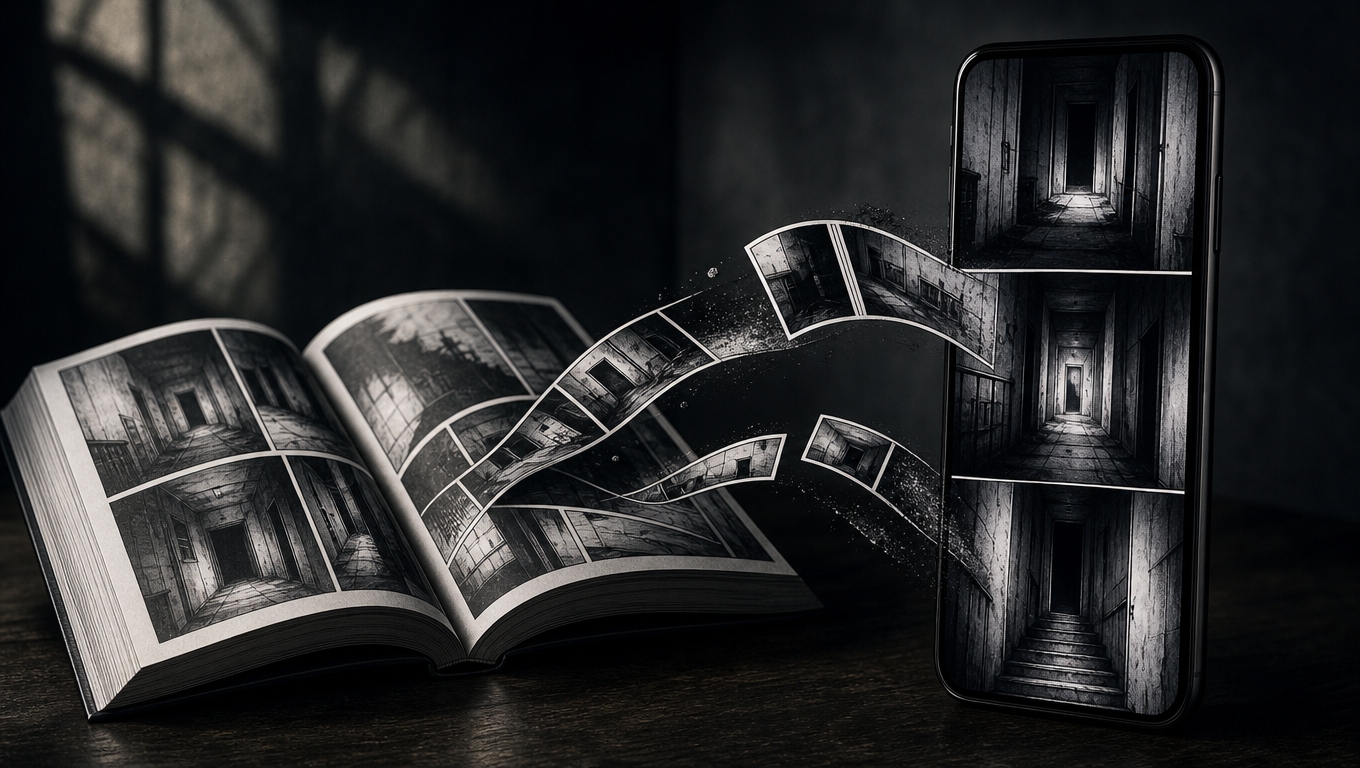
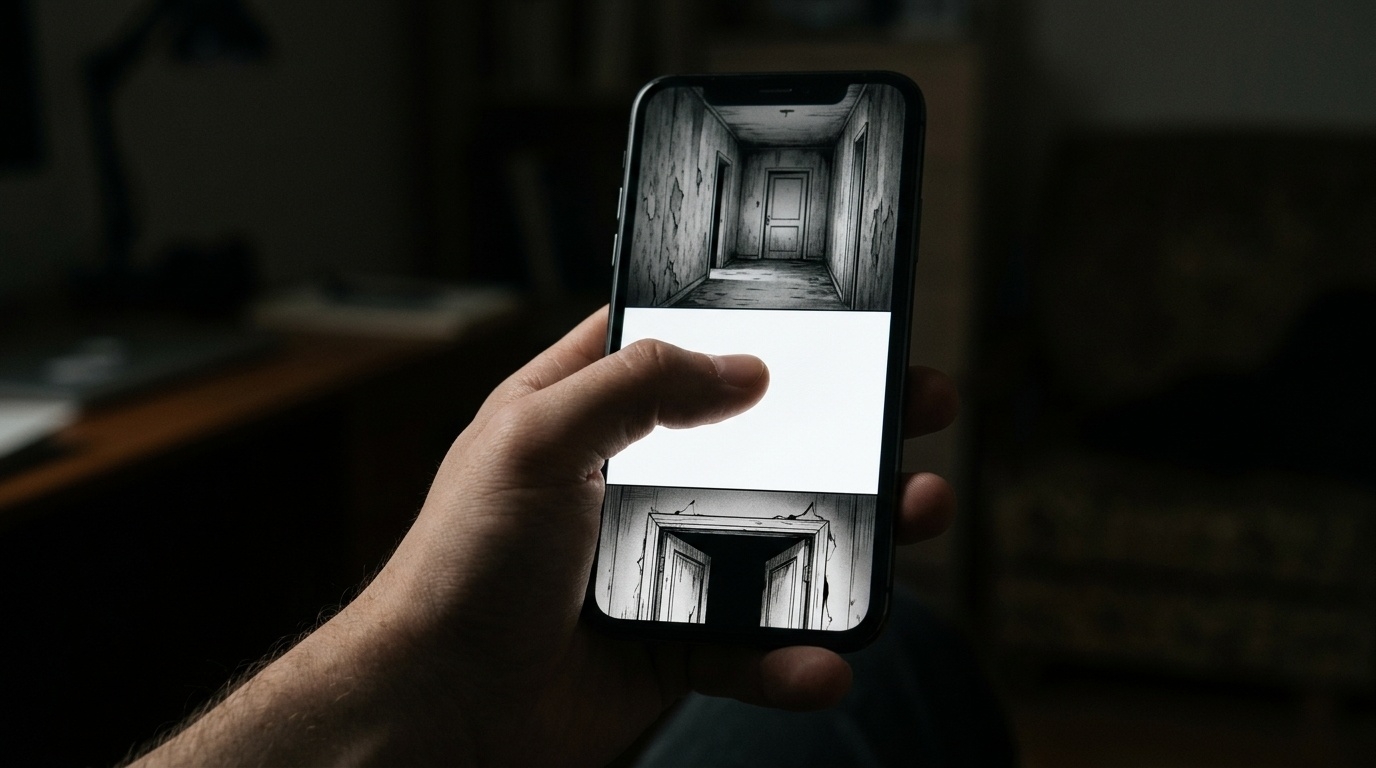
The heart of the change is the order in which images appear and how much is visible at once. In a printed manga, opening a page shows several panels together. In a vertical-scroll webtoon, new images appear one after another as the reader’s thumb moves down the screen. The story can be the same while the act of discovering the next scene is different. In horror this matters a great deal, because fear and tension depend not only on what is drawn but on when the reader first sees it.
Ito explained this difference himself in a video interview marking the approach of his 40th anniversary as an artist. In print, he said, panel arrangement was limited, for example by having to hide a scene meant to shock the reader on the next page. With webtoons, he said, a new image comes in with every scroll, which gives much more freedom in staging. The project is less about adding new stories than about what changes when existing work is delivered through a different way of reading.
Starting from a debut published in a 1987 magazine
The first title in the series is “Tomie.” According to Naver Webtoon, it first appeared in a Japanese monthly manga magazine in 1987. The project was planned ahead of Ito’s 40th anniversary as a manga artist, so it brings work long read on paper to smartphone readers. Opening with his debut ties the first release in the new format to the start of his career.
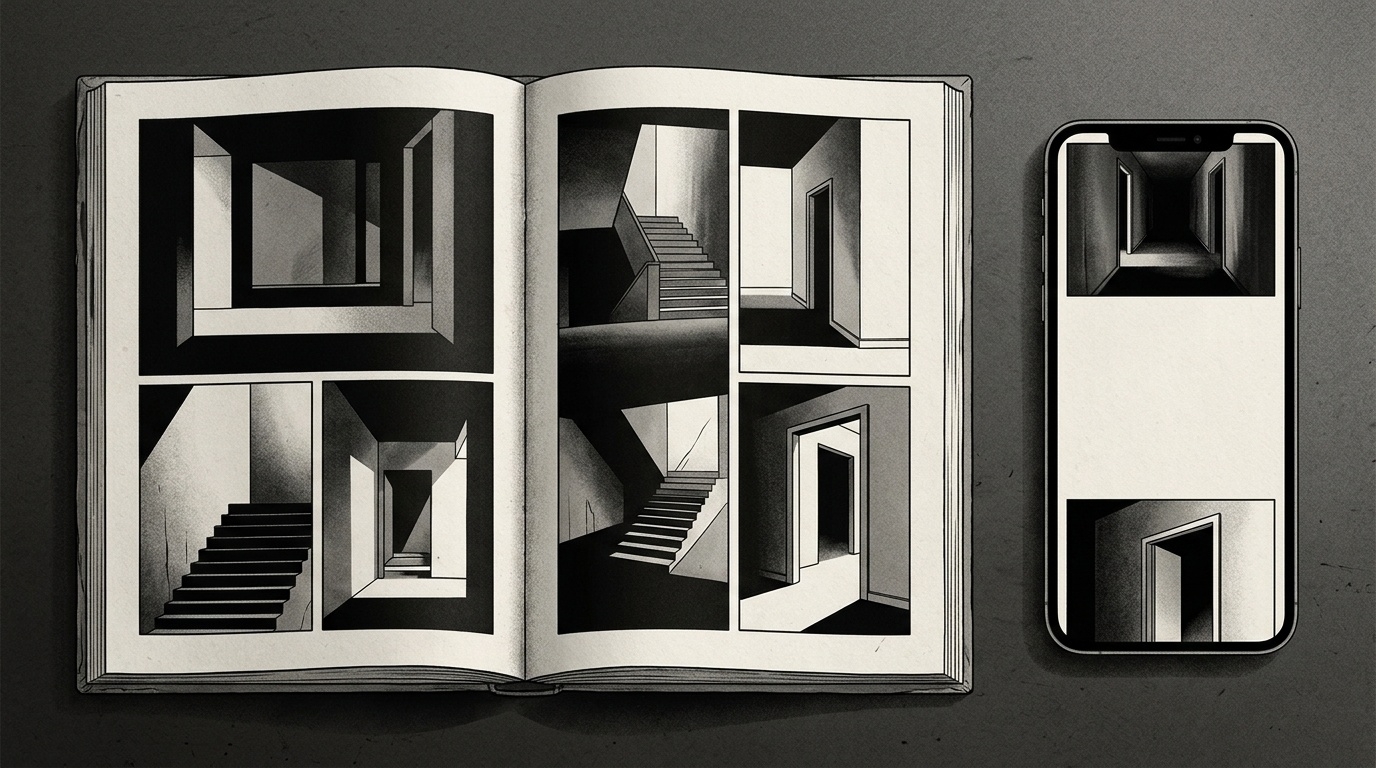
When reading manga in a magazine or a collected volume, the reader meets a fixed unit: the page. The panels on a page are separate scenes, but they can also be seen all at once. Artists decide where to put important images with that in mind. The “hide it on the next page” approach Ito described comes from exactly this feature of print, where turning the page marks the line between what has and has not been revealed.
That line can be used to build up a scare. The current page lets the reader anticipate what is coming, and the new image only appears after the page is turned. This is simply a restatement of the limit Ito described in page-based manga. How specific scenes in the new webtoon have changed would need a side-by-side comparison. Understanding the old format, though, makes it clear why switching to vertical scroll is more than resizing the pages.
Keeping the black and white, re-editing the order of images
Naver Webtoon said the work went beyond rearranging the original panels into a vertical line. It re-edited the panel layout and pacing to suit webtoon conventions. A panel is a single framed picture in a comic. To have panels that sat side by side or stacked on paper read continuously on a phone screen, editors have to rethink where the reader’s eye travels from and to. That is where the real work of changing formats lies.
Ito said that in print manga “five or six panels come into view at once,” which limited how panels could be arranged. In webtoons, he said, “a new image keeps coming in each time you scroll, so the freedom of direction has become much greater.” Put together, the two remarks show that his interest is not in making the screen longer. It is in being able to shape the relationship between images the reader can already see and images still to come.
The decision to keep the black-and-white tone stands in contrast to that change. Naver Webtoon said it kept the art in black and white to preserve the mood of the originals. Instead of adding color, the approach keeps the look of the drawings and changes how they are read, so familiar visual traits and a new way of moving through the story sit side by side. To describe the series accurately, it helps to ask both what stayed the same and what was re-edited.
Classics released in turn, part of a wider manga “reformat” push
After “Tomie,” the series will continue with titles including “Souichi’s Diary of Curses,” “Lovesickness” and “A Deserter in the House.” The announcement says the major works will be released in sequence but does not give a start date for each one. The twice-weekly schedule gives readers a new way to meet the work. Instead of opening a single collected volume, they follow installments released regularly on a platform.
Naver Webtoon calls this kind of work its “reformat” business: rebuilding existing comics or intellectual property in the vertical-scroll webtoon format. The company has released Japanese hits such as “Parasyte,” “Hell’s Paradise,” “Fullmetal Alchemist” and “Skip and Loafer” as full-color scrolling webtoons, and this year it also released “Bocchi the Rock!” exclusively. Unlike adapting a story into another medium, the focus is on keeping it a comic while changing the screen and the arrangement it is read in.
Within that trend, the Junji Ito series stands out for staying in black and white. Not every work is handled the same way as the earlier color scroll versions of Japanese manga. What to keep from the original and what to adjust for smartphones are separate editing decisions. In horror, the mood of the drawings and the moment a scene is revealed work together. The project shows that each reformat calls for its own mix of preservation and change.
A new format’s value lies in the moment the reader meets the image
Reformatting is not limited to Japanese manga. According to Naver Webtoon’s press release, WEBTOON Entertainment works with North American publishers such as Dark Horse and IDW, and at New York Comic Con 2026 it announced a vertical-scroll version of “Mighty Morphin Power Rangers (2016)” with BOOM! Studios. Rebuilding printed comics for smartphone reading is spreading to work from several regions, and the Junji Ito collection released in Korea is one example.
The greater freedom Ito described is a statement about what editing can do. The actual reading experience depends on how each scene was split and connected. The materials released so far include no scene-by-scene comparison and no figures on reader response. What can be confirmed now is that the black-and-white originals were kept while the panel layout and pacing were re-edited. How that plays out inside the stories is something readers will find on the screen as the series runs.
Ito said he was honored that his manga had been chosen for a different form of content, the webtoon. The question that remains is more specific than the fact that old work has moved to a new screen. At what moment, while scrolling down, does the reader come face to face with the next image? In what order does a horror once hidden behind the page reveal itself on a phone? That link between the act of reading and the reveal of each scene is where this reformat will prove its worth.
Source: Naver Webtoon press release, October 30, 2026.


