Table of Contents
A sales record, four overseas orders and a question
A domestic hanbok sales event brought in 4.02 billion won, and buyer meetings in Milan produced four overseas orders. As Hanbok Culture Week runs from Oct. 19 to 25, some of the most telling changes are happening away from the runway. Korea’s traditional clothing is being pushed from something people admire and try on for special days toward a product they pick out in a store and wear again and again. Along the way, deciding which features of hanbok to keep and which to change has become the central design problem.
Now in its ninth year, Hanbok Culture Week is hosted by the Ministry of Culture, Sports and Tourism and organized by the Korea Craft and Design Foundation (KCDF). It is held around Hanbok Day on Oct. 21 each year, and this year about 410 venues in Korea and abroad are taking part. The ceremony at the National Museum of Korea’s outdoor plaza includes awards for people who have contributed to hanbok culture and a fashion show featuring five brands. Alongside these events, which give more people a chance to see hanbok up close, work is under way to make products that people will actually buy.
Still, there is a gap between being curious about hanbok and deciding to buy it. A traditional silhouette may catch the eye, but at the moment of purchase, color, fabric and fastenings drive the decision. That was the problem young Korean brands ran into overseas. Following the path from domestic sales records to foreign orders shows what the hanbok industry has adjusted in order to turn cultural attention into a product that can compete.
“Clothes for a special event,” as Milan once put it
Hwang Lee-seul, head of the brand Leesle, first tried the Milan market eight years before this season’s orders. The response then was that her clothes looked like “something you’d only wear to an event.” The cultural character came through, but buyers did not see everyday clothing. The experience showed that going abroad was not only about letting people know hanbok exists. The clothes also had to be explained as something a buyer could fit into daily life.
Leesle became widely known through the “sabok pants” BTS member Jimin wore at the 2018 Melon Music Awards. The pants keep the structure of traditional trousers but add a zipper fastening. Keeping the traditional shape while making the clothes easier to put on and take off, closer to modern garments, sums up the brand’s direction. Its annual sales are now about 3 billion won. The brand carries both the boost of a celebrity moment and the ongoing work of making clothes that keep selling.
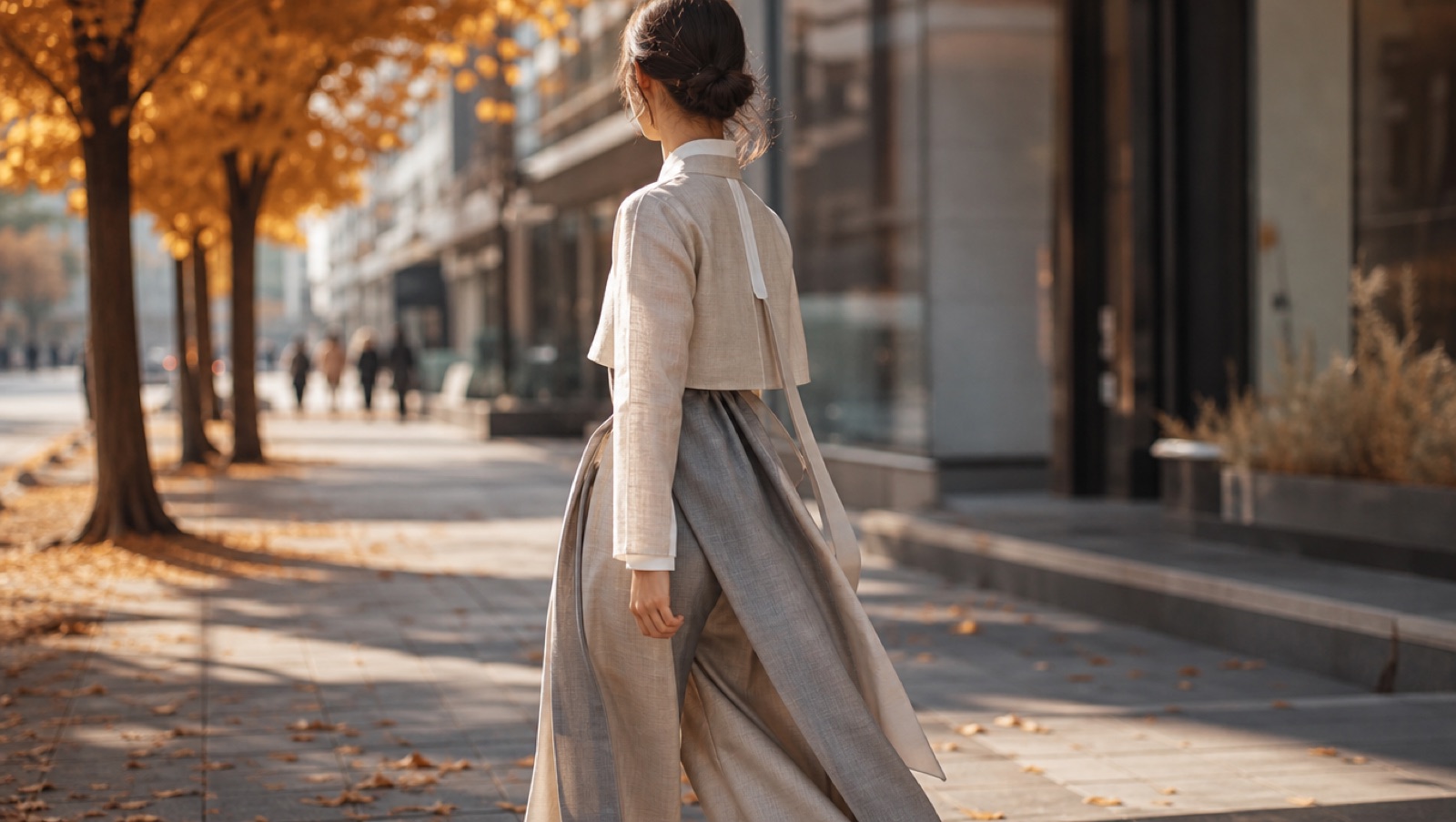
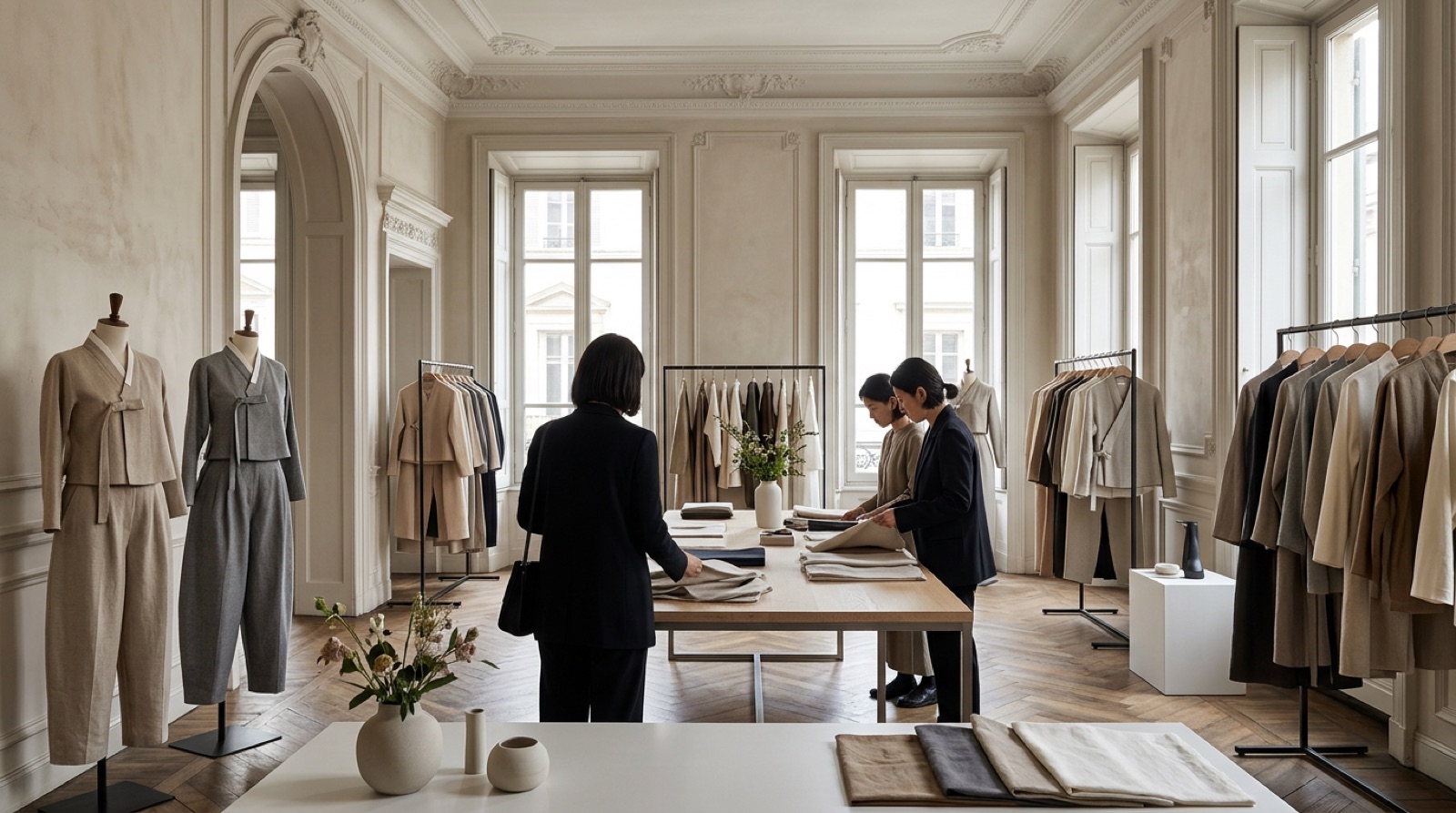
For this year’s Milan push, Leesle added more muted colors such as beige and gray and used linen and modal. Rather than stripping out the traditional look, it widened the options so the pieces could sit alongside everyday clothes. That shows concretely what changed after the cool reception years ago. Changing color and fabric, not only shape, also changes how hanbok is introduced. Buyers start thinking about what they would wear it with on an ordinary day, not just whether it suits a special occasion.
At home, more places to actually buy hanbok
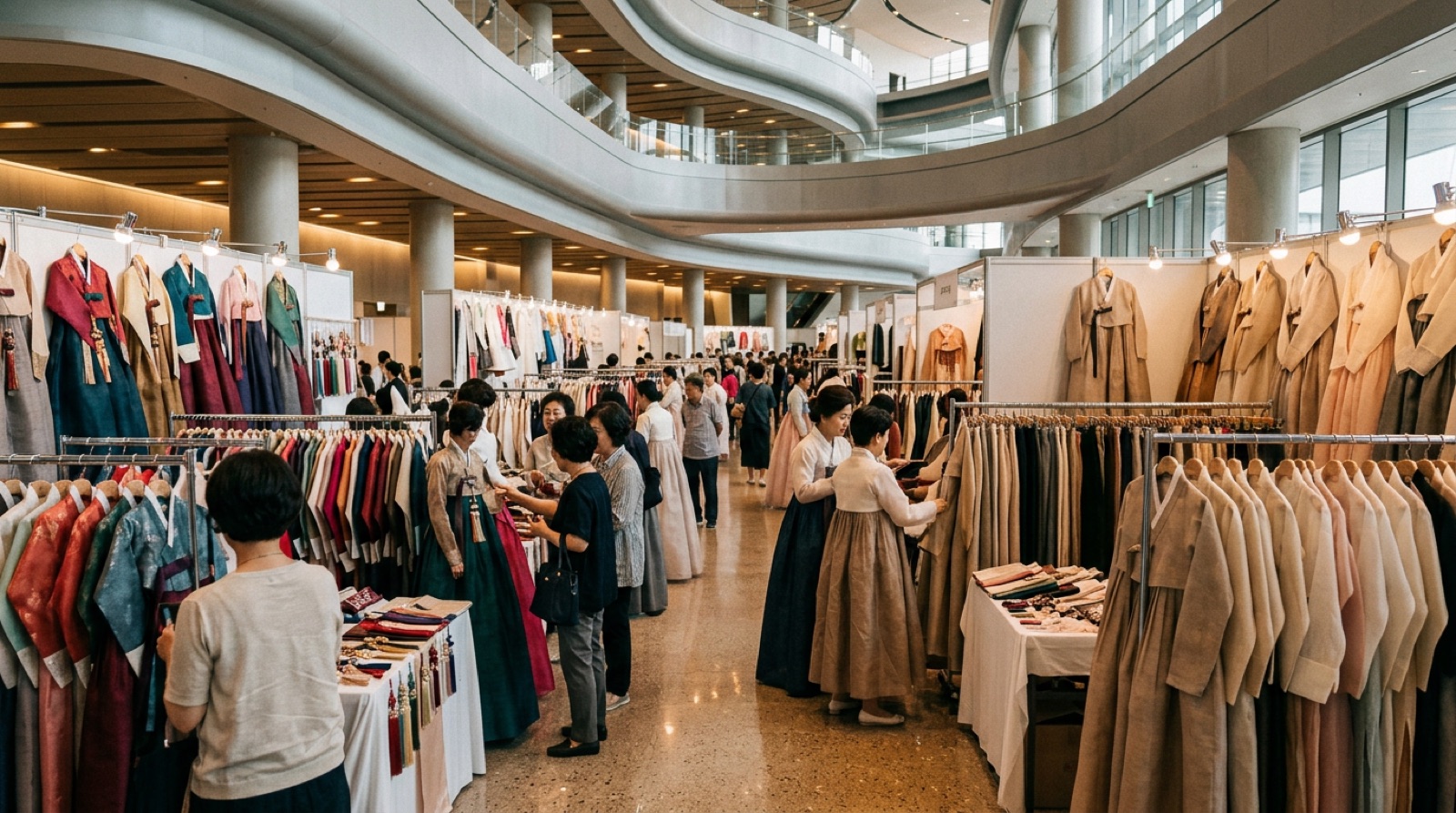
While brands knocked on doors abroad, more chances to see and buy hanbok opened up in Korea. In July, about 7,000 people joined programs linked to the traveling “Hanbok Shop” at Shinsegae Centum City in Busan. What matters here is not that attendance equaled sales but that people met hanbok in an ordinary shopping space. It linked the experience of looking at clothing at a cultural event with browsing products at a point of sale.
In August, 149 brands took part in the “2026 Hanbok Shop” at Dongdaemun Design Plaza (DDP) in Seoul. Sales reached 4.02 billion won, up 43 percent from the year before and the event’s best result so far. The rise in actual transactions at a market that gathered many brands in one place stands out. Instead of presenting hanbok as one fixed outfit, the event let shoppers compare and choose among different brands’ products.
That record was set in the domestic market. Abroad, brands often still have to explain what hanbok is, so carrying the Korean shopping experience overseas as it is will not be enough. Even so, the growth of domestic sales events gives grounds to see hanbok as both a cultural symbol and clothing that is bought and sold. It also shows that brands need two things at once: design changes, and places where shoppers can see the actual product.
In European showrooms, design changes turned into orders
The “2026 Hanbok Overseas Hub Promotion,” which ran from Sept. 22 to Oct. 6, was tied to Milan and Paris fashion weeks. Organized by the culture ministry and the KCDF, it featured five labels: Leesle, Mooroot, Ondata, Shin Seoul and Happly. The focus was business-to-business sales and showrooms. Instead of simply showing clothes, the program tested a model in which local retail buyers could examine products and place orders.
A presentation was held at Milan’s Palazzo Isimbardi on Sept. 26. Business meetings at the Studio Zeta showroom in Milan produced four orders, three for Leesle and one for Mooroot. Leesle’s shift in color and fabric toward everyday wear led directly to orders. The number matters because it confirms real buying intent in a foreign market. Apart from any cultural goodwill, it gives a starting point for judging hanbok’s commercial potential.
Mooroot, led by Kang Na-rae, uses the bangryeong collar, the square neckline of traditional hanbok. To foreign eyes it can resemble a Western square neck, which makes it feel familiar. Kang, who made actor Park Bo-gum’s hanbok last year through the KCDF’s Hanbok Wave Project, said what draws attention in Italy and what people actually buy are different. Shoppers are first drawn to traditional features, she said, but when choosing something to wear they tend to look for modern reinterpretations.
After the orders: distribution and the balance with tradition
The KCDF has discussed an experiential pop-up combining hanbok and Korean crafts with Milan department store La Rinascente, and signed a memorandum of understanding with the Istituto Marangoni fashion school. The aim is to create both chances to buy hanbok and channels for design exchange. The exhibition “Hanbok: Timeless Elegance” at a Milan city museum was extended to the end of October because of strong interest. The foundation plans to make Milan its first overseas hub for hanbok, moving beyond one-off events toward a place where people in the city can keep encountering it.
“Tradition comes alive when it is used in today’s daily life,” said KCDF President Kim Kyung-bae, adding that the response in Italy confirmed hanbok’s industrial potential. He also said the beauty of traditional hanbok needs to be shown alongside the modern versions. Modernization lowers the barrier to buying, but someone meeting hanbok for the first time still needs to understand the garment’s background and features. The plan is to offer clothes that are easy to wear every day together with an understanding of traditional dress.
Turning the attention around Hanbok Culture Week into a lasting market depends on what happens after the domestic sales events and overseas showrooms. Leesle’s muted colors and fabrics and Mooroot’s bangryeong collar each find a different route to everyday comfort. The thing to watch is whether these designs lead to repeat purchases and local distribution. The next round of orders will test how convincingly brands can make clothes people around the world wear on a normal day while keeping hanbok’s distinctive form.
Sources: Yonhap News Agency, Oct. 19, 2026; The Dong-A Ilbo, Oct. 7, 2026.