Table of Contents
Gifts that last after the snack is gone
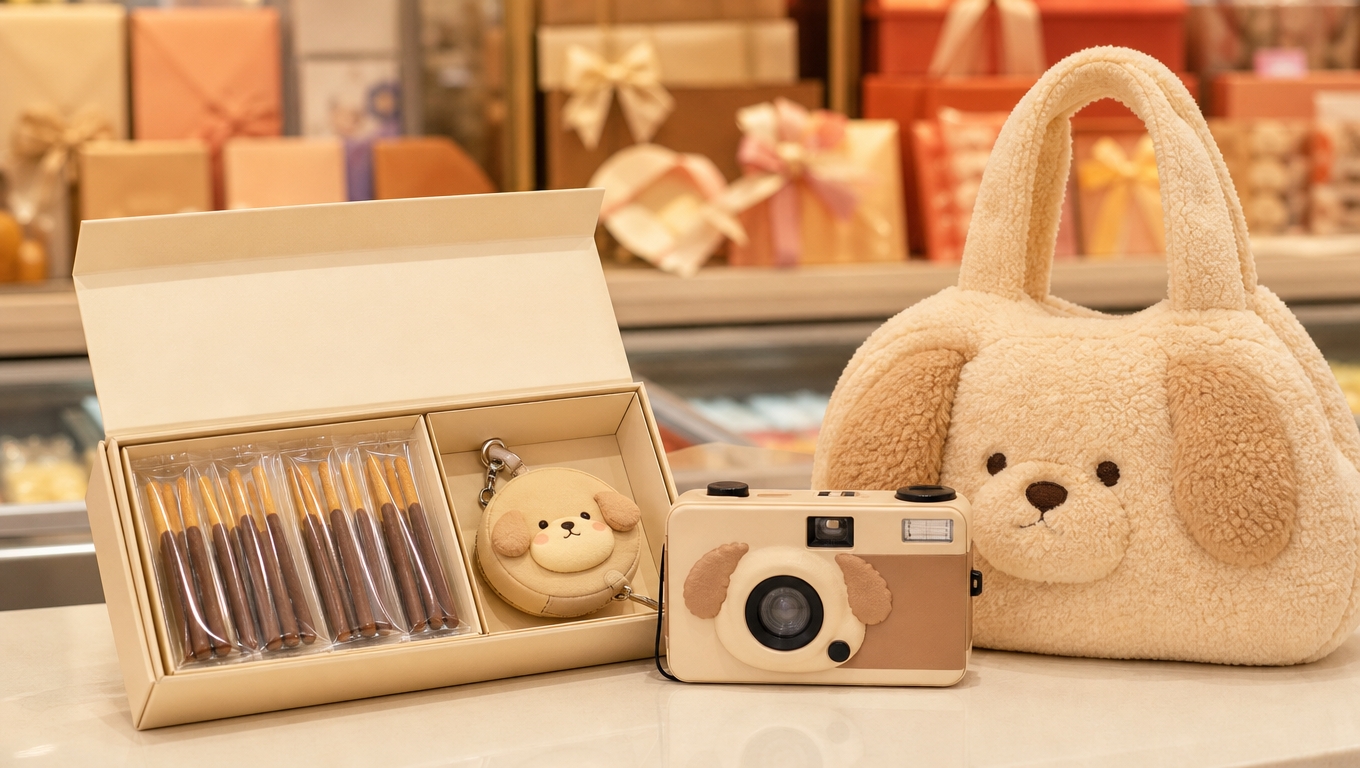
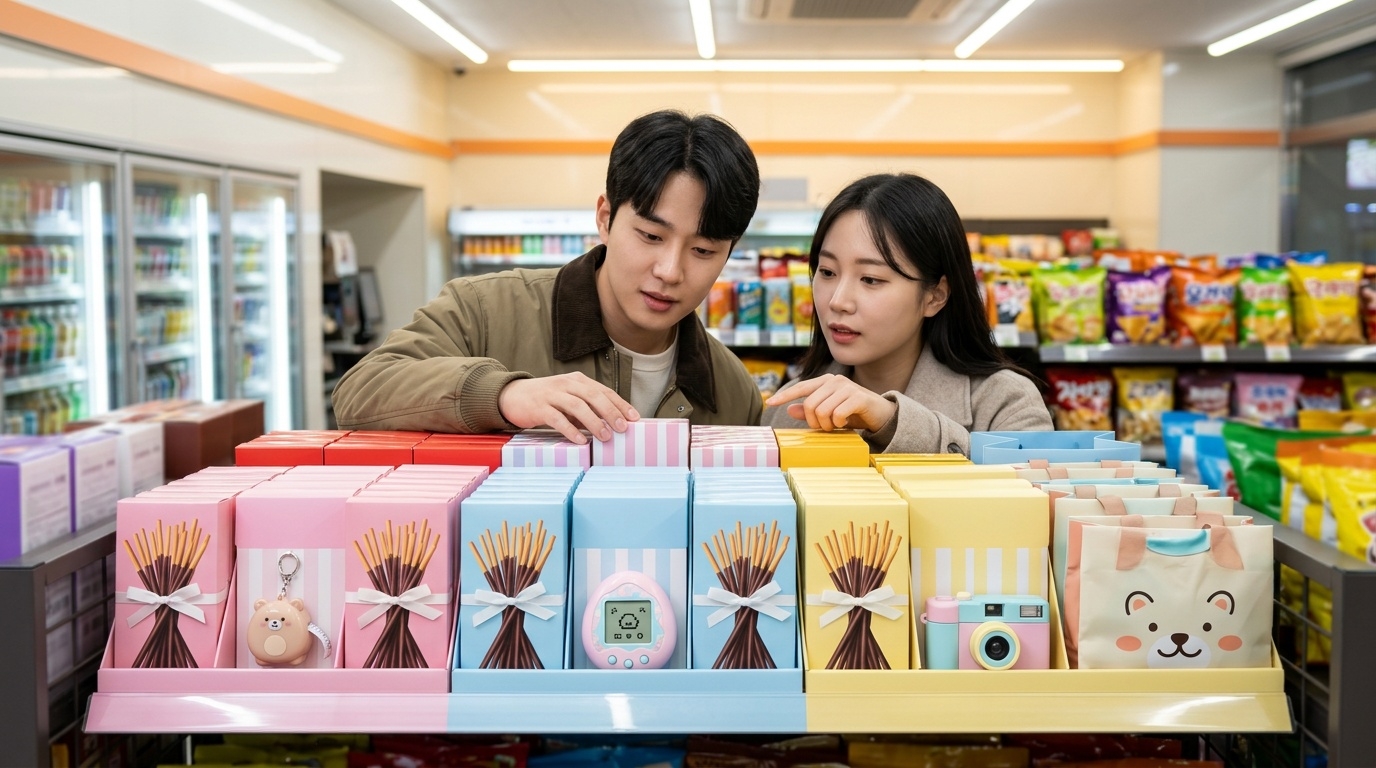
An Anpanman measuring-tape keychain, a Crayon Shin-chan film camera and a shopping bag shaped like Shiro, Shin-chan’s dog, now come packed in the same set as a box of Pepero. These are among the gift sets GS25 has released ahead of Pepero Day on November 11. Convenience stores used to print characters on the snack box; now they bundle the snack with things people use every day. When everyone is selling the same snack, the character and the item packed with it are what make one set different from another. On the shelves, the competition has moved from the snack to the goods sold with it.
For readers who have never seen Korea’s version of this holiday, the product lineup explains a lot. Pepero is a thin stick of biscuit dipped in chocolate, and Pepero Day is the day people hand them out to friends, classmates and partners. In this year’s convenience store sets, the snack is the one constant. The character and the accessory carry the recipient’s taste. Because a measuring tape or a shopping bag has an obvious use, the gift stays around long after the day itself.
The other chains have made similar choices. CU picked Pokémon and Tamagotchi, 7-Eleven went with ZO&FRIENDS and Sanrio Characters, and Emart24 chose the webtoon The Remarried Empress. Each is aiming at a different fan base with the same snack on the same day. IP, short for intellectual property, here means characters and stories that can be turned into merchandise. Winning Pepero Day now depends as much on which IP a chain secures, and what product it puts it on, as on how many boxes it stacks up.
How a biscuit-stick holiday became the year’s biggest sales day
Pepero Day is generally traced to the early and mid-1990s, when schoolgirls in the Yeongnam region, especially Busan, began trading stick snacks on November 11. The sticks look like the number 1, and the idea was a wish to grow tall and slim. According to YTN, the custom spread nationwide once confectioners began promoting it. A small joke about the shape of a date turned into a commercial holiday that retailers now plan around. Its origins were far smaller than the collaboration events of today.
How long the chains spend preparing shows how much the day is worth. GS25 says last year’s Pepero Day sales were more than 30% above its average daily sales for the year, so it spent eight months getting ready this time. Seoul Finance reported that about half of the chain’s annual sales of single Pepero boxes happen in November. The point is not only one big day. Sales of one product are packed into a single month.
When everyone buys in the same short window, what a store has on its shelves right before the day matters most. Shoppers are choosing gifts at the same time, and if every chain stocks the same snacks there is little to tell them apart. A character collaboration builds that difference into the product. The holiday gives people a reason to buy a gift, and a limited design or a bundled item gives them a reason to buy it at one particular chain. Months of planning go into not missing a sales window that lasts only days.
What CU’s sales mix shows
CU’s figures show that character products really have grown. The share of its Pepero Day sales that came from what it calls differentiated products rose from 23.2% in 2022 to 36.6% last year. During last year’s promotion, which ran from November 1 to 11, related sales were up 32.4% from the same period a year earlier. As event sales grew overall, the share taken by special sets, as opposed to ordinary snacks, grew too. That experience is behind this year’s push into more collaborations.
The figure says less about how many goods were sold than about how the event lineup has changed. Differentiated products cover many kinds of themed sets built around characters and brands. It suggests that more shoppers want to pick the packaging, the bundled item and the partner brand along with the snack. Chains are giving people reasons to buy that have nothing to do with flavor or quantity, which also lets them pitch different ideas to people who like different characters.
This year CU has prepared 28 differentiated products, including Pokémon and Tamagotchi tie-ins. The company says the Tamagotchi collaboration is a first for a Korean convenience store chain. It is also turning specific stores into themed spaces from November 4 to 12: the Seongsu Dessert Park branch for Pokémon and the Hongdae AK branch for Tamagotchi. Linking the products to a place where shoppers can see the characters gives CU a point of contact beyond the shelf.
Anime, games and webtoons: each chain picks its own route
GS25 is pairing outside collaborations with characters it owns. Alongside the Anpanman and Shin-chan sets, it has released limited single Pepero boxes featuring its in-house characters, Mumu and Friends. That puts the difference on a single box of biscuits, not only on the bigger sets with accessories. Offering both large and small gifts in the same event also gives GS25 a chance to show its own characters to more people. Collaboration, in other words, is not limited to pricey bundles.
7-Eleven has partnered with ZO&FRIENDS, Sanrio Characters and the virtual group K/DA, and expanded its Pepero Day lineup by about 30% to some 150 items. It is also running a ZO&FRIENDS pop-up at Lotte World Mall in Jamsil. Emart24 has released six Pepero products built around The Remarried Empress. It says related sales rose 24% during last year’s event period, while sales of collaboration products rose 118%. That gap explains why the chain is leaning on a webtoon this year.
The chains count different things and sell different lineups, so these numbers are not a scoreboard. They do show what each one is emphasizing. 7-Eleven combines several IPs with a wide range of products, and Emart24 centers on the characters of a single webtoon. GS25 adds its own characters to the mix, and CU connects its collaboration products to themed stores. All of them use characters, but each combines product range, fan base and store space in its own way.
Why discounts and experiences come together
Characters may lead the marketing, but price competition has not stopped. GS25 is offering buy-two-get-two deals with partner payment methods and discounts of up to 50%, and CU has discounts of up to 50% as well. 7-Eleven is taking 20% off 21 IP sets, and Emart24 is running buy-one-get-one and buy-two-get-one deals on about 180 snacks. The maximum discounts and free-item conditions vary by product, payment method and purchase period.
Discounts and goods answer different needs. A discount makes it cheaper to buy snacks for a whole class or office, while a character item gives a reason to choose something that suits one person’s taste, or your own. So it makes sense that regular snack deals and character sets show up at the same time. The chains want the bulk buyers who come out for the holiday, and they also want products that shoppers will not judge on price alone. Sets that combine a useful item with a collectible fit that plan.
Lotte Wellfood, which makes Pepero, has taken the event off the shelf entirely. Its mobile pop-up, Pepero Heart Attack, uses a large wrapped bus scheduled to stop in Hongdae, Gwanghwamun and then Seongsu. The company is also running marketing with its global ambassadors, Stray Kids, and has set up hands-on spaces in tourist areas such as Myeongdong. If the convenience stores attach characters to products, the manufacturer is reaching people on the street and in tourist districts.
What a measuring-tape keychain says about where the holiday is going
Marketing to tourists is also a way of introducing Pepero Day as part of Korean consumer culture. For a visitor who does not know what the date means, taking a photo or decorating a gift box explains the holiday better than a shelf of snacks does. What is a yearly routine for Koreans can be a visitor’s first look at a Korean gift-giving custom, and the Myeongdong spaces are built with that in mind.
This year’s products do not mean that swapping snacks has been replaced by shopping for goods. Single boxes of Pepero and discount deals still matter a great deal. What has changed is that characters, everyday items and in-store experiences now shape which snack people pick. The biscuit stick remains the common language of the holiday, and each company adds its own taste on top. That is why the chains are offering such different versions of the same November 11.
Go back to the Anpanman measuring-tape keychain and the change is easy to see. The snack is eaten and gone, but the tape measure stays, the shopping bag gets reused and the camera leads to something else to do. This year’s competition is about how convincingly each chain puts together those things that last. What remains to be seen is whether the extra collaboration products turn into real sales, and whether a liking for certain characters gives people a reason to keep coming back to the same chain. Sales on the holiday and loyalty after it are two different results.
Sources: Seoul Finance, Newsis, Newspim, Yonhap News Agency and Business Report, November 2, 2026; YTN, November 11, 2021.