Table of Contents
Even hobbies go through a ‘lull’
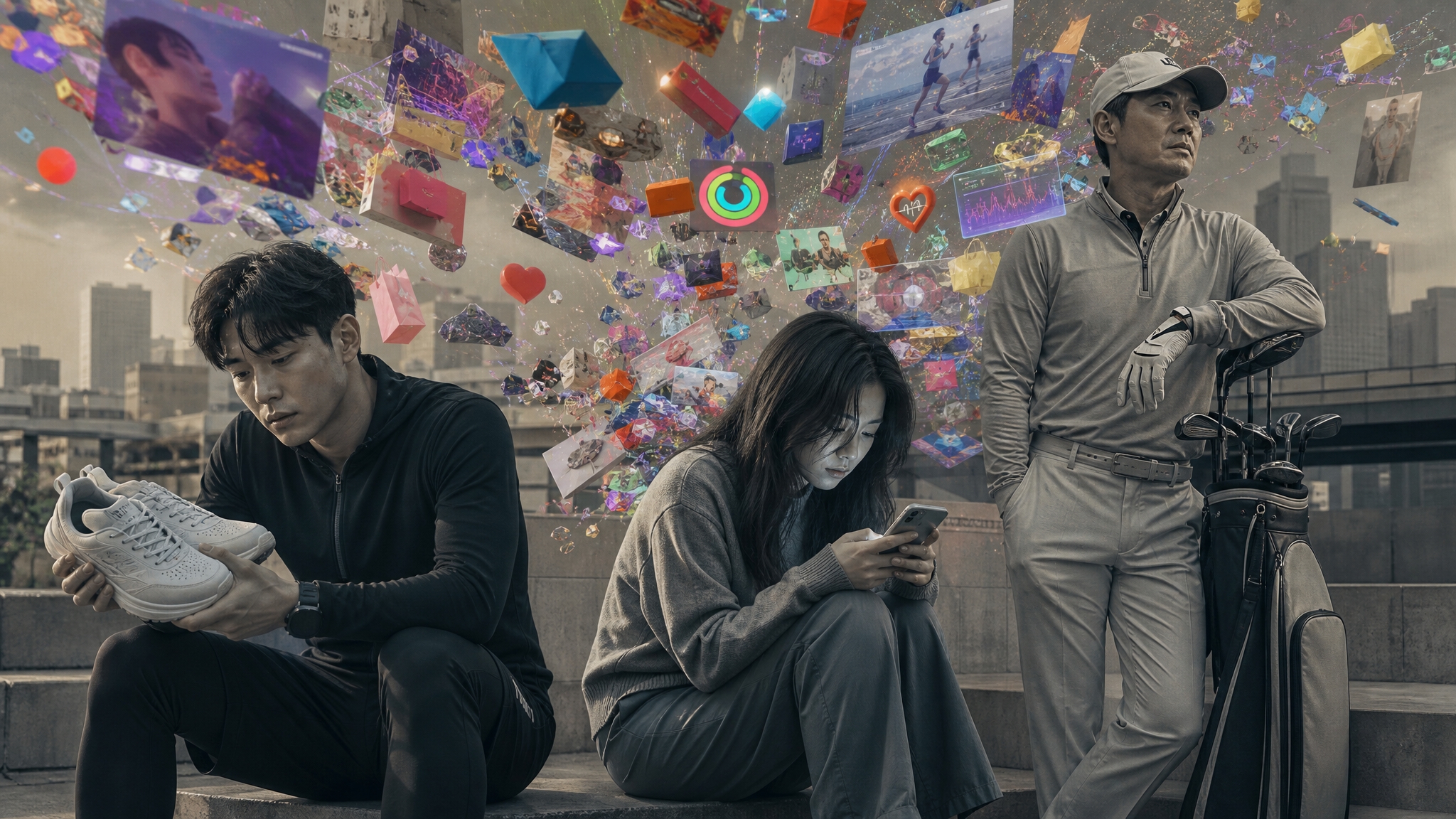
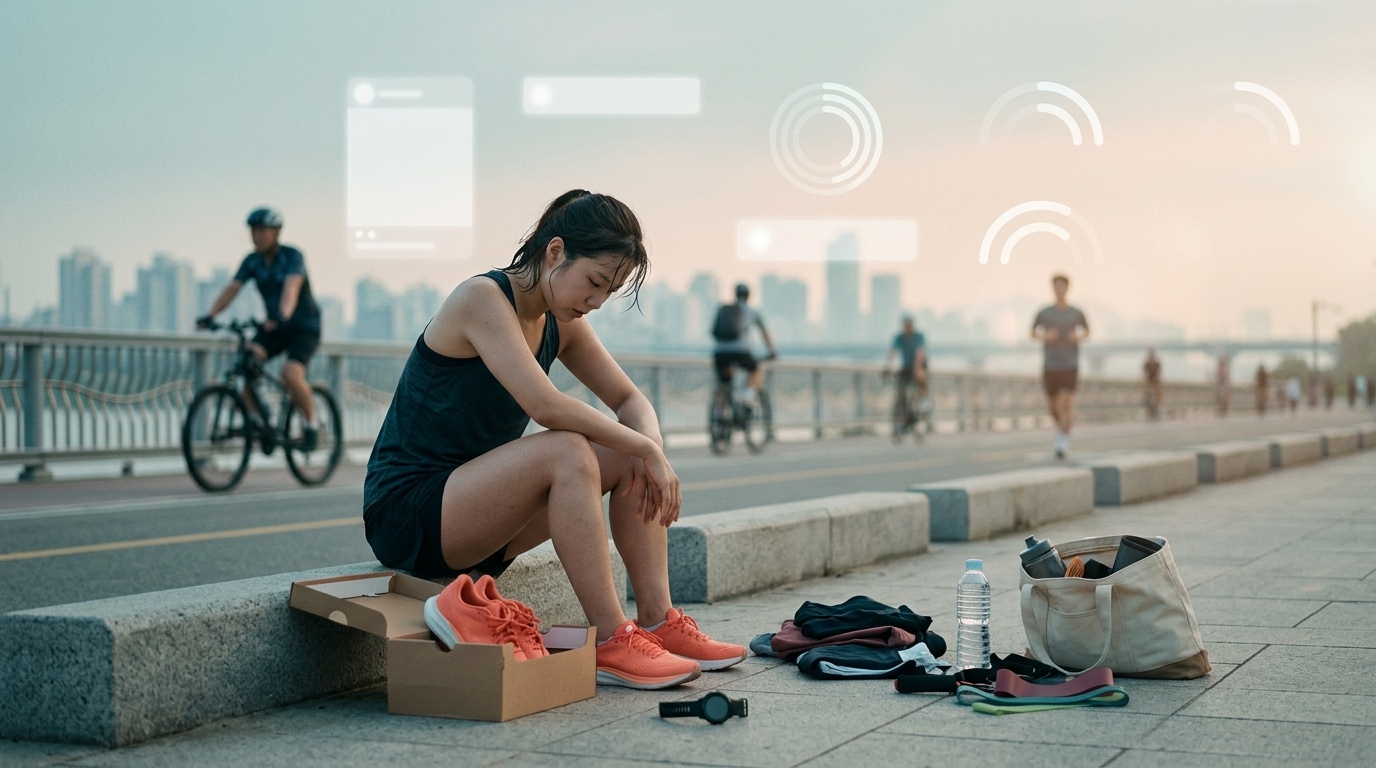
When a dedicated runner suddenly cannot bear the thought of lacing up their running shoes, South Korean netizens refer to the slump as run-taegi. When practicing swings or hitting the fairway starts feeling like an absolute chore, they call it gol-taegi. Both terms blend the activity (running or golf) with gwontaegi, the Korean word for a romantic rut or rough patch. While the term originally described the natural dip in passion and interest between long-term partners, it is now widely attached to workouts, casual pastimes, and everyday spending habits.
Entering one of these slumps does not necessarily mean walking away from the activity altogether. When running feels stale, people often buy fresh sneakers or new apparel; when golf loses its spark, they might test out new clubs or gadgets to rekindle the thrill. The goal is to shake up a routine that has grown predictable with new gear and fresh approaches. Rather than freezing consumer spending, this boredom often just channels it into new purchases.
Professor Emeritus Kim Ran-do of Seoul National University and the SNU Consumer Trend Analysis Center see this paradox, growing weary despite an endless flood of stimulation, as a defining current in Korean society heading into 2027. At a press conference introducing the book Trend Korea 2027 on September 30, the team put forward ‘Boredom Society’ as a signature keyword. What feels like a fleeting personal mood is, in reality, a window into broader shifts in society and consumer behavior.
Bored not by a lack of options, but by an overload
The boredom explored in the book functions quite differently from how boredom used to feel. In the past, it was largely rooted in scarcity: having nothing to do or lacking stimulation. Today, people grapple with boredom born of excess: even with short-form videos, streaming platforms, social feeds, real-time news, and shopping deals washing over them constantly, daily life can still feel flat and uninspiring.
People find themselves swiping for something better while in the middle of a clip, or checking their screens the second they stop at a red light. There is more content to choose from than ever, yet people linger on any single experience for far less time. Because we rush to the next dopamine hit before an experience can settle into a lasting memory or meaningful reflection, we are often left with a lingering sense of emptiness, a feeling of having consumed and done so much, yet holding onto so little.
Seen through this lens, slumps like run-taegi or gol-taegi are rarely just a matter of someone losing willpower. They capture the quiet exhaustion that comes from repeating an activity in an environment overflowing with new targets, personal records, high-end gear, and highlights from everyone else. When a hobby started purely for health or fun turns into something measured, compared, and posted online, the glow fades much faster whenever progress stalls.
How the suffix ‘-taegi’ packages complex emotions
Korean internet slang often evolves by lopping off part of a familiar word and tacking it onto another to describe modern dilemmas. The suffix -taegi, clipped straight from gwontaegi, is a prime example. Whatever activity you place before it, the compound instantly names the phase where your excitement has cooled off. Beyond running and golf, the suffix readily attaches itself to almost any hobby or repetitive daily pursuit.
Translating -taegi simply as boredom or burnout misses a subtle, essential shade of meaning. The expression implies a temporary dip in enthusiasm rather than an outright, permanent resignation. Much like weathering a rough patch in a relationship, it leaves the door wide open for reconciliation, serving as a lighthearted, quick way to share how you are feeling in the moment.
While such shorthand neatly summarizes a complicated headspace, it also carries the risk of framing systemic burnout as an individual flaw. A runner might dread their morning routine because of tight schedules, competitive pressure, or unrealistic goals, yet everything gets lumped under the catch-all label of -taegi. Trend Korea 2027 looks past the buzzword to highlight what really fuels it: relentless stimulation, rapid-fire consumption, and non-stop comparison.
‘Life ROI’: calculating time and relationships alongside money
Alongside the Boredom Society, the book introduces ‘Life ROI,’ an idea that imports financial and corporate logic straight into everyday life. ROI, or return on investment, weighs the returns generated against the capital and resources poured in. Life ROI applies that balance sheet far beyond money, running the numbers on careers, hobbies, travel, study, social ties, and how we budget our time.
When deciding whether to pick up an activity, people no longer just look at the price tag. They weigh how much time goes into prep and transit, whether the payoff matches the effort, and whether the experience yields tangible proof like photos or trackable stats. An activity that demands patience and offers uncertain outcomes often loses out to experiences that deliver swift, obvious gratification on a shorter timeline.
The very same math creeps into personal pastimes. If the pride of hitting a new milestone, physical changes, or validation from peers does not arrive as quickly as hoped, the intrinsic joy of moving fades, and the hobby starts feeling like a bad trade on invested time. Instead of learning an activity at an unhurried pace, people frequently turn to new gear or structured programs for a quick reset. Ultimately, terms like -taegi and Life ROI converge where leisure itself begins to be judged in the language of productivity and performance.
When efficiency governs connection, family moves to the center
When people begin calculating the “ROI” of their everyday lives, social circles often feel the pinch first. Relationships that demand extensive emotional labor and hours with uncertain payoff naturally fall away. Rather than maintaining a broad, loosely woven network, people increasingly focus on the small circle where trust already runs deep. It is a pragmatic choice: trimming the friction of social navigation while safeguarding genuine emotional comfort.
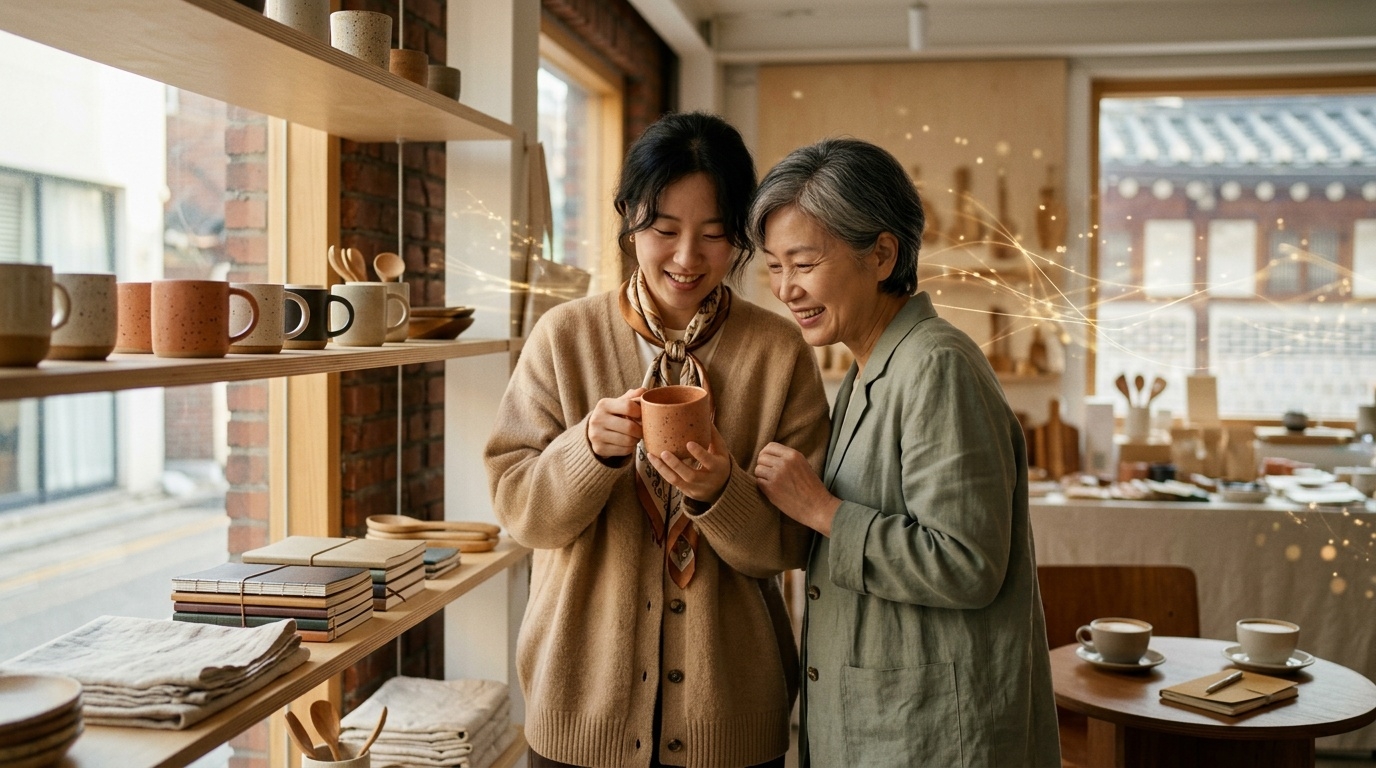
A telling reflection of this shift in Korea is the slang term eom-mi-sae, a blend of “mom” and a colloquial suffix used for someone single-mindedly devoted to something. It describes adult children who travel, shop, and share their everyday moments closely with their mothers. Family is no longer viewed merely as guardians or dependents; parents are becoming lifestyle companions with whom one shares leisure time, hobbies, and personal tastes.
While this dynamic doesn’t define every generation, its very naming signals an evolving understanding of family. Hangouts and weekend trips once reserved for friends or romantic partners are migrating into relationships with parents, turning family outings into genuine social media highlights. As people narrow the radius of their connections, the few bonds that remain grow far deeper.
As AI melts into the background, the “human edge” takes the lead
Interestingly, the top consumer trends for 2027 outlined in Trend Korea 2027 do not explicitly feature “artificial intelligence” in their headlines. As Professor Kim noted, this omission doesn’t mean AI is fading. Rather, like the smartphone before it, AI has quietly become an everyday essential. The defining question has shifted from what artificial intelligence can accomplish to what roles humans should claim once AI is everywhere.
Out of this landscape emerges the “Human Edge.” When generative AI can draft prose, design graphics, and structure strategic decks in seconds, basic technical polish ceases to be a true differentiator. Instead, personal discernment becomes the real asset: what choices were made, why a particular judgment was favored, and who stands behind the final result.
In many ways, the subtle quirks of handcrafted effort, small imperfections, and the trial-and-error of human process may carry greater value than machine-curated perfection. Here, humanity isn’t about outperforming an algorithm on raw capability. It is the knack for discerning meaning among endless options, reading the room’s unspoken context, and taking responsibility for the paths we choose.
We got more efficient, so why does life feel flatter?
The restless boredom of modern life, calculated life-ROI, and the search for a human edge are tightly intertwined. Digital tools and AI have dramatically cut down the time required to complete tasks and retrieve information, allowing us to compare options faster than ever. Yet having more time on paper doesn’t automatically mean we have more capacity to savor an experience. We find ourselves in an awkward paradox: our daily routines run with unprecedented frictionlessness, yet genuine fulfillment feels just out of reach.
For brands, this pervasive ennui opens up fresh territory. When someone burns out on running or golf, there is always a new pair of shoes, a novel route, or upgraded gear to rekindle interest. Consumers pick up these new tools hoping to reignite their enthusiasm, though it remains worth asking whether such novelty deepens the pastime or simply swaps one fleeting distraction for another.
Playful buzzwords like run-tae-gi (running burnout), golf-tae-gi, or eom-mi-sae are informal cultural snapshots rather than rigid academic concepts. They don’t imply that every person treats daily life like an investment portfolio. Yet the resonance of these terms proves that questions of boredom, belonging, and efficiency weigh heavily on people’s minds. Looking ahead toward 2027, the real challenge may not be chasing the next wave of fresh stimulation, but relearning how to stay rooted in an experience long enough to uncover its meaning.
Sources: Press conference for the publication of “Trend Korea 2027”; Asia Business Daily, September 30, 2026; Seoul Economic Daily, September 30, 2026.