Table of Contents
Sauna Spending by Seoul-Area 20- and 30-Somethings Rose 36% in September
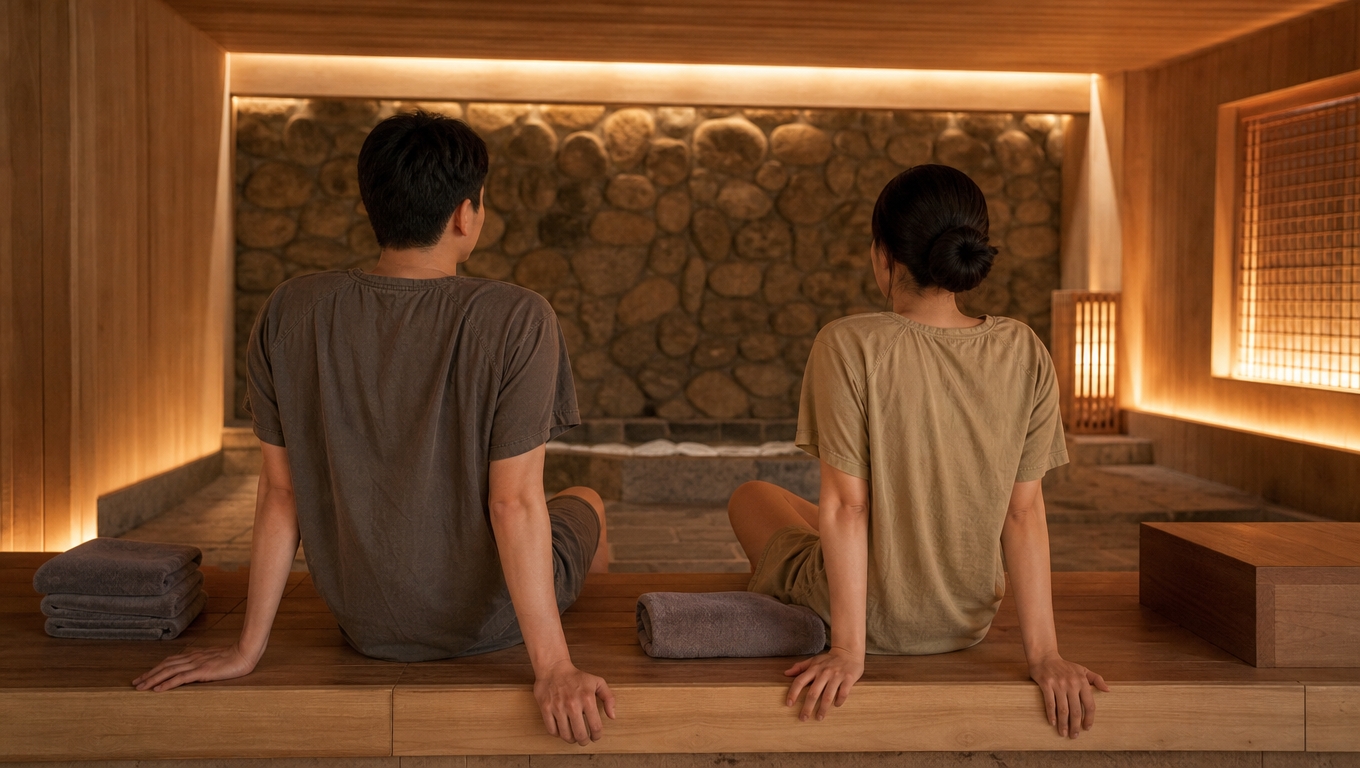
Spending at saunas by people in their 20s and 30s in Seoul and Gyeonggi Province rose 36% in September 2026 from the same month a year earlier. It followed increases of 33% in July and 34% in August, making three straight months of growth in the 30% range. The figures come from an analysis of Samsung Card transaction data reported by the Korea JoongAng Daily on November 11. The same data shows late-night visits to restaurants and bars falling while spending on exercise, healthy food and bathing grows.
The analysis covers payment records from 2023 through September 2026. Samsung Card had 12.23 million customers at the end of September. Because the data comes from one card company’s customers, it cannot show whether the same people who cut back on nights out spent that money at saunas. Read side by side, though, the spending categories show two things rising together in young people’s budgets: activities that work the body and activities that rest it.
Two places come up whenever Korean bathing culture is explained. A jjimjilbang combines a bathhouse with heated rooms and lounge areas, and a sauna is a facility that uses heat to warm the body. The new growth figures refer specifically to spending at sauna businesses. They suggest a link between these familiar bathing spaces and how young people relax, and the same trend continues in other parts of the payment data.
Late-Night Card Payments Have Been Falling Since 2023
Going back a few years, one strand of the change starts with late-night eating and drinking. From January to September 2023, people in their 20s and 30s made an average of 7.2 card payments each at restaurants and bars between 10 p.m. and 3 a.m. Over the same months of 2026, that dropped to 6.4. In Samsung Card’s analysis, the number fell every year. This compares the same stretch of each year, not one unusual month.
The measure covers restaurant and bar visits from late evening into the small hours. Where the sauna figure measures money spent, this one counts payments per person, a sign of how often young adults used their cards at night. Because the decline has run for several years, the analysis presents it as a change in daily rhythm that supports its reading of a shift toward recovery spending.
Its meaning gets clearer next to the exercise and diet figures. Late-night restaurant and bar payments went down, but in other categories young customers used services at higher rates than the comparison age group. The question is less whether spending fell than where it fell and which categories stood out. The focus moves from fewer nights out to how health and rest spending is put together.
Since 2025, Interest Has Reached Enzyme Baths and Mugwort Moxibustion
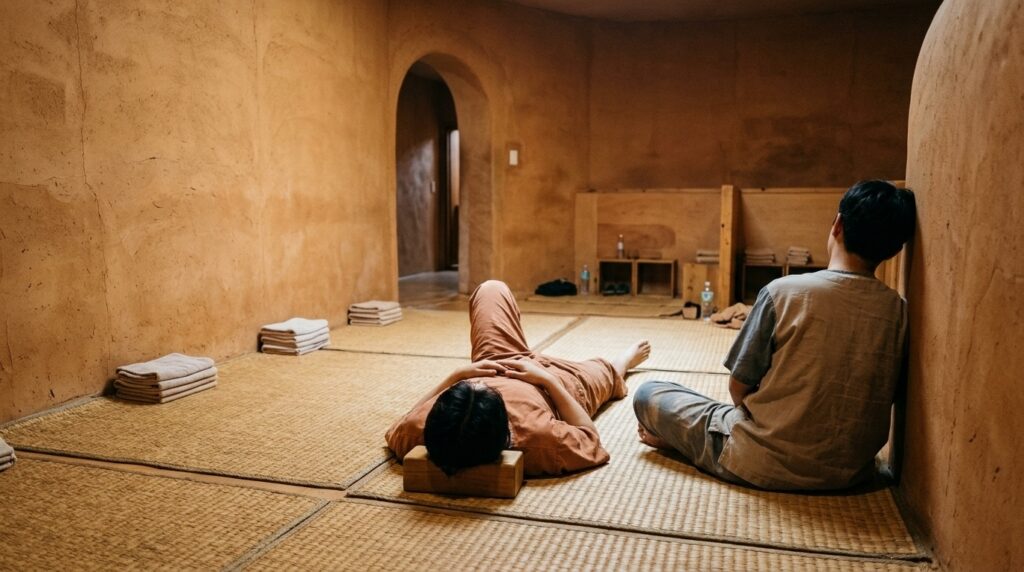
There was change inside bathing and heat treatments too. Transactions at businesses offering enzyme baths and mugwort moxibustion, services long used mostly by middle-aged and older customers, were 2.6 times higher in September 2026 than in January 2025. An enzyme bath warms the body with the heat produced by fermentation. Mugwort moxibustion applies heat from burning mugwort to parts of the body. The analysis, in short, covers heat treatments beyond the sauna.
The enzyme bath and moxibustion figure compares transaction counts in January 2025 and September 2026. The sauna figure, by contrast, is a year-over-year change in spending, so the periods and measures differ. What both show is more business at bathing and heat-treatment places. With services once associated with older customers now in the picture, recovery spending reaches past the ordinary sauna.
The sauna trend itself ran from summer into autumn 2026. Spending by people in their 20s and 30s in Seoul and Gyeonggi rose more than 30% year over year in July and August, then again in September. Three months in a row says more than a single September number. In this data, bathing appears as spending on rest, set alongside exercise as spending on effort.
More Young People Exercise, and Running Spending Is Up
From January to September 2026, 19.7% of customers in their 20s and 30s paid at sports-related businesses, compared with 14.3% of customers aged 40 and older. This measure is not about how often they paid or how much, but about the share of customers who used those businesses at all. Over the same period, sports spending was spread more widely among younger customers.
For specialty running stores, the data gives two measures, one for participation and one for spending. The share of people in their 20s and 30s shopping at these stores grew 2.36 times over three years, and spending per person rose by 31,000 won. More young customers are using running shops, and each one is spending more. Within exercise spending, running stands out as the activity driving the change.
In this data, exercise and saunas are two different kinds of health spending. Sports businesses capture moving the body, and sauna payments capture bathing and rest. Health spending, seen this way, includes the rest that comes after the workout and not only the workout itself. The diet figures show the same interest carrying over into what people eat.
At Mealtimes, Low-Sugar and High-Protein Purchases Stand Out
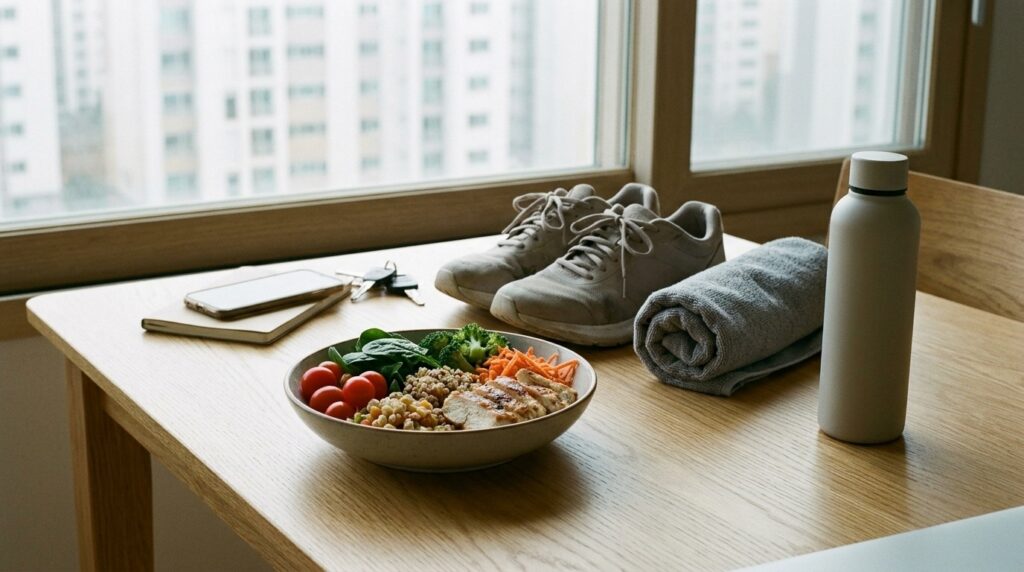
Food spending also set people in their 20s and 30s apart from those 40 and older. Younger customers were 22% more likely to use restaurants specializing in healthy meals such as salads and poke. Poke is a dish served with its ingredients in a single bowl, and the analysis groups it with salads under healthy-meal restaurants. This is a separate point from the fall in late-night dining: it is about which kinds of restaurants young people choose.
People in their 20s and 30s were also 87% more likely than those 40 and older to use online stores selling chicken breast and other protein foods, and 45% more likely to buy low-sugar, zero-sugar and high-protein products at convenience stores. Health-minded food spending was not limited to specialty restaurants. It showed up in online shopping and at convenience stores as well. In every case, the comparison group was customers aged 40 and older.
Each of the three figures points to a different place where people spend. Healthy-meal restaurants reflect where people eat out, protein food stores are a shopping channel, and the convenience store figure is about buying products with particular features. Younger customers were more likely to spend in all three. Along with sports and bathing businesses, everyday food purchases form part of the background for the recovery-spending reading.
From Spending to Work the Body to Spending to Rest It
Samsung Card describes the trend as “recoverynomics,” an economy built around recovery. The idea is that spending on a healthy life is widening beyond diet and exercise to activities aimed at physical and mental recovery. That is why the analysis puts sauna spending, sports business use and health food purchases together. Bathing and rest are being read as part of health spending.
“People in their 20s and 30s are actively investing not only in healthy diets and exercise but also in physical and mental recovery through activities such as saunas and bathing,” a Samsung Card representative said. “This reflects the spread of ‘recoverynomics.'” In this analysis, “recovery” does not describe the effect of any single service. It is a word that ties together the direction of spending seen across several industries.
That brings the story back to September’s rise in sauna spending, now set in a wider picture of everyday spending. Fewer late-night restaurant and bar payments sit in the same analysis as the exercise, diet and bathing figures. The next question is how long the trend lasts. Later data will show what place Korea’s familiar bathing spaces keep in young people’s recovery spending.
Source: Korea JoongAng Daily, November 11, 2026 (analysis of Samsung Card transaction data from 2023 through September 2026).