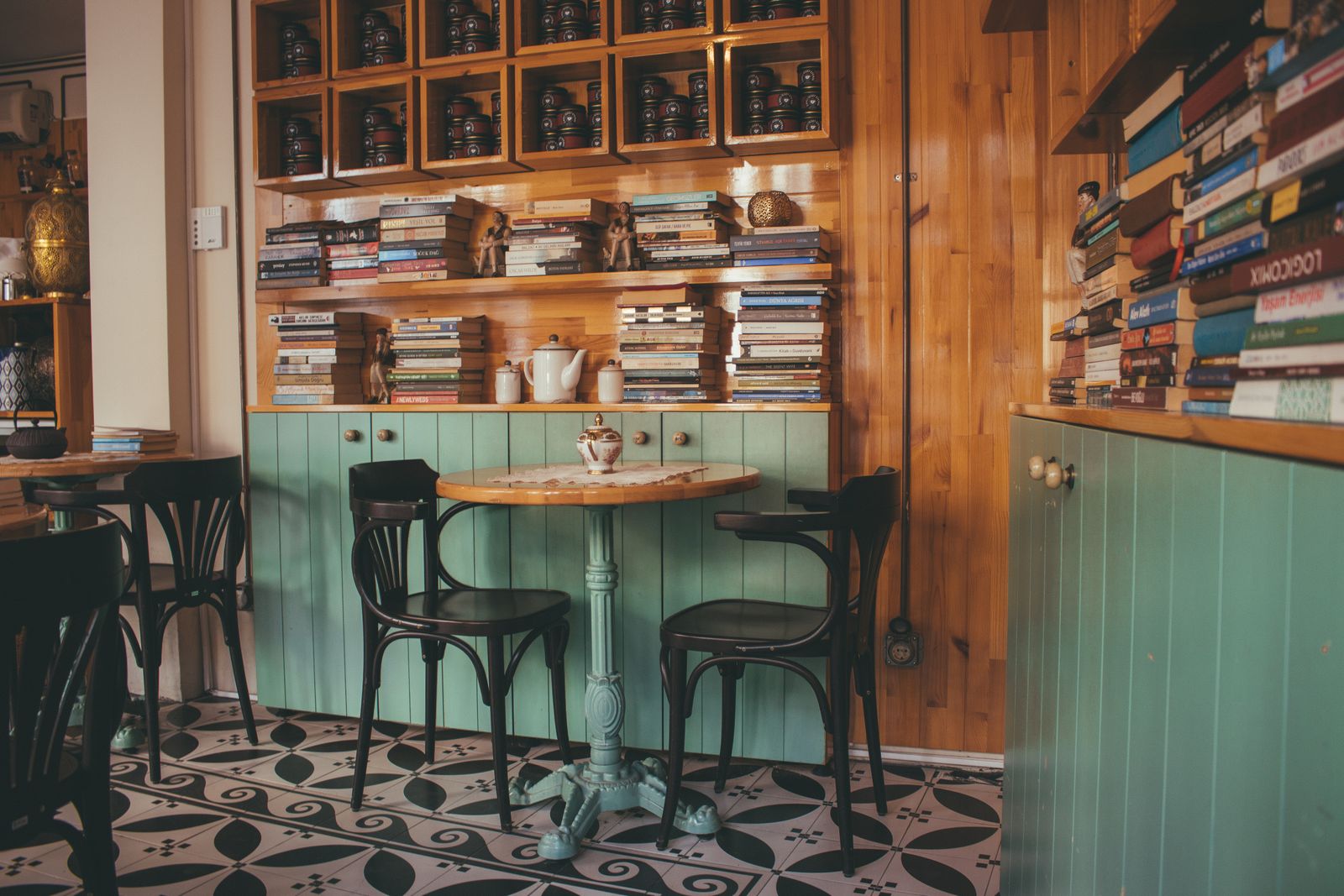
The sign on the wall at Cafe IO3 in Seongsu-dong doesn’t ask you to bring your own tumbler. It charges you ₩1,000 (about $0.75) if you don’t. “Have Bottle, Save Earth” is painted right next to the price list, and the barista didn’t blink when I forgot mine and got the surcharge added to my receipt. No discount for doing the right thing — a small tax for not bothering. It’s a tiny flip in framing, but it tells you something real about where Seoul’s cafe culture is heading in 2026.
According to Ye-Jin Han, an urban sociologist who visited 87 newly opened cafes across Seoul over six months for LetSeoul, the city’s cafe industry rallied this spring around a shared keyword unveiled at February’s Seoul Cafe & Bakery Fair: B.E.Y.O.N.D — Better Community, Everyday Wellness, Your Moment, Original Local, Nature Forward, and Digital Transformation. The pitch is that cafes are no longer just selling coffee; they’re organizing themselves around what kind of “third place” function a visitor actually needs that day.
You can see each letter of that acronym doing real work if you know where to look. Glow Seongsu put 140 of its 200 seats on outdoor terraces, deliberately blurring the line between cafe and park so strangers at neighboring tables end up making eye contact — that’s “Better Community.” A few blocks away, Quiet Space Seongsu went the opposite direction: of 30 total seats, 15 are solo seats, ten of them behind full privacy partitions, no music, phone calls banned — Han reports it’s been nicknamed “Seoul’s Quietest Cafe,” and that’s “Your Moment.” A temple-stay-style cafe opening in Samcheong-dong this spring pairs every coffee with a 10-minute meditation coupon for “Everyday Wellness,” while a zero-waste bakery in Yeonnam-dong takes back its own paper bread bags for a free item next visit, folding “Nature Forward” into something you actually participate in rather than just read about on a wall.
None of this changes the basic math behind why Seoul has this many cafes in the first place: small apartments that don’t really lend themselves to hosting guests, a study culture that treats a cafe table as a legitimate second office, and a visual culture that demands every space photograph as well as it pours. What’s changed is that the cafes themselves seem to know it, and they’re starting to specialize — one for solitude, one for community, one for a ten-minute reset between meetings — instead of trying to be the photogenic backdrop for all of it at once.
So if you’re picking a cafe in Seoul right now, the useful question isn’t “which one has the best coffee.” It’s “what do I actually need this hour to be” — because somewhere within a few blocks, there’s very likely a cafe in this city that built itself specifically to answer that.
Sources: LetSeoul, “Seoul Spring Cafe Trends 2026: The B.E.Y.O.N.D Era” (Ye-Jin Han, Feb. 14, 2026).