
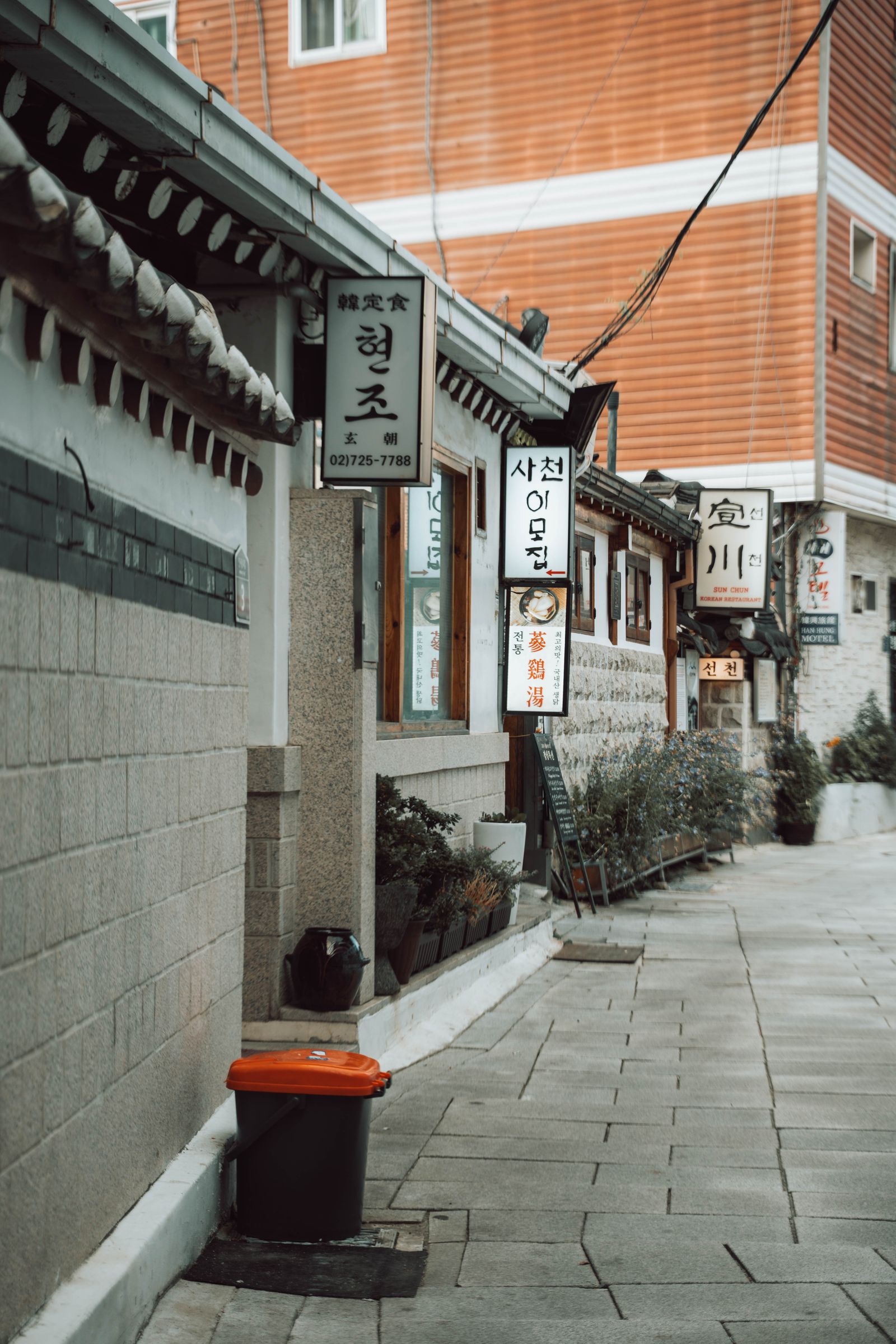
Get off at Mangwon Station, two stops past Hongik University on Line 6, and nothing about the exit signals you’ve arrived anywhere special. Climb the stairs and the first thing that hits you is the smell of fish cakes frying at a market stall, not a curated storefront. An elderly woman is fanning a grill of tteokgalbi. A coffee roaster’s exhaust fan is humming somewhere down the alley. It doesn’t look like a destination. That’s the entire point.
Seoul-based travel writer Ji-Hoon Park, who’s been tracking the neighborhood since first wandering off at the wrong subway stop back in 2018, describes Mangwon-dong in a recent LetSeoul guide as the city’s “most neighborhood-like neighborhood” — deliberately contrasted with what happened to Seongsu-dong and Yeonnam-dong, both of which started out quiet and ended up as full-blown destinations. Mangwon Market got a renovation push in 2019 after being named a Seoul Outstanding Market — cleaner floors, brighter lighting, a few younger vendors moving in — but Park notes the essence never changed: the same elderly women still run the fish cake stalls, the same hand-cut kalguksu shop still rolls noodles by hand for about ₩6,000 a bowl.
What keeps it from tipping into the next Seongsu is partly arithmetic. By Park’s count, Mangwon-dong now has more than 30 cafes, but the resident-to-traveler ratio still sits around 7 to 3 — locals still outnumber visitors on any given afternoon, which is a very different balance than the cafe-dense, Instagram-dense neighborhoods nearby. The market quiets by early evening as residents head home for dinner, then picks back up around 5 or 6 as the same residents come back out to buy side dishes for that night’s meal. That second rush is for the neighborhood, not for anyone visiting it.
If you want to actually feel the difference, the move isn’t to photograph the market — it’s to shop in it. Buy fruit, buy a side dish, eat the tteokgalbi standing up the way the regulars do. Then walk the ten minutes down to Mangwon Hangang Park, where the riverside is wide enough that you can actually find open grass on a weekend, unlike the more famous picnic spots at Yeouido. Go on a weekday if you can — Park’s reporting notes weekend brunch spots here already pull lines now, which is usually the first sign a quiet neighborhood is about to stop being one. Mangwon-dong hasn’t gotten there yet. That’s worth seeing while it’s still true.
Sources: LetSeoul, “Mangwon-dong Guide 2026: Seoul’s Last Real Neighborhood Where Markets Meet Cafes” (Ji-Hoon Park, Jan. 23, 2026).