
Table of Contents
The Term ‘Summer Off-Season’ No Longer Fits
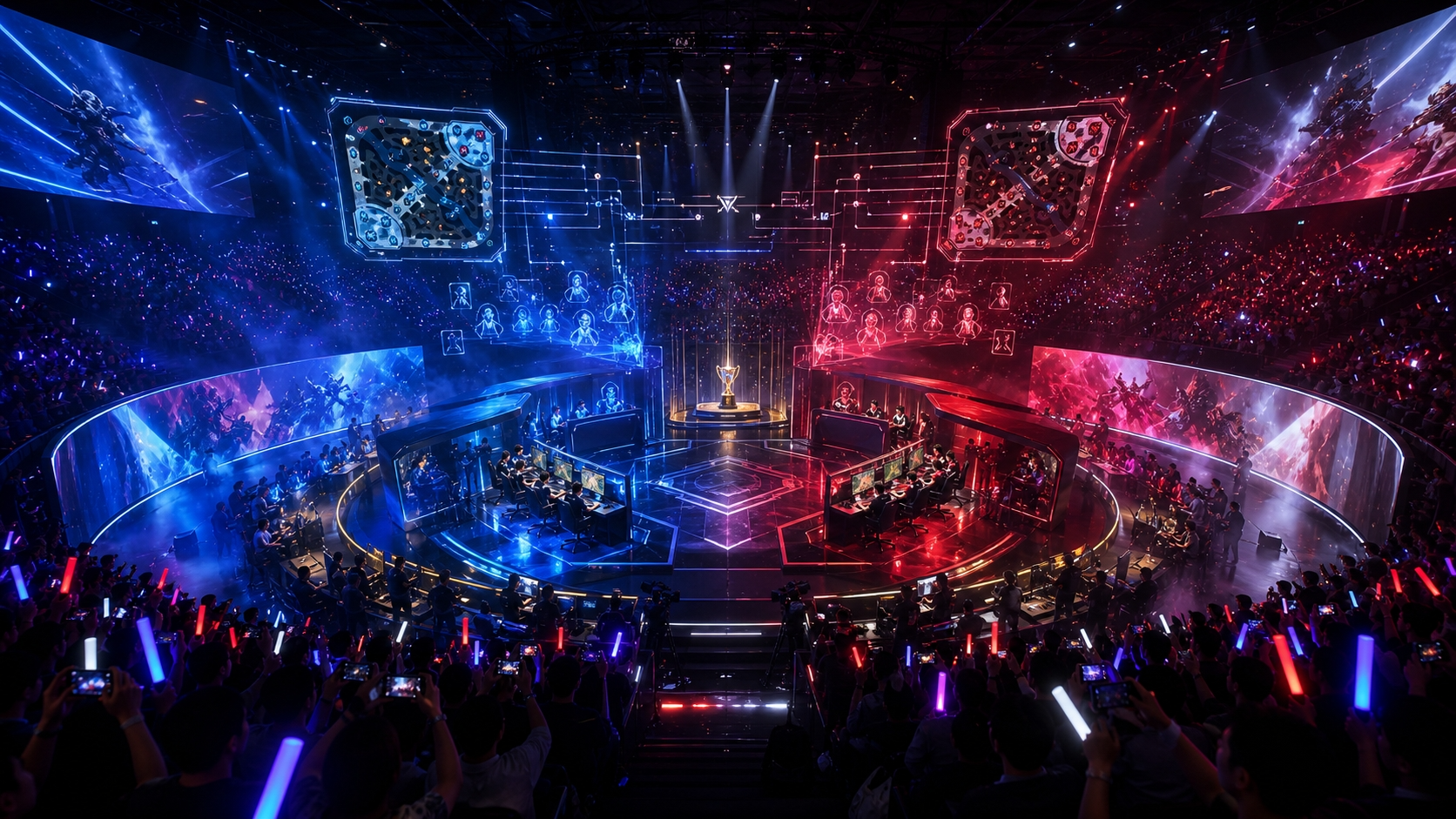
In League of Legends esports, summer has typically been viewed as a time to prepare for upcoming international tournaments and league schedules. But July 2026 paints a different picture for Korean esports. All 10 LCK teams entered the ‘2026 LoL KeSPA Cup,’ which kicked off on July 20, while national team selection and preparation for the Asian Games—set to take place in Aichi-Nagoya, Japan, this September—are already underway. The domestic league, a short-term cup tournament, and a multinational competition are now colliding on the same calendar.
On the surface, these two events have distinct characters. The KeSPA Cup is a domestic tournament where pro teams test roster depth and tactics, while the Asian Games is a comprehensive sports stage where players compete under national banners instead of team uniforms. But from the perspectives of players and teams, it’s hard to separate them, given how summer performance, playing opportunities, and fan attention influence each other. This is a snapshot of Korean esports being both an industry and a national representative sport.
For Korean fans, even familiar players’ matches now come with a shifted viewing context. The KeSPA Cup shows how deep a team’s player pool is, while Asian Games news reveals who might meet national team standards. For overseas fans following franchise leagues in the U.S. or Europe, this is an intriguing contrast. In Korea, club competitiveness and national team competitiveness are discussed simultaneously within the same player ecosystem.
What It Means That All 10 LCK Teams Entered the KeSPA Cup
The 2026 LoL KeSPA Cup runs from July 20 to August 18, roughly a month. All 10 LCK teams are participating. In the qualifiers, teams are split into two groups of five for a single-round robin, with the top four from each group advancing to the knockout stage. The first phase of the knockout uses a modified Swiss format, pitting teams with similar qualifying ranks against each other, while the final stage is a best-of-five series to crown the champion.
The schedule is also worth noting. Qualifiers and part of the knockout, from July 20 to August 11, are held online, while the latter half of the knockout on August 17 and the finals on August 18 take place offline at the Daejeon Esports Stadium in Yuseong-gu, Daejeon. Daejeon is a city that has steadily invested in gaming industry and esports infrastructure. Placing the final two days as live events goes beyond mere venue choice—it’s an attempt to complete a short tournament with a spectator experience.
What’s notably different this year is that the tournament isn’t just a showcase for starting lineups. An integrated roster, allowing flexible use of players from both the LCK and LCK Challengers League, is a key variable. In the regular season, a single loss directly burdens standings, but a cup tournament can offer rookies and substitutes practical experience against strong opponents. Fans get to see not just whether star players participate, but which teams are producing the next generation.
The Asian Games Expands to 11 Medal Events
The Aichi-Nagoya Asian Games esports program has confirmed 11 medal events. These include League of Legends, PUBG Mobile Asian Games Version, Pokémon Unite, Honor of Kings, Mobile Legends: Bang Bang, Identity V Asian Games Version, Naraka: Bladepoint, Gran Turismo 7, eFootball series, and Puyo Puyo Champions. Fighting games are grouped into a single team event combining Street Fighter, Tekken, and The King of Fighters series.
It’s important to get the numbers right here. While the overall Asian Games features 11 medal events, the Korea e-Sports Association plans to send teams for 9 of them. Korea will select players for League of Legends and PUBG Mobile Asian Games Version via direct appointment rather than trials, while most other events will use selection tournaments to pick representatives. Interpreting this as ‘Korean players competing in all 11 events’ would be inaccurate.
This distinction means national team operations aren’t determined solely by a game’s popularity. International competitiveness, player pool, the event organizer’s tournament structure, feasibility of trials, and training conditions all factor in. The Asian Games first adopted esports as an official medal event at the 2023 Hangzhou Games, and the number of events has increased for 2026. But as the event list expands, it becomes harder for any single nation to allocate equal resources across all titles.
Selection Is More Complex Than ‘Picking Famous Players’
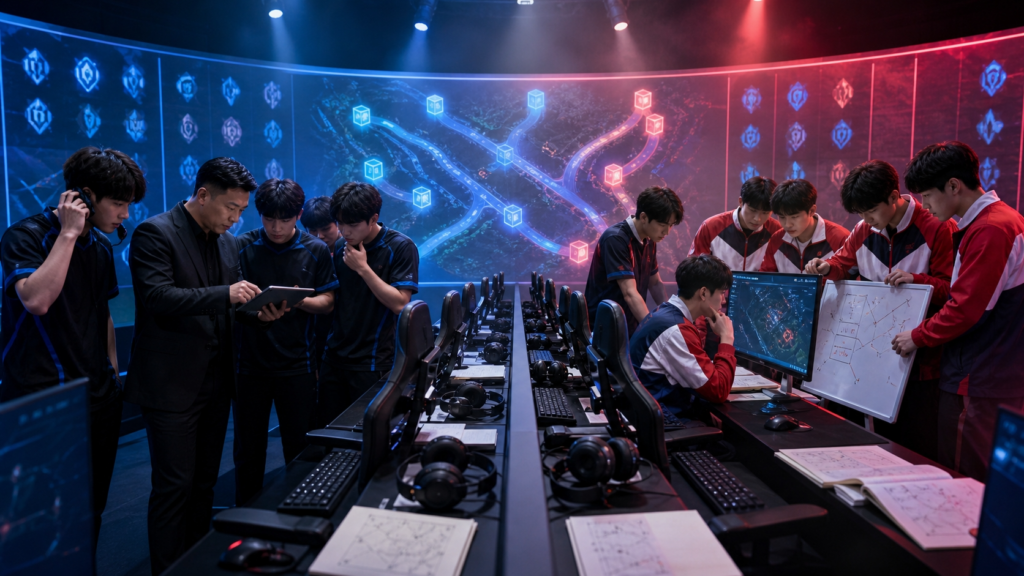
Stardom certainly plays a role in Asian Games national team selection. However, according to the criteria released by the association, they comprehensively review international tournament achievements, rankings from qualifying events, and results from association-hosted or -organized competitions. Participants must also meet requirements like professional athlete registration in the relevant title, age limits, owning an account in their name, and ability to travel abroad and participate in training camps. Being a highly skilled online player alone doesn’t guarantee a spot.
Team events, in particular, face stricter evaluation. In games like League of Legends, where five players move in sync, simply gathering five individually talented players isn’t enough. They need to align communication styles, pick/ban strategies, and coaching systems in a short period. Players who compete against each other on their respective teams must share a common goal during national team training. Korea’s gold medal in League of Legends at the Hangzhou Asian Games raises expectations, but also creates greater pressure.
There are also events like fighting games, racing, and sports simulations, where individual judgment plays a larger role. These titles may not receive the same public spotlight as the LCK, but on the Asian Games stage, they carry equal medal potential. The importance of national team trials lies in their role as a channel to spread attention beyond popular games to other competitive titles. To gauge the breadth of Korean esports, looking only at League of Legends is insufficient.
A Month of Club Cup Reflects Autumn for the National Team
The KeSPA Cup is not a national team trial. Results alone don’t determine Asian Games representatives. Yet this summer, with both schedules overlapping, can serve as a public testing ground for players. Fans and coaches can observe concentration in single matches, adaptability to new combinations, growth of substitute players, and decision-making under high pressure. Information invisible in regular-season stats often emerges in short tournaments.
The tournament is exclusively streamed via Disney+. The fact that LCK teams’ cup matches can be watched outside traditional gaming-focused platforms is another change. It signals that esports viewing is no longer just a habit for game fans but content that major streaming services want to secure. However, whether exclusive streaming actually attracts new viewers or reduces accessibility for existing fans is a metric to check after the tournament ends.
When the KeSPA Cup champion is decided on August 18, Korea’s esports summer won’t be over. Waiting beyond that is the Aichi-Nagoya Asian Games, running from September 9 to October 4. Which team will prove its roster depth? Which event’s national representatives will step onto the international stage? And where will Korea focus its resources in the expanded esports medal landscape? These are the next questions.
Sources: Korea e-Sports Association and industry reports from GameView and TechM, July 2026.