
Table of Contents
Seoul’s cafes aren’t just for coffee anymore
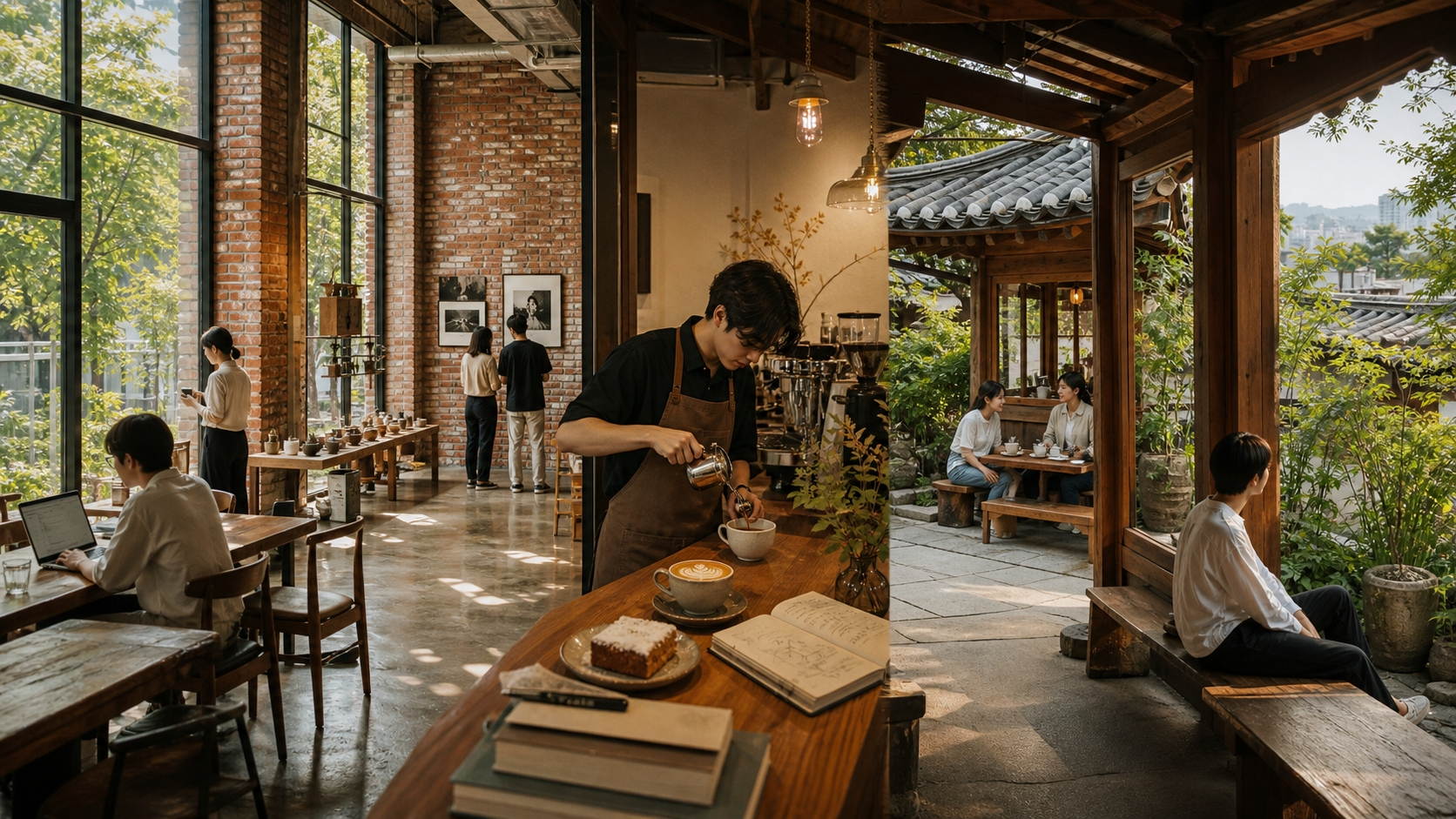
Seoul’s cafes aren’t just for coffee anymore. For some, it’s a spot to catch a breath before work; for others, it’s a workspace to open a laptop and keep going; and for many, it’s a living room to naturally hang out before or after meeting friends. The evolution of cafes as a ‘third place’—a term for everyday spaces between home and work or school—was clear at the 2026 Seoul Cafe Week, held from July 9 to 12 at COEX Magok.
The ‘third place’ concept was proposed by American sociologist Ray Oldenburg. If home is the first place and work or school the second, the third place is where anyone can drop by and casually mingle with others. Seoul’s cafes are often linked to this idea because, in a city of cramped homes and busy routines, they’ve practically taken on that role.
This year’s first-ever Seoul Cafe Week was a full-scale exhibition covering the entire cafe industry: coffee beans, tea, bakery items, desserts, beverages and alcohol, raw materials, equipment, interior design, home cafes, franchises, and startups. It wasn’t just about finding ‘the trendy cup of the moment’; it mattered because it explored how each shop builds relationships with customers through flavor, space, service, and operations. What made this exhibition stand out wasn’t just promoting new menus—it highlighted the cafe as an entire industrial ecosystem. From bean roasters to bakery ingredient suppliers, interior designers to franchise consulting firms, all gathered in one place, letting visitors feel how many industries are connected behind a single cup of coffee.
Seongsu-dong and Ikseon-dong create ‘reasons to stay’ in different ways
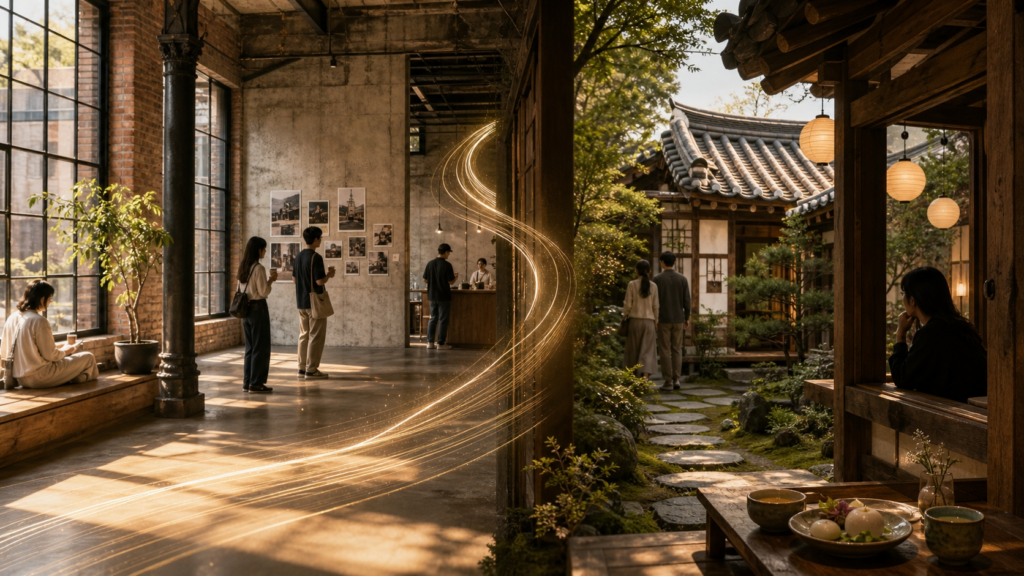
Seoul’s cafe map shows this well. In Seongsu-dong, old factories and warehouses have been reborn as cafes, exhibition halls, and showrooms, blending coffee-drinking with shopping, pop-ups, and gallery visits. In contrast, Ikseon-dong draws on the density of hanok alleyways and the vibe of small shops, where the space’s own atmosphere becomes the reason to visit. Both neighborhoods share a common thread: cafes have moved beyond being ‘places to consume menus’ and become part of how people walk through the city and spend their time.
Globally, cafe culture often ties into a city’s identity. Think of Melbourne’s specialty coffee scene, Tokyo’s kissaten, or Paris’s sidewalk cafes—each city has woven cafes into its daily rhythm in its own way. What makes Seoul’s cafe landscape intriguing is that places like Seongsu-dong, reinterpreting industrial spaces, and Ikseon-dong, preserving the charm of traditional hanoks, coexist within the same city.
For travelers visiting Seoul from abroad, cafe tours have become a key part of K-content trips. It’s fun to hunt down cafes featured in dramas or variety shows, but crafting a course that enjoys the neighborhood’s own vibe—like in Seongsu-dong or Ikseon-dong—lets you dive deeper into Seoul’s cafe culture. Just keep in mind that popular spots might have long wait times, so check hours and peak times before heading out.
The fatigue of hot places—how should cafes hold up?
But the charm of a hot spot can quickly turn into fatigue. Long lines, excessive photo-taking, and seating layouts focused only on high turnover can turn a cafe from a cozy third place into a ‘stop-by just for proof’ spot. For cafe culture to last, it needs spaces that feel comfortable even when you’re alone—not just photogenic ones—along with reasonable noise levels, smooth foot traffic, clear service guidelines, and operations that coexist with the neighborhood.
It’s worth noting this exhibition also covered home cafes and franchise startups. It means that while the home cafe trend—brewing your own beans at home—is growing, franchise systems for individual entrepreneurs are also diversifying. These two trends might seem opposite, but they both start from the same desire: to consume cafe experiences in one’s own way. If events like Cafe Week become annual, they could become a go-to spot for consumers to catch the year’s cafe trends at a glance. If such comprehensive exhibitions keep up, they’ll likely be useful for both industry insiders and consumers.
The ‘Dubai Chewy Cookie’ craze shows the speed and shadows of trends
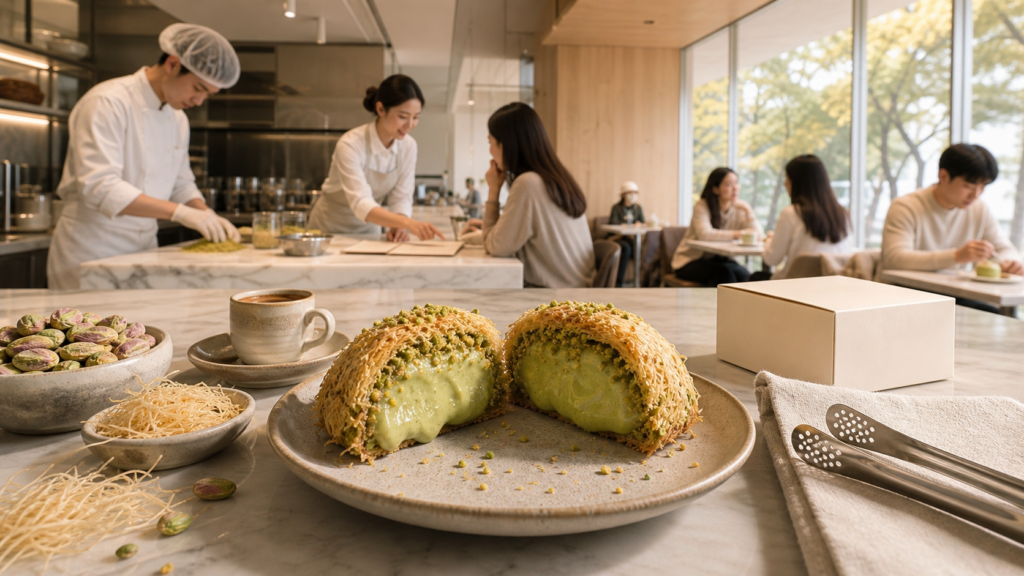
One dessert that symbolized 2026’s flavor wave is the so-called ‘Dubai Chewy Cookie’ or ‘dujjjankku.’ Made with kataifi and pistachio cream wrapped in marshmallow dough, this treat went viral for its contrast of a crispy inside and chewy outside. According to Yonhap News, packaging orders for this cookie on Baedal Minjok jumped 321% in January compared to the previous month, and search volumes surged 25 times from two months earlier. At some shops, it became an ‘open-run’ item selling out right after opening.
The name ‘Dubai Chewy Cookie’ itself reveals its roots. The original was ‘Dubai chocolate’ popular in the UAE—kataifi noodles and pistachio cream wrapped in chocolate. As this combo spread globally via social media, Korean cafes put out a twist: wrapping it in chewy cookie dough instead of chocolate, earning the nickname ‘dujjjankku.’ Rather than copying the original recipe, they reimagined it for Korean tastes and cafe menus.
But enjoying a trend requires a calmer eye. Supply instability for pistachios and kataifi has pushed up prices, and the rapid increase in sales outlets has led to reports of hygiene and unlicensed operations. The Ministry of Food and Drug Safety announced it would inspect around 3,600 shops making and selling related desserts. That’s an unusually large scale—and it shows how explosively many shops started handling these items in a short time. New pop-ups or small startups might lack adequate hygiene infrastructure, so as a consumer, don’t blindly trust low prices or long lines—check the shop’s hygiene yourself. If you have nut allergies, definitely check for pistachio content.
In the end, what are we really consuming at cafes?
So, Seoul Cafe Week, the cafe scenes in Seongsu-dong and Ikseon-dong, and the Dubai Chewy Cookie craze all boil down to one question: What are we consuming at cafes? The answer isn’t just coffee or dessert. We’re also consuming the joy of discovering new flavors, conversations sharing tastes, the leisure of being alone, and the experience of briefly syncing with a neighborhood’s rhythm in a new area.
Good cafe culture isn’t built only on the fastest-selling menu or the most Instagrammable interior. It’s about tasting trends while keeping an eye on safety, price, and the context of the space—and respecting the right to stay long in a shop that welcomes it. That’s what could make Seoul’s cafes better third places in 2026. The price of a cup of coffee includes not just the beans but the cost of maintaining the space, the labor of those serving you, and the relationship with the neighborhood. Next time you push open a cafe door, it might be worth pausing to think about the layers of story inside that cup.
Sources: COEX Magok 2026 Seoul Cafe Week guide, Segye Ilbo on-site coverage, Yonhap News.