Table of Contents
Comeback Calendars Used to Drop at Midnight, Date First
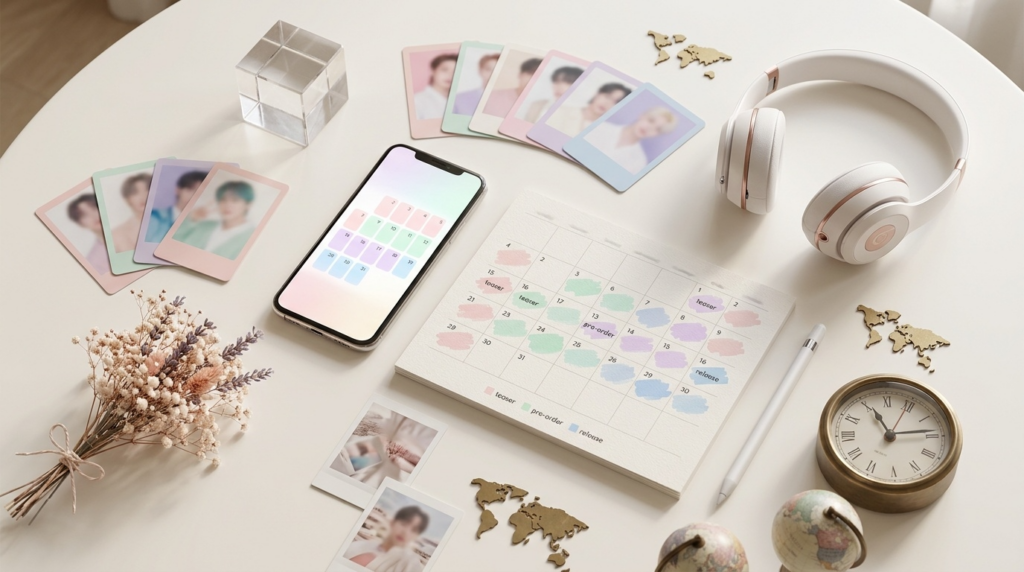
If you’re a K-pop fan, chances are you’ve saved a comeback calendar at least once: album title, release date, concept photos, tracklist, music video teaser, showcase, laid out with no gaps. Once that schedule went public, fans set midnight alarms and checked exactly what was coming on which day. This format is still incredibly effective — for international fans especially, it lets you plan around the time difference and know when you can actually take part.
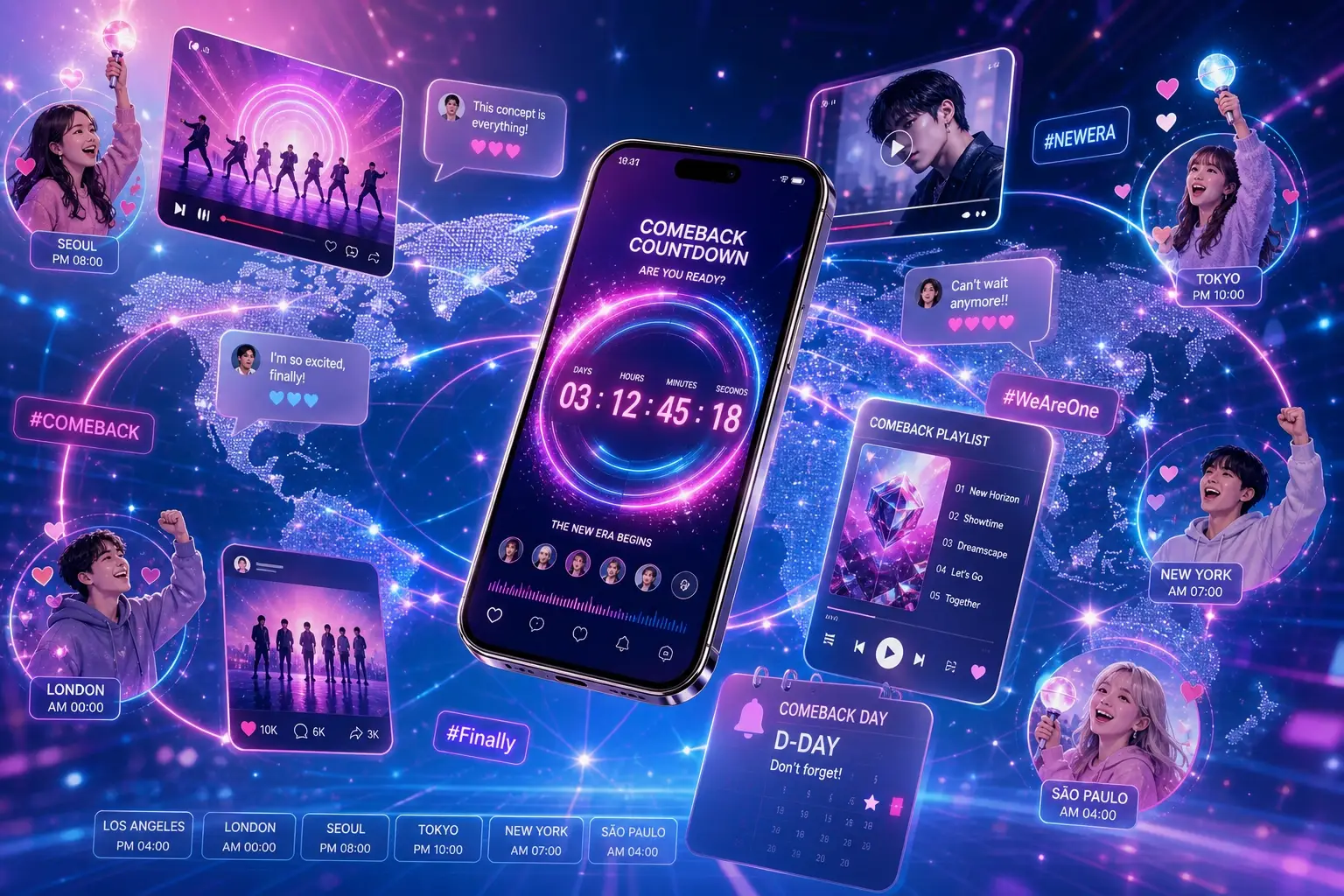
Lately, though, the starting point of an announcement often isn’t a single calendar graphic anymore. A member says an unfamiliar word on a short livestream, and the official account posts a photo tied to that word a few days later. One group launches a website styled like a fictional shopping mall; another opens with a hashtag asking fans to share a specific everyday moment. Instead of an ad explaining the new music, it’s a small world fans can step into and play around in first.
That doesn’t just mean prettier teasers. A comeback announcement now has to handle two jobs at once: delivering the information of ‘when does the music actually drop’ and extending the invitation of ‘how do I join this world.’ These two roles didn’t used to need separating, but as content spread across more platforms, distinct pieces of content emerged to carry each one. Fans aren’t passive recipients of photos anymore — they help build the next scene through comments, videos, memes, and playlists. That’s why a short announcement today can end up having a much longer life than it looks like it should.
Teasers Didn’t Disappear — They Just Changed Order
There’s a common misconception here: since short-form video and fan platforms have grown, it’s easy to assume the traditional teaser calendar is dead. The reality is close to the opposite. Groups releasing a full album still clearly announce the information fans actually need to buy and listen — release time, pre-order windows, tracklist, video drop times. The calendar hasn’t disappeared; more content has simply attached itself before and after it.
LE SSERAFIM’s case makes this easy to see. The official Weverse notice for the April 2026 lead single ‘Celebration’ clearly laid out the release time and the album’s pre-order schedule — the core information fans actually need. At the same time, the ‘#TimeToCelebrate’ campaign encouraged fans to share moments in their own lives worth celebrating. Rather than playing a snippet of the new song first, it connected fans’ everyday lives to the album’s concept.
This approach works because it operates on two layers. The official notice takes responsibility for facts that can’t afford to be confusing, while the campaign leaves room for fans to interpret and react. Separating these two layers this way means that even as more content piles up, fans are less likely to miss the release information they actually need. Release dates and pre-order details need to be accurate. The meaning behind a prop in a photo or a hashtag, on the other hand, can stay a little open-ended. The former builds trust; the latter builds conversation. Rely on only one of the two, and a comeback risks feeling either too dry or too vague.
Short-Form Video Isn’t an Ad — It’s a Ticket In
A 15- or 30-second clip can look like it carries less information than an old-school teaser. But vertical video shows up instantly on a phone screen and travels easily to other platforms. When something is released in pieces rather than as one single image, fans start lining up the sequence, comparing captions, background music, and props against each other. The waiting itself, between posts, becomes part of the activity.
As with NewJeans’ fourth-anniversary film, short-form video doesn’t always mean album promotion, either. Individual member clips, group footage, and scenes that evoke the past can bring a fandom’s shared memory back to the surface. What matters here is exactly how far the official announcement went. Even if a video seems to hint at new music, if the label described it as anniversary content, fans need to respect that line. A culture that doesn’t mix anticipation with confirmed information is what keeps a fandom lasting.
The power of short-form content lies in the blank space it leaves. Explain every single detail and fans just consume and move on. Leave the blank space too large, though, and it gets exhausting. A well-made announcement leaves behind one or two clues without hiding the facts that actually matter — striking a balance that gets fans rewatching a clip multiple times while still not missing the release date or how to take part.
Livestreams and Fan Platforms Are Where You Actually Get a Reply
Where comeback announcements used to travel one-way through broadcasters, portal news, and official fan cafes, artists today can see fan reactions almost immediately. Notices and posts on fan platforms like Weverse, YouTube livestreams, Instagram Lives, and short comment replies all move at different speeds from one another. The formal announcement stays on the record; the livestream adds the temperature to that announcement.
What makes livestreams especially fun is that you get to see tone and expression instead of a polished promotional line. When a member mentions something that was hard during the making of the album, or casually name-drops a favorite track, fans end up remembering the album as a stretch of someone’s time rather than just numbers and photos. The fact that unedited moments slip in is exactly what makes a livestream feel different from other promotional content. Of course, when something said on a livestream gets written up as news, it needs care — a joke, a personal hope, and a confirmed schedule are three different things. Cross-checking against the official announcement is what keeps it accurate.
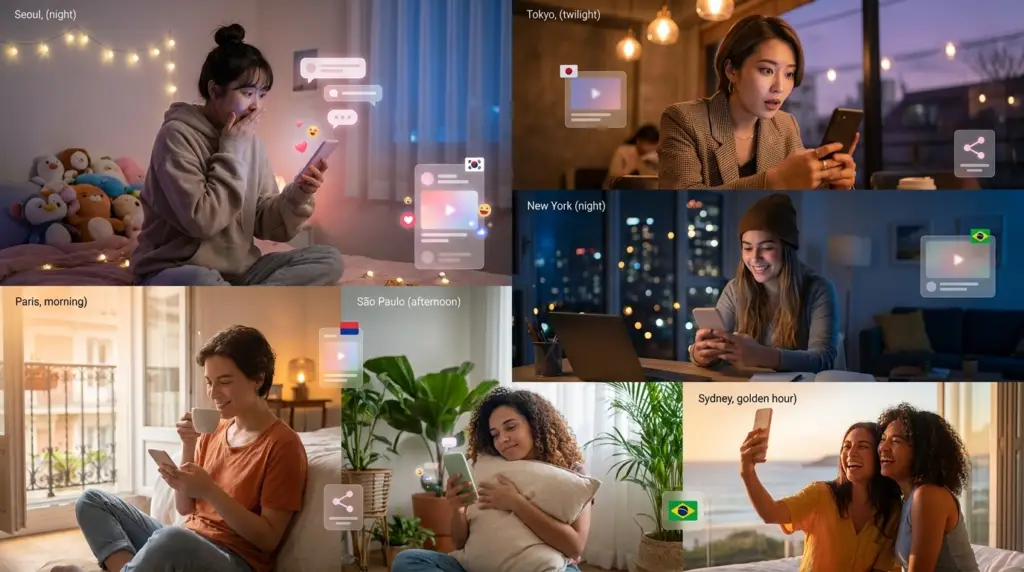
Fan platforms matter for international fans, too. Even when a Korean-language notice goes up first, translation features and multilingual notices attach quickly, and fans from different countries can react under the same post. In an environment where a teaser released on Korean time reaches fans in the US, Europe, and Southeast Asia almost simultaneously, ‘who heard it first’ matters less than ‘who interpreted it together, and how.’
The Best Thing a Fan Can Do Is Verify, Then Enjoy
As flashy campaigns multiply, fans need one more skill: telling the difference between an official account’s notice, a fan-made interpretation image, and an unsourced schedule. For comeback dates, album composition, and performance plans especially, it’s safest to check the agency’s official website, fan platform, or verified official accounts. Posts that only cite ‘an insider’ or edited screenshots can be fun to look at, but it’s better not to spread them around as if they were confirmed information.
And you don’t have to crack every single code, either. Some fans savor the color palette and styling in a photo, some help with translations, some hold onto one line from a livestream for a long time. A K-pop comeback isn’t a test with one correct answer — it’s a way for a lot of different people to wait for the same song together. The calendar is still necessary. It’s just that the road leading up to it has gotten a lot longer, and a lot more fun, filled with video, hashtags, livestreams, and fans talking back.
Source: LE SSERAFIM official Weverse notice, April 13, 2026; Korea Herald, 2026 reporting.