
Table of Contents
Individual Narratives That Filled the Hiatus
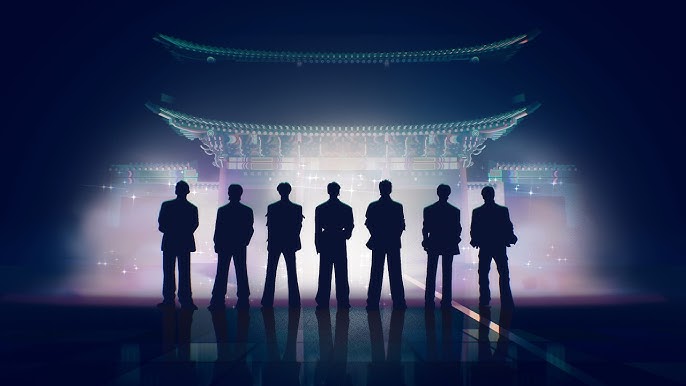
In the summer of 2025, as all members of BTS completed their military service, the fandom reached the end of a long wait. RM and V were discharged on June 10, 2025, followed by Jimin and Jungkook the next day on June 11. With Jin and j-hope, who had already returned to civilian life in 2024, the puzzle of the seven-member reunion was complete. But here’s what’s interesting: this hiatus was no mere ‘pause.’ The solo projects each member released before and after enlistment built their own independent narratives, and together, these stories entirely redrew the blueprint for the group’s full return in 2026.
In the past, a boy band’s military hiatus was usually a crisis period that risked fan attrition. BTS, however, turned that time into an experiment to imprint individual brands on the global market. The result? Far from being forgotten while the group was away, each member’s musical color became even sharper. It’s worth examining what this strategic shift signals for the entire 2026 K-pop landscape.
Jimin and Jungkook Prove Solo Firepower
At the peak of solo achievements stands Jimin. His first solo album’s track ‘Like Crazy’ hit No. 1 on the Billboard Hot 100, and the title track ‘Who’ from his second album ‘MUSE’ stayed on the charts for over a year, enjoying a long run. In fact, ‘Who’ ranked No. 57 on the 2025 Billboard Year-End Hot 100 and was counted as the best-selling male K-pop solo song in the U.S. Keeping that kind of heat alone while the group was away is no coincidence.
Jungkook was no different. ‘Seven,’ featuring Latto, also topped the Hot 100, proving he is a vocalist who resonates in the global pop market. The fact that two members hit the top of the U.S. charts side by side shows that, even without the BTS name, each member commands their own fan base and commercial firepower. This achievement naturally justifies a ‘two-track’ structure—combining group activities with solo work—after the full-group comeback.
Jin and j-hope Strengthen the Live Foundation
The moves of Jin and j-hope, who were discharged earlier, are also noteworthy. After his first solo album ‘Happy,’ Jin released his second mini-album ‘Echo’ in May 2025 and continued promoting the title track ‘Don’t Say You Love Me.’ Notably, Jin embarked on his first solo tour, finishing with an encore concert in Incheon, confirming his ticketing power to hold standalone shows. j-hope expanded his stage presence with a world tour based on his mixtape ‘Jack in the Box.’
These solo tours go beyond individual activities—they serve as advance groundwork for a full-group world tour. Each member accumulated data on how much demand they generate in which cities, which can be directly reflected in designing a massive stadium tour. In fact, international media have mentioned the possibility of a record-breaking 65-show world tour.
March 20: The Weight of a Full Reunion
Big Hit Music announced that BTS will return with a full-group album on March 20, 2026. This marks the first new release since the anthology album ‘Proof’ in June 2022—roughly three years and nine months, and a very long gap for a proper group project. With a large-scale world tour expected to follow right after, the first half of 2026 could see the entire K-pop industry reshuffle around BTS’s schedule.
What’s worth noting here is the nature of the comeback. If the old BTS was ‘group-first, solo as support,’ now seven members, each with a solid solo career, are coming together. Individual brand power creates a synergy with the group’s strength. This approach not only enhances the sustainability of group activities but also disperses reliance on any single member.
2026 K-Pop Strategy: A New Grammar
BTS’s case is becoming a textbook for younger groups. It reimagines the military hiatus or activity break not as a crisis but as a period to expand individual IP. When each member builds their own musical world and fandom, the overall brand’s heat doesn’t cool even when the group pauses. In fact, the accumulated individual stories make the narrative impact of a reunion even more explosive.
In 2026, the K-pop market is moving beyond the binary of ‘group versus solo.’ A model where full-group and individual activities interlock as one organic ecosystem is becoming the standard. Right before stepping onto the world stage again, BTS’s post-discharge moves are not just preparation for a comeback—they are a turning point rewriting K-pop’s operational grammar itself. How other major groups will riff on this strategy will be the key watchpoint for the next few years.
Sources: Forbes, Billboard, The Independent, 2026.