Table of Contents
Korea’s Fashion Market Isn’t Growing — It’s Getting Pickier
If you assume a fashion market always trends upward, today’s numbers might surprise you. According to Trend Research’s “2026 Preview: Korea Fashion Industry Big Data Trends,” Korea’s domestic fashion market peaked at 48.4167 trillion won in 2023 and has been shrinking since. It fell 1.1% to 47.9019 trillion won in 2024, and is estimated to have dropped a further 2.5% to 46.6998 trillion won in 2025. For 2026, the forecast points to 44.4955 trillion won — a 4.7% decline from the year before.
None of this means people in Korea have suddenly stopped buying clothes. It’s closer to shoppers becoming more price-sensitive, weighing a purchase against what’s already in their closet, and paying closer attention to why a brand made a given product in the first place. A steep discount alone isn’t enough to win someone over anymore. And yet, in this same environment, a handful of small brands are growing fast. The industry has started calling them “small giants” — and what sets them apart isn’t scale, it’s a much sharper sense of taste paired with fast execution.
HUNCH Posted 5 Billion Won, Then Set a 12 Billion Won Target
HUNCH, a womenswear brand launched in 2022, is a case in point. After posting 5 billion won in revenue in 2025, the brand set a target of 12 billion won for 2026. It’s worth being precise here: that 12 billion won figure is a goal the brand has stated, not a result it has already achieved. Whether the target gets hit will depend on how much the brand expands distribution and how well its products perform going forward. Still, the fact that a brand set a growth target more than double its previous year’s revenue, in a period when the overall market is shrinking, is worth paying attention to on its own.
There’s a common misconception about how small brands grow quickly. It’s easy to assume it comes down to good-looking Instagram photos or a brief moment of buzz because a celebrity wore the piece. Those things can genuinely help spark initial interest. But surviving past a single season requires an actual reason for someone to keep wearing the clothes: price, fit, fabric, the delivery and exchange experience, and a consistency to the brand that makes you look forward to what comes next all have to add up. Part of why brands like HUNCH expand across offline pop-ups and online platforms at the same time is to turn attention on a screen into an actual purchase.
A Small Brand’s Strength Isn’t “Clothes for Everyone.” It’s “Clothes for Someone Specific.”
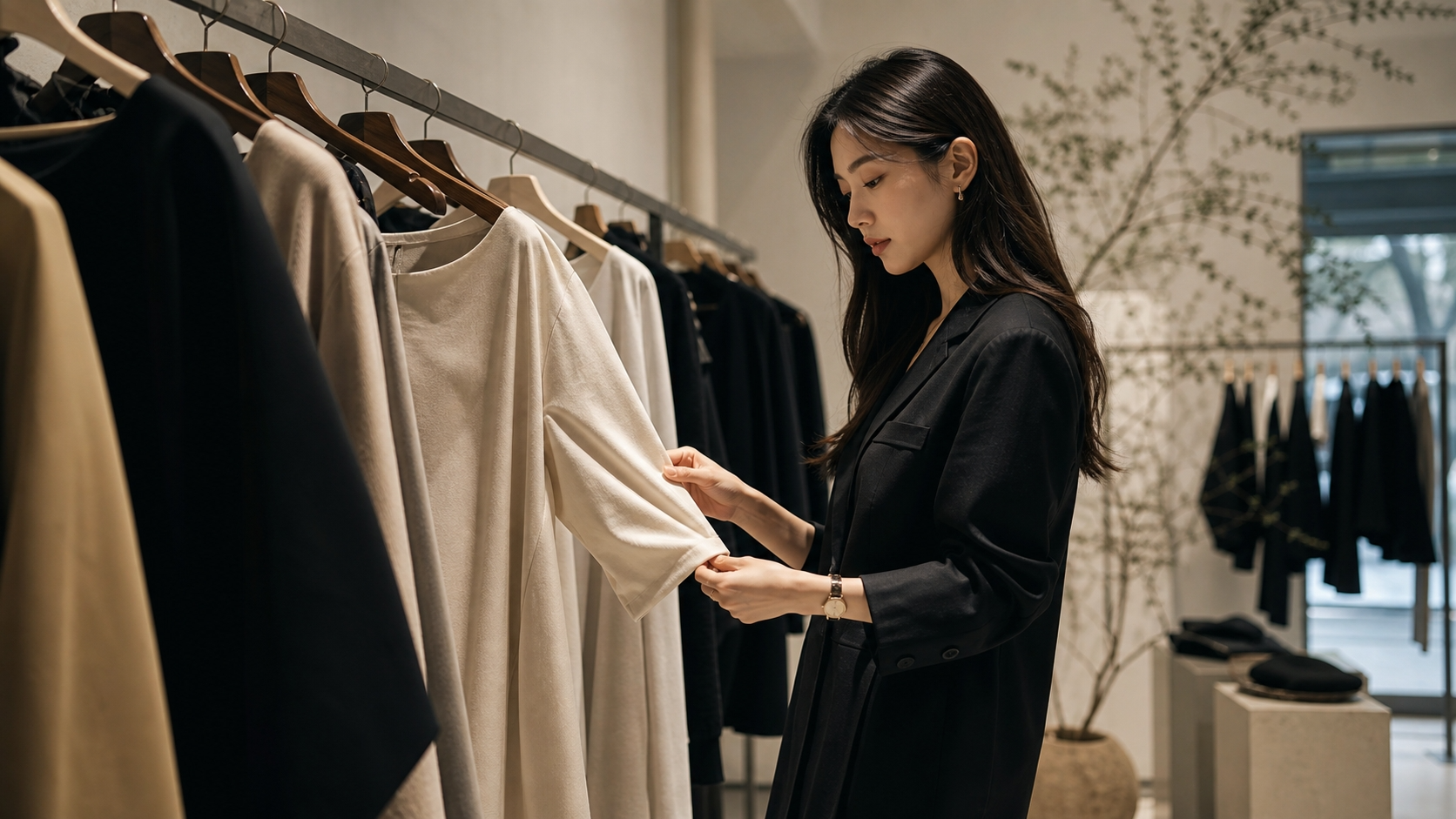
A large brand can make products that feel like a safe, agreeable choice for a broad customer base. An emerging designer brand, by contrast, has an edge in imagining one specific customer’s life and taste in detail: someone who wants to wear something to the office but doesn’t want to look ordinary, someone who enjoys trends but finds heavy logos overwhelming, someone who cares more about how a fabric actually feels than how it photographs. If you’ve ever picked up a piece from a small brand and thought, “this feels like it understands exactly who I am,” that’s the brand’s persona doing its job.
Samsung Fashion Institute naming “Integral Market” — the outsized power of small brands — as one of its 2026 market keywords reflects the same shift. When consumer taste splits into many different directions rather than moving as one, a brand with a clear identity has an easier time finding its customers. That doesn’t mean small automatically means intimate and good, though. If product quality and customer service don’t keep up, attention that spread quickly can disappear just as quickly. The smaller a brand is, the more visible the gap becomes between what it says about itself and what you actually experience.
29CM Wants to Be a Growth Partner, Not Just a Sales Channel
Numbers from the platform 29CM point to another condition behind emerging-brand growth. According to the Seoul Economic Daily, combined transaction volume for women’s designer brands that have been on 29CM for three years or less grew 2.6 times in the first half of 2026 compared with the same period the year before. Over the same period, 145 fashion brands crossed 1 billion won in cumulative transaction volume on the platform, and the number of women’s fashion brands surpassing 3 billion won in transaction volume rose more than 85% year over year. While the overall market shrinks, emerging brands within this particular platform have shown growth moving in the opposite direction.
That said, these numbers shouldn’t be taken as proof that every emerging brand in Korea is thriving — they reflect brands and transactions on one specific platform. What they do confirm is that a platform like this isn’t simply an online shelf for displaying products. 29CM uses customer data to support brand-specific product sales and content planning, and has run programs like its “demand-based onboarding” brand selection process, brand introduction content, exclusive product drops, and curated promotions. It’s a way of helping shoppers trust a name they’re seeing for the first time, by explaining the brand’s background and style alongside the product itself.
When You’re Sizing Up a Small Brand, Watch for Repeat Purchases, Not Just Buzz
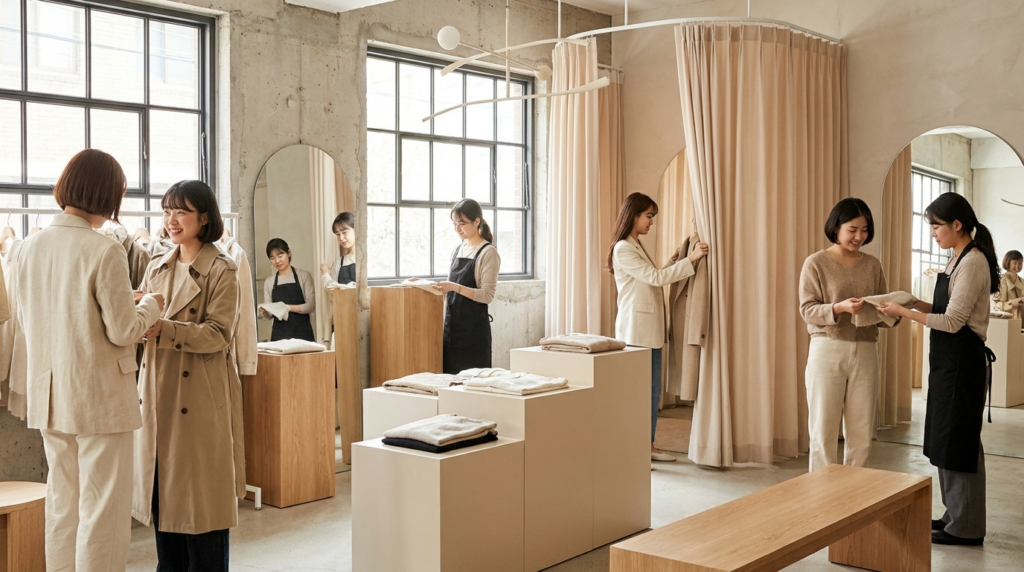
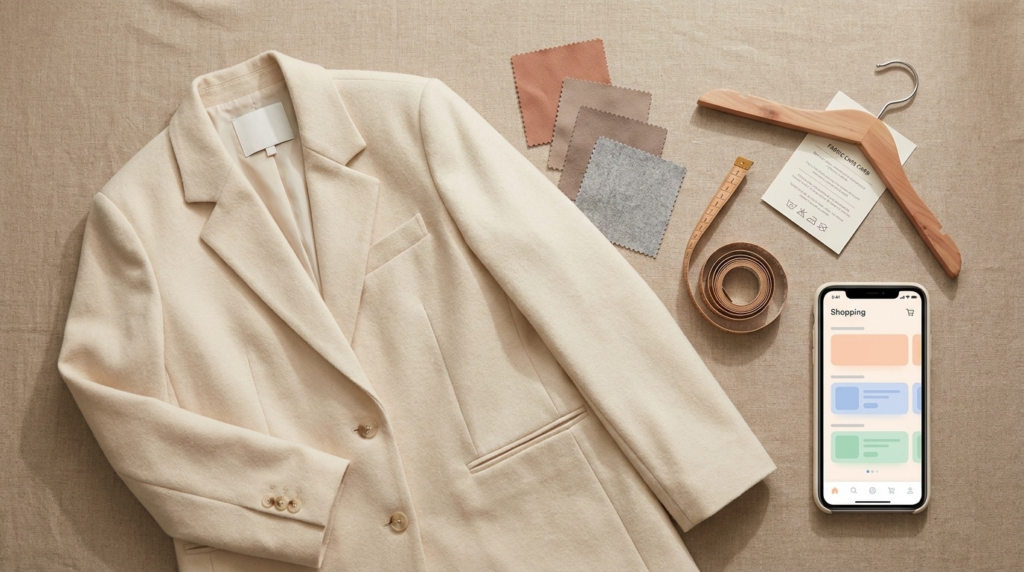
If you’re looking to discover an emerging brand, don’t stop at “what’s selling the most right now.” Check the fabric and sizing details on the product page carefully, and look at reviews from people who’ve worn the piece for a full season. It’s especially worth checking whether customers come back after their first purchase, and whether the brand maintains its own balance instead of just repeating similar designs. If you come across a pop-up store, don’t just take a photo — touch and try on the piece. That’s how you can tell whether the weight, lining, and finishing of the actual garment match the impression you got online.
A market forecast to shrink into the 44-trillion-won range is a real weight on a lot of brands. But a shrinking market doesn’t mean consumer taste disappears along with it. If anything, more people may start asking, with each piece they buy, whether they’ll want to wear it for a long time, whether it fits their actual life, and whether the brand’s story is genuinely convincing. HUNCH’s 12 billion won target and the growth among 29CM’s emerging brands aren’t guaranteed successes yet. But together, they show that a brand’s potential can’t be judged by market size alone. Going forward, the real contest won’t simply be big brands against small ones — it’ll be about who can give customers a more precise reason to choose them.
Source: Trend Research, “2026 Preview: Korea Fashion Industry Big Data Trends”; Fashionbiz, “2026 Emerging Brands” feature; Seoul Economic Daily, July 21, 2026; Samsung Fashion Institute, “2026 Fashion Market Outlook.”