
Table of Contents
Three Korean Designers You Met on Jakarta’s Fashion Stage
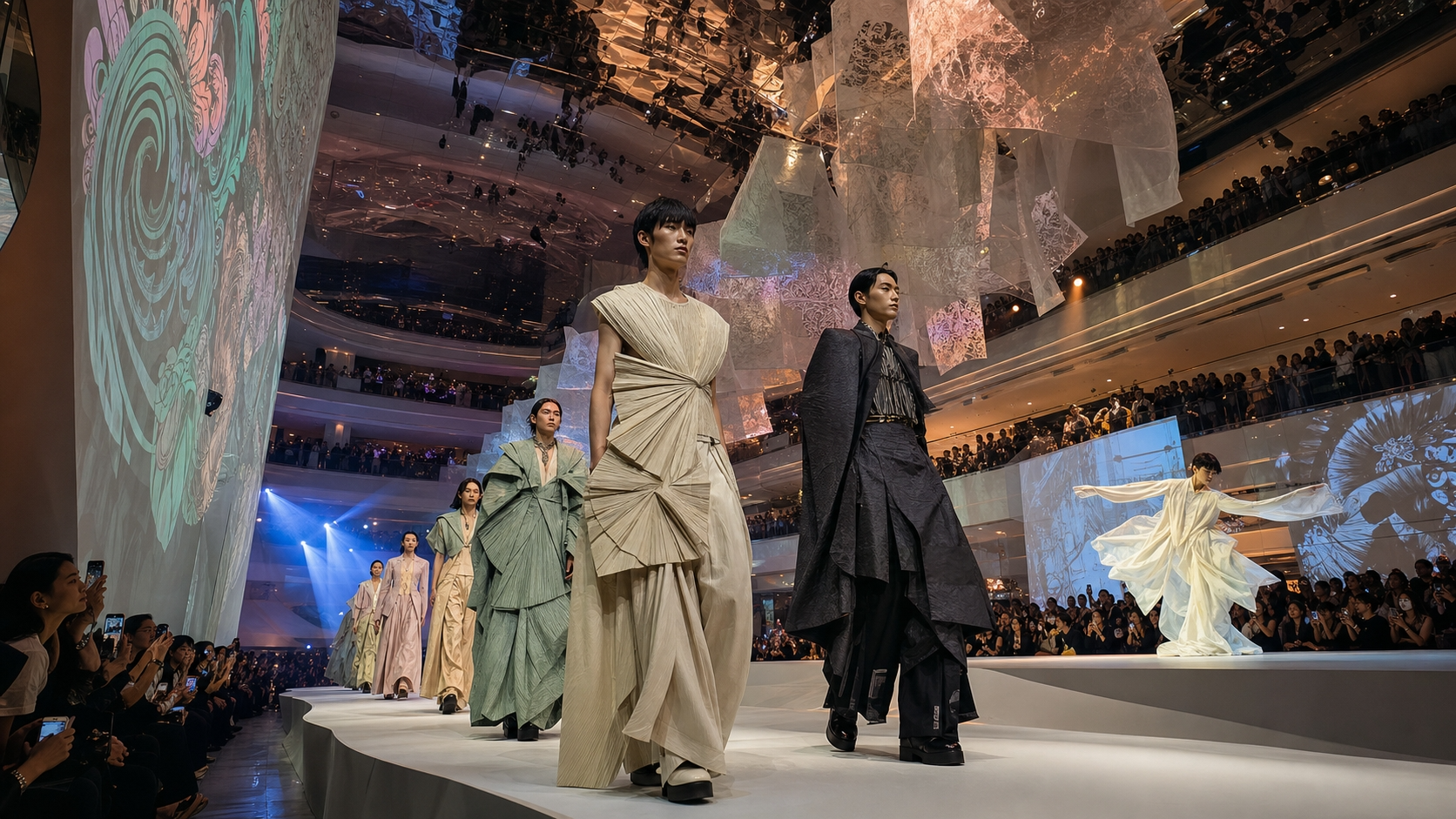
When you think of a fashion show, you probably picture the colors and silhouettes that’ll be trending next season, right? But at the JF3 Fashion Festival in Jakarta this July, the spotlight was on Korean designers who presented clothing as a story and an art experience. It was a runway inside a mall, sure, but it felt different from just a lineup of new arrivals.
The JF3 Fashion Festival 2026 took place at Sumarecon Mall Kelapa Gading in Jakarta, Indonesia. This year’s theme was ‘RE-CRAFTED: SHAPING THE FUTURE.’ JF3 has been an Indonesian fashion platform since 2004, emphasizing an ecosystem that connects designers, brands, artisans, educational institutions, buyers, and creative communities—not just runway shows.
This year, three Korean teams participated through a collaboration with Busan Fashion Week: Baek Jin-joo’s Studio di Perla, Oh Hye-young’s OHGYO, and CONSTELLER D.L. All three shared a common thread of linking fashion with fine art, performance, and cultural experiences, but each unpacked the meaning of clothing in their own way.
JULY SEVEN Started with Five Paintings
OHGYO’s ‘JULY SEVEN’ is a collection born from the artistic world of Korean designer Oh Hye-young. She explained that the starting point was five paintings from her 2020 solo exhibition ‘Human Connection.’ So, emotions like love, parting, longing, loss, and healing—the feelings we go through in relationships—were translated into clothing.
In a local interview, Oh Hye-young said JULY SEVEN isn’t a brand that chases seasonal trends or fads first. She’s long explored the question ‘What connects people?’ through philosophy and art, and the emotions of meeting and parting became key inspiration along the way.
You might look at the brand name and think it’s a summer collection for July. But the heart of JULY SEVEN is emotion, not season. The core idea is seeing clothing not just as something to cover your body, but as a moving sculpture carrying memories and feelings. Think of it as an attempt to share personal experiences with the audience through fashion.
Forests, Oceans, Fog, and Night Skies Became Fabric for the Clothes
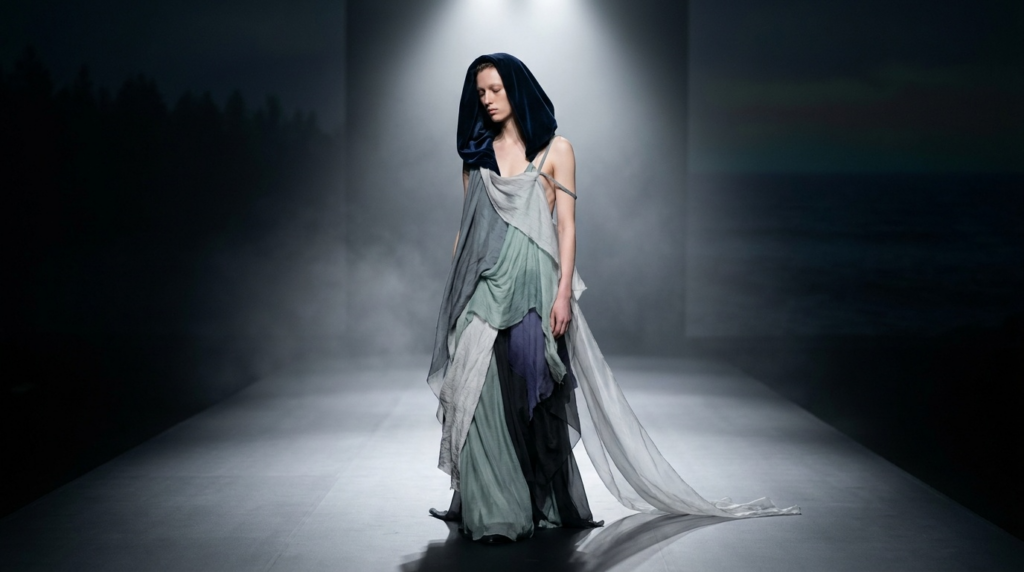
Nature also plays a big role in JULY SEVEN. Oh Hye-young views forests, oceans, fog, and night skies as symbols of order and cycles that have existed long before humans. She says these natural images are reflected in the collection’s colors, materials, and how the stage space was set up.
In the actual looks, you’ll notice sculptural forms and gender-fluid silhouettes. There’s three-dimensional structure, asymmetrical cuts, draping, and contrasts between different textures. When choosing materials, she went beyond just looks—considering weight, transparency, firmness, and how they respond to movement.
These clothes might look a bit unfamiliar in a single photo. But when you see the fabric sway as the model walks, the surface change under light, and the silhouette shift with body direction, the intention becomes clearer. To Oh Hye-young, material isn’t just a finishing touch for a design—it’s a tool to turn emotion into movement.
Why the Runway Became a Performance
This show was a performance weaving together clothing, body, movement, music, lighting, video, and space. Oh Hye-young described it not as a simple stage to showcase fashion, but as an art project combining fashion, fine art, sound, and performance into one narrative.
Each outfit symbolizes a specific emotion, and the model’s movements, music, video, and lighting come together to tell a story. So when you watch JULY SEVEN, it’s better to ask ‘What emotion is this outfit trying to express?’ rather than ‘Will this be trendy this year?’ Because it’s a show designed to follow emotional flow, not trend forecasting.
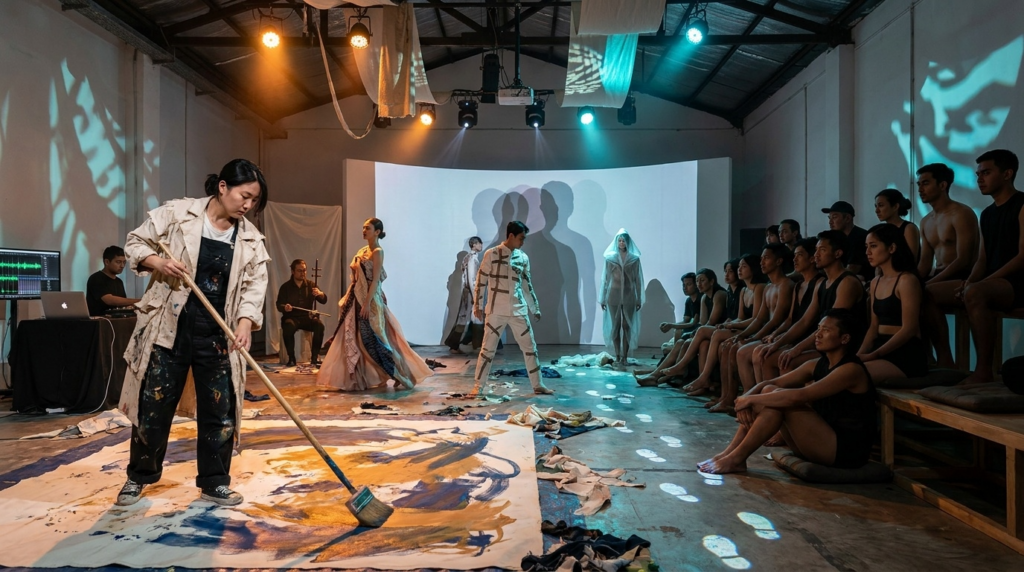
CONSTELLER D.L. showed a similar but different approach. This brand stands by the philosophy ‘Fashion is a Canvas.’ They present original paintings, media art, live painting, music, and performance alongside clothing—so the audience doesn’t just see the outfits but feels a full cultural experience.
A Moment to Broaden Your View of K-Fashion
Studio di Perla’s ‘APORIA’ collection explored social boundaries like gender, class, race, and cultural authority. Designer Baek Jin-joo, visiting Indonesia for the first time, said the cultural differences between Korea and Indonesia sparked inspiration for future work and collaboration. The local variety of skin tones and clothing colors also opened up new perspectives.
These three teams’ work makes it hard to understand K-fashion as just idol styling or streetwear. Sure, those styles are a big part of K-fashion. But on international stages, Korean designers show a wider range. There’s also work that translates personal philosophy, social questions, painting, video, and stage performance into the language of fashion.
If you’re looking for practical daily outfits, this art-based collection might feel a bit distant. But remember that fashion isn’t just about what to wear—it’s also about what story you want to tell with your body. In that sense, JULY SEVEN is a pretty interesting case. Next time you watch a fashion show video, don’t just look at the colors and shapes—pay attention to how the music, lighting, and model’s movements create an emotion.
Sources: VOI Indonesia, ‘South Korean Designer Presents Full Story Work at JF3 Fashion Festival 2026’, 2026-07-25; JF3 Fashion Festival official website, 2026; Indonesia Observer, ‘JF3 Fashion Festival 2026: Fostering Indonesia’s Fashion Ecosystem’, 2026.