
Table of Contents
Reading Without Opening a Book
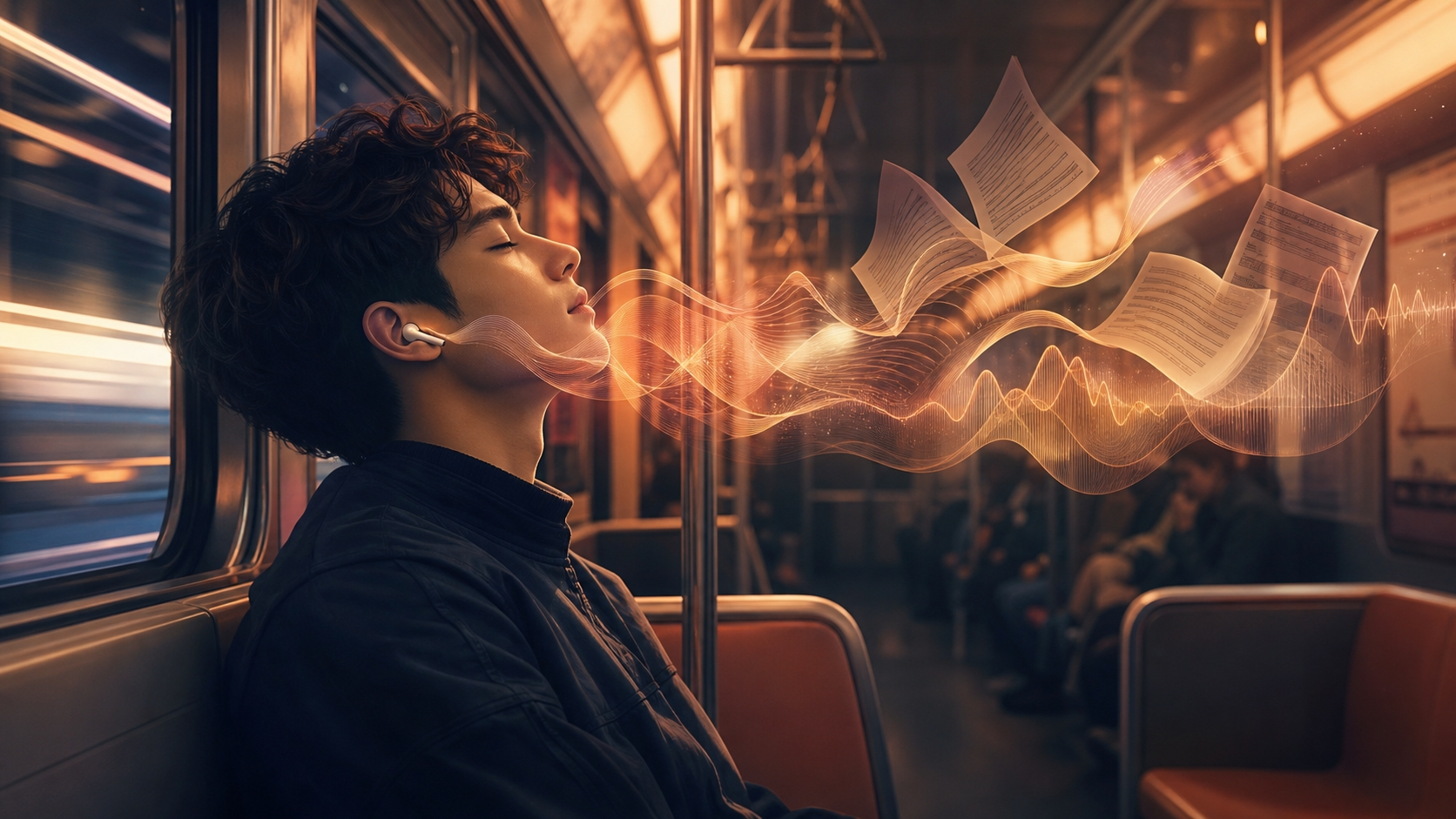
The word “reading” once meant, quite literally, running one’s eyes over printed characters. But for a commuter with earbuds in, listening to a novel on a crowded subway car, a page no longer refers only to a sheet of paper. The eyes are occupied elsewhere while the story flows in through the ears, and the sense of having experienced a book from beginning to end blurs the old boundary between reading and listening.
Korea’s audiobook market is moving beyond its old role as a supplement to print or an accessibility tool for the visually impaired, and becoming an independent content format in its own right. Subscription platforms such as Millie’s Library and Welaaa now place e-books and audiobooks within a single service, and some have launched standalone services that serialize web novels as audio. At the center of this shift sits fiction — the genre best suited to being followed by ear.
Why Fiction Suits the Ear
Nonfiction often requires readers to flip back to confirm a detail or to study a table or footnote, but a novel moves forward, carried by the flow of character and event. A single narrator’s voice can establish the rhythm of the story, and when multiple voice actors and sound effects are layered in, the result can approach something closer to radio drama. Idle time spent commuting or doing housework naturally becomes reading time.
Web novels pair especially well with audio. Short installments, clear conflict, and endings that make a reader want the next chapter are all well suited to continuous listening. A reader can keep following the story without staring at a screen for long stretches, and platforms can combine subscription with serialization. “Audio web novels” don’t stop at recording an existing book — they design narratives for the ear from the start.
How AI Lowered the Barrier to Production
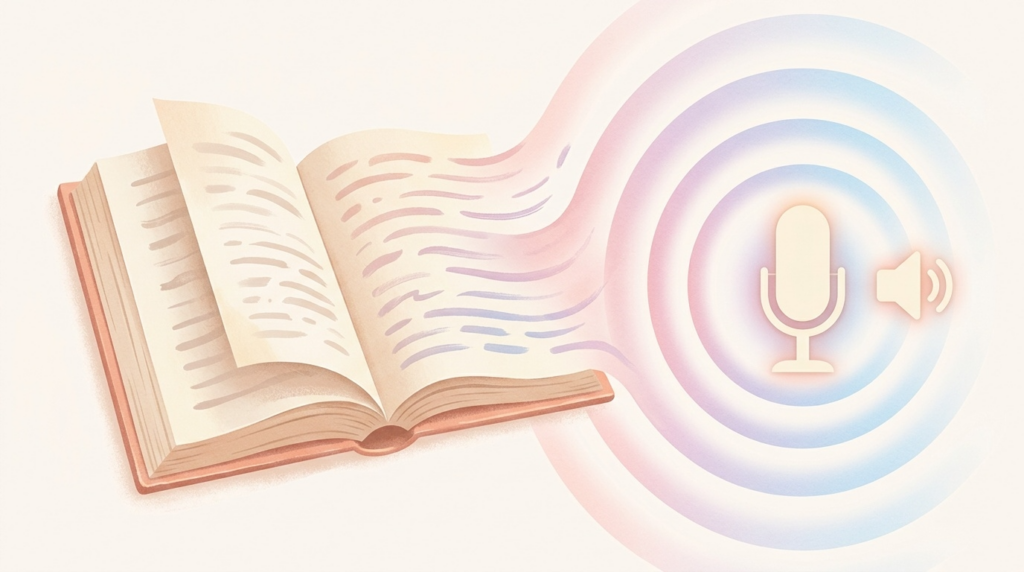
Traditional audiobook production required no small amount of cost and time — casting voice actors, renting a studio, directing, editing. For small and mid-sized publishers or individual creators who couldn’t be certain of sales, it was a format that was hard to enter at all. AI voice synthesis has cut production time by converting a manuscript into a natural-sounding voice and letting only revised sentences be regenerated, rather than the whole recording.
As a result, books published long ago that are difficult to reprint on paper, or genres with a limited readership, now have room to be tested in audio form. The Korea Publication Ethics Commission’s continuation of its audiobook production support program into 2026 reflects a policy response aimed at widening the range of available content. Technology has lowered the minimum cost of producing a single title, but it hasn’t removed the editorial responsibility of choosing which works are worth making.
A Voice Still Carries Rights
As AI narration becomes more common, the question of whose voice was used, and under what consent it was trained on, grows more important. If an actual voice actor’s tone is imitated without permission, a cost saving for one party becomes a rights violation for another creator. Disclosing to listeners whether a narration is human or synthetic is also necessary for trust.
There are literary problems as well. The same comma can call for a different length of pause depending on whether it follows sorrow or precedes surprise, and sentences mixing dialect, archaic language, and foreign words don’t come alive through accurate pronunciation alone. AI is skilled at converting text into sound, but the judgment of an editor, a director, and a voice actor still matters when it comes to interpreting a work’s emotional register.
The Next Chapter Where Reading Meets Listening
The future of audiobooks is unlikely to be a simple contest between human narrators and AI. It’s plausible that the two will divide the field: popular new releases narrated in full by actors or professional voice talent, while out-of-print books and sprawling genre fiction gain accessibility through synthetic voices. Readers will likely move between e-books and audio depending on the situation.
Books have long waited quietly for a reader’s eyes, but now some books speak first. Whether that voice comes from a human or a machine, what matters is that the original author’s rights are protected, that readers can know the source and method of production, and that the listening experience doesn’t stop at a light form of consumption. Behind the threshold that technology has lowered stands a new door for editorial judgment.
Source: Korea Publication Ethics Commission, “How Is AI Changing Audiobooks” and “2026 Second Round of Audiobook Production Support Program” notice, 2026.