Table of Contents
An Attempt That Started at the National Assembly and Stalled at the Seongnam Branch
On September 30, 2024, Bang Min-soo, formerly known as C.A.P from the group Teen Top, attended a forum at the National Assembly Members’ Office Building titled ‘Idols Go to the National Assembly: The Labor and Human Rights of Children and Youth Hidden Behind K-pop’s Success.’ This event served as a platform to vocalize the labor and human rights issues faced by underage trainees and idols behind their glamorous onstage personas, spoken directly in their own words. It also marked the starting point where Bang framed the working conditions of idols not merely as personal anecdotes, but as systemic issues the entire industry needed to solve together.
This awareness evolved into a push to establish a labor union the following year. Seo Min-seon, a researcher at the Democratic Party’s Youth Policy Institute, proposed forming the union in May 2025, and by September, both Bang and Seo submitted the establishment report to the Seongnam Branch of the Ministry of Employment and Labor. The preparatory committee outlined key policy goals, including guaranteeing a minimum livelihood for idols, expanding coverage for the four major social insurances, and requiring agencies to support deleting malicious comments and filing lawsuits when artists are targeted.
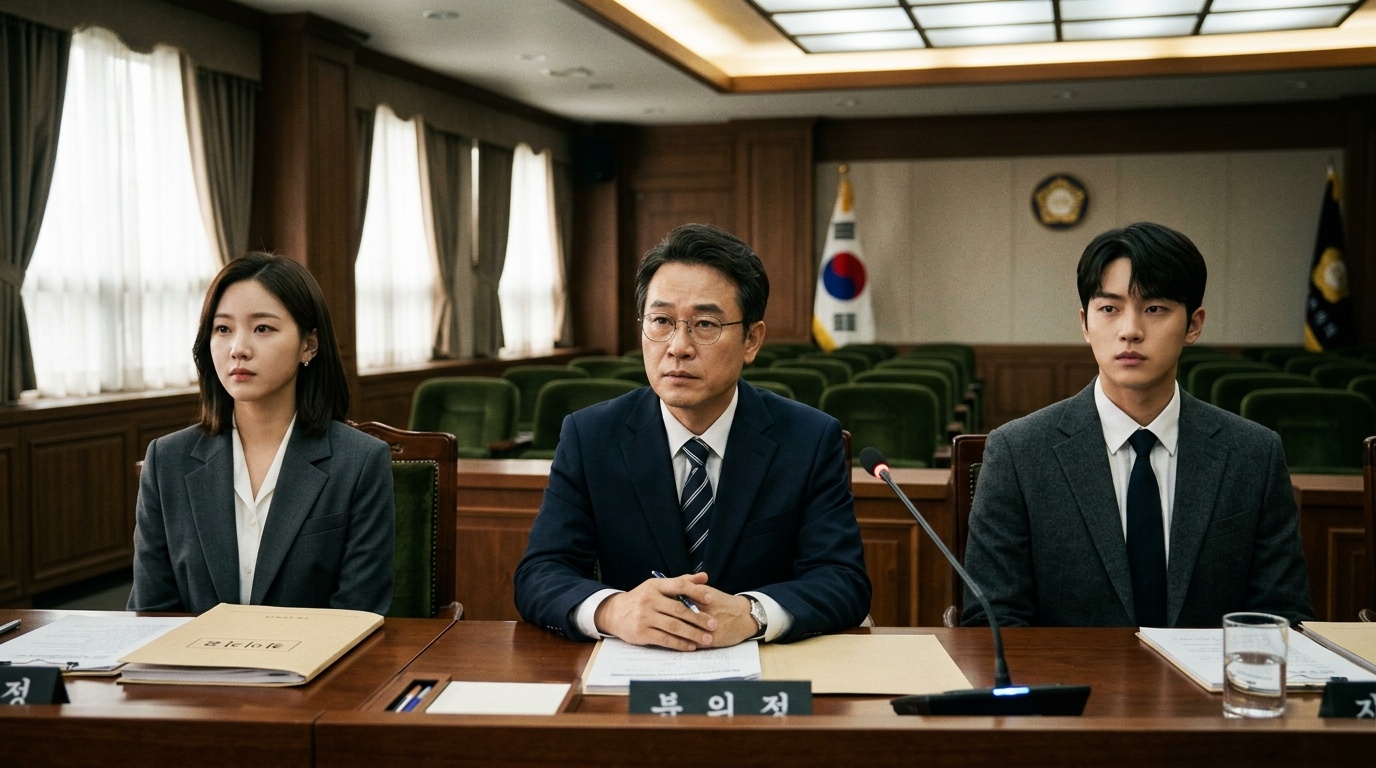
The submission, however, failed to materialize into an actual union. Over a span of about nine months, the Seongnam Branch requested supplementary documents four times, citing incomplete paperwork. On May 13, 2026, Bang announced his intention to withdraw the application, pointing to differences in values among the founding members. Unlike the initial claims that around ten idols had expressed interest in joining, the only members who actually put their names on the official application were Bang and Seo.
The Paradox of Those Who Need It Most Being the Least Able to Join
The collapse of the idol union attempt doesn’t mean the underlying rights issues have vanished. Rather, it exposes an industry structure where the very people who desperately need a union are effectively barred from participating publicly. Artists who have already achieved success, gaining financial independence and bargaining power, can hire personal legal representatives or establish independent agencies to negotiate with their management, lowering their relative need for a union. Conversely, rookies and trainees rely entirely on their agencies for debut opportunities, album production, broadcast appearances, and promotional schedules, making it nearly impossible for them to risk souring that relationship.
Joining a labor union requires stepping forward with your name and demands, but for an idol who hasn’t yet made it big, raising issues publicly translates directly into anxiety over losing career opportunities. It is a system where those in most urgent need of rights bear the heaviest risks. The fact that only Bang and Seo remained on the application cannot be explained simply by a lack of personal persuasiveness. It highlights the massive gulf between casually expressing support and actually putting one’s name down as an official union member.
The legal status of idols further complicates the issue. Because idols typically sign exclusive contracts and split activity profits rather than signing standard employment contracts, a debate persists over whether they are employees under the direction and supervision of an employer or independent contracting parties. However, in a 2018 ruling regarding the Broadcasting Actors Union, the Supreme Court determined that even if exclusivity and income dependency are not strictly pronounced, worker status under the Trade Union Act can be recognized by considering the reality of the labor provision relationship and the need for collective bargaining. An idol union was never legally impossible from the start, yet this particular preparatory committee fell short of translating that possibility into concrete organizational and administrative reality.
The Perils of Promoting Outside the Agency, as Shown by jtL
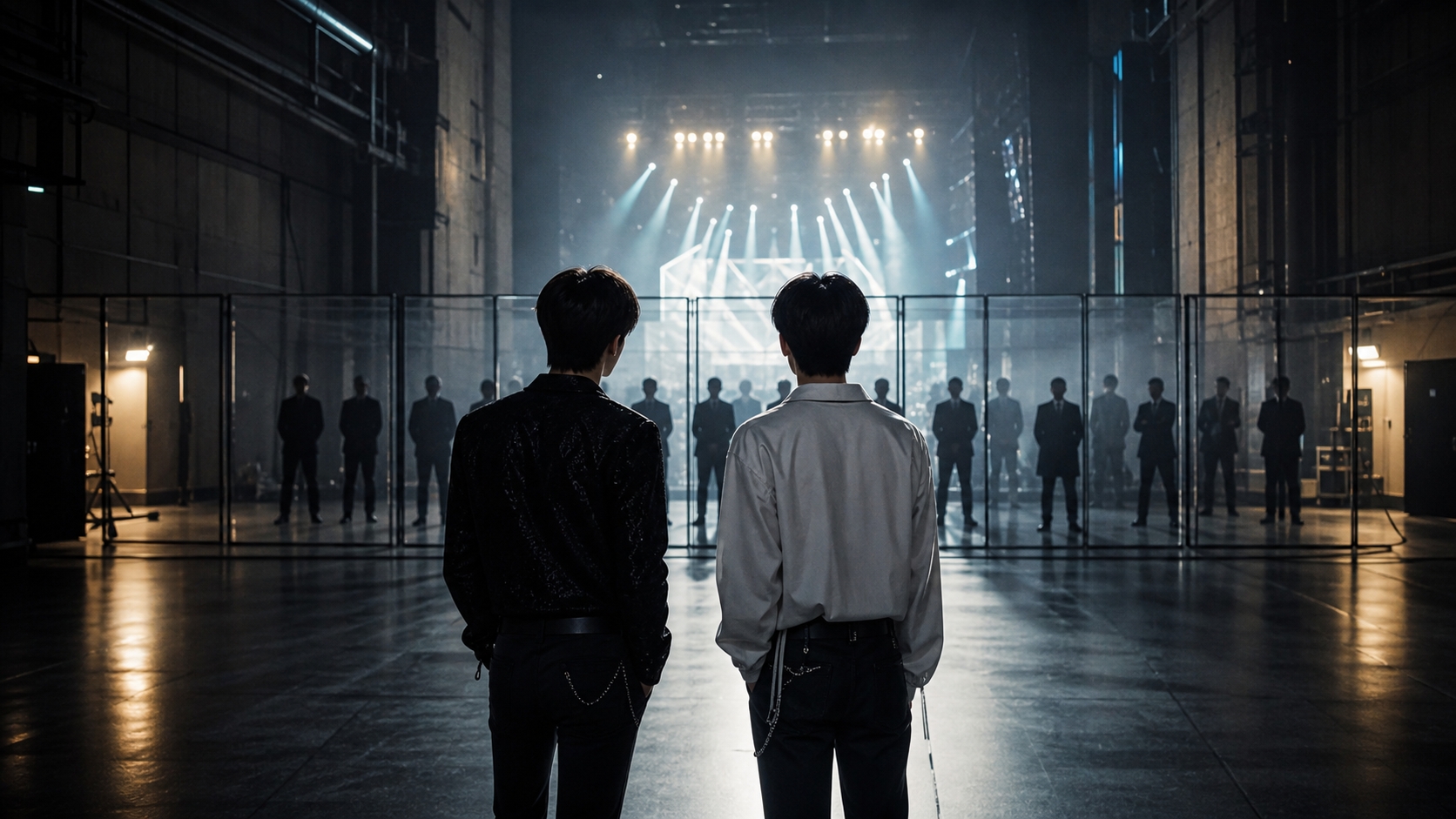
The history of singers facing distribution and broadcast hurdles after clashing with or leaving their agencies has been repeating itself since the era of first-generation idols. Following the disbandment of H.O.T. in 2001, Jang Woo-hyuk, Tony An, and Lee Jae-won left SM Entertainment to sign with Yejeon Media, forming the group jtL. Despite being household names, the new group’s broadcast promotions were anything but smooth.
On January 8, 2002, the Hankook Ilbo published an article titled ‘The Power of Giant Entertainment Agencies?’ shedding light on the suspicions surrounding jtL’s broadcast struggles. At the time, SBS canceled the broadcasting of jtL’s music video, prompting fans to accuse SM of sabotaging their activities. SM denied the claims, stating they had no reason to pressure broadcasters. While the sabotage allegations were never legally proven, the controversy cemented a lingering perception that even artists with immense popularity and massive fandoms can become intensely vulnerable in the broadcast scheduling process after leaving their original agency.
The crucial takeaway from this case is that the end of a contract does not instantly mean escaping the former agency’s sphere of influence. Even if an artist signs with a new company and releases an album, their practical scope of activity drastically shrinks if the broadcast channels needed to showcase their songs and performances to the public are blocked. Changing the party on a contract and achieving true independence within the industrial web of production, distribution, and broadcasting are entirely separate hurdles.
How the JYJ Dispute and Standard Contracts Reshaped the Landscape
A similar issue emerged even more starkly during the 2009 exclusive contract dispute involving three members of TVXQ. On July 31 of that year, Kim Junsu, Park Yuchun, and Kim Jaejoong filed for an injunction with the Seoul Central District Court to suspend their 13-year exclusive contract with SM, arguing its terms were unjust. By October, the court ruled that SM must not interfere with the trio’s independent entertainment activities, leading them to form JYJ in 2010 and embark on their own path.
According to the Fair Trade Commission’s ruling, the Korean Federation of Pop Culture and Art Industry (KFPCAI) coordinated with SM in October 2010 to send a document to relevant businesses, requesting they refrain from casting JYJ for broadcasts or distributing their albums and music. The recipients included 26 businesses, among them nine broadcasting companies comprising three terrestrial and six cable networks. In July 2013, the FTC determined that these actions constituted an obstruction of JYJ’s business activities and issued a corrective order against both SM and the KFPCAI.
Standard contracts also emerged around this time. On July 6, 2009, aiming to protect entertainers’ legitimate rights and curb unfair practices, the FTC published standard exclusive contracts for singers and actors. The new guidelines stipulated that exclusive periods should generally not exceed seven years, while outlining the rights, obligations, termination conditions, and damage compensation criteria far more clearly than before. It was a shared baseline designed to dismantle the practices that trapped entertainers in their agreements, such as excessively long contracts and exorbitant penalties.
Because the publication of the standard contract happened before the three TVXQ members filed their injunction, it cannot be seen as a direct consequence of the JYJ case alone. Still, the dispute over the 13-year exclusive contract profoundly engraved the issue of long-term deals into the public consciousness, serving as a landmark event that proved why the industry urgently needed to adopt new standards. While the standard contract didn’t force a uniform profit-sharing ratio across all companies, it finally provided an institutional yardstick to examine and challenge the long-term contracts and power dynamics that were historically criticized for overwhelmingly favoring the agencies.
Contracts Have Changed, But the Stages Remain Scarce
Improved contracts do not automatically multiply the avenues for idols to introduce themselves to the public. As of August 2026, there are only six weekly chart-based music programs: KBS’s ‘Music Bank’, MBC’s ‘Show! Music Core’, SBS’s ‘Inkigayo’, Mnet’s ‘M Countdown’, MBC M’s ‘Show Champion’, and ‘The Show’, which recently resumed on SBS Life. Even combining terrestrial and cable networks, the core broadcast windows capable of repeatedly exposing new songs and performances every week remain incredibly tight.
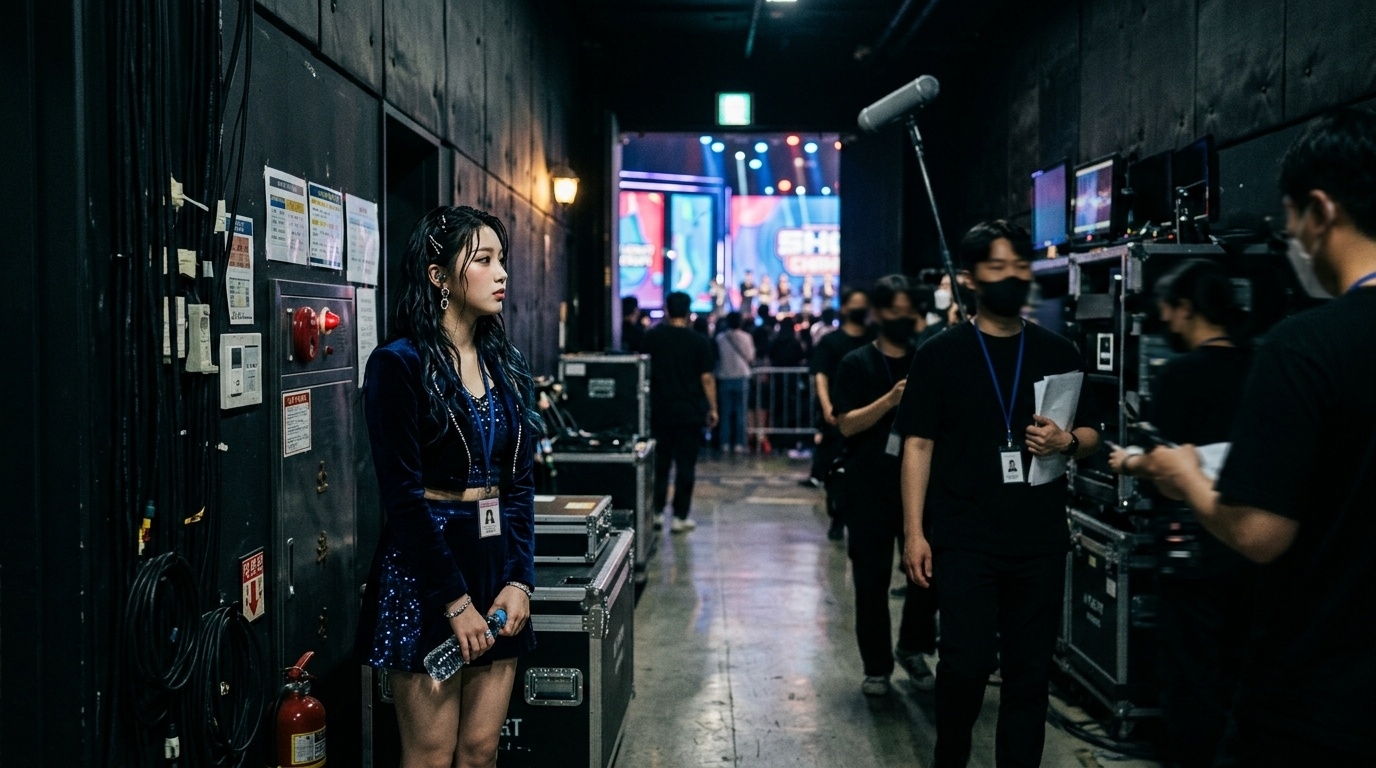
Music shows operate on a scheduling structure where multiple groups must carve up a fixed runtime and stage space within a single program. Naturally, not every group releasing a new album can perform as often as they’d like, exactly when they’d like. The agency’s role is expansive, handling everything from appearance negotiations and pre-recordings to on-site management, broadcast stage preparations, and promotional scheduling. For a rookie, the agency isn’t just the other party on a contract; it is the vital operational gateway that secures access to heavily restricted broadcast slots.
Fan platforms, short-form video services, and online video channels have blossomed as new avenues for exposure, yet the fundamental utility of music broadcasts hasn’t disappeared. Televised stages serve as the official showcase for new releases, gather multiple acts on one program, and offer a rare chance to reach viewers far outside established fandoms. While artists with massive followings can lean on alternative promotional tools, regular music show appearances remain an irreplaceable resource for rookies battling low name recognition.
The First Problem Is the Contract, The Second Is Accessibility
Bang Min-soo’s attempt leaves behind a crucial lesson: understanding idol rights solely through the lens of contract terms is simply not enough. Contract structures have genuinely improved through the introduction of standard agreements and interventions by the courts and the FTC. Broadcast accessibility, on the other hand, remains fiercely bottlenecked around a handful of programs and limited scheduling slots. Even if rights are clearly spelled out on paper, as long as rookies and trainees depend entirely on their agencies for promotional opportunities and basic visibility, raising collective demands against those very companies will remain a daunting task.
The failure of this recent union drive stems from focusing primarily on already-improving contract issues while inadequately addressing the secondary structural wall: the inescapable need for agency backing and relationships to access coveted broadcast stages. The preparatory committee failed to advance far enough to mitigate the career penalties participants would face, nor did they secure alternative promotional channels insulated from agency influence. As long as the cutthroat competition for broadcast slots persists unchanged, it will be virtually impossible for rookies and trainees to risk burning bridges with their agencies to join a union.
The fact that only two members remained is not evidence that idols have no need for collective rights. Instead, it acts as a glaring signal that the most vulnerable parties are too terrified of losing their debut and broadcast chances to step forward. For any future attempt to succeed, the conversation must go beyond merely demanding better contract terms. It must evolve to include guaranteed anonymity in participation, robust safeguards against retaliation, independent legal and administrative support, and most importantly, the development of alternative promotional channels that can lower artists’ utter reliance on their agencies.
Sources: JoongAng Ilbo, August 16, 2026; Chosun Ilbo, December 13, 2025; Hankook Ilbo, January 8, 2002; Fair Trade Commission Decision No. 2013-167, July 24, 2013; Fair Trade Commission Press Release, July 6, 2009.