
Table of Contents
A 2,600-Ticket Scalping Scheme Involving BTS Concerts
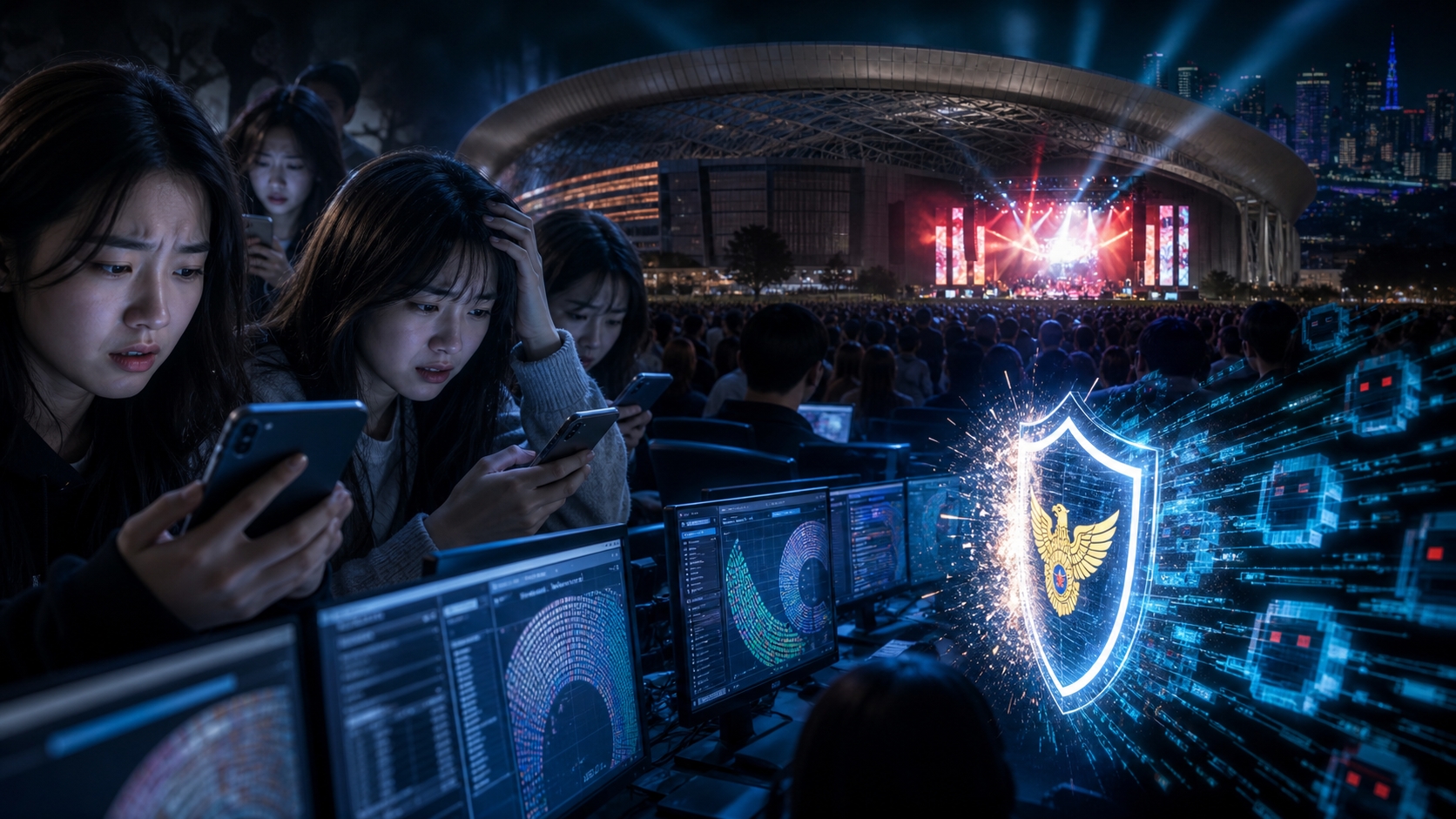
The Seoul Metropolitan Police Agency’s cyber investigation unit has referred a woman in her 30s to the prosecution without detention for allegedly using macro programs to secure and resell roughly 2,600 K-pop concert tickets. She faces charges for violating the Information and Communications Network Act and the Public Performance Act, alongside obstruction of business. Police estimate her illicit profits from the resale scheme at around 442 million won and have requested pre-indictment preservation to confiscate the funds. Notably, the investigation revealed that nine tickets for BTS’s highly anticipated Gwanghwamun concert in Seoul were part of this haul.
Right as this case came to light, revised versions of the Public Performance Act and the National Sports Promotion Act went into effect on August 28, directly targeting the illicit purchase and sale of concert and sports tickets. Under these new rules, unauthorized ticket sales are strictly prohibited regardless of whether macros were used, with fines capable of reaching up to 50 times the original ticket price depending on the scale of the operation. With stronger criminal procedures and tighter administrative sanctions working in tandem, the chronic scalping issues plaguing the K-pop fandom economy are finally entering a new era of regulation.
Evading Purchase Limits for Nearly Three Years
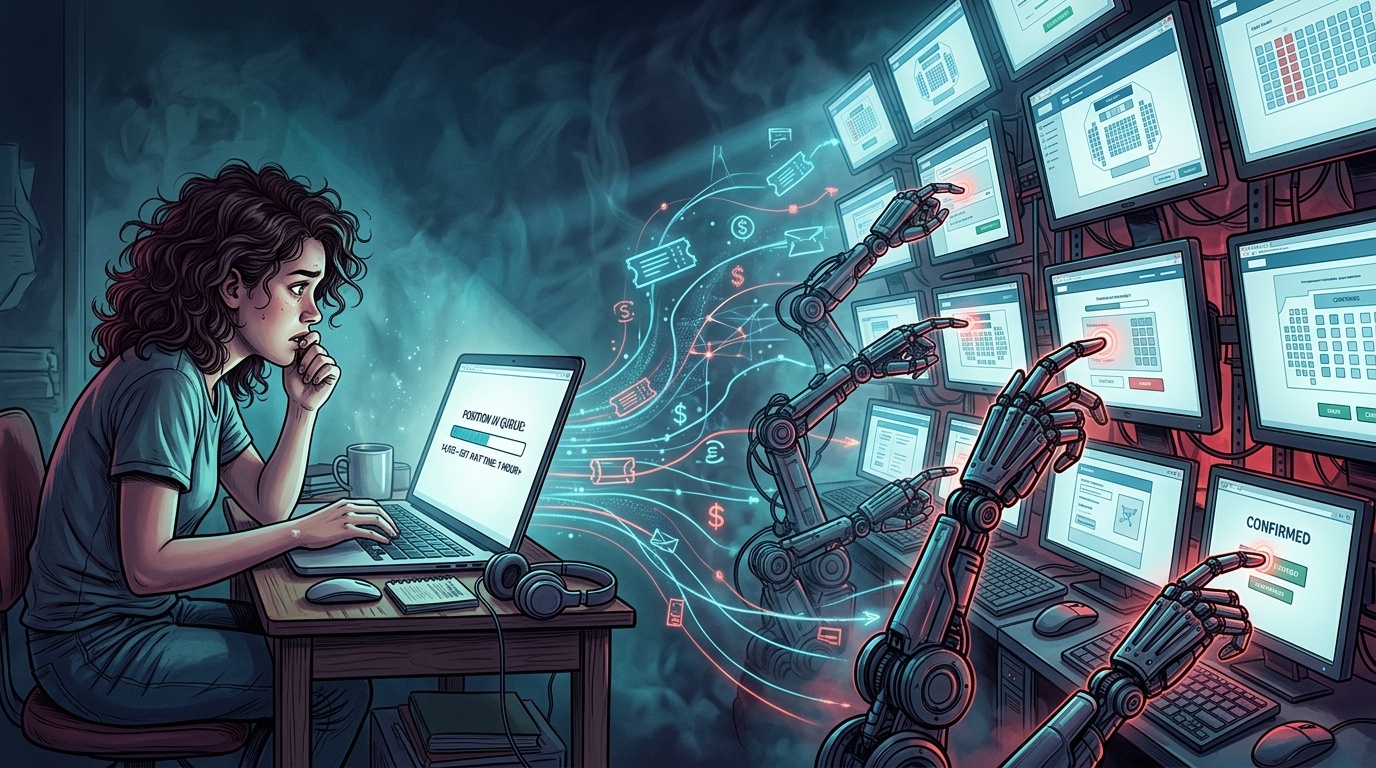
According to the police, the suspect used macro programs over a roughly three-year period—from April 2023 to March 2026—to hoard tickets for popular idol groups and various other concerts. A macro automates the entire booking process, from checking the screen and selecting a seat to entering payment details, repeating the requests at lightning speed. Because these programs execute massive parallel connections and automatic data entry the instant ticketing opens, it is virtually impossible for a regular human fan to compete manually.
Even when ticketing platforms strictly limit the number of purchases allowed per person or account, scalpers easily bypass these walls by mobilizing multiple accounts. Investigators found that the suspect borrowed the names of family members and acquaintances to create a network of accounts for her ticket grabs. While it appeared on the surface that completely different consumers were buying the tickets, police determined that a single individual was masterminding both the initial purchases and the subsequent resales. This tactic allowed her to sweep up about 2,600 tickets, forming the basis for the police’s estimate of her massive illicit profits.
The Speed Gap Created by First-Come, First-Served Ticketing
For high-profile K-pop concerts, domestic and international fans battle simultaneously over a limited pool of seats. The moment fan club presales or general sales open, traffic surges dramatically, and prime seats often vanish in mere minutes. A regular fan has to endure the virtual waiting room and carefully click whatever seats happen to be left, whereas a macro user combines repetitive automated inputs with multi-account networks to snatch up multiple prime spots instantly. Even though both log into the same ticketing system, the playing field is entirely uneven from the start.
The lucrative nature of macro-driven scalping stems directly from this speed gap and the sheer scarcity of seats. Once illicit buyers sweep up the inventory, the official platform flashes a “sold out” sign, forcing desperate fans into the secondary market where steep markups are the norm. As scalper prices soar, the immense passion for the concert doesn’t translate into revenue for the artists or production companies; instead, it lines the pockets of resellers. Fans who cannot afford these inflated prices are simply priced out of the experience, widening the gap in access within the fandom based entirely on financial means.
Anomalies Detected Through Gwanghwamun Concert Monitoring
The catalyst for this extensive investigation was the highly anticipated BTS concert in Gwanghwamun. Anticipating a massive surge in illegal ticket trading, the police teamed up with the ticketing agency to closely monitor the purchasing process right from the start. During this sting, they flagged ticketing patterns that deviated sharply from normal user behavior. By tracing these suspicious accounts and their transaction histories, authorities uncovered a prolonged pattern of fraudulent booking. The suspect is specifically accused of using macros to reserve nine tickets for this very event on February 23.
Fortunately, the police intercepted those nine tickets before they could hit the black market. However, the significance of this case goes far beyond saving a handful of seats at a single show. It exposes how even the most heavily fortified ticketing systems for globally renowned acts can be breached when multi-account networks collude with automated software. By catching abnormal patterns during the booking phase itself, this investigation represents a major tactical shift—moving past the old method of chasing down sellers only after their scalp listings appear online.
Reselling 1,700 Tickets at Up to 13 Times the Price in Ulsan
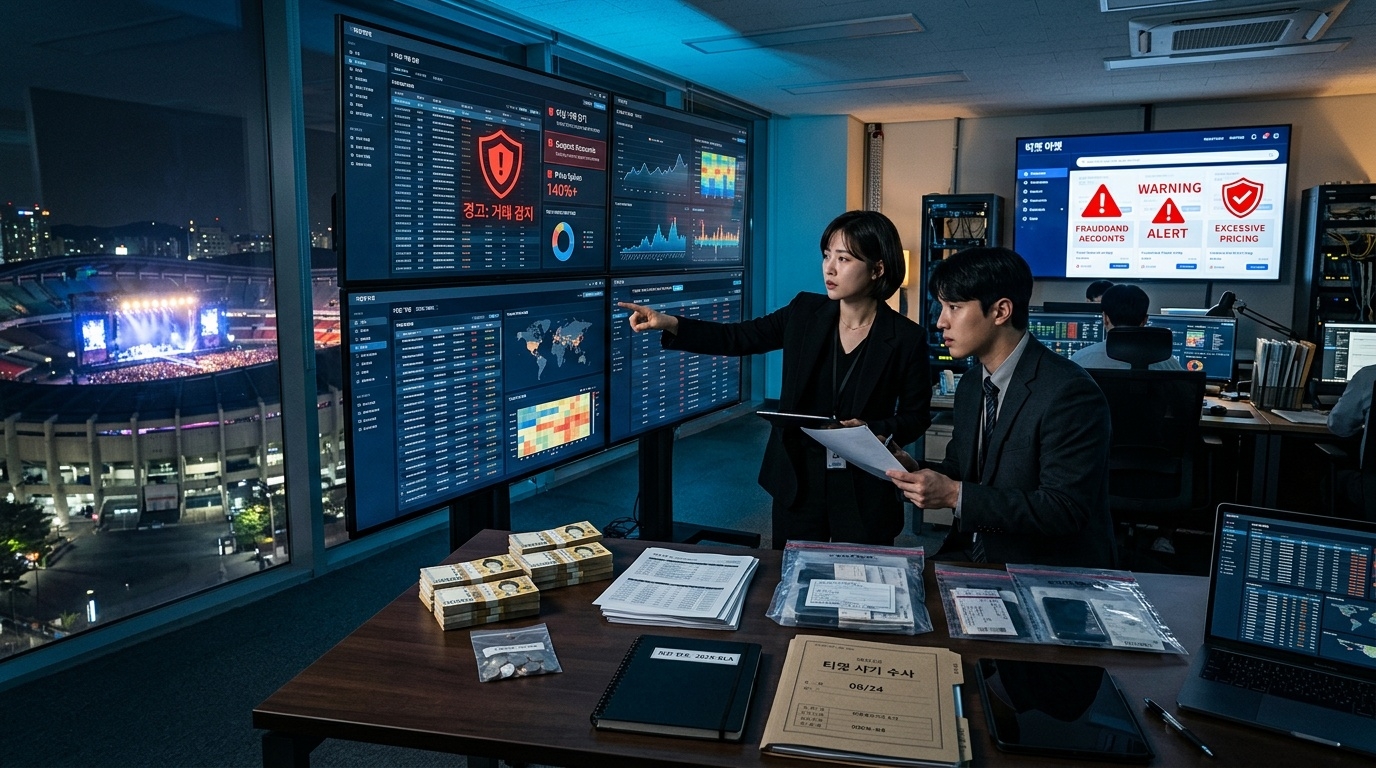
A parallel case revealed by the Ulsan Metropolitan Police Agency around the same time highlights an even darker reality: macro scalping has evolved from opportunistic individual resale into a fully automated, lucrative enterprise. Ulsan police arrested and referred a man in his 30s who custom-built a macro to purchase and resell over 1,700 tickets for popular idol concerts. Between November 2024 and October 2025, he reportedly hijacked roughly 1,200 accounts under other people’s names to sweep up inventory from major domestic ticketing platforms.
He hawked these tickets at anywhere from three to an astonishing 13 times their face value, raking in an estimated 420 million won in illegal profits. His custom macro didn’t just bypass the anti-bot protocols set up by ticketing sites; it also featured a function that automatically generated sales posts on secondhand trading platforms in record time. Automating both ends of the hustle allows a single individual to manage a vast network of accounts and transactions effortlessly. This perfectly illustrates why the scale of modern ticket scalping has grown far beyond a fan simply reselling a few spares manually.
New Laws Targeting All Illegal Sales, Beyond Just Macros
Previous regulations largely focused on punishing the specific use of macros for buying and reselling, leaving a massive blind spot for transactions where macro usage was hard to prove. The revised laws enacted on August 28 vastly broaden the scope of regulation, outright banning illicit ticket purchases and sales regardless of the tools used. Moreover, ticket vendors and e-commerce platforms are now required to implement strict technical and managerial safeguards—such as robust identity verification, active reporting systems, and algorithmic restrictions on suspicious listings—to thwart fraudulent trading.
The financial penalties for illegal sellers have also been given real teeth, with fines scaling up to 50 times the sales amount based on the volume and value of the tickets moved. This is a deliberate mechanism designed to make the economic devastation of getting caught heavily outweigh any anticipated profits, effectively destroying the incentive to scalp. It reflects a growing consensus that alongside criminal punishment, authorities must claw back criminal proceeds and levy crippling fines to strip the scalping industry of its profitability.
Of course, tougher laws alone won’t instantly eradicate every macro-driven transaction overnight. The real-world impact will depend heavily on how accurately ticketing platforms can root out multi-name account rings, how swiftly secondhand marketplaces can flag repeat offenders, and how seamlessly law enforcement can connect purchasing logs with financial trails. The recent busts in Seoul and Ulsan have laid bare the reality that automated bots, hijacked accounts, and dedicated resale channels operate together as a well-oiled machine. Whether genuine fans will finally get a fair shot at booking their dream concerts now rests entirely on how effectively these strengthened rules are enforced.
Source: Announcements by the Seoul Metropolitan Police Agency and Ulsan Metropolitan Police Agency, along with reports from Seoul Economic Daily and Money Today, August 26, 2026; Ministry of Culture, Sports and Tourism, August 28, 2026.