
Table of Contents
The Korean Film Standing Right Behind Two Hollywood Blockbusters
During the last weekend of August, two massive Hollywood films claimed the top two spots at the South Korean box office. Right behind them stood director Kim Mi-jo’s Korean film, The Journey to Gyeongju. Released on August 26, the film took third place overall during its opening weekend from the 28th to the 30th. It was the highest rank among newly released Korean films. Amid foreign blockbusters armed with colossal budgets and familiar intellectual properties, this Korean family revenge drama emerged as a compelling third option for moviegoers.
The opening weekend drew 124,963 viewers, bringing the cumulative audience to 192,384 by August 30. On its opening day, the film was shown on roughly 600 to 800 screens, depending on the tracking time. Despite facing off against blockbusters that secured far more screenings, the film firmly held its ground. To truly understand its presence, however, one must look past the numbers and delve into the story of why these four women headed to Gyeongju.
A Family’s Time Frozen for Eight Years
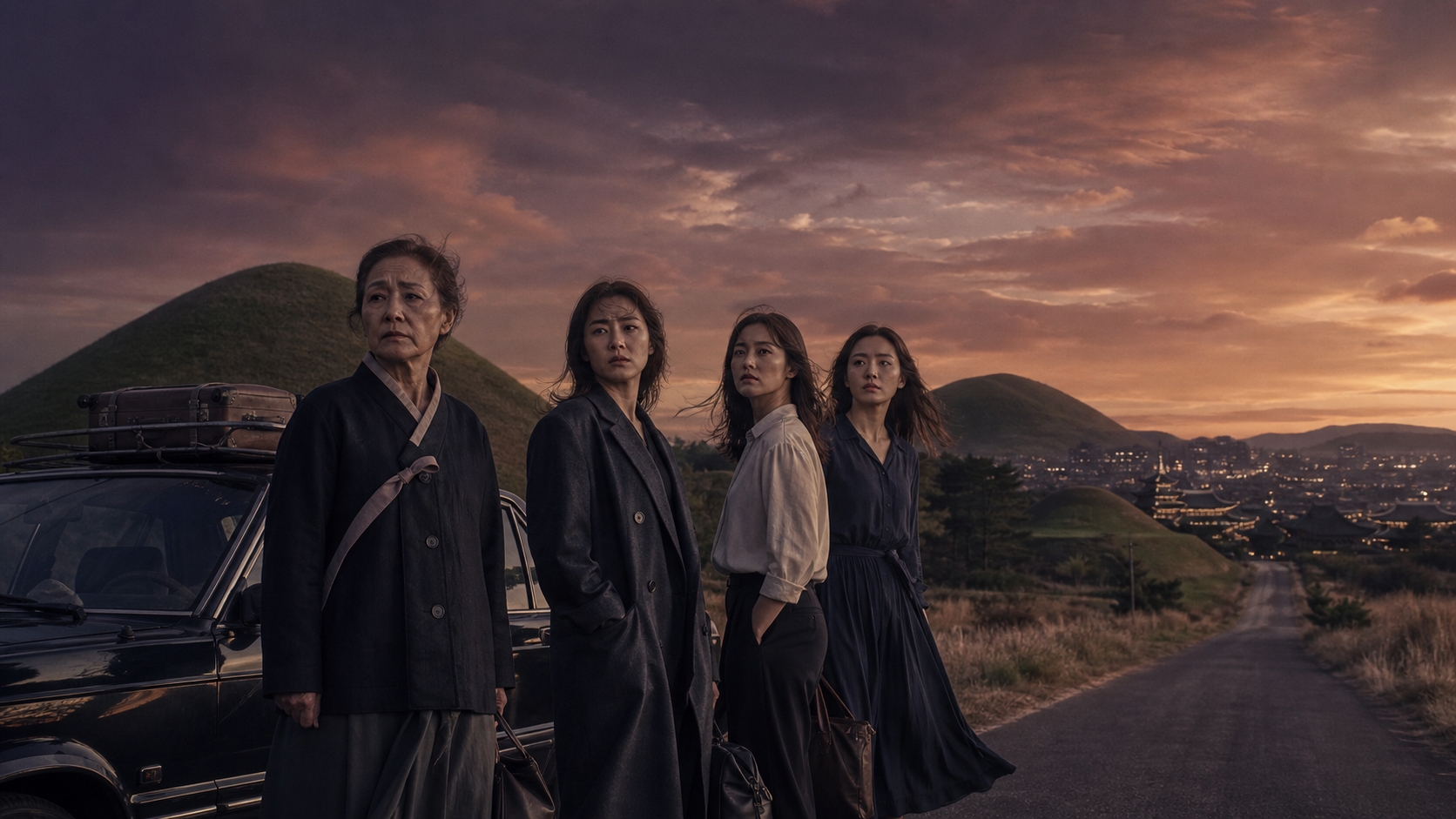
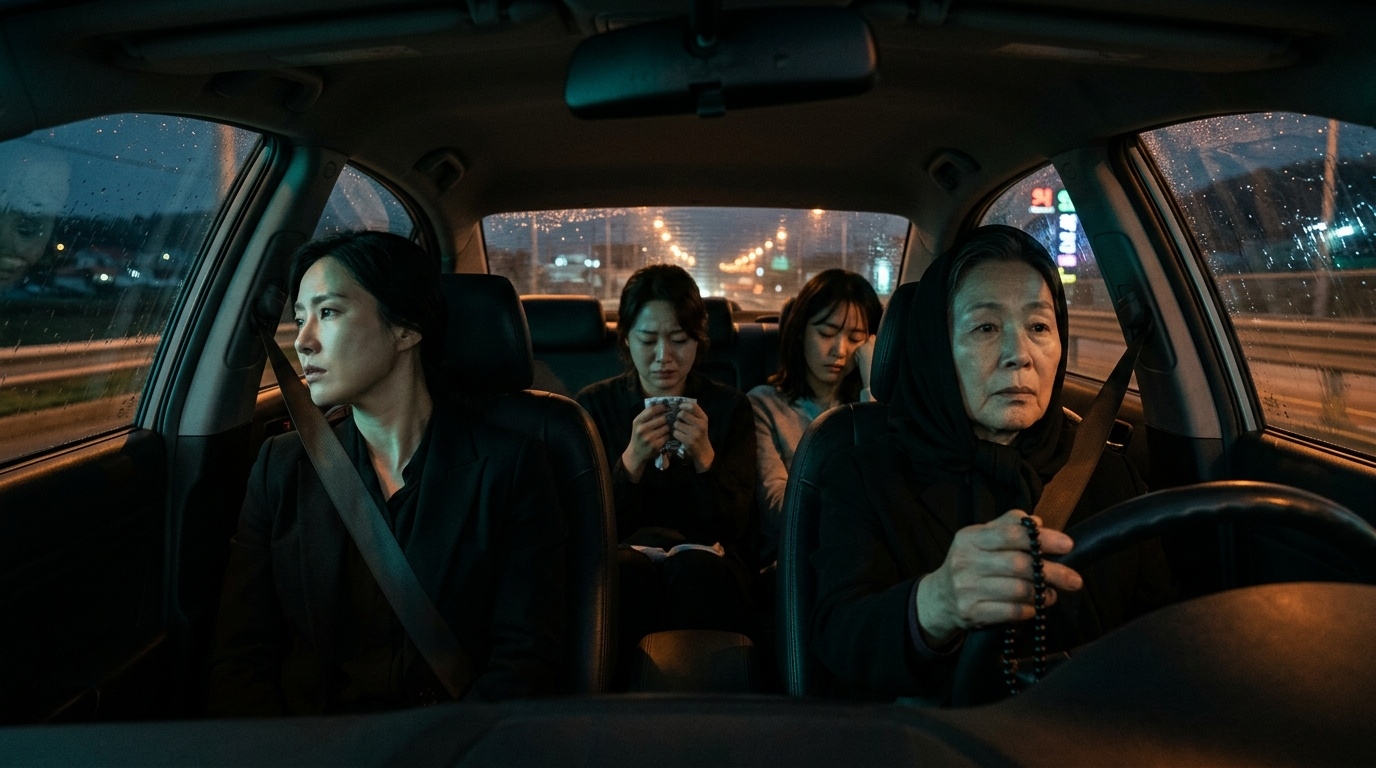
The Journey to Gyeongju centers on the youngest daughter, Gyeongju, who never returned from a school trip. Her mother, Ok-sil, and her three remaining sisters have endured eight years since her passing. The calendar pages may have turned, but for this family, the tragedy never truly ended. After a long wait, they finally set out on a road trip together to enact revenge for Gyeongju. The city of Gyeongju, widely known as a tourist destination, is not a place of leisure for them. It is where they must confront a past incident and finally take the actions they have long postponed.
The premise of plotting revenge for eight years gives the narrative a profound weight. The protagonists are not driven by fleeting, impulsive rage; they are a family that has weathered a vast expanse of time while carrying immense loss. While revenge is their shared goal, the years they each endured and the roles they played within the family to reach this point are distinct. Amid the tension inherent in the crime genre, the film beautifully weaves in how those left behind cope with grief and how they treat one another.
The driving force of the film stems from the collective movement of the family rather than the solo actions of a single individual. Experiencing the same loss doesn’t mean the four women process their grief in the exact same way. The physical journey of the mother and three daughters serves as a framework not just for resolving the incident, but for revealing the emotions and dynamics they have each harbored over the past eight years. The “journey” in the title signifies both their literal road trip and the emotional miles the family has traversed.
A Mother and Three Daughters, From Lee Jung-eun to Lee Yeon
The mother, Ok-sil, is played by Lee Jung-eun. Gong Hyo-jin, Park So-dam, and Lee Yeon take on the roles of the three daughters joining Ok-sil on her path of vengeance. These four actors span different generations and acting backgrounds, yet they drive the story forward seamlessly through their familial bond. At the heart of the film is not simply an alliance of four women from four generations, but a deep solidarity of four women making up a mother and her three daughters. Recognizing this distinction is vital to understanding the family dynamics of the work.
This casting brings a collective family to the forefront, stepping away from the lone-hero trope typically found at the center of revenge thrillers. While heading toward the same destination, each character responds differently based on her established role within the family. Instead of relying on the actions of a single star, the film builds its tension and emotional resonance through the chemistry of all four characters. Audiences are invited not only to see if the revenge succeeds but also to witness how four very different individuals navigate a single master plan together.
The ensemble of actors itself elevates the film’s profile. Lee Jung-eun and Park So-dam are already well-known to international audiences through the acclaimed Korean film Parasite. With Gong Hyo-jin and Lee Yeon joining the cast, four actors with remarkably distinct acting styles are united as mother and daughters. Yet, the film cannot be defined merely as a gathering of famous faces. Because this is a story of four people sharing a single loss and purpose, it requires them to project distinct individual presences while simultaneously embodying a tightly knit family.
Leading the Korean Box Office From Day One
Opening on August 26, the film drew 36,796 viewers on its first day, debuting at third place at the overall box office while securing the number one spot among Korean films. The pre-release buzz successfully translated into opening day choices by moviegoers. Throughout its opening weekend, it maintained its overall third-place position, right behind Odyssey and Spider-Man: Brand New Day. The ranking held steady, and the story of the four women remained a strong alternative for audiences looking for something different from the two massive blockbusters.
Over the three days from August 28 to 30, it attracted 124,963 viewers. By the end of its first weekend, the cumulative audience surpassed 190,000. Even during a season when massive foreign films typically sweep up theater audiences, The Journey to Gyeongju held its ground. While it didn’t threaten the top two foreign films in sheer ticket sales, it refused to be pushed out of the upper ranks despite the overwhelming exposure of its competitors.
Even after the opening weekend, the film maintained its third-place ranking overall. Although there is a significant gap in pure audience numbers compared to the films ahead of it—which boasted far more screens—The Journey to Gyeongju continued to claim the highest spot among Korean films. It is still too early to predict its final box office run. However, it has successfully carved out the necessary space to be discovered by audiences during its crucial first week.

A Narrative Creating an Alternative to Blockbusters
Framing the performance of The Journey to Gyeongju solely in terms of winning or losing against Hollywood films obscures its unique appeal. What this film offers is not a massive production scale or a recognizable intellectual property. It offers a family that spent eight years plotting revenge, a mother and three daughters, and a crime-driven road trip cutting through actual Korean cities. Rather than leaning on a cinematic universe the audience already knows, it uses the relationships and motives of its characters as its starting point.
The film adopts a revenge format familiar to international audiences, yet places Korean cities and mother-daughter dynamics squarely at the heart of the narrative. The clever overlap between the youngest daughter’s name, Gyeongju, and their destination connects the concepts of travel and memory. The movement in the film is not about sightseeing; it is the process of a family returning to the past and choosing to take action.
Korean cinema doesn’t necessarily have to compete on the exact same scale to maintain its presence amidst major foreign releases. The Journey to Gyeongju brought four women to the forefront as the agents of revenge, smoothly blending a family drama with a crime thriller. This distinct approach resonated with audiences, leading to its solid third-place debut at the opening weekend box office.
The Key Challenge After a Third-Place Opening
Securing third place in its opening week is a starting point, not the finish line. Its future performance hinges on whether this initial audience interest can stretch into a long-term theatrical run and whether it can sustain steady viewing demand within its limited screen count. In a landscape where blockbusters dominate multiplex screens, longevity is just as important as short-term rankings. It needs to maintain solid seat occupancy rates and positive word-of-mouth to secure ongoing screening opportunities.
The momentum The Journey to Gyeongju displayed in its first week is undeniable. While two familiar Hollywood heavyweights led the market, this highly specific, distinctly Korean revenge tale of four women firmly established itself as the third option. It wasn’t a score that overtook the blockbusters. Yet, in a theatrical environment where films of vastly different scales clash, it was the distinct personalities of the characters and the story that ultimately moved the audience.
Whether it can hold this position after crossing the 190,000-viewer mark in its opening weekend will depend heavily on word-of-mouth and theater conditions. It remains to be seen if the initial curiosity sparked by the fame of the four actors will blossom into genuine appreciation for the family revenge drama itself. While it is hard to dictate the final outcome based on opening week numbers alone, The Journey to Gyeongju has left open the promising possibility that a Korean film with strong regional identity and rich character dynamics can still carve out its own space in a blockbuster-driven market.
Sources: Korean Film Council (KOFIC) Box Office Information System & Yonhap News, August 31, 2026; Economic Review, September 1, 2026.