
Table of Contents
1,753 Complaints in 7 Months, Surpassing Last Year’s Total
Between January and July 2026, a total of 1,753 tourism-related complaints were filed across the country. According to data released by the Korea Tourism Organization’s Korea Tourism Data Lab, that is nine more than the 1,744 complaints filed during the entirety of 2025. With five months still left in the year, the annual record has already been broken.
Foreign visitors submitted 1,477 of these reports, accounting for 84.3% of the total, while domestic travelers filed 276. These complaints are collected through the Tourist Complaint Center website and the 1330 Tourist Translation Information line, the main official channel for international tourists who may struggle to raise concerns directly with accommodations, shops, or transit operators because of language barriers.
Seven months of data outpacing a full twelve months points to something beyond simple monthly fluctuation. These numbers alone can’t say definitively that the overall quality of Korea’s tourism services has dropped, but they do show that friction with accommodations, shopping, flights, and taxis is stacking up quickly in the official record.
Growing Pains in the Era of 10 Million Tourists
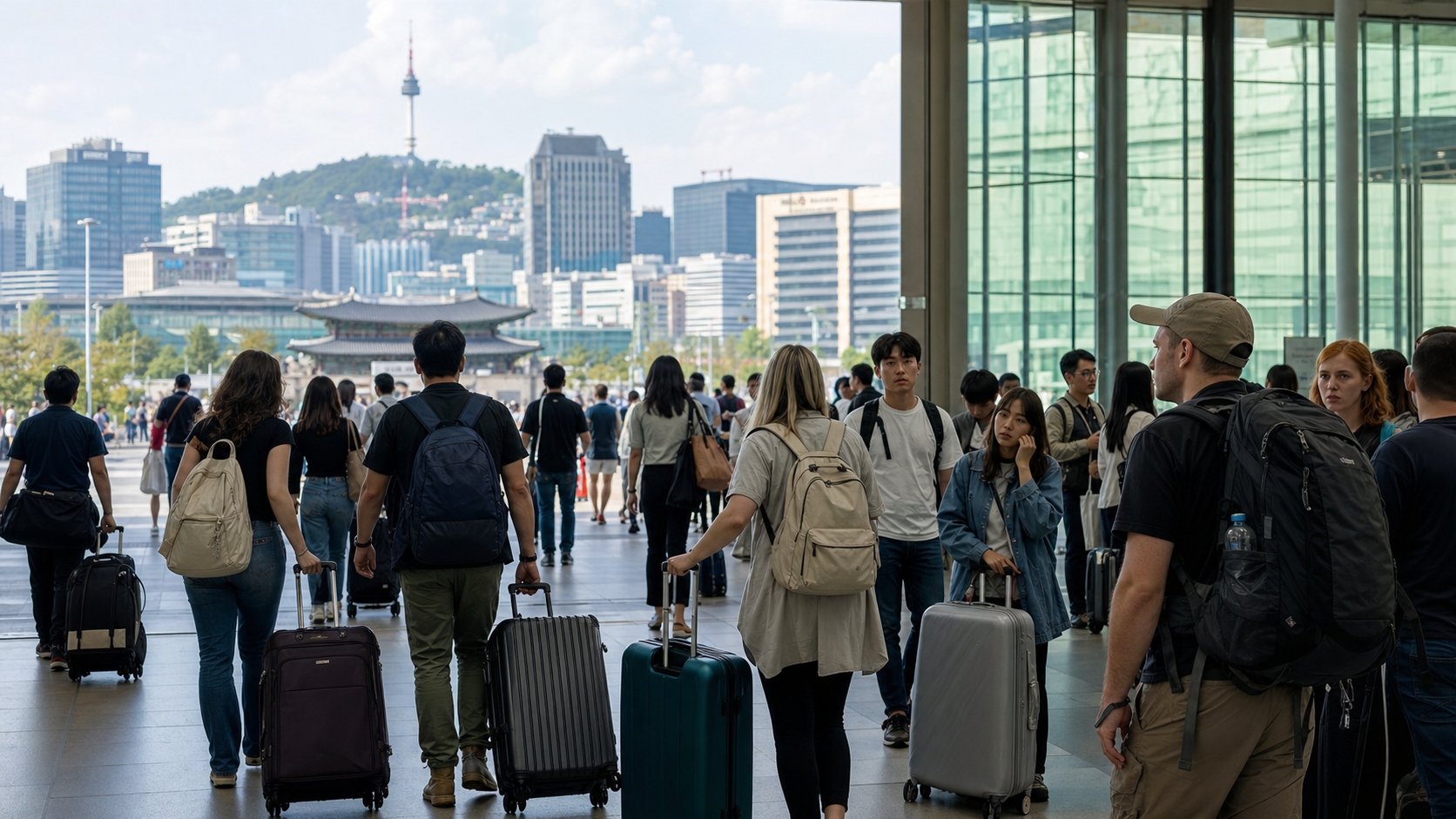
This rise in complaints coincides with a period of rapid growth in inbound tourism. In the first half of 2026, roughly 10.71 million foreign tourists visited South Korea, crossing 10 million for a half-year period for the first time on record. More visitors naturally means more people booking rooms, shopping, moving through airports, and catching taxis.
Part of the rise in complaints is simply a byproduct of a larger market: when more people use local services, the absolute number who run into problems and report them tends to grow too. Based on the figures currently available, it’s hard to say exactly how much more likely an individual tourist is to file a complaint compared with last year.
Still, the record numbers shouldn’t be dismissed just because visitor volume is up. A filed complaint signals that real friction happened on a trip and that the traveler felt it was worth pursuing an official resolution. For the tourism boom to hold up, Korea needs its service quality, reliable bookings, transparent pricing, safe transit, to keep pace with the number of arrivals.
Most Complaints in Seoul, While Busan Sees a 2.5-Fold Jump
Regionally, Seoul logged the most complaints at 665, followed by Busan with 594. Incheon recorded 176, and Jeju saw 155. Complaints were concentrated in areas with international airports, major attractions, hotels, and shopping districts. Seoul and Busan together accounted for 1,259 of the reports, a large share of the total.
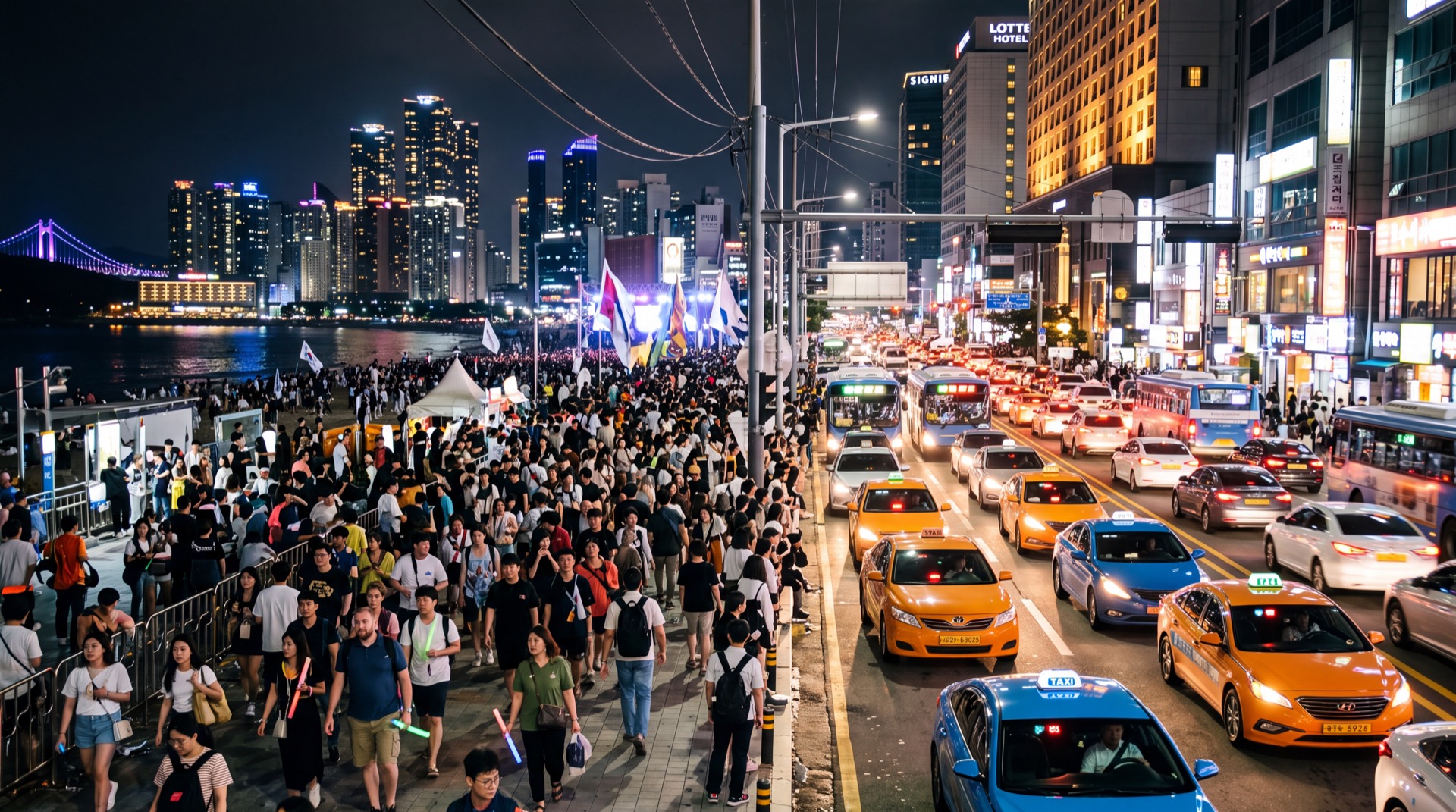
Busan’s spike stood out. Complaints there rose from 239 in the same January-to-July period last year to 594, an increase of about 2.5 times. Its overall count was still lower than Seoul’s, but the year-over-year jump was clear. It shows how much strain local services can face when visitor demand spikes over a short period.
In June, an estimated 110,000 people came to Busan, driven largely by a BTS concert. Large K-pop events can draw international fans into regional areas and boost tourism outside the capital. But when a single event triggers a rush for beds and rides all at once, problems like abrupt cancellations, price disputes, and transit trouble become more visible.
Busan’s rising complaints can’t be pinned entirely on one concert. Still, the overlap of a major cultural event, a surge of tourists, and a jump in reports shows that on-the-ground capacity matters as much as hosting the event itself. Anticipating crowd sizes and spreading the load across lodging and transit makes a real difference to the local travel experience.
Friction Centered Around Lodging and Shopping
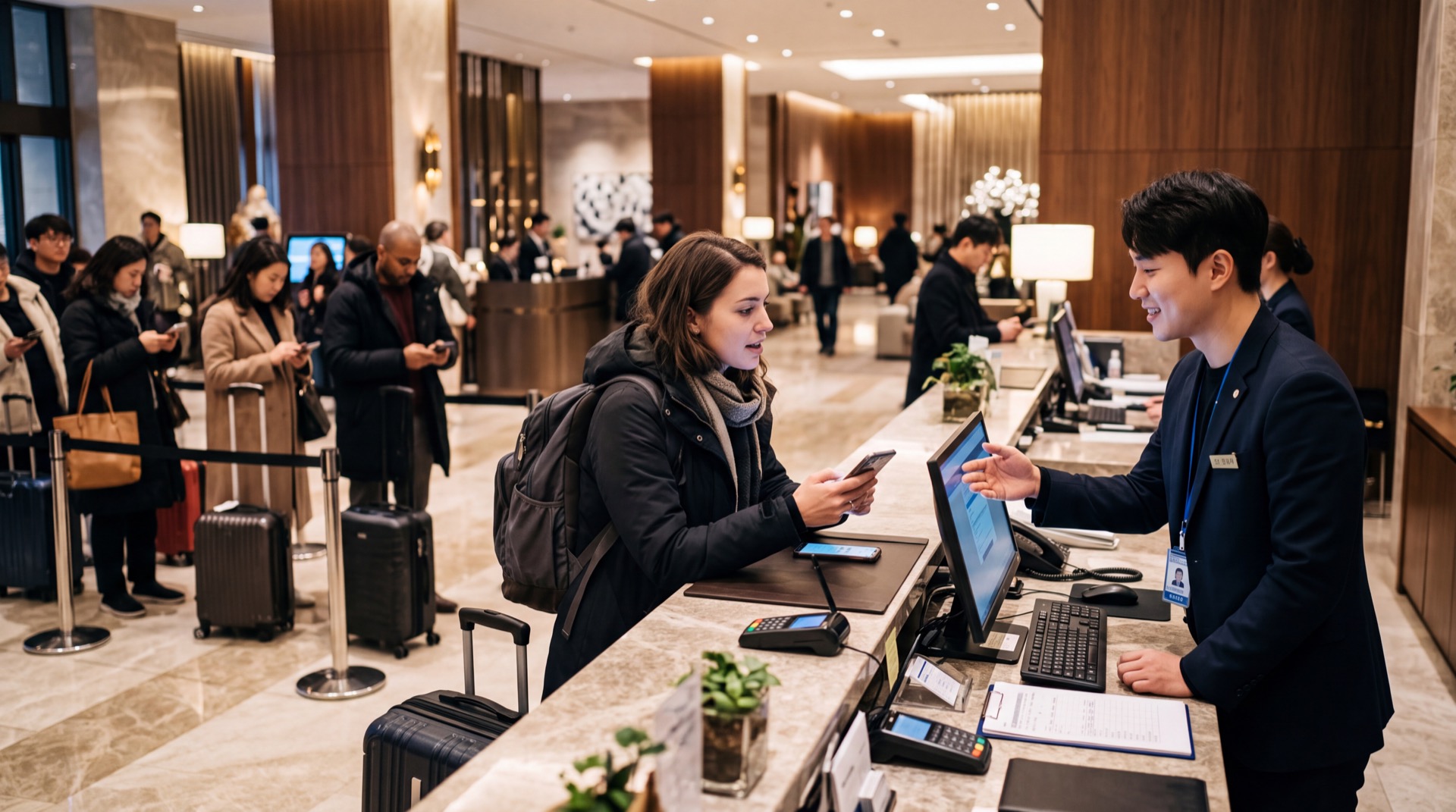
By category, general accommodations topped the list with 500 complaints, mainly one-sided reservation cancellations and steep penalty fees. Travelers usually build their flights, local transit, and daily plans around where they’re staying, so an unexpected cancellation isn’t just a dispute with one business. It can derail an entire trip.
These lodging problems get worse during major events or peak seasons. If a booking is cancelled when rooms are scarce, finding a comparable alternative nearby is difficult. For foreign tourists already navigating language barriers, different payment systems, and unfamiliar refund processes, abrupt cancellations or steep fees add an even heavier burden.
Shopping came next with 376 reports, mostly rude service and pricing disputes that felt like overcharging. Shopping is a direct point where tourists experience local service alongside the products they buy, so when pricing is unclear or poorly explained, even a small transaction can leave a bad impression of the whole destination.
Airport and flight-related complaints accounted for 186 cases, and taxi complaints came to 182, often meter refusals and reckless driving. Airports and taxis are usually the first services tourists encounter on arrival or when moving between cities. Because they affect safety and set the tone for a trip, these categories carry more weight than their raw numbers suggest.
Foreigners Made Up 84.3% of Reports, Led by Chinese Tourists
By nationality, Chinese tourists filed the most complaints at 680, followed by South Koreans with 276, Japanese with 263, Taiwanese with 182, and Hong Kong residents with 87. Of the 1,477 complaints from foreigners, Chinese visitors made up about 46%. China was also the largest source of foreign arrivals to Korea during the same period.
Reports from Japanese, Taiwanese, and Hong Kong tourists were substantial too, which suggests these complaints aren’t limited to one nationality but show up across major inbound markets. That points to a need for improvement in shared touchpoints, booking, pricing, and transit, that affect travelers from many countries.
Even so, the raw numbers by nationality need to be read alongside total visitor volume. Countries that send more tourists will naturally rack up more interactions with lodging, shopping, and transportation, and a proportionally higher number of reports. Chinese tourists filing the most complaints doesn’t necessarily mean they are more dissatisfied than travelers from other countries.
Rather than singling out specific visitor groups, this nationality data is more useful for deciding where to focus multilingual support and dispute resolution. The fact that 84.3% of all complaints came from international visitors points to the need to explain service rules, pricing, and refund policies clearly enough to get past language barriers.
Turning Growing Numbers into Lasting Trust
The 2026 tourism statistics show two trends side by side. In the first half of the year, inbound foreign tourists surpassed 10 million for the first time on record, while tourism complaints passed the previous year’s total in just seven months. The success of attracting larger crowds and the strain on frontline services are showing up at the same time.
The complaints span several stages of the travel experience, from lodging and shopping to flights and taxis. That means fixing one industry alone won’t solve it; it calls for a broader review of the tourism journey, from booking and entry to local transit and retail. Regionally, it also calls for better planning to match service supply with the demand expected around major events.
To get an accurate read on how service quality is changing, the total complaint count isn’t enough on its own. Tracking the ratio of complaints to visitor volume, along with regional and sector trends, matters too, to see whether complaints are simply scaling with tourist growth or whether friction in certain areas is growing faster than that. The detailed statistics now available are a starting point for that work.
For the tourism boom to turn into sustainable growth, visitors need accessible ways to report problems and clear processes for tracking how they’re resolved. Making hotel bookings more stable, pricing and penalty fees clearer, and taxi service more reliable all matter here. The real test for Korean tourism going forward is whether this wave of visitors turns into good experiences and repeat trips.
Sources: Korea Tourism Organization Korea Tourism Data Lab, Yonhap News, Maeil Business Newspaper, September 6, 2026; Ministry of Culture, Sports and Tourism and Korea Tourism Organization Korea Tourism Statistics, July 2026.