Table of Contents
Samsung C&T Lands 121 Stores in a Single Deal
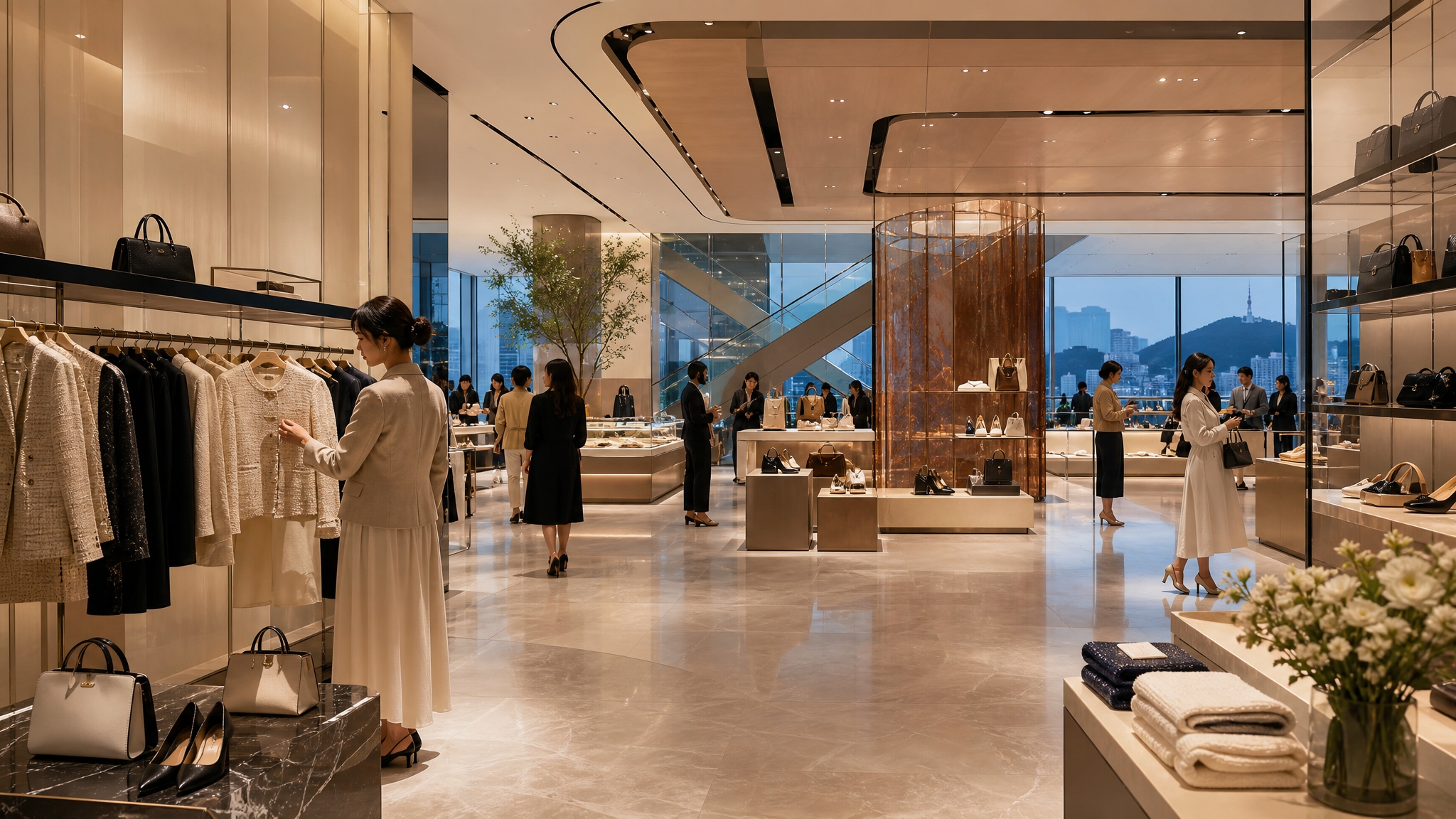
In March 2026, Samsung C&T Fashion Group signed an agreement with French fashion company SMCP, securing the exclusive domestic distribution rights for Sandro, Maje, Claudie Pierlot, and Fursac. The physical retail network Samsung C&T now operates totals 121 stores, combining 95 department store locations and 26 outlets. Online, they set up dedicated brand boutiques on their own fashion platform, SSF Shop.
This deal is a different scale from the usual approach of bringing in one new overseas brand. Samsung C&T took over domestic operations for four brands at once, all already well known to Korean consumers with established store networks. Instead of building brand awareness from scratch, the company is building on recognition and retail footprints that already exist, now consolidated under its own management.
Sandro, Maje, Claudie Pierlot, and Fursac target different customers and sell different products, but they all belong to the same French contemporary fashion category, sitting between traditional high-end luxury and mass-market fashion. By managing all four together, Samsung C&T is trying to widen consumer choice in that category and cover gaps in its own portfolio.
Moving Beyond Simple Imports into a Race for Distribution Rights
The deal goes beyond simply importing and selling products: it secures exclusive domestic distribution rights. A company with these rights can run offline stores, online sales, product rollouts, and marketing under one strategy. That means deeper involvement in a brand’s growth in Korea, but also full responsibility for sales and brand image.
121 stores is more than just a high number of locations. An overseas brand needs stable distribution and physical space where shoppers can see the products in person to succeed in Korea. By using an existing retail network, Samsung C&T skipped the time and cost of building new storefronts from scratch, connecting department stores, outlets, and online channels in one move.
Distribution rights for imported brands also let a company fill price points and aesthetics its own labels don’t cover. Adding a brand with an already-formed identity brings in a different kind of demand alongside the existing customer base. Competition among fashion houses in 2026 has shifted from finding the next hot brand to figuring out how to pair acquired brands with the right retail network.

Strategic Choices that Drove Performance for Samsung C&T and LF
Samsung C&T Fashion Group posted 573 billion won in sales and 38 billion won in operating profit in the first quarter of 2026. In the second quarter, sales rose to 593 billion won and operating profit to 54 billion won. The company credited the gain to balanced growth across both in-house and imported brands, a sign that imported brands have moved from a supplementary lineup to a core part of the business.
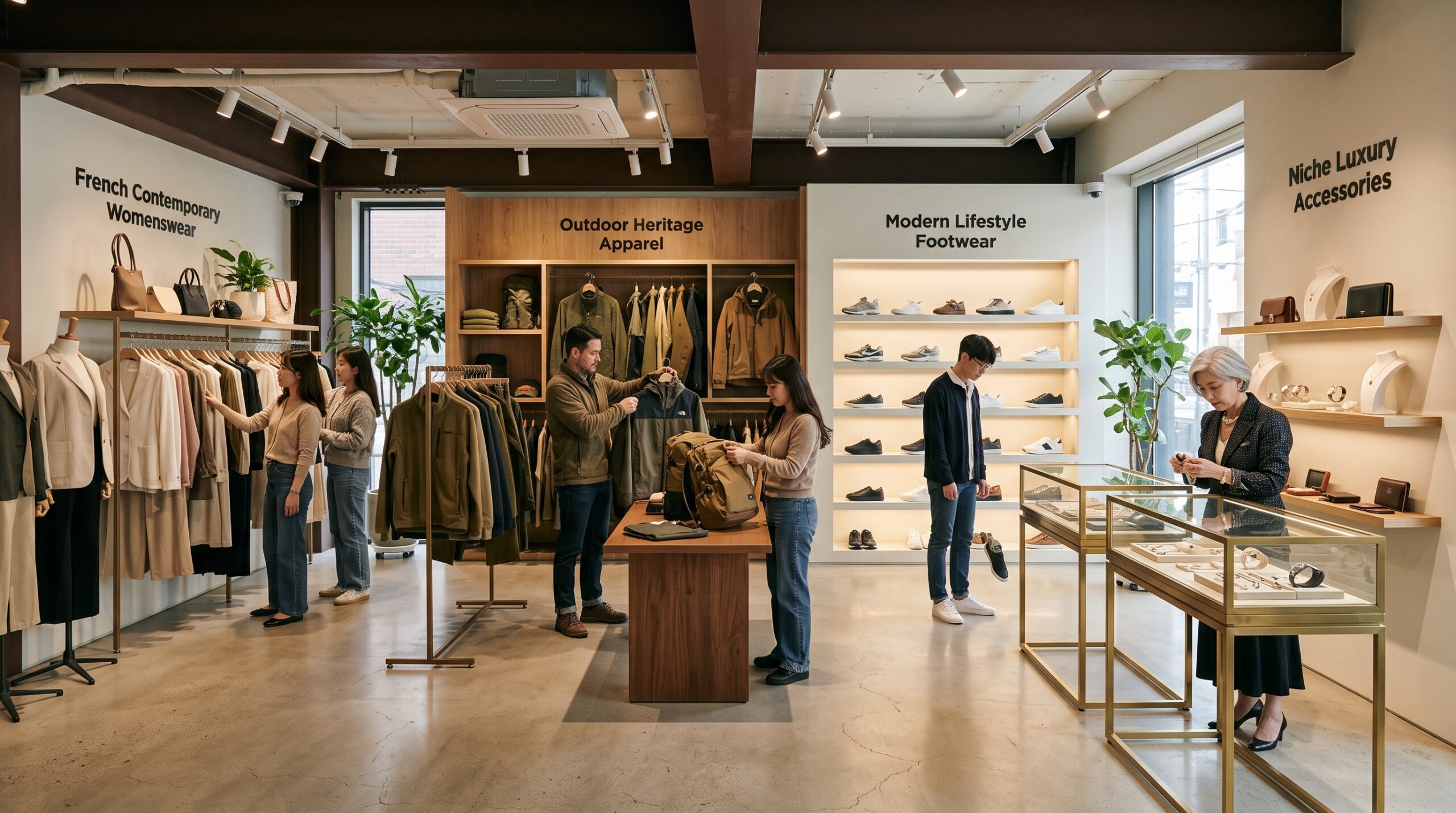
Samsung C&T’s approach focuses on taking in a large cluster of brands and a big retail network at once. LF has instead widened its range of imported brand categories. Barbour, Keen, and Oofos cover different demands across apparel, footwear, outdoor gear, and lifestyle. Rather than doubling down on one type of fashion product, LF’s approach spans a wider range of consumer activities and use cases.
LF’s consolidated sales for the first half of 2026 reached 927.3 billion won, up 4.7% from a year earlier, while operating profit rose 19% to 88.5 billion won. Steady growth from imported brands like Barbour, Keen, and Oofos backed those numbers. Operating profit growing faster than sales suggests the import portfolio added real profitability, not just volume.
The Diverging Expansion Playbooks of LF, Handsome, and Kolon FnC
LF’s strategy expands the lifestyle areas its portfolio covers, not just the variety of imported clothes. Pairing an apparel brand like Barbour with footwear brands like Keen and Oofos spreads out purchasing motives and seasonal demand. That reduces reliance on passing clothing trends and pulls everyday spending, whether for going out or for leisure, directly into the import business.
Handsome made its move with Skims. The strategy aims at a new customer base by adding an internationally known name to its existing import lineup. Handsome already carries a mix of in-house and overseas labels; Skims gives the portfolio extra visibility and reaches consumers outside its traditional demographic.
Handsome’s move shows that the import brand business isn’t only about stacking similar brands together. Instead of simply scaling up current product lines and customer bases, a company can use a highly recognizable new brand to shift its portfolio’s boundaries. The real question is whether a newly acquired brand overlaps with the existing business or actually draws in new consumers.
Kolon FnC stepped away from the race for store counts and mass appeal, choosing instead to lock in niche luxury brands early. Niche luxury brands serve a smaller audience than the major luxury houses but carry a distinct look and premium image. Rather than chasing current mainstream popularity, Kolon FnC is betting on brands with high future growth potential, building their awareness and story in Korea over the long term.
This is the opposite of Samsung C&T’s approach of securing massive distribution deals. Instead of taking on brands that already have wide retail networks and recognition, Kolon FnC picks relatively unknown labels first, betting on a competitive edge that way. It may take longer to reach full commercial success, but the approach lets them build a distinct image with brands no other company carries.
Why the Competition for Imported Brands Has Suddenly Intensified
What’s driving all four fashion houses to ramp up their imported brand operations at once is the fragmentation of consumer tastes. The market now has several distinct brands, each different in price, design, and purpose, building their own followings rather than one mega-brand satisfying everyone. For a company, mixing and matching overseas brands with different identities multiplies consumer choice faster than trying to meet every demand with in-house labels alone.
Brands already established abroad bring a name and design identity that’s already formed. Instead of designing products from scratch and building awareness, domestic companies can reach consumers through an image that already exists. But global fame doesn’t automatically mean local profit. Merchandising, store operations, online sales, and marketing all have to line up with the specifics of the Korean market.
Imported brands are also tied to how competitive department stores and online platforms are. Brands that cover a range of tastes give shoppers a reason to visit a specific retail channel. Exclusive rights in particular keep a brand from being spread thin across multiple retailers, which sharpens differentiation. That means whoever holds distribution rights affects not just the brand’s own success, but how appealing the retail channel is.
Financial performance adds to that pressure. As seen with Samsung C&T and LF, when imported brands lift sales and operating profit, the overseas brand business stops looking like a mere image-booster and starts looking like a real growth engine. So fashion companies are no longer looking only at a brand’s fame; they’re weighing its potential for domestic expansion, its overlap with existing customers, its product categories, and its actual capacity to generate profit.
Why the Portfolio Mix Matters More Than the Brand Count
All four companies use overseas brands, but their growth formulas are different. Samsung C&T chose scale and speed by locking in SMCP’s four brands along with 121 stores. LF diversified across product categories with Barbour, Keen, and Oofos, while Handsome went after a new demographic with Skims. Kolon FnC put its energy into securing promising niche luxury brands early.
The distribution rights competition of 2026 can’t be judged just by counting which company holds the most international labels. What matters is whether a brand fills gaps in an existing business, brings in different consumers, and connects efficiently to offline and online retail networks. Even brands with the same level of recognition can perform very differently in Korea depending on the operating company’s channels and marketing.
Large-scale distribution deals are effective for growing sales fast, but they come with the burden of managing many stores and brand identities at once. Category diversification lowers the risk of depending on a single market, but it requires separate operating skills for each product group. Buzzy brands and niche luxury lines face their own challenges: turning short-term attention into repeat purchases, and growing a customer base that’s naturally limited.
What decides this competition isn’t just importing foreign brands, but turning acquired rights into a sustainable business. The different strategies at Samsung C&T, LF, Handsome, and Kolon FnC show the domestic fashion market shifting from single-brand rivalries to broader portfolio competition. The real test ahead is which of these combinations turns into long-term sales and lasting profitability.
Source: Samsung C&T Newsroom, March 3, 2026; Korea Textile Newspaper, September 2, 2026.