Table of Contents
Cosmetics Exports Surpass $1.3 Billion
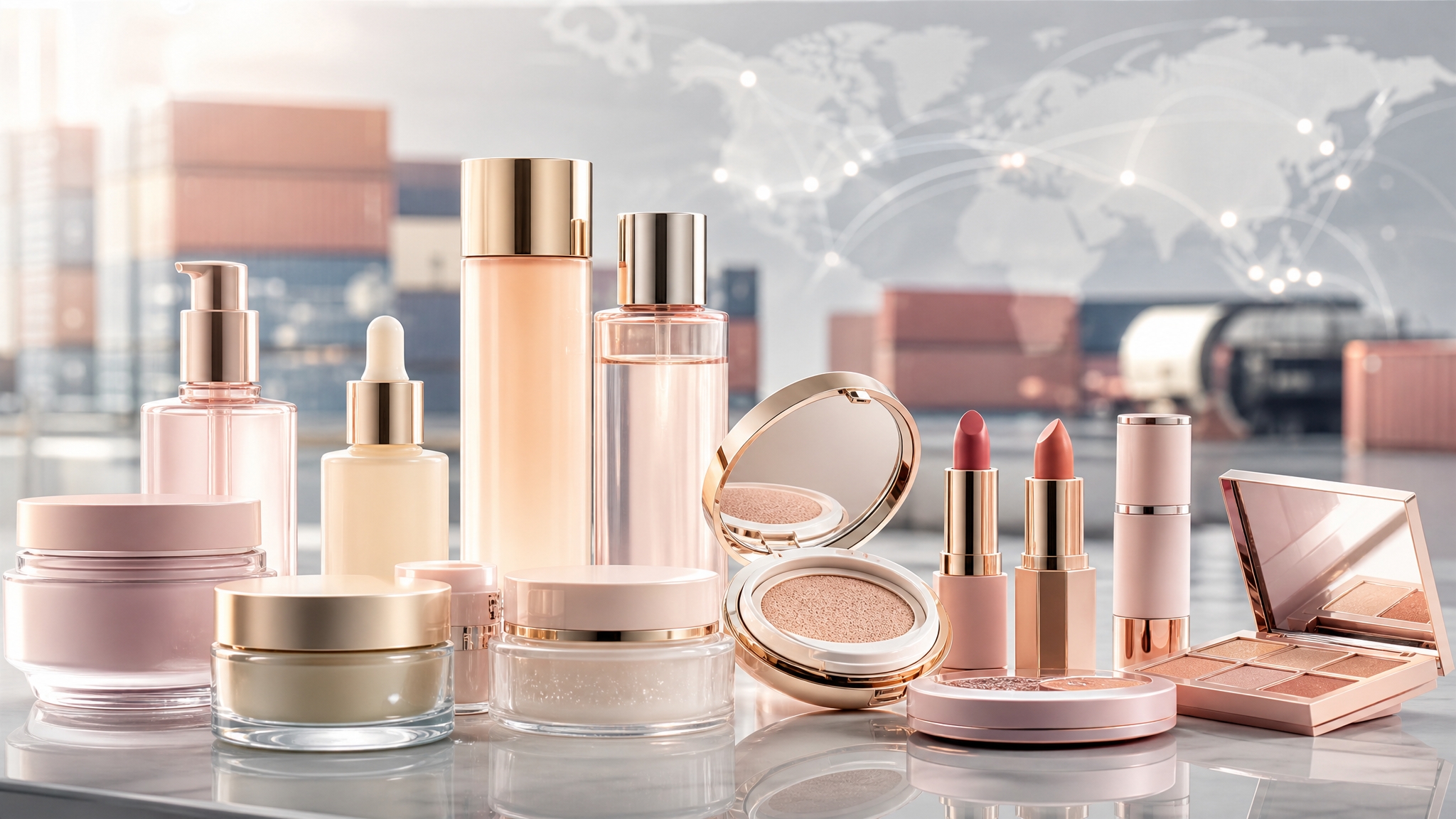
South Korea’s cosmetics exports reached approximately $1.31 billion in August 2026, setting a new all-time high for the month. According to provisional data from the Ministry of Trade, Industry and Energy based on customs clearance figures, exports jumped by 52.1% compared to the same month last year, more than a 50% increase from August 2025.
What stands out about this performance is that cosmetics exports didn’t just break a seasonal record, they reached an entirely new scale. When analyzing August figures, it’s better to look at year-over-year comparisons rather than month-to-month changes to account for seasonal trends. A 52.1% year-over-year jump shows how fast global demand for K-beauty is growing.
Unlike industrial goods like semiconductors that rely heavily on B2B transactions, Korean cosmetics are consumer products chosen directly by everyday shoppers abroad. This growth in exports means more than just stocking foreign shelves; it reflects real interest and purchasing power from local consumers, with K-beauty becoming a consumer good closely tied to Korean culture.
Export Figures Vary by Methodology
The reported value of cosmetics exports can differ depending on how the categories are grouped. The Ministry of Trade, Industry and Energy tallied it at roughly $1.31 billion under its major export category statistics, while NH Investment & Securities analyzed it at $1.08 billion using separate criteria for cosmetics. Even though these numbers vary, neither is necessarily incorrect.
Totals naturally shift when different datasets define the exact items and scope of what counts as a cosmetic product. Rather than viewing $1.08 billion and $1.31 billion as conflicting figures from the same baseline, it’s better to understand them as results from distinct classification systems.
Both methods point to the same reality: South Korea’s cosmetics exports in August 2026 hit their highest level ever recorded for that month. The record-breaking momentum and the year-over-year jump matter more than the small gap between the two totals.

Interest in K-Content Drives Product Consumption
The Ministry attributed this export boom to growing global awareness and preference for K-beauty. As Korean dramas, music, and other cultural content are consumed worldwide, the fashion, makeup, and skincare routines featured in them naturally catch the public’s eye.
Cultural content isn’t like a traditional advertisement that lists ingredients or functional benefits. Instead, it builds familiarity with Korean products through repeated exposure to Korean aesthetics and lifestyles. When the curiosity sparked by a show leads to product searches and purchases, cultural exposure ends up fueling exports of consumer goods.
K-beauty doesn’t refer to a single company or a specific product. It’s a broader term covering an entire industry, from skincare and color cosmetics to finished brands and their manufacturers. As international interest spreads across various product lines, the industry builds a more resilient export base that doesn’t rely on one fleeting trend.
Expanding Beyond Greater China to Europe
Greater China, including mainland China and Hong Kong, remains a key market for Korean cosmetics exports. What’s notable in these latest figures is that K-beauty’s appeal is stretching well beyond this region, picking up traction in Europe and other markets. NH Investment & Securities specifically flagged the rapid growth trend in Europe.
Broadening export destinations matters for long-term stability. When sales concentrate heavily in one market, shifts in local consumption or distribution networks can hit overall performance hard. Demand spread across multiple regions lets growth in one area offset a slowdown in another.
These cosmetics milestones came alongside a strong overall surge in South Korea’s exports. Total exports in August reached $98.25 billion, up 68.7% from the previous year, staying above $90 billion for a third straight month. The trade balance posted a $34.75 billion surplus, over $30 billion for three straight months. Semiconductors led the broader export rally, but cosmetics showed how much weight Korean consumer goods now carry.
Because the August figures are provisional and based on customs clearances, they may be adjusted before the annual statistics are finalized. What matters going forward is whether this surge turns into sustained, repeat purchases and stable distribution rather than a one-time spike. Holding onto the Greater China market while opening up Europe and other new markets looks like the next stretch for K-beauty exports.
Sources: Ministry of Trade, Industry and Energy, “August 2026 Export and Import Trends,” September 1, 2026; NH Investment & Securities Research, September 2, 2026.