Table of Contents
Brands Opened the Market, Manufacturers Are Expanding It
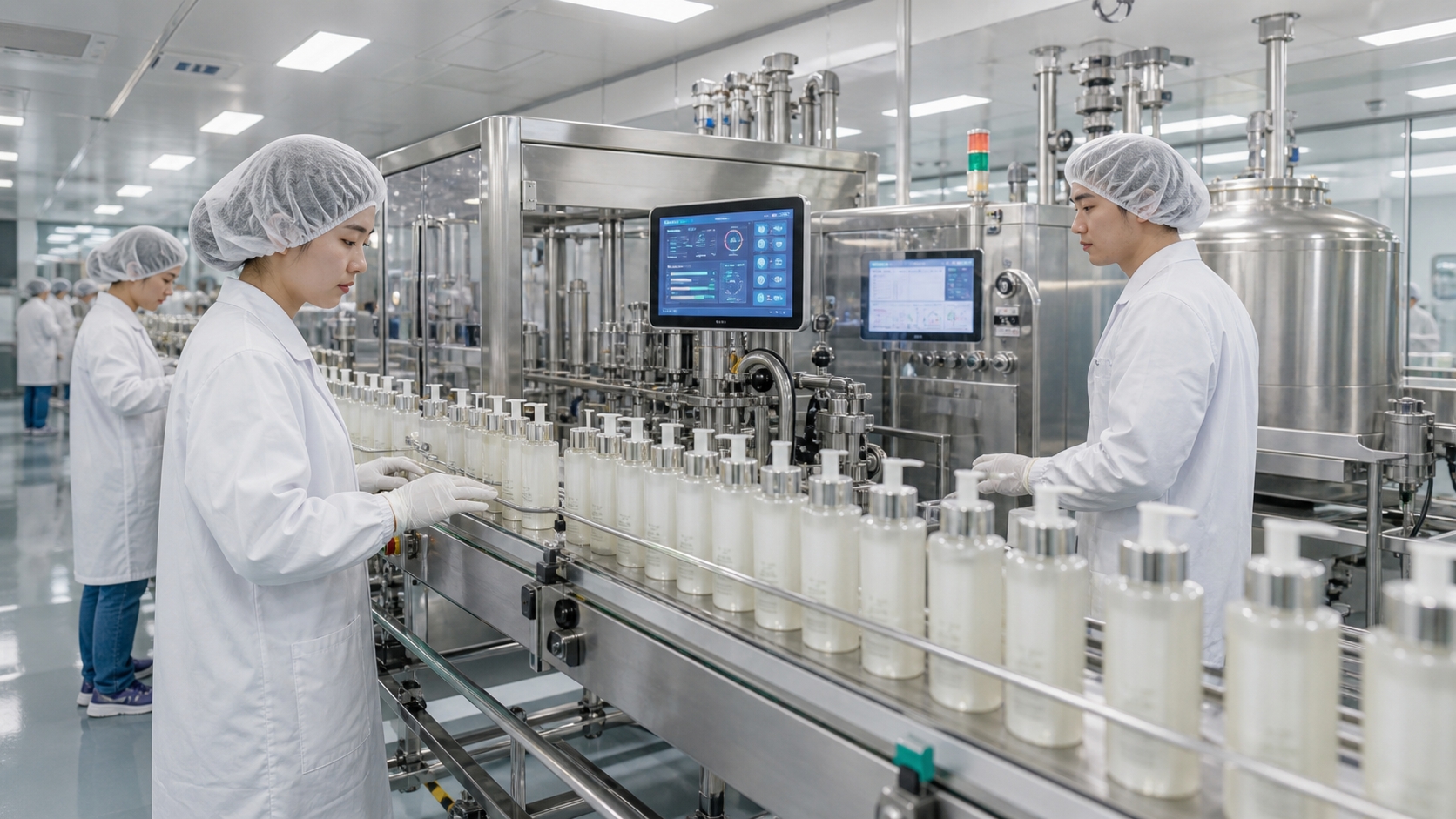
For a long time, the global growth of K-beauty has been told through the success stories of a few popular brands. The formula was familiar: a product goes viral on social media, enters overseas e-commerce platforms, and as sales surge, the brand releases its next hit. However, as we move through 2026, the industry’s center of gravity is shifting toward the companies operating behind the scenes to develop and produce these products. Original Design Manufacturers (ODMs) like Cosmax and Kolmar Korea, alongside cosmetic packaging manufacturers like Pum-Tech Korea, are at the heart of this shift. While consumers primarily see the brand name, it is the companies consistently replicating quality and delivering on time that are playing an increasingly outsized role in the actual supply chain.
The ODM model allows brands to provide a basic direction, while specialized firms handle everything from formula development and ingredient blending to final production. In the Korean cosmetics industry, this system has served as a foundation enabling even emerging brands to launch products relatively quickly without needing to own massive factories. Recently, the role of this manufacturing network has evolved beyond simple outsourced production; it now provides the essential quality and volume required to penetrate global distribution networks. As multiple brands expand overseas simultaneously, the growth speed of the entire industry depends on manufacturers’ development capabilities and their ability to manage production schedules to turn diverse orders into finished goods.
Viral Online Hits Have Turned into Big-Box Store Orders
Behind this transformation is the expansion of K-beauty’s sales channels. Korean cosmetic brands that initially grew online in North America and Europe have started entering major brick-and-mortar retail networks like Ulta Beauty, Target, Costco, and Boots, leading to much larger order volumes. While online sales allow for flexible supply based on demand trends, stocking a nationwide chain requires stable production capacity and strict delivery timelines right from the launch. Products and their packaging must be ready to meet specific shelf-display schedules, meaning a delay in either formula production or packaging supply can disrupt the entire delivery timeline.
At this stage, a manufacturer’s production capacity becomes just as important as the brand’s recognition. Hana Securities projected that Korean cosmetics exports will jump by 33% in 2026 compared to the previous year. The expected increase alone is $3.1 billion, which is roughly equivalent to the entire annual cosmetic export volume of 2016. Simply put, the new export growth expected in just one year matches the total market size of a decade ago. Cosmax and Kolmar Korea’s order backlogs in the third quarter have already surpassed those of the second quarter, and Pum-Tech Korea, facing capacity constraints, has seen some packaging orders spill over into the next quarter. The export boom is not just boosting brand revenues; it is creating a tangible backlog of orders across the manufacturing and packaging supply chain.
The Barrier to Entry Shown by Hydrogel Masks
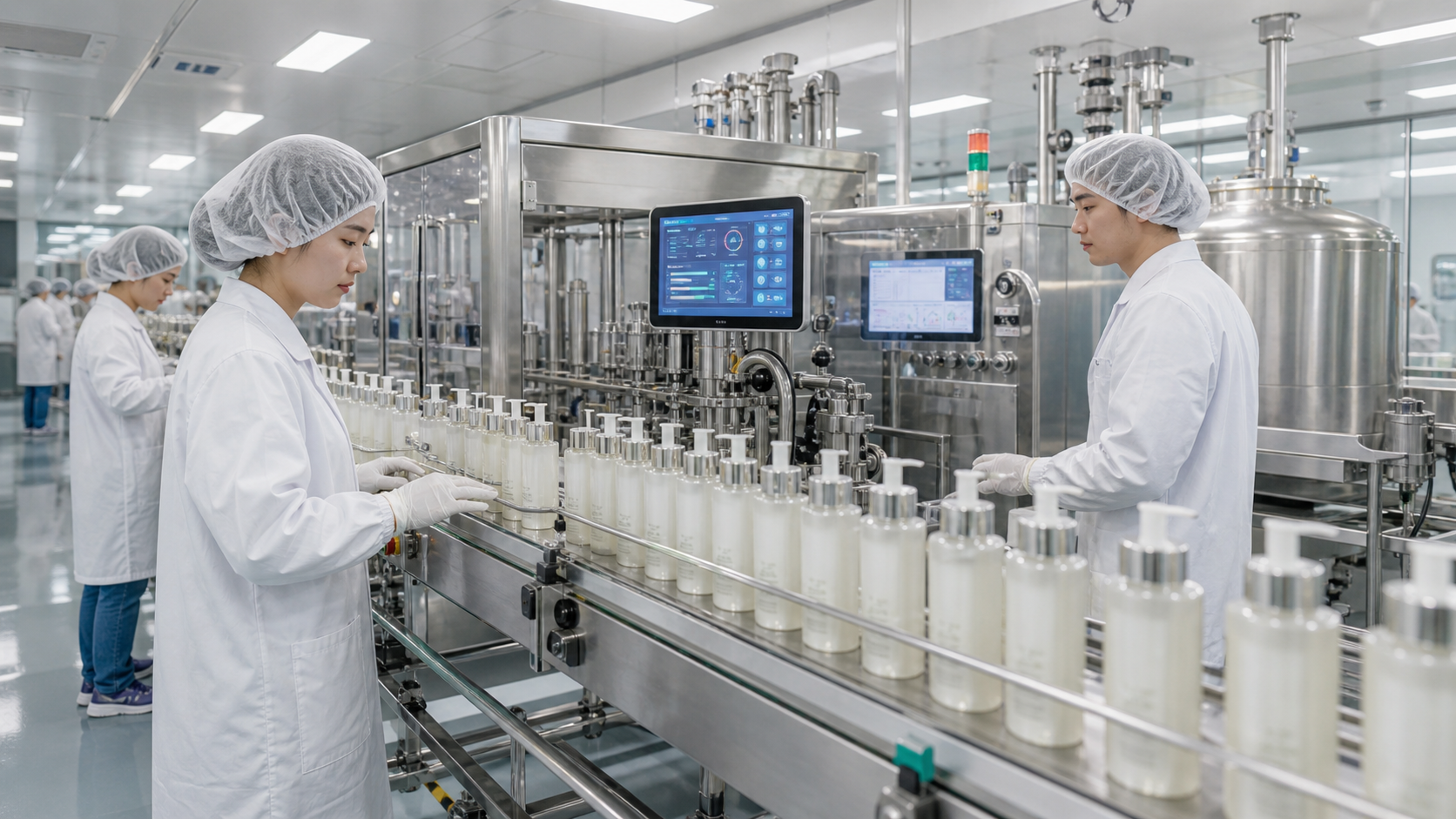
Hydrogel masks, which have recently been driving export growth, perfectly illustrate the distinct strengths of Korea’s manufacturing infrastructure. Unlike standard sheet masks, hydrogel products require precise ingredient blending, high-temperature coating, cooling, molding, and sealing. Because product sizes and folding methods vary by client, automating the entire production process is difficult, and minimizing initial raw material loss and defect rates takes time. Even with identical equipment, production efficiency can vary wildly depending on the physical properties of the mixture and the skill level of the operators, making it a difficult category to rapidly scale in response to sudden order spikes.
Installing a single production line costs roughly up to 500 million won (about $375,000) and requires a dedicated workforce of 20 to 30 people per line. It also demands ample factory floor space to house equipment spanning about 30 meters. Moreover, having the machinery does not guarantee immediate high yields. If defects and material losses mount during the early stages of production, profitability remains elusive despite high order volumes. These demanding conditions prevent new players from entering the market quickly, even as demand surges, naturally funneling orders to domestic manufacturers who have already built up deep production experience. Ultimately, the popularity of hydrogel masks is not just a trend for a specific product, but a testament to the immense value of accumulated process expertise.
Moving Beyond Low-Cost Production to High-Value Technology
The competitive edge of Korean manufacturers goes well beyond mass production. Kolmar Korea recently began supplying a premium skincare cream priced over $150 for a global luxury brand through the ODM model. Considering the brand’s previous products were manufactured in France, this shift indicates that the R&D and quality control capabilities of Korean firms are now being sought after in the luxury market, moving past mid-to-low-tier products. Because high-end cosmetics demand a specific sensory experience and consistent quality that matches their price tag, brands rarely change suppliers just for cheaper production costs. The entry of a Korean manufacturer into this territory is a clear signal that their formulation and production reliability, not just cost-efficiency, have earned global recognition.
A cushion compact manufactured by Cosmax for a global brand has also successfully landed in the US market. The cushion—a distinctly Korean format that houses liquid makeup in a sponge—was designed to enhance portability and ease of use. While deeply familiar in Korea and across Asia, introducing it to Western markets required changing long-standing consumer habits. Its successful integration in the US can be attributed not only to brand marketing but also to the manufacturing prowess that fine-tuned the formula’s longevity, hygiene, and packaging structure. For an unfamiliar format to become part of a local consumer’s daily makeup routine, it needs a level of perfection that guarantees satisfaction through repeated use, far beyond what basic product descriptions can convey.
An Industrial Ecosystem Connected All the Way to the Packaging
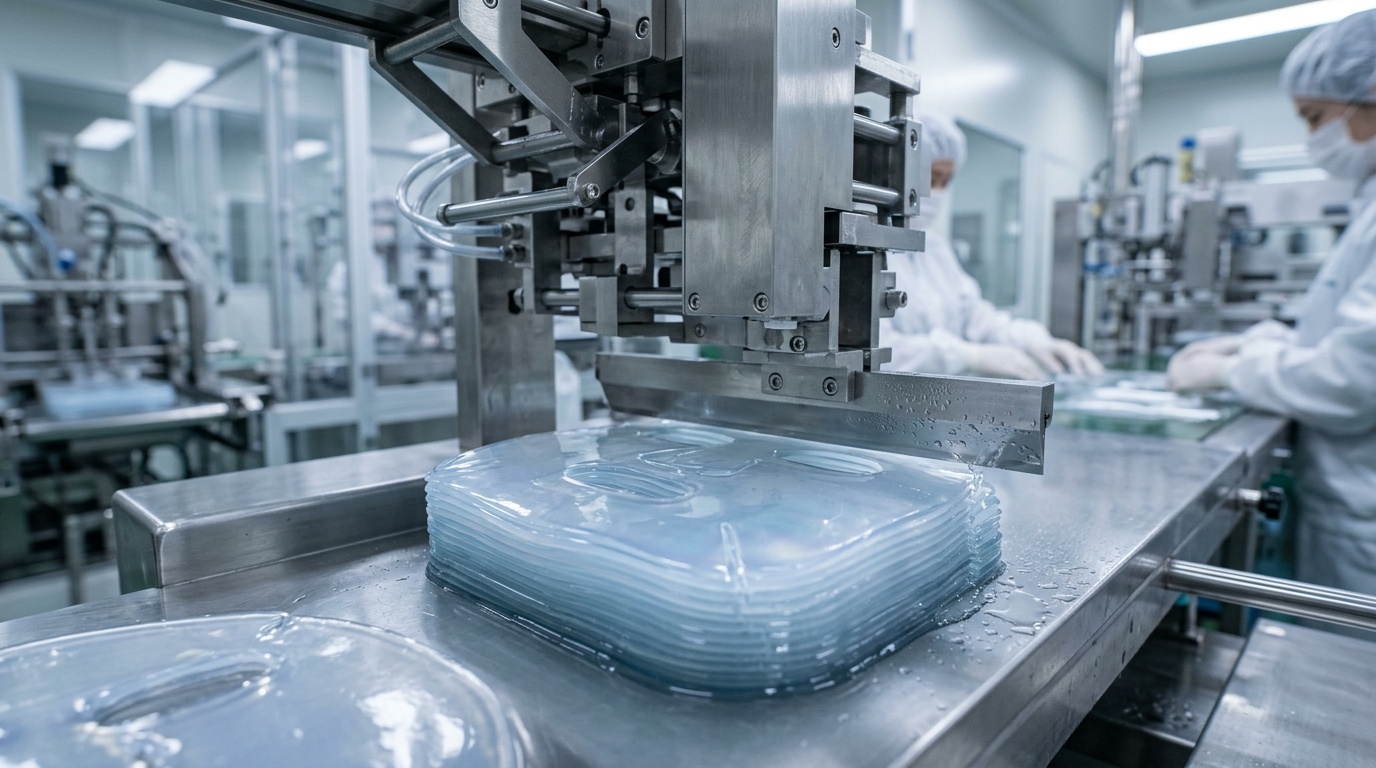
Cosmetic packaging is far more than just a component that dictates the finished product’s appearance. It directly affects how much the formula is exposed to air, the amount dispensed per pump, the risk of leakage during transit, and the tactile experience of the consumer. Products entering large overseas distribution networks require massive quantities of packaging delivered with uniform quality, meaning the production capacity of companies making pumps and tubes directly dictates the overall speed of exports. Even if the formula is perfectly ready, a finished product cannot be shipped without the right packaging supplied on time. In this light, packaging companies are central pillars, not merely secondary players, in the manufacturing ecosystem.
For this reason, the true beneficiaries of K-beauty are expanding from individual hit brands to ODMs like Cosmax and Kolmar Korea, and packaging firms like Pum-Tech Korea. While brands might cycle through rapidly changing trends, manufacturers absorb the growth of multiple clients simultaneously. They possess a structural scalability, moving in tandem with the overall order volume of the entire industry rather than riding on the success or failure of a single brand. Even if different brands grow in entirely different markets, the underlying companies that produce and package those products see a steady, unified convergence of orders.
The Strength of K-Beauty Lies Where You Can’t See It
The reason K-beauty has been able to compete with rapid product launches and diverse formats is deeply rooted in its densely woven manufacturing ecosystem. When a brand proposes a new ingredient or application method, manufacturers translate it into a concrete formula and process, while packaging firms supply the exact casing to match perfectly. As orders from overseas retail networks grow, the production speed and quality control capabilities of this interconnected web become increasingly vital. It requires the combined ability to transform fresh ideas into retail-ready products swiftly while maintaining flawless quality across massive production runs.
The export boom of 2026 can hardly be explained by the overseas success of famous brands alone. The intricate manufacturing processes of hydrogel masks, the high-value production of luxury creams, and the successful adaptation of cushion formats in the US all point to a broader truth: Korean manufacturers are shifting into the core axis of product planning and technological realization. The next growth phase of K-beauty depends not just on which brand becomes the next big thing, but on who can stably produce and supply that soaring demand. The manufacturing and packaging infrastructure, largely invisible to the end consumer, is now stepping firmly into the spotlight to define the industry’s true competitive edge.
Source: Hankyung Magazine, August 21, 2026; Newsis, August 25, 2026.