
Table of Contents
Holiday Festivities Kicking Off at Huam Market on September 14
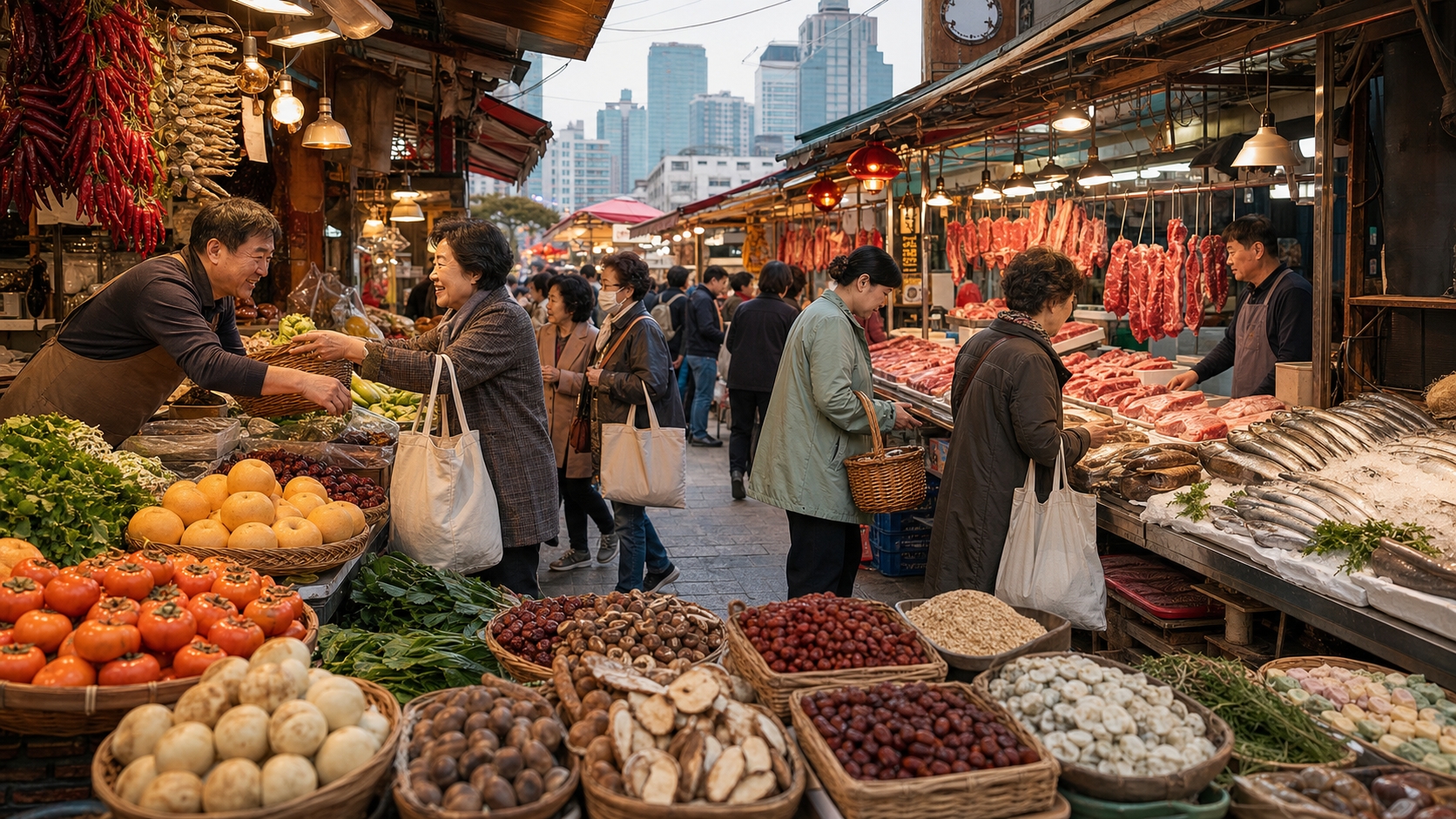
Seoul’s Yongsan-gu is getting a head start on the Chuseok rush at Huam Market, starting September 14, ten days before the holiday. Shoppers spending over 25,000 won can get digital Onnuri gift cards back, based on how much they buy. The more it takes to reach the next spending tier, the bigger the reward. The event runs through the weekend right before Chuseok, wrapping up on September 19.
The refund tiers break down into four levels. Spending between 25,000 won and 50,000 won gets a 5,000 won refund, and 50,000 won to under 75,000 won returns 10,000 won. Spending between 75,000 won and 100,000 won brings back 15,000 won, and anything over 100,000 won returns 20,000 won. Alongside the refunds, shoppers can also get price discounts and eco-friendly reusable bags.
The point isn’t just holiday atmosphere; it’s aimed squarely at easing the cost of grocery shopping during a period of high inflation. Families tend to buy a large amount of agricultural, livestock, and seafood products, plus processed foods, all at once for Chuseok, so even an ordinary discount rate adds up to real relief for a household budget. Yongsan-gu is betting that these perks will bring more people through the door at Huam Market and the shops around it.
Ichon General Market Hosts Two Different Events Based on Items and Dates
At Ichon General Market, two separate refund promotions are running. First, an agricultural and livestock refund event from the Ministry of Agriculture, Food and Rural Affairs runs September 16 to 20. Spend between 34,000 won and 67,000 won on those products and get a 10,000 won Onnuri gift card; push the purchase above 67,000 won and the refund doubles to 20,000 won.
Closer to the holiday, from September 22 to 24, the market runs its own promotion: anyone spending 70,000 won or more at Ichon General Market during that window gets a 10,000 won Onnuri gift card. Because the agricultural refund event and the market’s own promotion run on different dates with different purchase conditions, shoppers need to check both the calendar and their shopping list.
Huam Market uses a four-tier system for its digital Onnuri gift card refunds, while Ichon General Market splits its efforts by timeframe, one window for agricultural goods and another for general purchases. Both markets are in Yongsan-gu, but they’re running these promotions in different ways. Worth noting too: if the budget set aside for any of these events runs out early, the promotion could end before its scheduled date.
Market Preparations Go Beyond Discounts
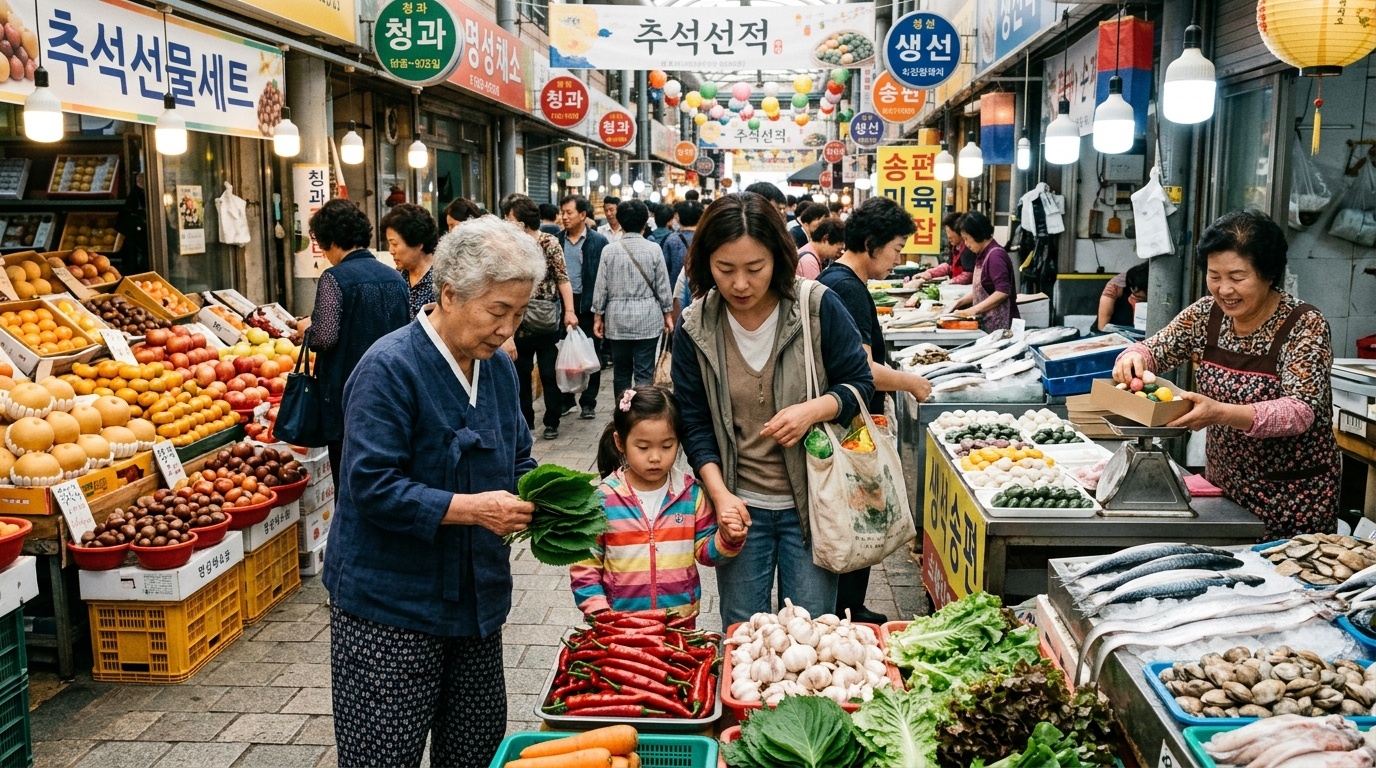
Before launching these promotions, Yongsan-gu ran safety inspections across seven traditional markets in the district on September 9 and 10, covering electrical, gas, structural, and fire safety. With more people and goods moving through the markets before the holiday, checking facility safety matters as much as offering discounts.
From September 15 to 17, the district will also run a “Staff Traditional and Alley Market Day,” encouraging district office employees to visit local markets and alleyways to help spread spending through the neighborhood. Since these dates overlap with the Huam Market refund period, shopper traffic is likely to bunch up right as that promotional week begins.
The lineup shows that the holiday market rush doesn’t just form in the days right before Chuseok. Safety checks come first, then the Huam Market event and staff visits, then Ichon General Market’s produce refunds and its own separate promotion. Yongsan-gu’s holiday preparations are staggered step by step, from early September through September 24, when the Chuseok break begins.
Traditional Markets Nationwide Anticipate a Chuseok Boom
The preparations at Huam and Ichon General Markets line up with rising hopes among traditional market vendors nationwide. According to the “August 2026 Small Business and Market Economic Trend Survey,” released September 1 by the Small Enterprise and Market Service, the prospective Business Survey Index (BSI) for traditional markets in September hit 105.0, a 38.5-point jump from the previous month’s forecast of 66.5.
The BSI reflects how merchants view the current or coming economic climate: a score over 100 means more respondents expect things to improve than to worsen. This is the first time this year the traditional market forecast has crossed that 100-point line. Of the merchants expecting better business, 73.2% pointed to the seasonal peak (the Chuseok boom specifically) as the reason.
By category, expectations ran especially high for goods tied to holiday meals and gifts. The prospective BSI for seafood jumped to 118.0, up 52.5 points from the month before. Meat products rose 42.8 points to 116.1, and agricultural goods climbed 40.1 points to 112.6. Processed foods rose 51.0 points to 112.5.
The Gap Between High Expectations and Cold Reality
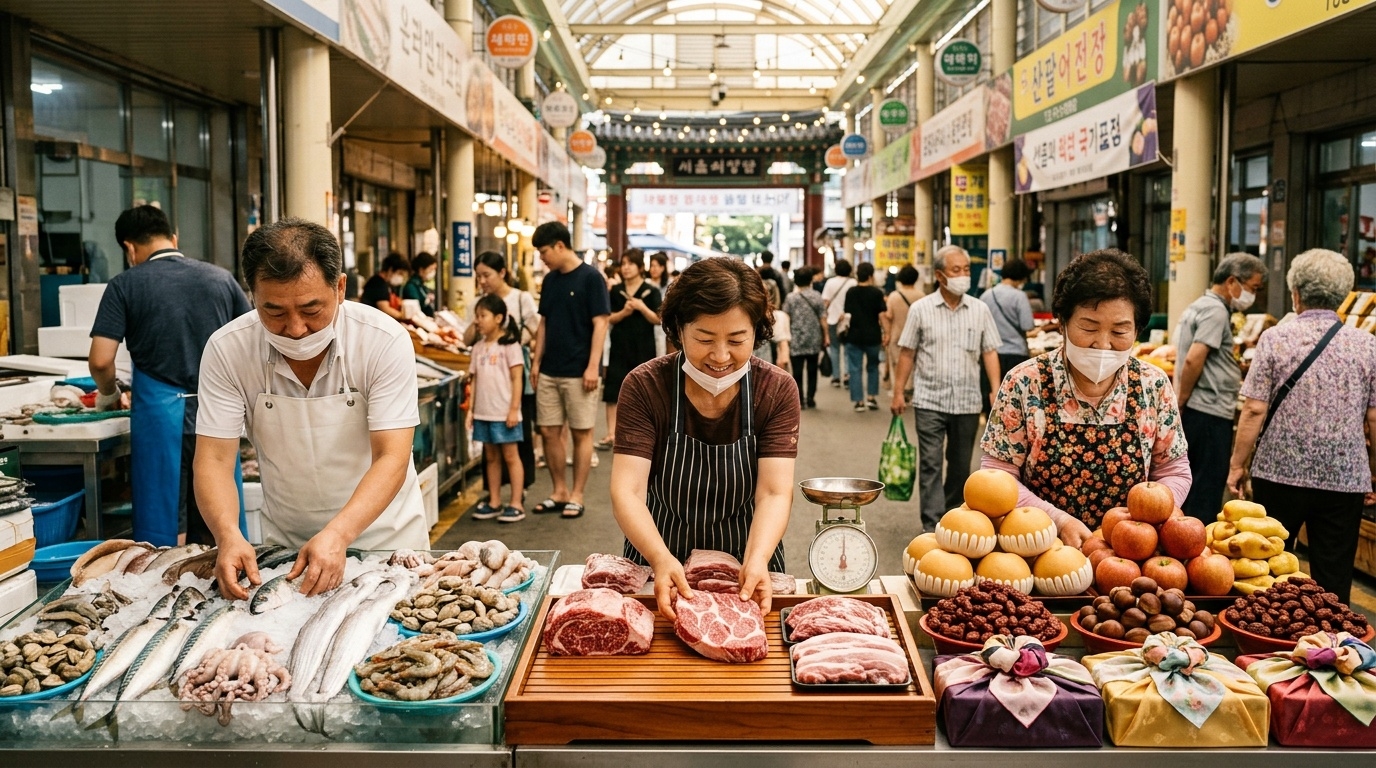
A forecast improving quickly doesn’t mean the market economy has already bounced back. In August, the perceived BSI among traditional markets sat at just 57.0, up only 6.5 points from July and still well short of the 100-point baseline. Set next to September’s optimistic 105.0 forecast, that leaves a real gap between the expected holiday rush and what merchants are feeling right now.
That gap explains why refund events at Huam Market and Ichon General Market matter. Merchants expect sales to climb for Chuseok, but consumers may hold back given high inflation. Gift card refunds and discounts are meant to close that distance, cutting shoppers’ actual costs while pushing up market visits and spending at the same time.
Sectors with the highest forecasts, seafood, meat, produce, processed foods, are especially tied to Chuseok demand. Turning those expectations into real revenue depends on people actually showing up and buying. August’s weak perceived index is a reminder that a strong September forecast alone doesn’t guarantee a turnaround. Whether these Chuseok promotions worked will show up in the foot traffic and sales during the events themselves.
A Shorter Four-Day Weekend Compared to Last Year
In 2026, Chuseok day falls on Friday, September 25. The official government-designated holiday spans three days, from Thursday, September 24 to Saturday, September 26. With Sunday, September 27 immediately following, the practical break runs four consecutive days. Because the holiday overlaps a Saturday, no substitute holiday has been designated. Last year’s calendar allowed for up to ten days off; this year’s stretch is much shorter.
Huam Market’s event runs the 14th to the 19th, and Ichon General Market’s agricultural refund runs the 16th to the 20th, giving shoppers a chance to buy early and skip the immediate pre-holiday crowds. Ichon’s own event, from the 22nd to the 24th, is aimed at people who prefer to shop right before Chuseok. With the schedules staggered like this, shoppers can pick a visit time that fits their own holiday plans.
A four-day weekend doesn’t automatically mean higher traditional market sales. Spending could bunch up right before the holiday, or high inflation could just as easily shrink overall purchase volume. The sharp rise in the national prospective BSI shows what merchants are hoping for; the low perceived index shows the financial strain that hasn’t gone away. What happens at Huam and Ichon General Markets over these events will be an early sign of whether that gap closes with real spending.
Local Markets to Gauge the True Temperature of the Chuseok Economy
At Huam Market, shoppers can get up to 20,000 won in digital Onnuri gift cards depending on how much they spend, while Ichon General Market offers up to a 20,000 won refund depending on whether the purchase is agricultural and meat products or general goods. Add in price discounts, eco-friendly bag giveaways, safety inspections, and staff visit days, and Yongsan-gu’s two markets are now deep into their peak-season preparations, running from mid-September up to the start of the holiday.
For visitors unfamiliar with Korean holiday customs, the traditional market’s Chuseok rush is a period when festive foods and gift ingredients get traded more heavily than usual. Onnuri gift cards work at traditional markets and designated shopping districts, and in these promotions they’re being handed back to shoppers who spend over a set amount. Huam Market is issuing its cards in digital form.
The September prospective BSI of 105.0 means traditional markets are starting a month above the baseline for the first time this year. But August’s perceived index of 57.0 shows that optimism alone doesn’t tell the whole story. With a short four-day weekend ahead, it’s still not clear exactly when or how much consumer spending will pick up. What happens at Huam and Ichon General Markets will be one of the first signs of whether high Chuseok expectations turn into an actual recovery for the neighborhoods around them.
Sources: Yongsan-gu, Seoul Press Release & Yonhap News, September 10, 2026; Small Enterprise and Market Service ‘August 2026 Small Business and Market Economic Trend Survey’, September 1, 2026.