Table of Contents
27 international performance groups from 23 countries gather in Andong
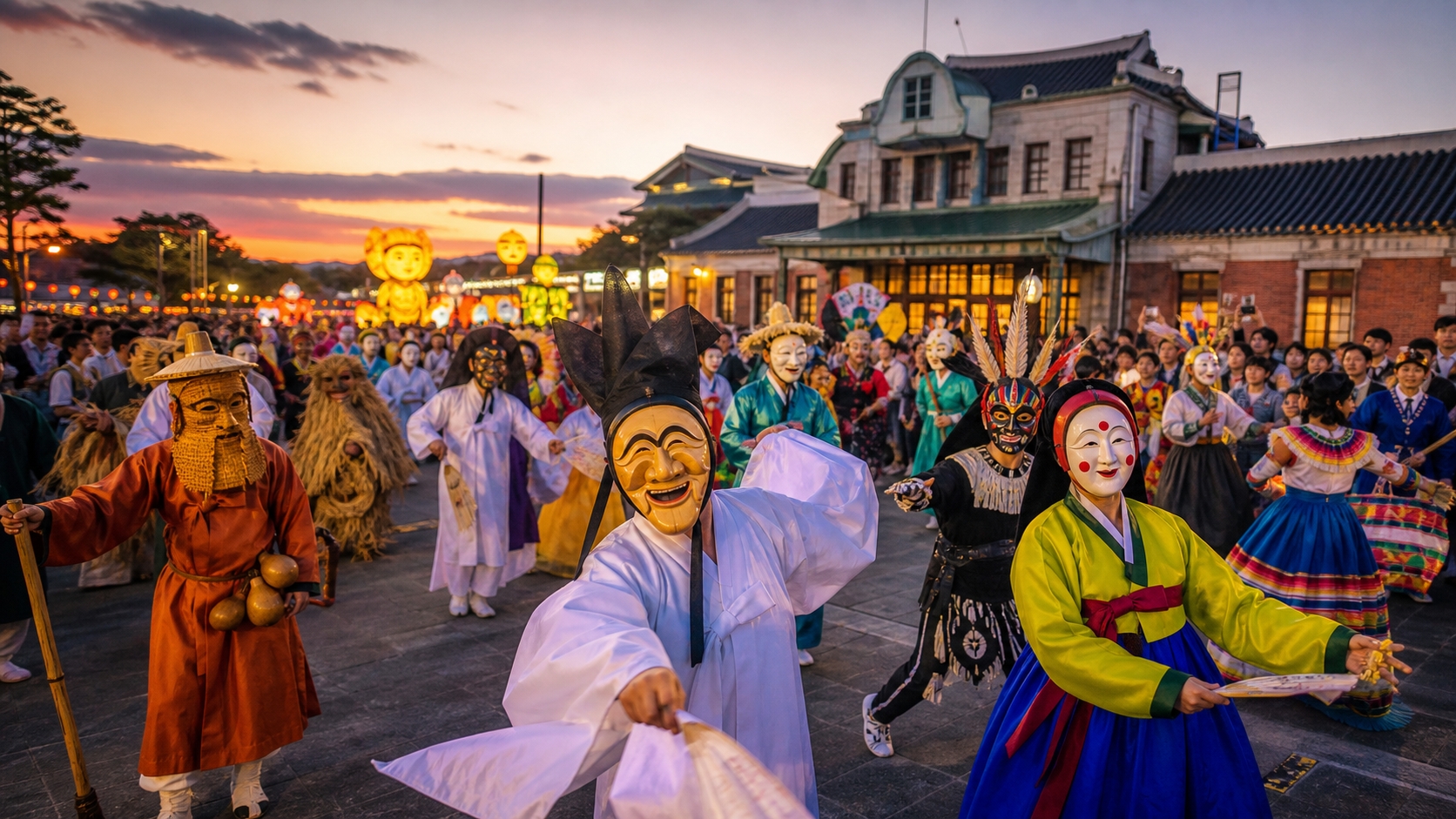
The 2026 Andong International Mask Dance Festival will take place for 11 days from September 24 to October 4 in Andong, North Gyeongsang Province. This year’s theme is “Memories of Masks, Everyone’s Dance.” To present traditional Korean talchum (mask dance) alongside mask cultures from around the world, 27 international performance groups from 23 countries are joining the festivities. It is an international event where masks and dances passed down through different regions can be compared and shared within a single festival.
The festival weaves together four distinct venues: the Jungang Line 1942 Andong Station, Mask Dance Park, the original downtown area, and Hahoe Village. Rather than concentrating performances on a single stage, it creatively utilizes the old railway station, the bustling city center, and a historic traditional village as its sprawling canvas. Kicking off on the first day of the Chuseok holiday, the festivities will run well past the long weekend. Visitors are encouraged to wander through various corners of Andong, experiencing performances and mask cultures dynamically rather than staying rooted in one spot.
The official opening ceremony takes place the day after the festival begins, at 7 PM on September 25 on the main stage at Jungang Line 1942 Andong Station. Before that, a pre-ceremony parade will launch at 6 PM, winding its way from the downtown area straight to the festival grounds. Visitors should take note of the distinction between the festival’s start date and the official ceremony date, as well as the timing of the parade versus the main event. The procession essentially flows from the city streets directly into the heart of the celebration.
Showcasing UNESCO intangible heritage Talchum on a global stage
Talchum is a traditional Korean performing art where masked performers tell stories by combining dance, music, and theatrical expression. The mask instantly reveals a character’s personality and role, while the accompanying dances and gestures convey nuances and emotions that dialogue alone cannot capture. Through humor and satire, it unravels the stories of the community, and the audience becomes an active participant by cheering and responding dynamically. A defining characteristic of talchum is this shared energy, where both the performers on stage and the crowd build the atmosphere together.
In 2022, Korean talchum was inscribed on the UNESCO Representative List of the Intangible Cultural Heritage of Humanity. This festival places this rich tradition side by side with mask performances from all over the globe. It offers a rare opportunity to see how different cultures use masks to express specific characters and historical memories, all in one place. The global expansion of Korean mask dance is presented here as an ongoing dialogue and cultural exchange with mask traditions from other regions, rather than simply a preservation of traditional forms.
Competitions and four Global Mask Parades
One of the main participatory events is the World Mask Play Competition. Here, contestants present their own unique performances using masks, costumes, and dance. It is not merely a contest judging the physical design of the masks; it evaluates how participants move and craft an entire stage experience while wearing them. Alongside watching traditional master performances, visitors can witness incredibly diverse expressions through masks, expanding the festival’s scope from professional performances to highly interactive, participatory programs.
The World Mask Play Competition is a powerful demonstration of how masks are practically utilized in live performance. Even with the exact same mask, a performer can project an entirely different character and mood depending on their costume, gestures, and choreography. Spectators get to enjoy not only highly polished traditional acts but also the fascinating process of everyday participants interpreting masks in their own unique ways and bringing them to life on stage.
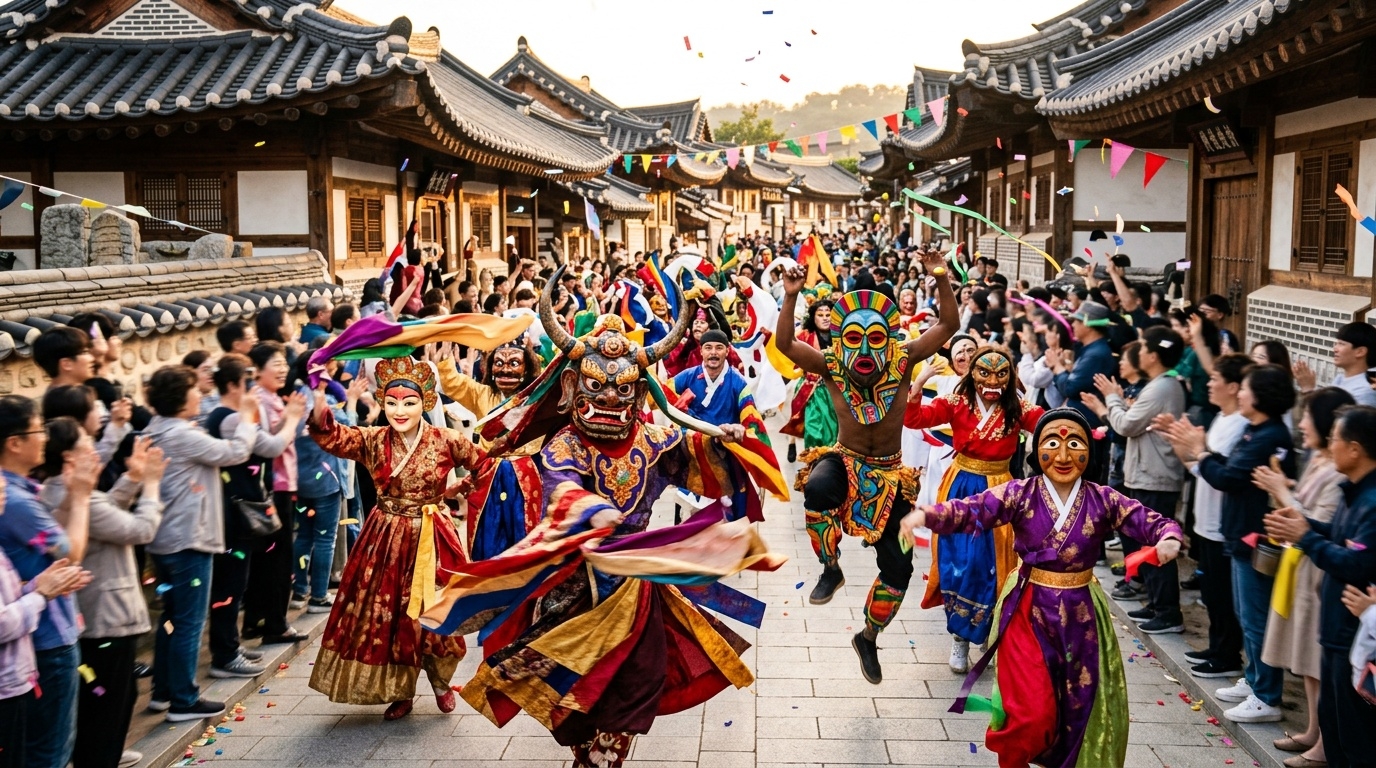
The Global Mask Parade will take to the streets four times: on September 26, 27, 30, and October 3. By weaving international performance groups and their magnificent masks into a street procession, it creates a visual spectacle quite different from watching individual acts on a fixed stage. As diverse masks, costumes, and dances flow down the same avenue, the truly global nature of the festival unfolds right before your eyes. Visitors should check these specific dates during the festival run to catch the parades.
Connecting Andong’s traditional spaces with the city center
Each of the four venues plays a distinct role. Jungang Line 1942 Andong Station is the main hub for major events, including the official opening ceremony, while Mask Dance Park is the dedicated festival ground for engaging directly with talchum and its related programs. The downtown area acts as a bridge, funneling the energy of the pre-parade and street life straight into the festival. Meanwhile, Hahoe Village provides the profound cultural backdrop, grounding the modern festivities in Andong’s rich history of traditional mask culture.
Spreading the event across these four locations ensures that talchum isn’t confined to a single auditorium. It allows people to encounter masks and dance across entirely different atmospheres: an old train station, a busy city center, a festive park, and a historic village. For visitors, this is an invitation to explore the performances themselves as well as how Andong’s urban spaces and deep-rooted traditions come together through the festival.
The participation of 27 international groups from 23 countries elevates Andong’s local mask dance festival into a grand exchange of global mask cultures. The main draw this year is watching how the satire and deep communal spirit of Korean talchum, a UNESCO Intangible Cultural Heritage, resonate alongside global performances, competitions, and street parades. The theme, “Memories of Masks, Everyone’s Dance,” perfectly captures this vision of uniting brilliantly diverse traditions in one shared space.
Source: Andong City Press Release & Yonhap News, September 20, 2026; UNESCO Intangible Cultural Heritage of Humanity “Talchum, mask dance drama in the Republic of Korea”, 2022.