Table of Contents
The Shift Highlighted by a Korean Language Graduation Ceremony in Budapest
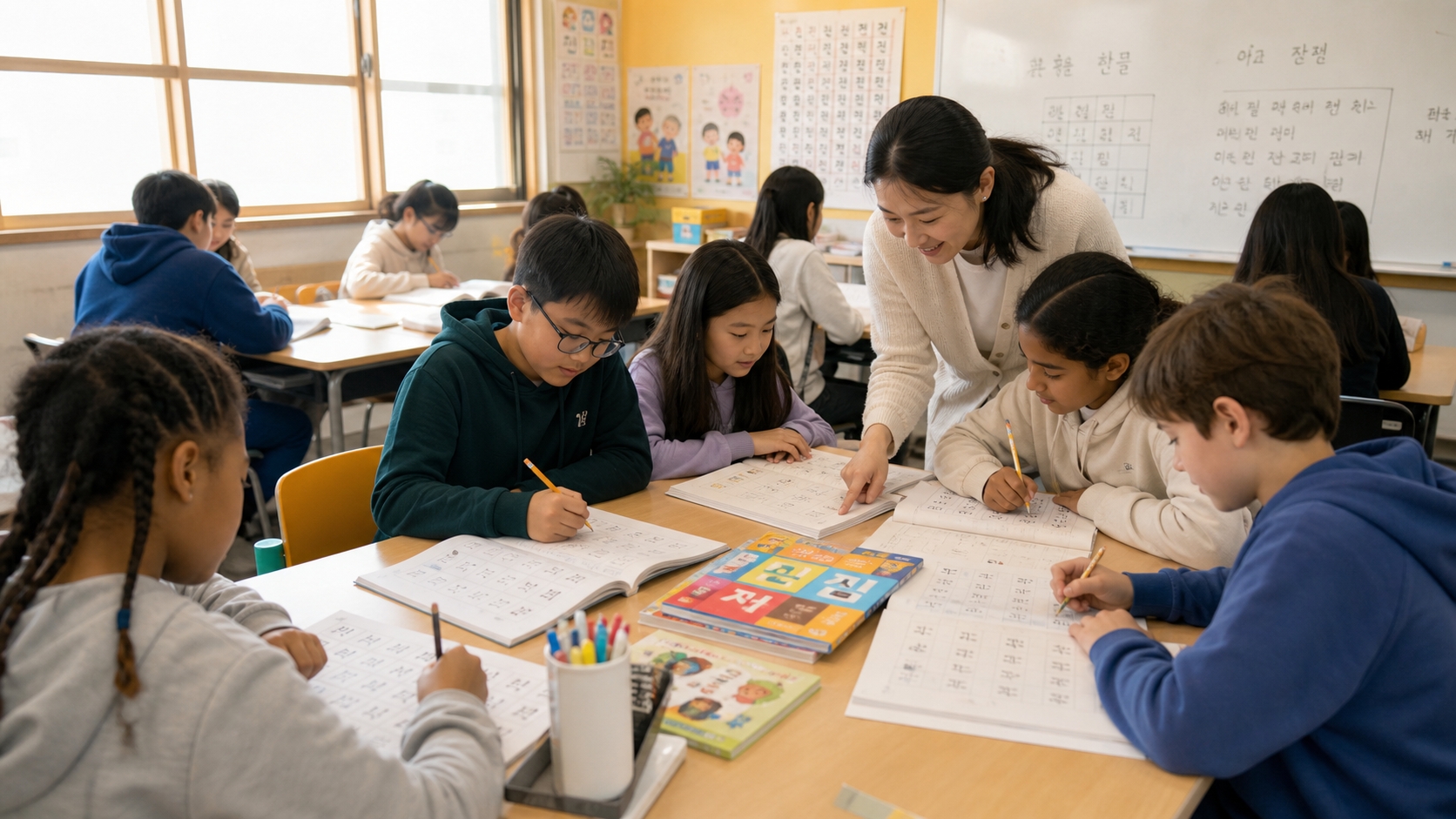
A completion ceremony for a Korean language course recently took place at the King Sejong Institute in Budapest, Hungary. A photo of instructor Park In-sun with her students illustrates how learning Korean is becoming a regular educational activity abroad. However, the King Sejong Institute is a system operated by the Ministry of Culture, Sports and Tourism and the King Sejong Institute Foundation. This is a separate network from the statistics on Korean Education Centers and overseas primary and secondary school Korean classes recently compiled by the Ministry of Education and the Korean Educational Development Institute. To understand how Korean language learning actually works overseas, it helps to recognize that various educational systems exist, each managed by different government ministries and organizations.
While these two systems cannot be merged into a single statistic, they share a clear, common trend: the global demand to learn Korean is translating into actual classroom participation. An interest sparked by listening to K-pop or watching Korean dramas is moving toward showing up for scheduled classes to learn reading, writing, and speaking. The Ministry of Education’s statistics show the scale of this shift within schools and public educational institutions. Viewers of cultural content and systematic language learners are not identical groups, but the growing number of learners means the foundation for turning casual interest into sustained educational engagement is expanding.
The Roots of the Korean Education Center: Starting in Japan in 1963
The first Korean Education Center was established in Japan in 1963. Initially, its primary role was to support language and cultural education for Koreans living abroad and the Korean diaspora. Over time, it expanded its reach to the Americas, Europe, Russia, and the Commonwealth of Independent States. As of April 2026, 47 centers are operating across 22 countries. What began as an effort to support education within overseas Korean communities has now broadened into an institution that brings the Korean diaspora and local residents together.
The functions of these centers have also grown in response to changes in the overseas environment and the demographic of learners. Alongside providing textbooks and materials to Hangul schools run by the Korean diaspora, they assist local primary and secondary schools in establishing and running Korean language classes. They train new Korean language teachers, offer professional development for existing educators, and host learning events like Korean speech contests. Administering the Test of Proficiency in Korean (TOPIK) abroad. It is a comprehensive educational structure that not only opens classes but also secures teaching staff and runs the assessments needed to measure learning outcomes.
They also support students hoping to study in South Korea. The centers facilitate partnerships with Korean universities, offer study abroad information and counseling, and host education fairs and information sessions. They bridge the gap for local students who, having started learning Korean, are ready to take proficiency tests and explore entering a Korean university. Rather than just being facilities that host individual courses, they serve as regional educational hubs connecting schools, teachers, testing, cultural education, and study abroad resources. This means they cater to a wide range of needs within a single region, from a learner’s first encounter with the language to their concrete plans for higher education.
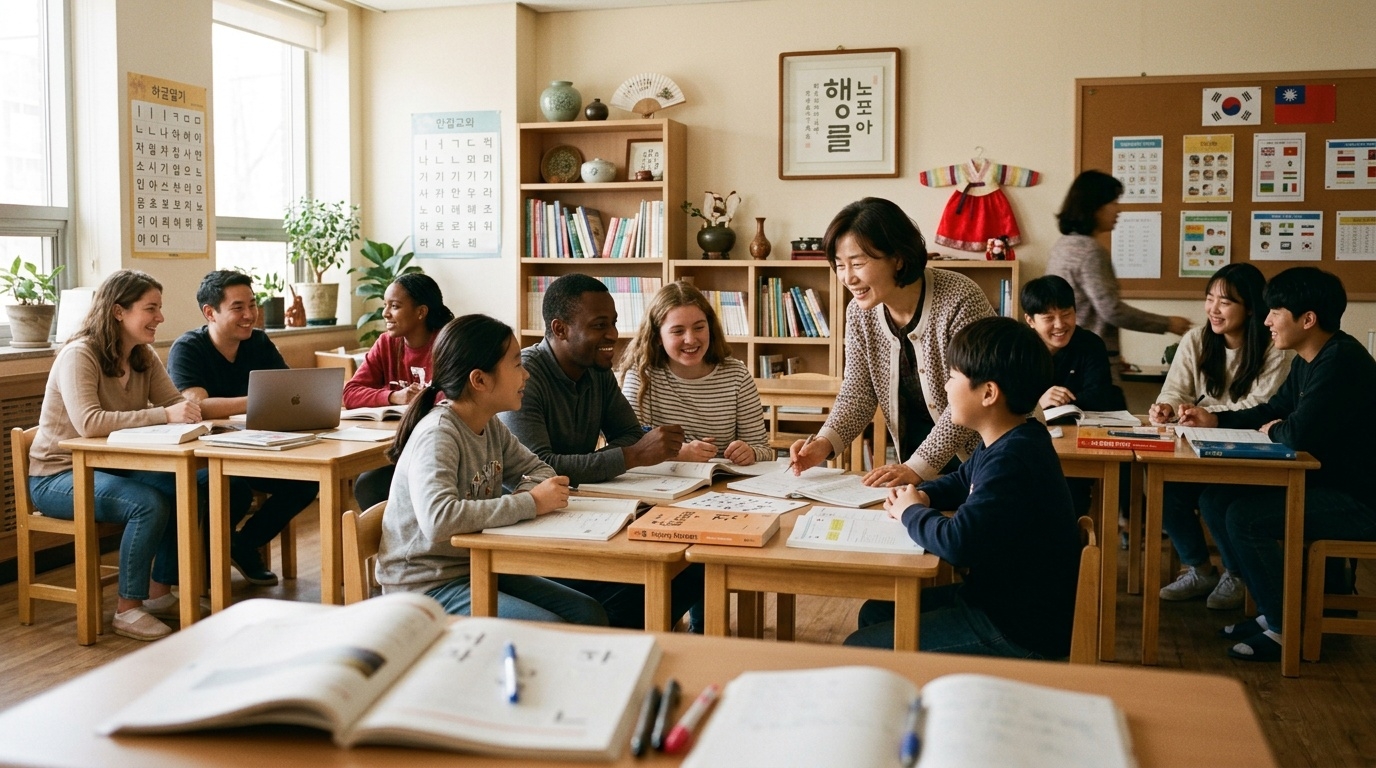
Korean Classes Expand to 2,777 Schools Across 47 Countries
According to the 12th issue of “Reading Our Education Through Data,” published by the Ministry of Education and the Korean Educational Development Institute on August 23, Korean language classes were running in 2,777 primary and secondary schools across 47 countries as of the end of 2025. Among them, 191,896 students studied Korean in regions overseen by the Korean Education Centers. This is an increase of roughly 50% compared to five years ago. This figure holds a distinct significance because it reflects actual student numbers confirmed in educational settings, rather than just content consumption volumes or view counts used to gauge the global awareness of Hallyu.
This number indicates that the foundation of Korean language education is moving beyond short-term cultural events and online content, expanding directly into local schools. When Korean classes are integrated into the regular curriculum of primary and secondary schools, students can study the language consistently within a set schedule. It creates a pathway where curiosity about pop culture evolves past a one-off experience into the long-term learning of vocabulary, grammar, reading, and speaking. School-based instruction allows learning to be reinforced through teachers, dedicated class time, and educational materials, rather than relying solely on a learner’s personal motivation.
When interpreting these statistics, it is helpful to distinguish the scope of the school count from the student count. The 2,777 schools represent the total footprint across 47 countries offering Korean classes. The 191,896 students, however, are specifically those enrolled in primary and secondary school Korean classes within the jurisdictions managed by the Korean Education Centers. While the scopes of these two figures aren’t perfectly identical, the overall trend is clear: both the school infrastructure teaching Korean and the actual community of learners are growing together. Thus, simply using the total number of schools as a direct denominator to calculate the average number of learners per school would not paint an accurate picture.
Directly Operated Courses Also Grow from 731 to 1,200
Korean language courses directly run by the Korean Education Centers outside of the school system have also seen rapid growth. In 2023, 20,580 people participated in 731 courses, but by 2025, that number jumped to 28,751 students across 1,200 courses. In just two years, the number of courses grew by roughly 64%, and student enrollment increased by about 40%. This widens the contact points for local residents, including adults, to learn Korean alongside younger students. Even in areas where local schools do not offer Korean in their curriculum, the center’s courses serve as an alternative avenue to begin or continue language studies.
About 90% of those enrolled in these directly operated courses in 2025 were locals. While supporting the mother-tongue education of the Korean diaspora remains a vital function, the fact that the vast majority of students are local residents highlights how the role of the Korean Education Centers is evolving. They now hold a dual identity: as an educational institution for overseas Koreans, and as a regional center teaching Korean as a foreign language. For learners without family ties to Korea, the language is not a way to explore their roots, but rather a newly chosen foreign language.
Language classes naturally spilled over into history and cultural education. In 2025, there were 235 lifelong education courses covering Korean history and culture, drawing 5,224 participants. Combining the language and lifelong education courses, roughly 34,000 people learned about Korea’s language and culture through the Korean Education Centers. The curriculum is extending beyond grammar and conversation into foundational knowledge for understanding Korean society. Learning the historical and cultural contexts in which linguistic expressions are used helps students interpret Korean content and society with greater accuracy.
Korean Schools and Korean Classes: Distinctly Different Systems
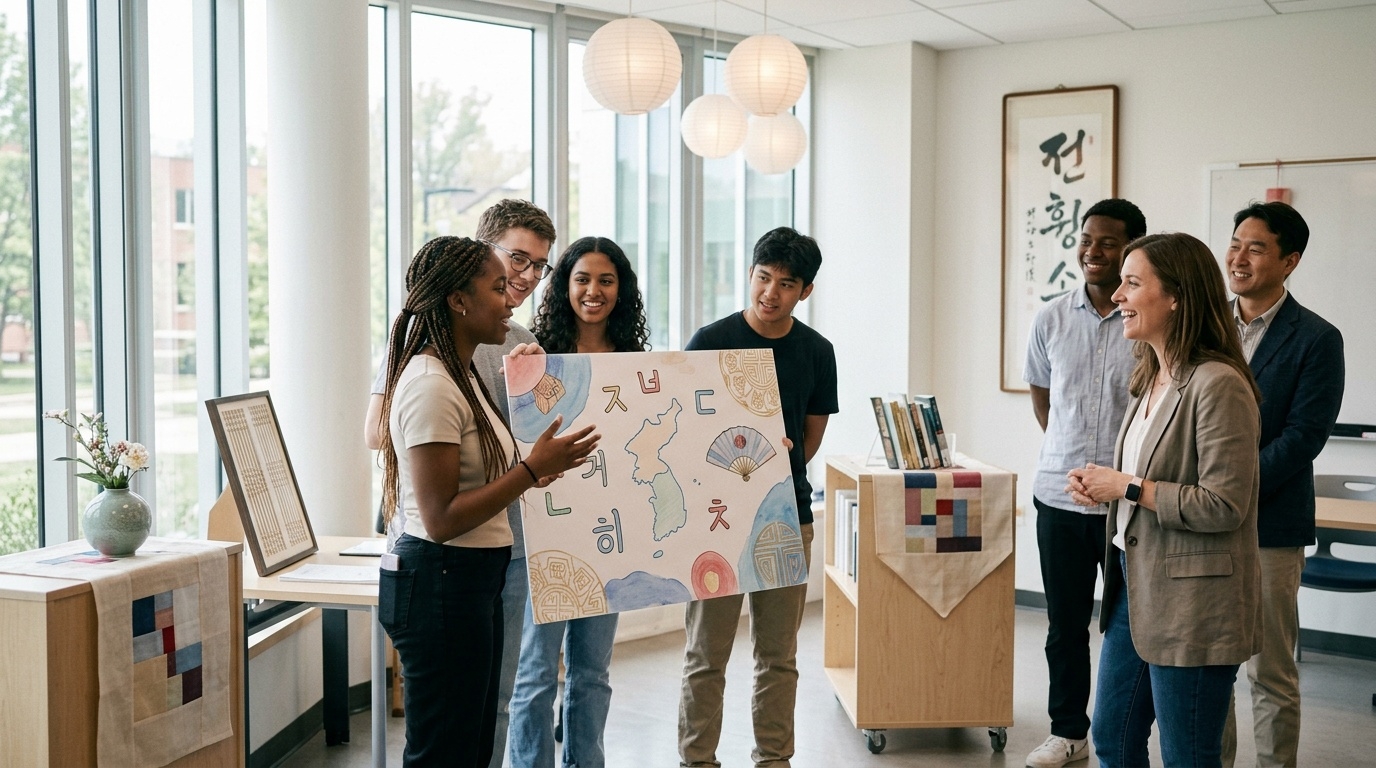
It is necessary to draw a line between the Korean classes in overseas primary and secondary schools or courses run by the Korean Education Centers, and actual “Korean Schools.” Korean classes are programs where local school students learn the language as a foreign language subject, and the center’s courses target both the diaspora and local residents. On the other hand, Korean Schools are formal educational institutions established for the children of South Korean nationals living abroad, following a curriculum aligned with Korea’s Elementary and Secondary Education Act. Learning Korean as a single subject has a very different purpose and operational structure from attending a school where multiple subjects are taught following the standard Korean curriculum.
Currently, there are 34 Korean Schools in 16 countries, with 12,949 enrolled students and 1,242 full-time teachers. These figures are separate from the statistics for the 47 Korean Education Centers across 22 countries recorded as of April 2026. While the names sound similar and both are tied to overseas Korean language and cultural education, their founding purposes, core student bodies, and curricula are distinct. If we add the King Sejong Institute into the mix, the institutional framework surrounding overseas Korean language education becomes even more diverse, requiring us to check exactly which institution and learner group a given statistic refers to.
Moving from Cultural Consumption to Continuous Language Learning
The figure of 191,896 overseas Korean language learners and the near 50% growth over five years show that Hallyu’s influence is evolving beyond casual interest and consumption into active educational engagement. At the same time, sustaining this growth requires more than just adding more classrooms. There needs to be a concurrent development of local teachers, curricula, teaching materials, and evaluation systems. It is equally important to bridge beginner courses with intermediate programs and further learning opportunities, allowing those who have started studying to seamlessly elevate their proficiency.
The Korean Education Center, which began with its first location in Japan in 1963, now weaves together local school Korean classes, teacher training, TOPIK exams, cultural education, and study abroad support. Though the graduation ceremony at the King Sejong Institute in Budapest comes from a separate system, it perfectly mirrors the broader trend: the global enthusiasm for learning Korean is actively moving into classrooms through multiple educational networks. The task ahead is determining how to stably channel this heightened interest into long-term learning and a sturdy educational foundation. Whether this surge in learners becomes a sustainable language education movement or simply passes as a temporary trend will depend heavily on how these foundations are managed.
Source: Ministry of Education & Korean Educational Development Institute, “Reading Our Education Through Data” Issue 12: ‘Meeting Korean Schools and Korean Education Centers on the Overseas Educational Institution Portal’, August 23, 2026.