Table of Contents
Revisiting Iconic K-Drama Scenes in Seoul
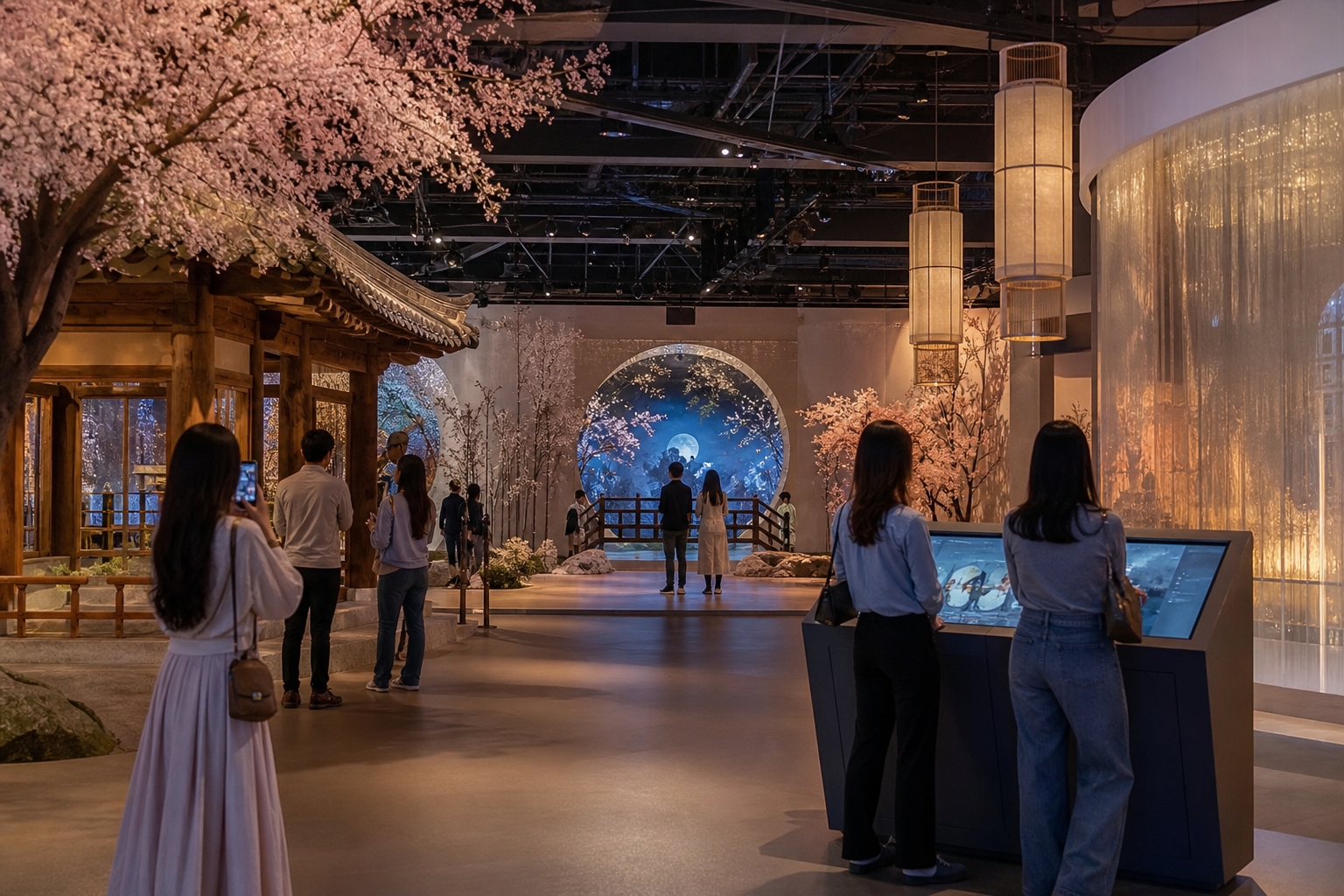
Step into HiKR Ground in Jung-gu, Seoul, and you’re greeted by familiar scenes from globally loved K-dramas like Guardian: The Lonely and Great God, Mr. Sunshine, Hotel Del Luna, Crash Landing on You, Hometown Cha-Cha-Cha, Yumi’s Cells, and Queen of Tears, all laid out in a single space. Organized by the Korea Tourism Organization and production studio Studio Dragon, this K-drama exhibition runs until November 19, built around the theme “Scenes Become Destinations.”
The exhibition hall displays memorable lines, iconic scenes, original soundtracks (OSTs), props, and filming location details from over 40 Studio Dragon productions. Instead of just rewatching clips on a screen, visitors can type out dialogue to create their own custom scripts or collect postcards and prop stickers featuring classic moments, turning screen memories into something you can hold.
Operating hours run from 10 AM to 8 PM, with English guidance for international visitors. Fans who love K-dramas but don’t know Korean regional names or specific filming spots can still follow along easily. During a Seoul trip, it’s a practical way to see several shows at once before picking a filming site to add to the itinerary.
Translating Visitor Tastes into Regional Travel Itineraries
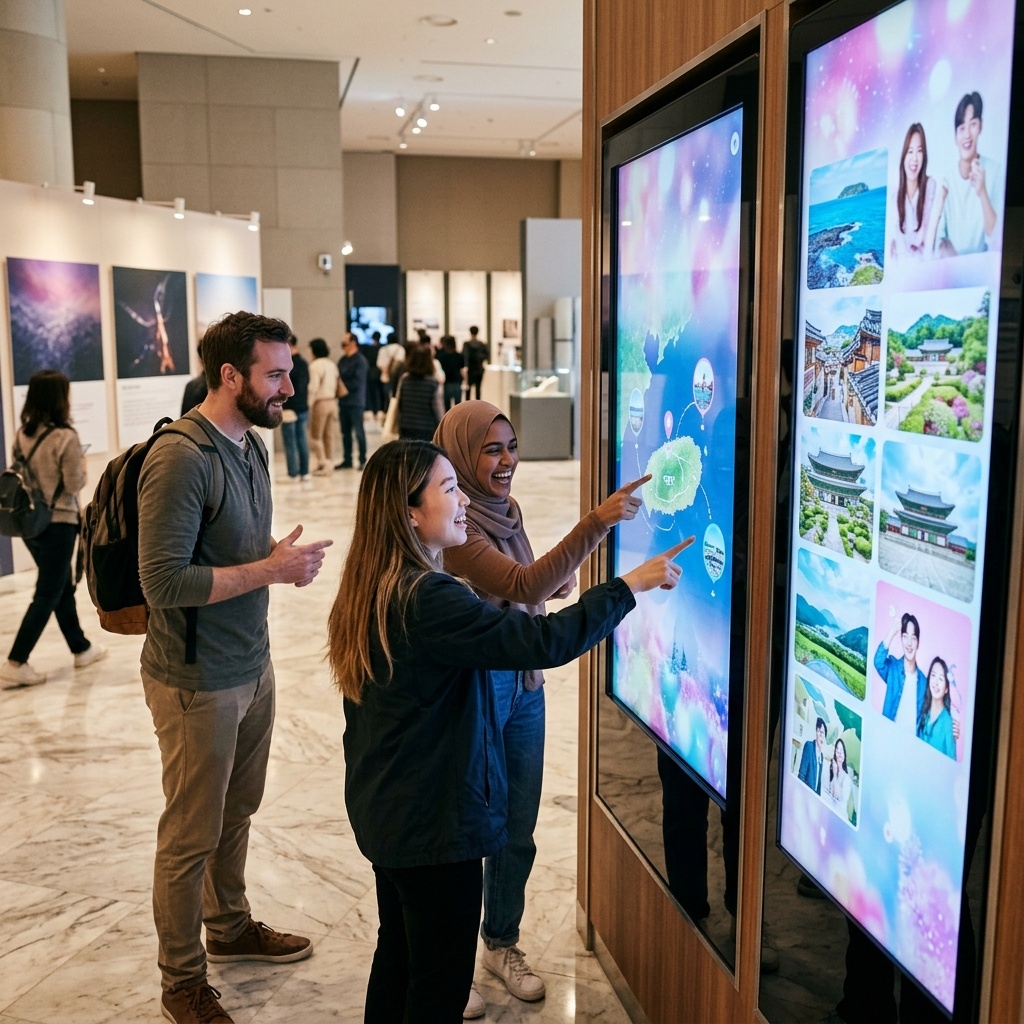
The real draw of this exhibition goes beyond gathering famous works in one room. When visitors scan the items they collected throughout the space at a designated kiosk, the system reads their choices and recommends regional travel courses tailored to their taste, plus a custom ticket packed with travel information for that area. Picking favorite scenes turns into data that points to your next destination in Korea.
International viewers often remember a drama’s title and its lead actors, but figuring out exactly which Korean city a scene was filmed in can be hard. Even with the location’s name in hand, working out how far it is from Seoul or what else is nearby takes extra digging. The kiosks close that gap between screen and place, turning fan knowledge into something closer to a travel plan.
The Korea Tourism Organization is also running a “K-Drama Filming Location Travel Promotion” with global online travel agencies (OTAs), so a spot recommended at the exhibition can lead straight to buying a related travel package. Watching the content, sorting out your taste, getting a regional recommendation, and booking a package become one continuous process, giving fan interest a direct route into regional tourism.
Turning a 400-Million-View Ad into a Day in Hoengseong
A similar shift played out at “Korea Camp” in Hoengseong, Gangwon State. On September 19, the Ministry of Culture, Sports and Tourism and the Korea Tourism Organization ran an event that took a tourism ad made with the Netflix variety show Yoo Jae-suk Camp and turned it into a real regional experience. Rather than just showing Korean camp culture in an online video, they brought international viewers to Korea to live it out in person.
Since its release in June, the “Korea Camp” ad has passed 400 million cumulative views. Much of that comes from using a familiar variety-show format on global platforms to show off Korean games, food, and group activities. But high view counts don’t automatically turn into visits or regional tourism, so the tourism board set up a participatory event under the same name and opened it to international applicants.
The open call drew 1,219 applicants from 50 countries. In the end, 90 people from 38 countries were selected to visit a rural experience village in Hoengseong. The spread of nationalities shows K-content-driven travel appeals across many different cultures, but the gap between 1,219 applicants and 90 spots also shows how far online interest still outpaces what can actually be hosted on the ground.
Korean Field Days and K-BBQ Evolve into Tourism Content
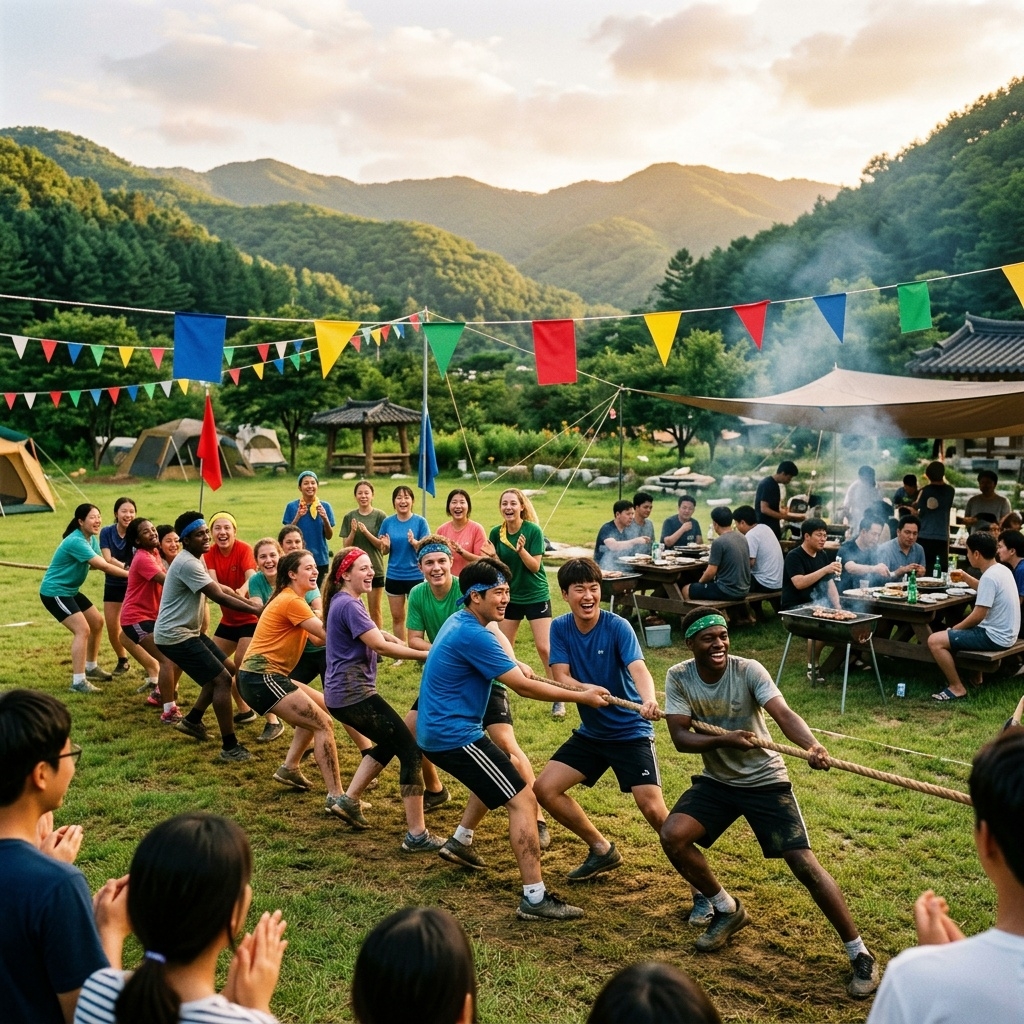
In Hoengseong, participants took part in a traditional Korean field day (undonghoe), including tug-of-war and the classic gourd-busting game (bak teotteurigi). Field days like this run deep in Korean school and community culture, where groups split into teams for competitions and group cheering. Mixing a game people everywhere recognize, tug-of-war, with a distinctly Korean schoolyard staple let participants pick up the culture through their bodies rather than an explanation.
Food and performances were built into the camp schedule too. Participants cooked local dishes, took on a K-BBQ dining mission, and watched a live K-pop dance performance. Unlike a standard tour where meals and entertainment are just consumed, this schedule had visitors take part in missions and group activities, closer to being cast members on the show than an audience. It’s a different kind of content tourism, one where fans don’t just visit a location but step into the atmosphere of what they watched.
The choice of venue mattered too. Hoengseong is a rural experience village in a region losing population, and most international tourists still stick to well-known hubs like Seoul, Busan, and Jeju. This event routed the global attention on K-content toward a regional visit instead. Hoengseong wasn’t just scenery from a variety show; it became a place where travelers could actually experience Korean rural life, local food, and community games.
The Stepping Stones from Fandom to Travel
The HiKR Ground exhibition and the Hoengseong Korea Camp run differently, but they share a common shape. The exhibition works as an ongoing guide, reading individual taste across different dramas and recommending travel routes. Korea Camp, on the other hand, is a one-time, selective event that rebuilds a variety show’s format and mood out in the countryside. One helps fans figure out where to go next; the other shows them what to do once they get there.
Both cases show K-content tourism moving past taking photos at a filming location. Typing out famous lines, collecting props, joining field-day games, and cooking meals together are all designed to make the traveler part of the content, not just a spectator. Pair that with an online travel agency’s booking tools and local tourism packages, and fan enthusiasm can turn into real regional spending on transport, lodging, and activities.
Come December, the tourism board plans to send a “Digital Time Capsule” of event photos and sketch videos to the Korea Camp participants, so they can revisit the memory and share it on social media well after the trip ends. The ad went up in June, the Hoengseong event ran in September, and the time capsules go out in December: a timeline built to keep content tourism going as an ongoing story instead of a one-off event.
Exhibition Details to Know Before Visiting and the Road Ahead
The K-Drama exhibition runs at HiKR Ground in Jung-gu, Seoul, until November 19, open daily from 10 AM to 8 PM, with English translations throughout so international visitors can follow the shows and filming spots. Visitors can look over the customized regional travel courses and tickets offered at the exhibition and see whether the OTA-linked filming location packages fit their own plans.
The Hoengseong Korea Camp was a selective, one-time event held on September 19, so it isn’t something general tourists can join at will. Even so, it’s a working example of how a huge view count can turn into applications, actual travel, and a regional experience. What comes next is turning these one-off, invite-only events into ongoing, bookable regional products that everyday travelers can access.
These two projects show that K-content’s popularity doesn’t translate into regional tourism on its own. It takes guidance, transportation, booking systems, and hands-on programs to connect what’s on screen with an actual place. The kiosks and OTA packages at HiKR Ground, along with the participatory camp and digital time capsules in Hoengseong, are the pieces building that connection. For international fans, a favorite scene is turning into something more than what they watch: the start of a trip to discover a new part of Korea.
Source: Yonhap News, Kyunghyang Shinmun, Asia Economy, September 21, 2026.