
Table of Contents
From the first medal to the final gold
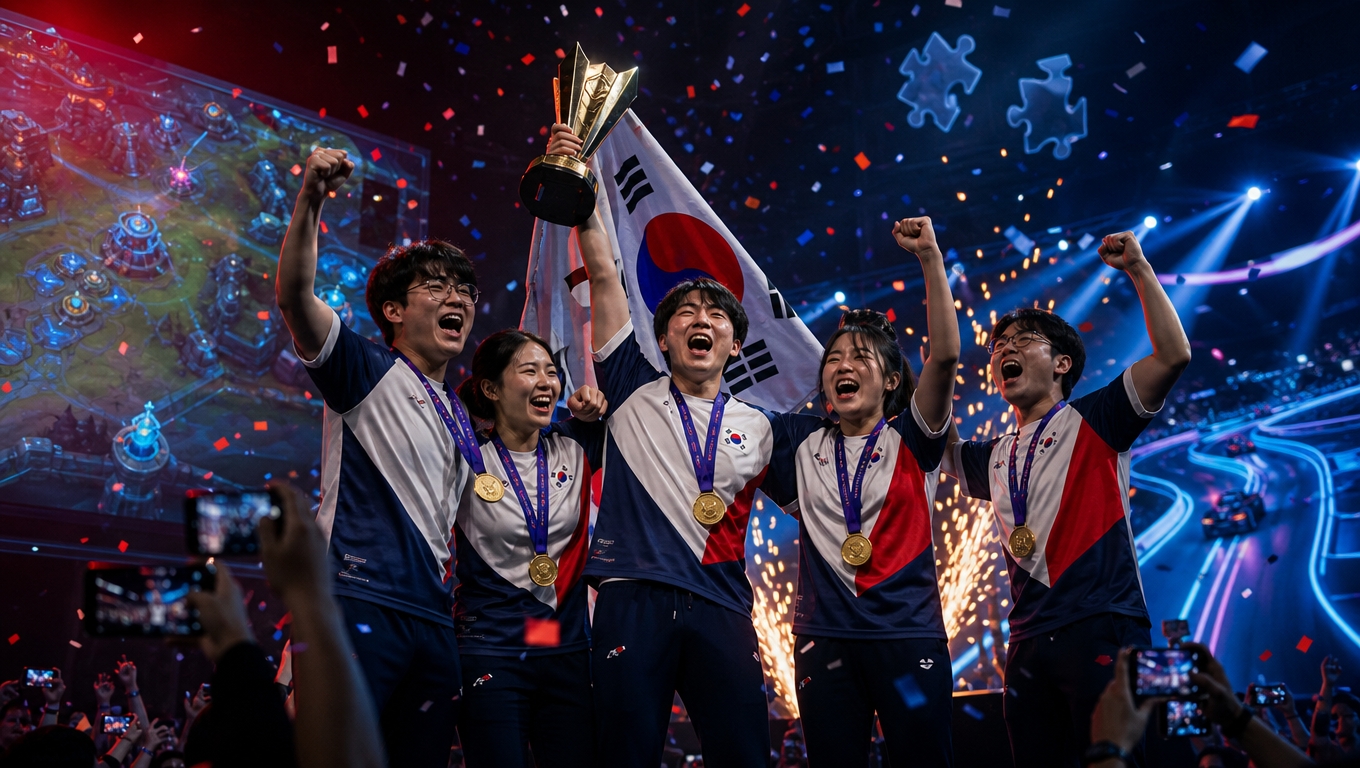
The South Korean national esports team wrapped up the 2026 Aichi-Nagoya Asian Games with a total haul of two gold, one silver, and two bronze medals. After securing their first medal early in the tournament with Gran Turismo 7, the team expanded their podium finishes across fighting games, Puyo Puyo Champions, and Pokémon Unite, ultimately capping things off with a final gold in the League of Legends (LoL) finals on October 2.
Their final tally of five medals is one better than their run at the previous Hangzhou Asian Games. While they fell short of their pre-tournament goal to medal in all nine entered events, a chronological look at their journey reveals that this was a vital testing ground for South Korea’s versatility. The team proved their competitive edge stretches well beyond their traditional strongholds, diving deep into fighting, puzzle, racing, and multiplayer online battle arenas.
Kicking off the medal race with bronze on the track
South Korea’s very first medal came on September 23 in Gran Turismo 7. Kim Young-chan secured bronze by racking up 25 points in a final that combined scores across three separate races. During the second race, he pulled off a thrilling pass on the final straightaway, edging out the Malaysian driver by just 0.054 seconds to cross the finish line first. His overall ranking placed him third behind Malaysia and Saudi Arabia. Although he tied in points with the Saudi driver, the tiebreaker fell to the final race’s standings, locking in Kim’s bronze.
Gran Turismo 7 is a sim racing title that meticulously recreates the physics and driving techniques of real-world motorsports in a digital environment. It is a far cry from the team-based strategy games like League of Legends that usually define South Korean esports to international audiences. Reaching the podium first in this specific event proved that the national team wasn’t pinning all its medal hopes on a single genre.
A first gold in fighting games and a silver in puzzles
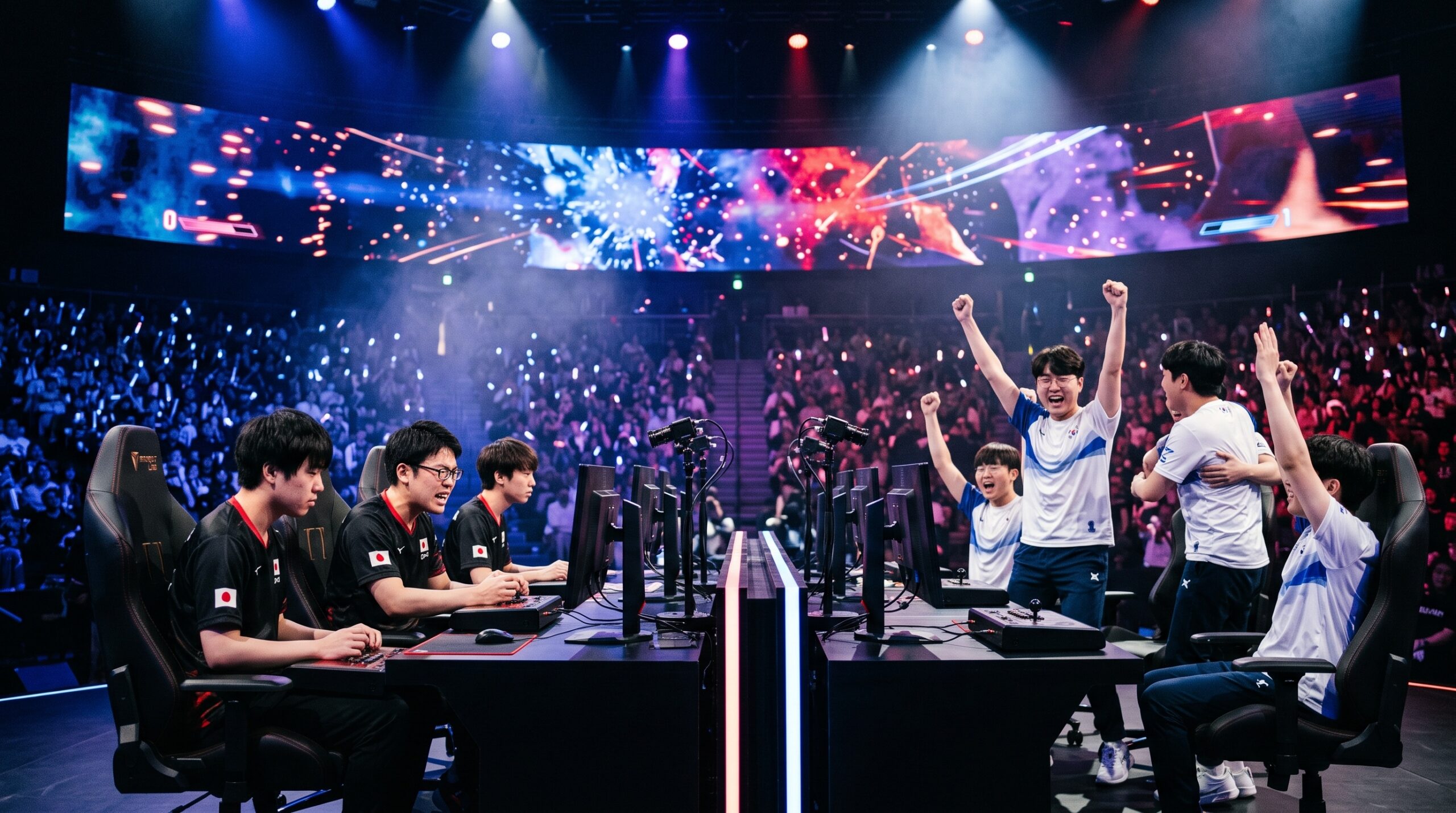
On September 26, the fighting game team defeated host nation Japan 5-2 in the finals, delivering South Korea’s first gold of the games. This fighting game category was a newly established team event that combined three distinct titles into a single relay: Tekken 8, The King of Fighters XV, and Street Fighter 6. Bae Jae-min, Lee Gwang-no, and Yeon Je-gil mounted a massive comeback from a 1-2 deficit, sweeping the next four sets to become the inaugural champions.
That same day, Kang Dong-shin earned a silver medal in Puyo Puyo Champions. Puyo Puyo is a fast-paced puzzle game where players connect matching pieces to clear their board and send garbage blocks to their opponent’s screen. Kang faced off against Japan’s Kurihara in the finals, ultimately falling 2-10. While the 11-year-old Kurihara took the crown, Kang’s deep run added a valuable silver to South Korea’s count. The gold in fighting games and the silver in Puyo Puyo showed how South Korea’s and Japan’s different gaming strengths collided on the Asian Games stage.
A second bronze courtesy of Pokémon Unite
On September 27, the Pokémon Unite team chipped in with another bronze medal. South Korea advanced to the knockout stage as the runner-up in their group after defeating India 2-0 and dropping a tight 1-2 match against Japan. They then bested Singapore 2-1 in the quarterfinals before falling to Japan 0-2 in the semifinals. Without a separate third-place playoff, South Korea automatically secured the bronze.
Pokémon Unite, a team-based battle game, made its debut as an official medal event at these games. Though South Korea reached the podium in their inaugural run, they missed out on medals in several other entered titles, including Honor of Kings, eFootball, PUBG Mobile, and Identity V. The mid-tournament results made one thing clear: while South Korea remains fiercely competitive across multiple genres, they can no longer take the gap between themselves and the rest of Asia for granted.
A flawless LoL run, and Zeka’s start, signal a turning point
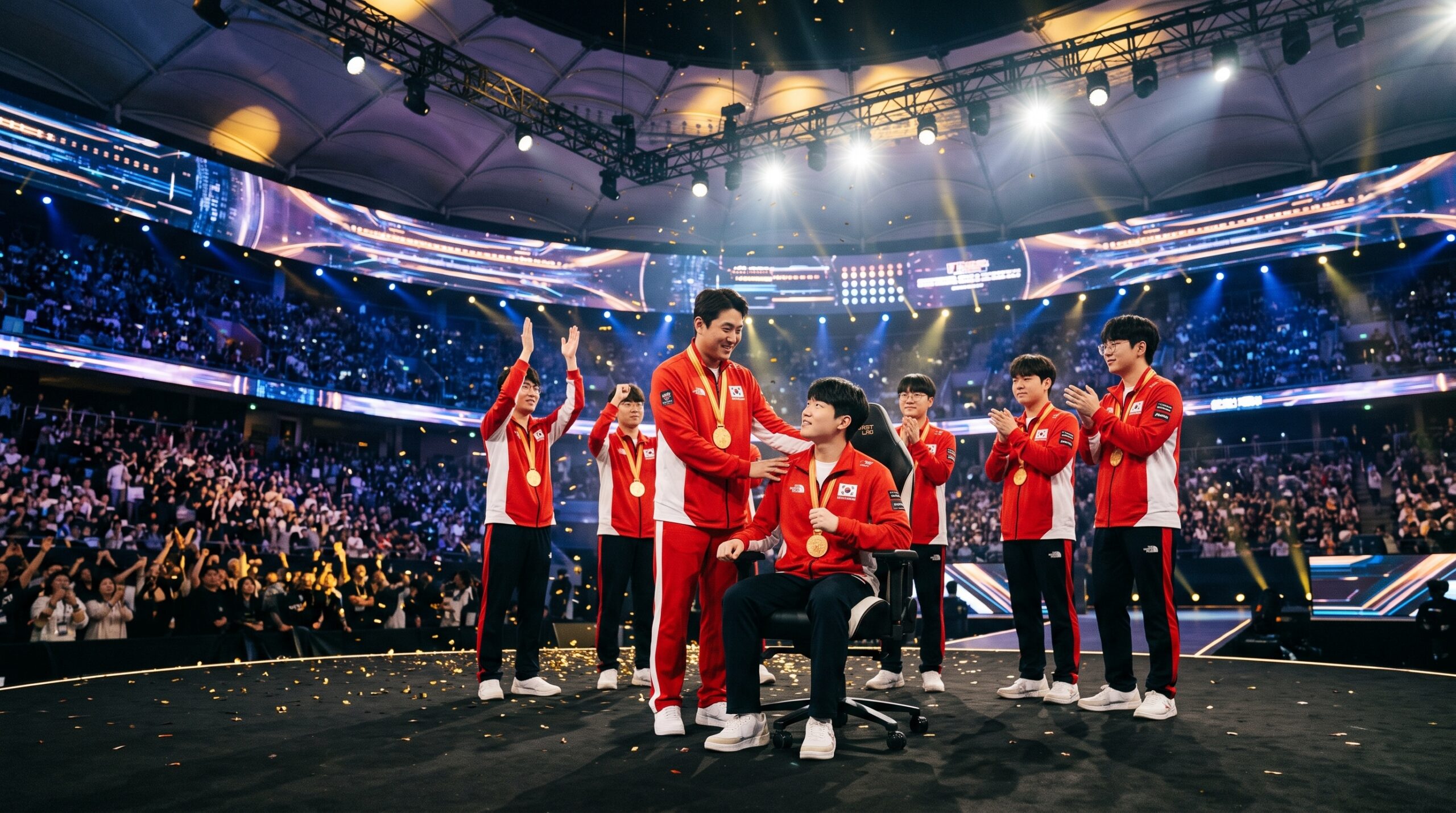
The tournament’s grand finale was delivered by the League of Legends team. After sweeping Taiwan, India, and Hong Kong to top Group B, South Korea dismantled Saudi Arabia 2-0 in the semifinals. In the grand finals held at Aichi Sky Expo on October 2, they routed Taiwan 3-0. It was an flawless 8-0 set record from the group stages all the way to the championship.
With this victory, South Korea claimed back-to-back League of Legends gold, following up their win in Hangzhou where esports was first recognized as an official medal event. Zeka took the starting spot this time, with Faker rotating in for just one group stage match, testing both veteran experience and a fresh tactical option. Cruising to the title without dropping a single set proved the squad’s depth: the team could adapt its lineup to different matchups and game states instead of relying on one star player.
Faker was notably absent from the starting lineup in the finals, with Zeka taking the reins in the mid lane. Rather than a harsh declaration that Faker’s era is over, the move highlighted that the team now possesses a viable alternative who can maintain their dominant form in the highest-stakes matches. Navigating the tournament with a dual-midlaner system showed that South Korean League of Legends has entered a mature phase where they can seamlessly leverage both the invaluable experience of iconic veterans and the mechanical prowess of the next generation.
Looking ahead to the 2026 World Championship
There won’t be much time to bask in the afterglow of their Asian Games victory. The League of Legends World Championship kicks off in Los Angeles on October 15 local time (the early hours of October 16 in Korea) and runs until November 14. While the Asian Games pits national teams against one another, the World Championship is a battle among top-tier clubs that have conquered their respective regional pro leagues. In just a matter of days, teammates representing their country will revert to fierce rivals representing their franchises.
Evaluating South Korea’s esports performance at these games by simply looking at the two gold medals doesn’t tell the whole story. The final tally was built on the back of becoming inaugural champions in a brand-new fighting game relay, grinding out medals in puzzles and racing, and making history on Pokémon Unite’s first podium. The League of Legends team’s repeat title, and the decision to start Zeka in the finals, show that even in Korea’s most dominant event, a generational and tactical shift is underway.
Source: ZDNet Korea, October 2, 2026; Inven, October 2, 2026; LoL Esports, 2026 World Championship schedule.


