
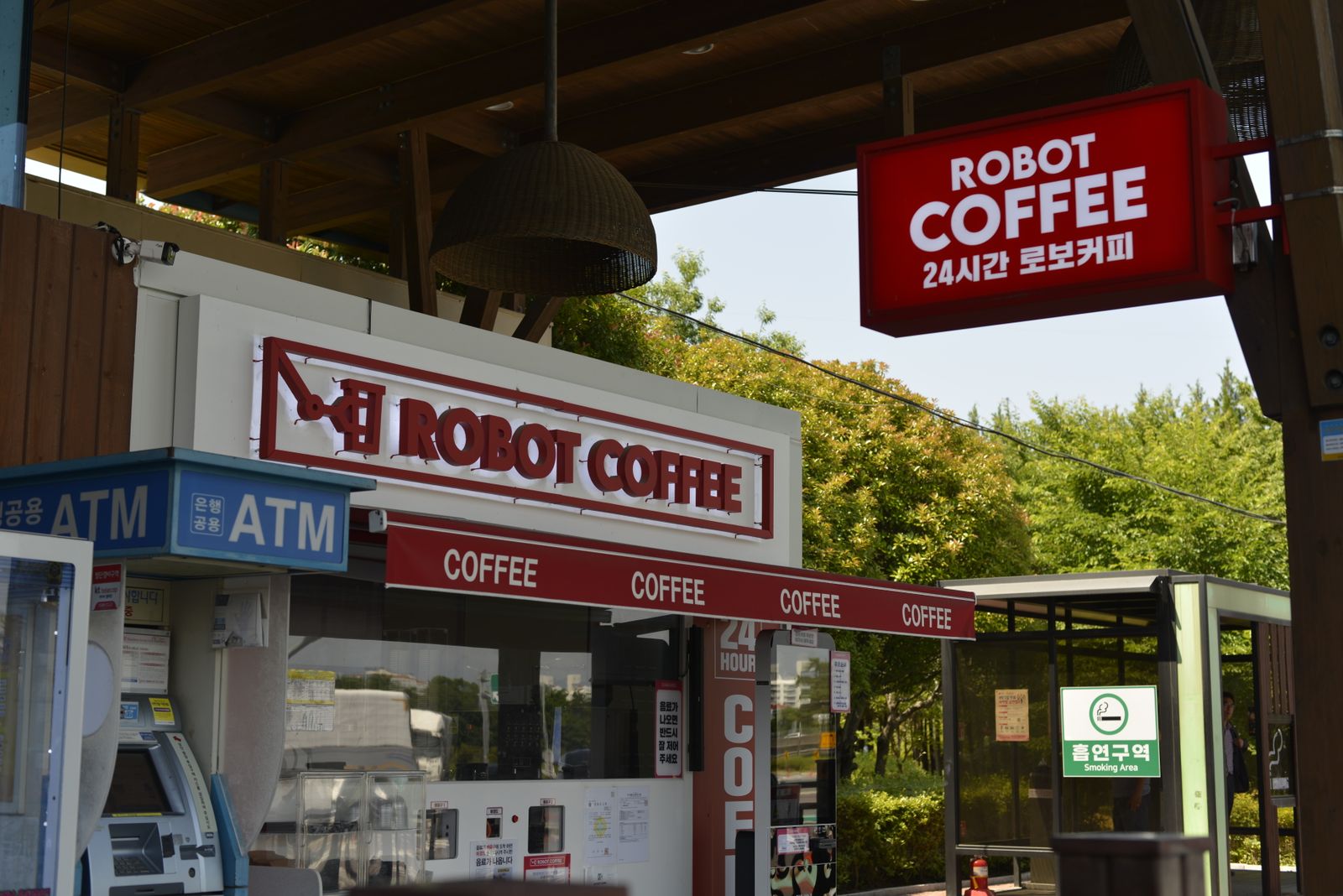
Walk through almost any Korean neighborhood these days and you’re likely to pass at least one cafe with nobody behind the counter — just a self-service machine, a QR code, and a soft hum of espresso grinders running on autopilot.
According to a “2026 Trend Report” published by the franchise information platform MyFranchise (마이프차) on January 24, 2026 and cited by Seoul Economic Daily, 32.6 percent of prospective small-business owners named “unmanned” businesses as the sector with the best growth potential for the year — more than any other category. The report ties the trend directly to Korea’s rising labor costs and chronic staffing shortages, which have made minimal-staff operations increasingly attractive to first-time entrepreneurs.
Unmanned cafes and self-service laundromats, both already well established, are now being joined by newer formats: unmanned underwear shops and unmanned screen-golf ranges. Lingerie brand Lafair Lounge, for instance, has opened stores where customers browse products through a mobile app, try them on in person, and check out through automated payment — all without a staff member in sight. Golf tech company GTS&N has rolled out “GOLF24,” a 24-hour unmanned screen-golf brand built around compact one- or two-bay locations designed for short, spontaneous practice sessions rather than long waits.
Self-service laundromats remain the most popular unmanned format overall, largely because they can be run by a single owner, operate around the clock, and keep fixed costs low — a combination that appeals to office workers looking for side income as much as full-time entrepreneurs. Industry watchers caution, though, that success in an unmanned model depends heavily on equipment reliability: with no staff on-site, a single machine breakdown can translate directly into lost revenue, and experts increasingly advise prospective owners to weigh a machine’s manufacturing origin, durability and after-sales service — not just its upfront price — before signing on.
The unmanned boom has a less welcome side effect, too. With fewer staff around to keep an eye on the sales floor, petty theft has climbed sharply. Data submitted by the National Police Agency to the office of Democratic Party lawmaker Chae Hyun-il showed that thefts involving losses of 100,000 won or less reached 81,329 cases in 2024 — the highest total in five years, and a 53 percent jump from 53,060 cases in 2020. Police officers quoted in the report described a growing burden: even a theft worth a few thousand won can trigger a full investigation involving bank-account tracing and CCTV review, pulling resources away from more serious cases.
Experts say that as unmanned businesses become the default rather than the exception, the next phase of the trend will likely hinge as much on crime-prevention technology and equipment upgrades as on the novelty of a cashier-free storefront.
Source: Kim Do-yeon, Seoul Economic Daily (서울경제), January 24, 2026.