
Table of Contents
A Single App Transforms Your Beauty Routine
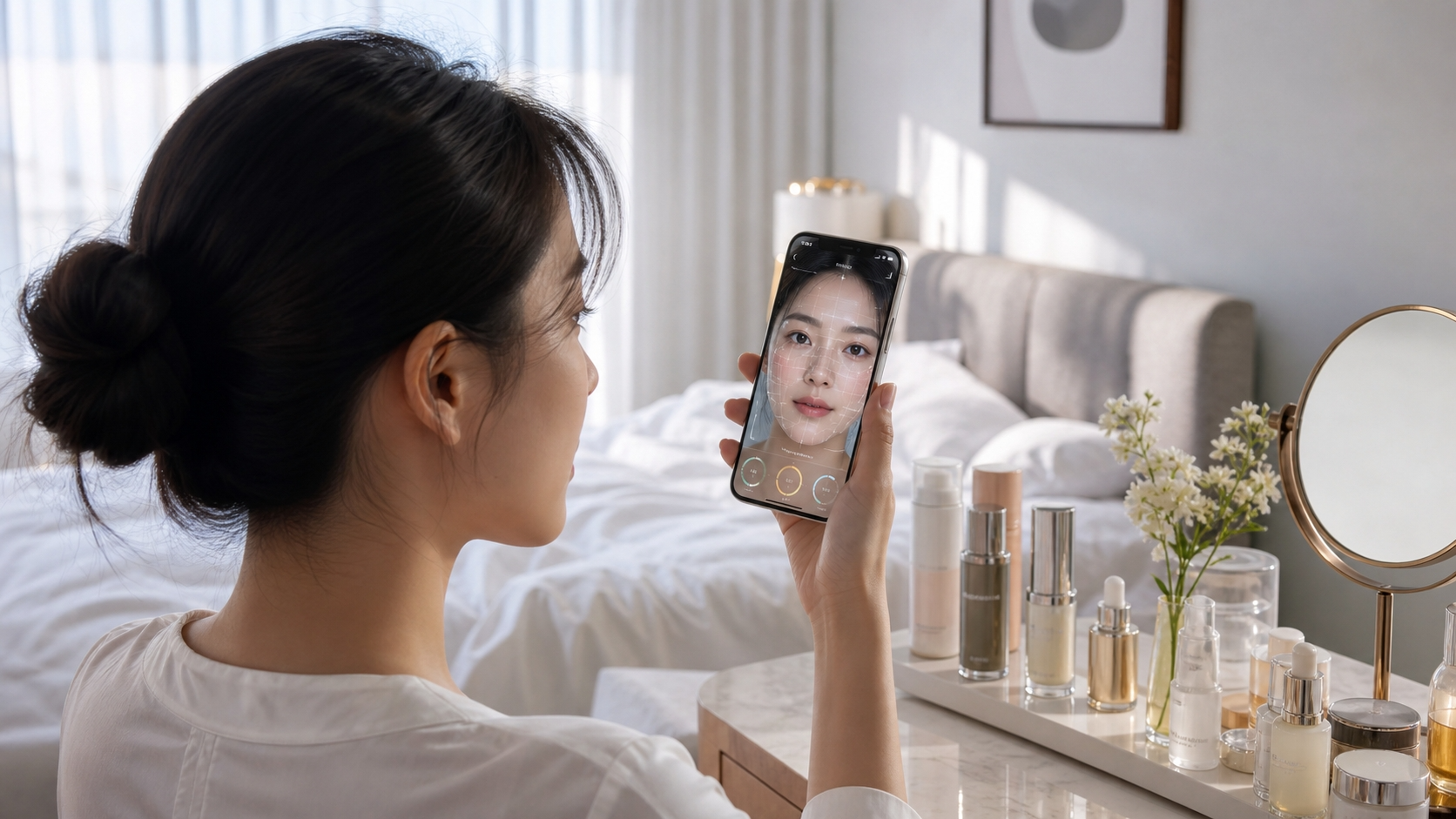
In the past, figuring out your skin type meant visiting a dermatologist or seeking advice from experts at beauty counters. But now, a smartphone camera has changed all that. We’ve entered an era where AI skin analysis apps diagnose your skin condition from a single selfie and even suggest personalized care routines. The line between you and professional advice is quietly disappearing.
As of 2026, beauty apps equipped with skin analysis features have already become part of daily life for tens of millions. Korean beauty brands, in particular, are aggressively investing in this technology, competitively rolling out app-based personalized services. The grammar of beauty is shifting—instead of consumers hunting for information, the app brings skin-specific insights directly to them.
What AI Reads from a Selfie
The information an AI skin analysis app extracts from a single selfie is far more extensive than you might think. It simultaneously analyzes dozens of metrics: skin hydration, oiliness, pore size, distribution of blemishes and wrinkles, and even skin texture uniformity. Some apps enhance precision by adding technology that corrects lighting conditions and angles.
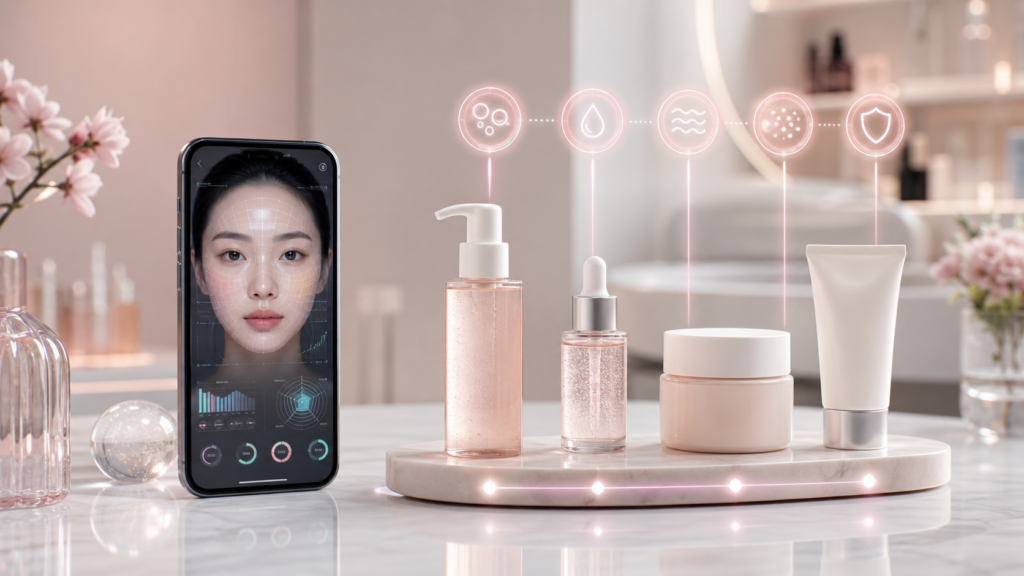
The analysis doesn’t stop at a simple skin type classification. It goes on to offer specific recommendations—what ingredients to replenish based on your current state, and which ingredients or products to avoid. This is advice that, in the past, only a dermatologist or beauty professional could provide. While the accuracy isn’t perfect yet, it’s improving rapidly through continuous learning.
Personalization Rewrites the K-Beauty Formula
AI personalization is fundamentally changing the sales formula of K-beauty. Traditionally, beauty brands targeted the mass market with best-selling product lines. But now, the concept of a ‘routine for my skin’—recommending the optimal combination based on an individual’s skin condition—is becoming the standard for consumption. Even for the same moisturizer, the recommendation can vary depending on your skin analysis results.
For brands, AI analysis data is a valuable asset. By accumulating data on consumers’ skin concerns and response patterns, they can leverage it for new product planning and ingredient research. AI is becoming a new link between consumers and brands. Technology is reshaping even the R&D direction of the beauty industry.
From Grandma’s Fingertips to MZ, Accessibility Transformed
Another shift brought by AI skin apps is accessibility. Busy modern individuals who find dermatologist visits burdensome or time-consuming, beginners who feel awkward seeking advice at premium beauty counters, and those living in rural areas or abroad with limited access to experts—anyone with a smartphone can now easily check their skin.
This change carries particular weight from a global perspective. International consumers interested in K-beauty can now get a skin analysis and receive recommendations for Korean products suited to them, all through a single app. It’s becoming a conduit that bridges language barriers and geographic distances, connecting K-beauty more deeply with consumers worldwide.
Trust and Limitations: Two Pillars to Move Forward Together
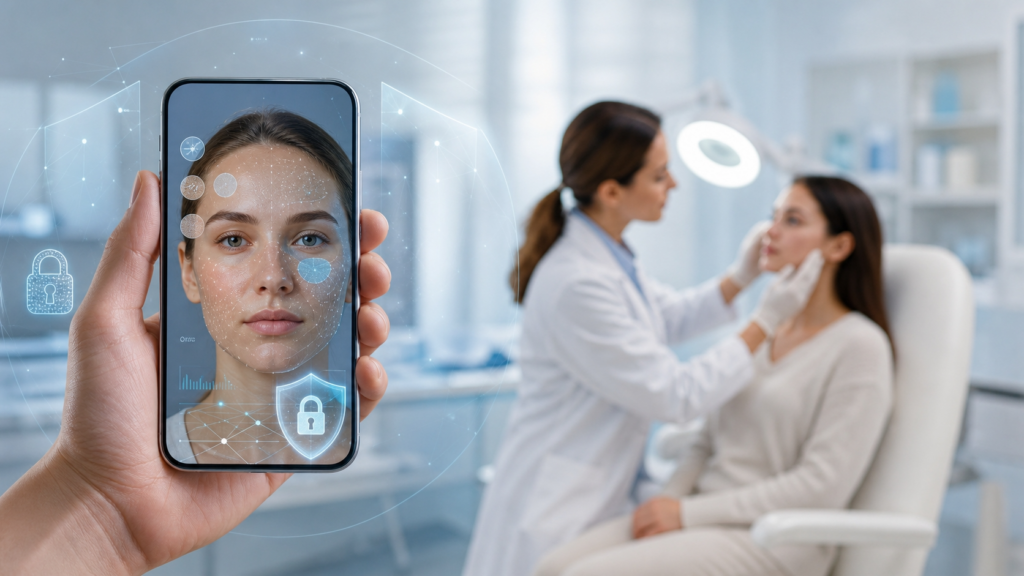
Of course, there are hurdles to overcome. Issues like the accuracy of AI diagnostics, concerns over personal data collection and security, and the medical limitations—where AI cannot replace a dermatologist’s judgment—are all being raised simultaneously. Especially for skin diseases or severe breakouts, a professional diagnosis is essential, and there’s worry that heavier reliance on apps could blur that boundary.
Still, it’s clear that AI skin analysis apps are fundamentally changing the way we consume beauty. A new space has emerged somewhere between the dermatologist’s office and the beauty counter, and apps are filling that void. This shift—bringing a dermatologist into your pocket—signals that K-beauty is evolving to the next level, hand in hand with technology.
Sources: Allure, industry reports, 2026.