
Table of Contents
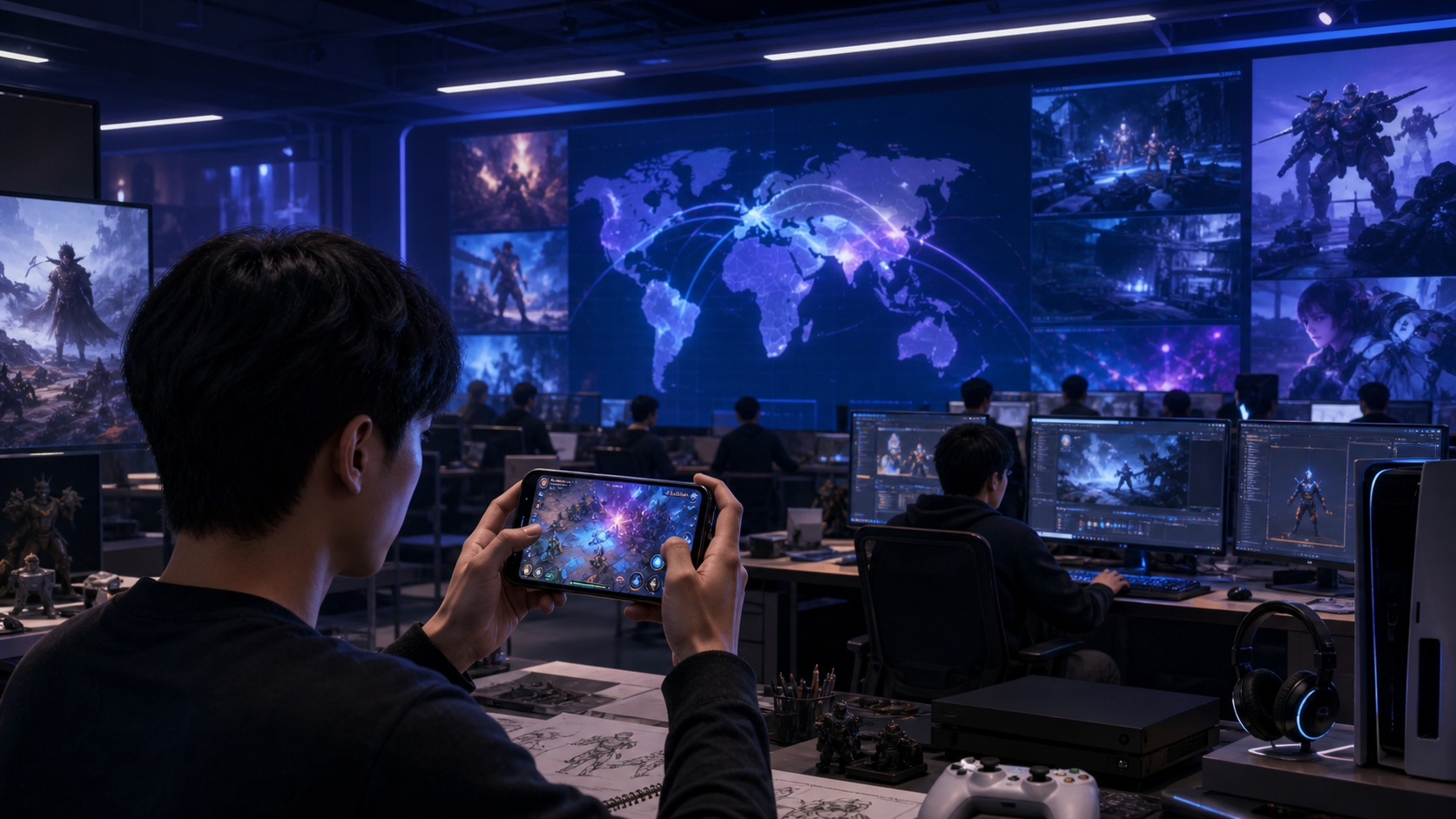
The Game Industry Reshaped Around Mobile
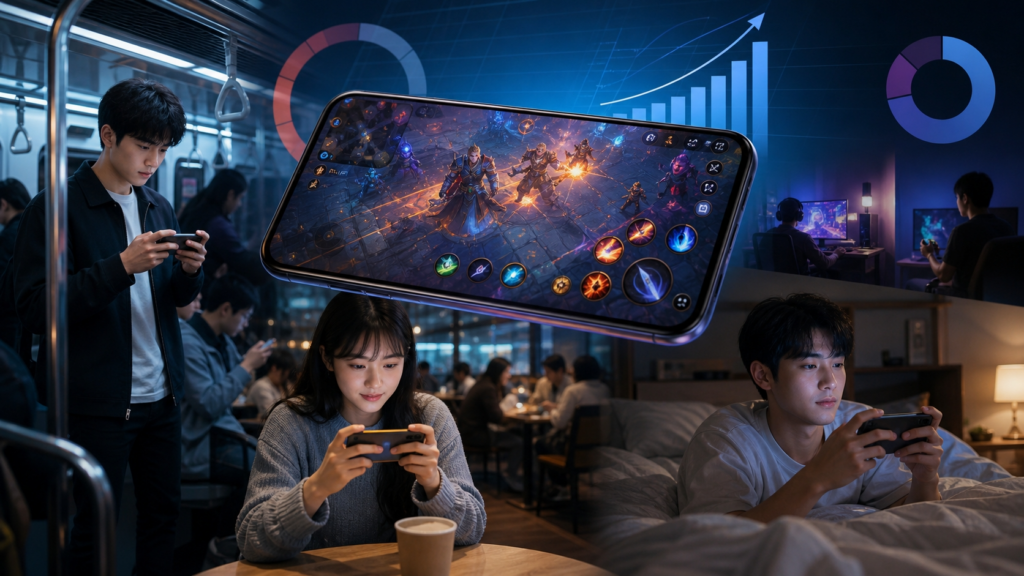
The center of gravity in South Korea’s game industry has clearly shifted. According to the ‘2025 Korea Game White Paper’, domestic game industry revenue reached approximately 23.8 trillion won. By platform, mobile games accounted for 14.71 trillion won, or 59 percent of the total, securing an overwhelming lead. PC games followed with 6.094 trillion won (25.2 percent), while console games brought in 1.1836 trillion won (5 percent). Mobile has far surpassed half of the entire market, leaving PC and console far behind.
This concentration is also reflected in gamer behavior. Surveys show that over 90 percent of Korean gamers play on mobile devices. As smartphones have effectively become the national gaming device, the entire process of game development, distribution, and marketing has been reorganized around mobile. South Korea is among the world’s top four game powerhouses, but most of its growth is concentrated on a single platform—mobile—a distinctive feature of the industry.
Export Market Structure and the Risk of Overconcentration
This mobile tilt is mirrored in the export structure. South Korea’s game exports total about 8.5 billion U.S. dollars, with China accounting for the largest share, followed by Southeast Asia, North America, Japan, Taiwan, and Europe. The heavy reliance on a specific country—especially China—has long been flagged as a structural vulnerability. Export performance can swing sharply depending on whether China grants game service licenses, known as ‘panho’.
In response, the government is pushing for expanded Chinese licensing of Korean games as part of its 2026 economic growth strategy, coupling diplomatic efforts to lower the barrier in the largest market. Yet the dual concentration on a single platform and a single market remains a risk factor for the industry’s sustainability. As mobile growth shows signs of slowing, moves to ease this overconcentration are gaining momentum.
Console as a New Breakthrough
The industry’s eyes are on the console market as a breakthrough. According to the game white paper, console game exports rose more than 15 percent year-over-year, showing visible growth. While console’s domestic share is still tiny, the global console and PC packaged-game market remains enormous. With mobile growth decelerating, it is a natural strategic choice for Korean game companies to turn to the global console market.
What stands out is that this shift goes beyond simple platform expansion—it changes the nature of games themselves. Unlike mobile games, whose revenue models have relied heavily on random-item purchases, the console market is dominated by selling high-completion packaged games at a one-time price. Entering the console space could therefore push Korean games away from service-based revenue models and toward developing blockbuster titles with strong artistic merit and completeness.
Fundamental Transformation for the Global Market
The strategy targeting console and PC packaged games can be read as an attempt to fundamentally change the Korean game industry’s constitution. Korean games have long been strong in operational know-how and live-service capabilities, but they have relatively lacked globally recognized major intellectual property (IP) or narrative-driven blockbusters. To succeed in the console market, they must produce titles with world-class overall quality in graphics, storytelling, and gameplay.
This is a challenge that demands a full-scale overhaul of development methods, workforce structure, and investment scale. Indeed, several major domestic game companies are pouring resources into developing blockbuster titles for console platforms, and the government is expanding related support. This shift—aimed at accumulating long-term brand value rather than short-term revenue—is seen as a necessary step for the Korean game industry to leap to the next level.

The Future of Korean Gaming at a Crossroads
Of course, this transition is not without hurdles. The console and packaged-game market is already fiercely competitive, with world-class developers vying for dominance. Developing blockbuster titles requires enormous time, money, and carries the risk of failure. There is no guarantee that the success formula accumulated in mobile will work in the console market. News of recent layoffs and poor performance in the game industry underscores the difficulty of this challenge.
Still, moving beyond the current structure where mobile has overtaken PC, the strategic pivot toward diversifying platforms and markets is a necessary direction. Reducing the overconcentration on a single platform and a single market, and competing with high-quality titles that resonate globally, is the path to a sustainable future for Korea’s game industry. Whether it can evolve from a mobile powerhouse into a true global gaming leader—2026 will be a critical test of that transformation.
Sources: Korea Creative Content Agency, Dong-A Ilbo, Digital Today, 2026.