
Table of Contents
The Era of Set Tourism Is Over
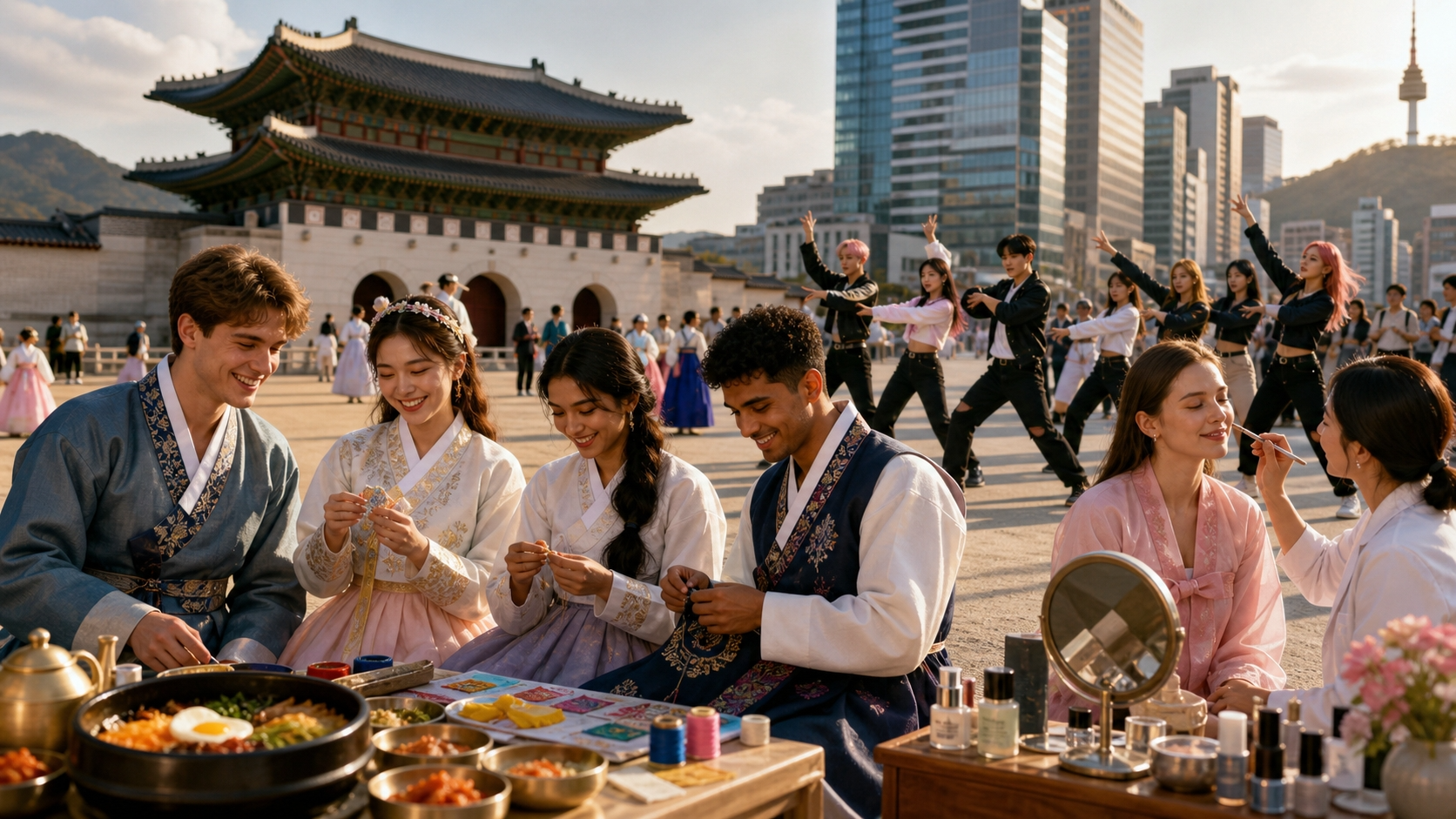
The first wave of Hallyu tourism was built upon sets. Namiseom, the filming location of ‘Winter Sonata’ (Gyeoul Yeonga), the ‘Dae Jang Geum’ set, the alleyways where beloved characters once walked—for fans, simply standing in the exact spot they had seen on screen was sufficient. But the Hallyu tourist of 2026 craves something far deeper: not just viewing the backdrop, but stepping directly into the culture itself.
This transformation is validated by statistics. In 2024, inbound tourists surpassed the 20 million mark, a historic record, and the ascent has persisted. The primary engine behind this surge is the growing segment of visitors who seek not mere tourism but cultural immersion. Hallyu is no longer merely a catalyst for travel; it has become a gateway to experiencing a mode of living.
The Experience Menu Expands: From K-Pop to Beauty and Cuisine
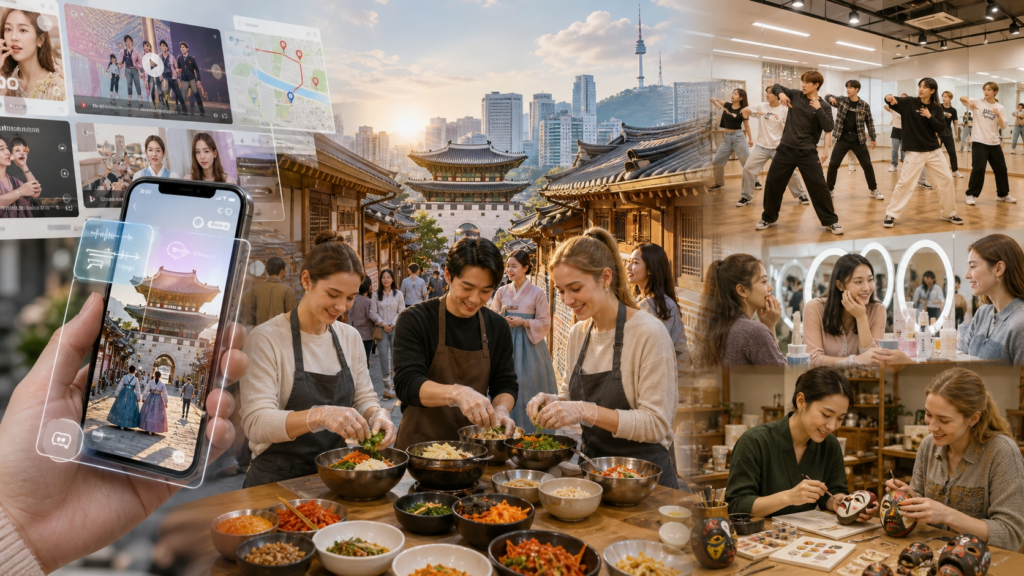
The menu of immersive Hallyu tourism experiences is diversifying rapidly. From K-pop idol training sessions, wearing hanbok (traditional Korean attire) and participating in traditional wedding performances, hands-on cooking classes to make kimchi and hangwa (Korean traditional sweets), to tours of K-beauty pop-up stores and skin analysis consultations, the options available to tourists have exploded. What these experiences share is a foundation of active participation, not passive observation.
What deserves special attention is the refinement of experiential packages for K-pop devotees. Moving beyond concert attendance, bundled offerings now integrate studio visits, dance instruction, and even the opportunity to prepare for fan signings. In this manner, Seoul becomes a stage where fan identity is actualized in reality.
The Intersection of Cultural Heritage and Modern Hallyu
An intriguing phenomenon is that traditional culture and modern Hallyu are not in conflict but are being woven into a single experience. The sight of foreign tourists wearing hanbok and taking selfies at Gyeongbokgung Palace has become a common tableau. Court cuisine experiences, traditional craft workshops, and gugak (traditional Korean music) performances coexist naturally within the same itineraries as K-pop and K-drama fan tours.
This confluence holds strategic weight for cultural tourism. Basing tourism on a single content piece or a specific idol fandom is inherently precarious. However, fostering visitors who possess a profound curiosity about Korean culture in its entirety yields far steadier and more enduring demand. It is precisely for this reason that the Korea Tourism Organization and municipal authorities are aggressively crafting integrated packages that marry Hallyu intellectual property tourism with heritage experiences.
The Convergence of Digital and Offline
Another defining feature of Hallyu tourism in 2026 is the seamless integration of digital encounters and physical visits. The entire journey—charting routes via YouTube and TikTok before departure, employing AR filters and live translation apps on the ground, and generating and sharing content afterward—coalesces into a unified tourism experience. At the point where the trip concludes, content emerges, and that content, in turn, ignites the desire for the next traveler.
This cyclical framework fuels the organic proliferation of Hallyu tourism. Nothing proves more potent than the organic content generated by those who have lived the experience. A mechanism is already at work: as visits to Korea ripple outward through social media feeds, they perpetually reignite the aspiration to come.
The Era of Immersion: The Next Chapter of Hallyu Tourism
Immersive Hallyu tourism—venturing beyond mere sets to embed oneself within the culture—is unlocking fresh industrial horizons. As the experience economy flourishes, the market for premium tourism offerings anchored in content intellectual property is swelling. A self-reinforcing cycle is taking shape: the expansion of Korea’s content industry funnels into tourism demand, which then amplifies the global stature of that very content.
The lingering task is to render this expansion sustainable. The threats of overtourism—erosion of cultural assets, friction with local communities, and the need for rigorous quality management of experiential offerings—are puzzles that demand simultaneous resolution. Yet the overarching trajectory is unmistakable: as a cultural powerhouse, Korea is forging a path toward unrivaled prowess in the realm of tourism content.
Sources: Korea JoongAng Daily, Korea Tourism Organization, industry reports, 2026.