
Table of Contents
A Glasses Brand Showed Up at a Google Event
It’s still pretty rare to hear about a fashion brand at an IT developer conference. But that’s exactly what happened at Google I/O 2026 on May 19, 2026, in Mountain View, California. Samsung and Google introduced “Intelligent Eyewear” built on the Android XR platform, and they showed off frames from Korean eyewear brand Gentle Monster and American brand Warby Parker.
Just a heads up: the date June 19 in the original text is wrong. Both Google’s official blog and Samsung’s global newsroom put the announcement date as May 19. And it wasn’t four designs total—only two were revealed, one from each brand. More frames will be added to their collections later, but I couldn’t find any official source saying four were shown at I/O.
Gentle Monster started in Seoul in 2011 and grew into a Korean eyewear brand known for its experimental store concepts and sculptural frames. But here’s a common misconception: Gentle Monster didn’t handle the entire hardware design solo. Samsung took care of the hardware and Galaxy ecosystem, Google handled Android XR and Gemini, and Gentle Monster and Warby Parker focused on frame design and wearing experience. It’s a joint development structure.
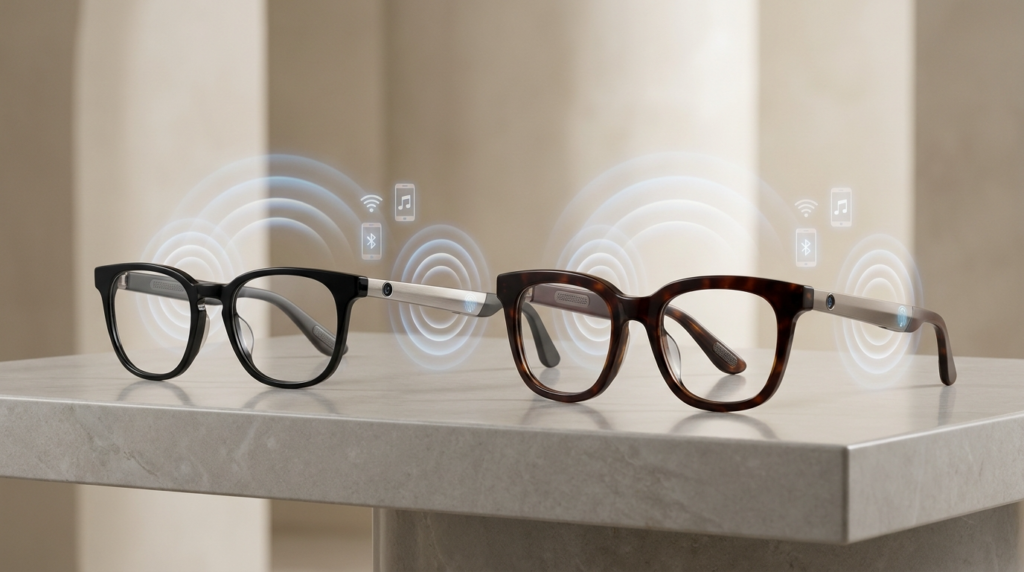
Samsung gave another look at the product on July 22 at the Galaxy Unpacked event in London. The Gentle Monster edition was described as a slim black frame with a straight top rim and softly rounded bottom line. The Warby Parker edition features a deep brown color with a slightly raised brow line. Even though both designs pack the same electronics, they show how different eyewear brands can create completely different impressions.
Why Did They Need a Fashion Eyewear Brand?
Smart glasses aren’t new. Lots of tech companies have tried adding cameras, displays, and voice features to glasses, but they’ve struggled to make them everyday products. The problems are a mix of looks, weight, battery life, heat, privacy concerns, and a lack of clear reasons to use them. You can’t blame the failure on design alone, but fit and appearance were definitely big barriers.
Unlike a smartphone, glasses sit right in the middle of your face. They’re something people constantly look at, and they can totally change your impression—they’re a fashion item. Even if the performance is great, a frame that’s too thick or heavy is hard to wear for long. Plus, face width, nose bridge, and where the temples touch your ears vary from person to person, so electronics design alone can’t solve everything.
Samsung said they worked with both eyewear brands to adjust key contact points like the forehead and ear area during development. The reason they brought in Gentle Monster and Warby Parker wasn’t just to borrow their logos—it was to refine the shape and wearing experience of the glasses. It’s more accurate to see this as a project that combined electronics and eyewear expertise from the start, rather than a tech company borrowing fashion sense.
Around July 23, Gentle Monster revealed a second design on their official page: a minimalist rectangular silhouette—more restrained and calm than the first one shown at Google I/O. But that doesn’t mean these are the last two models in the Gentle Monster collection. The brand says more designs will be added when the product officially launches in fall 2026.
The First Product Is Audio Glasses Without a Display
Google is developing Intelligent Eyewear in two main categories: audio glasses and display glasses. The first to launch in fall 2026 are audio glasses—no screen on the lenses. They pack a camera, microphone, open speakers, and touch controls into the frame, and you connect them to your phone to use Gemini.
You can say “Hey Google” or tap the side of the frame to activate Gemini. Ask questions about signs, menus, or objects the camera sees, get voice-guided directions, manage texts and calls. You can also take photos and videos, get a summary of missed messages, or use real-time translation. The glasses can share what you’re seeing with someone on a call, or capture a whiteboard in a meeting and organize it in Samsung Notes.
But the glasses don’t do everything independently. Samsung calls them a “companion device” for your smartphone. They need a network connection, a compatible phone and app, and user permissions for some features. Availability varies by language and country. According to the Gentle Monster official page, they work with iOS devices too, not just Android. But some Galaxy-specific features might only work with Samsung devices, so check the official specs.
From the July Galaxy Unpacked specs: they use Qualcomm’s Snapdragon AR1 Gen1 platform, and a single charge lasts up to 9 hours. The charging case supports 7+ additional charges. Actual battery life depends on camera use, calls, translation, network conditions, and settings. Don’t take “up to 9 hours” as a guarantee for continuous shooting or with all features on.
How Is This Different from AR Glasses?
Calling this fall’s product ordinary AR glasses would be confusing. AR or display glasses overlay visual info like maps, notifications, or translations onto your field of view through lenses or optical systems. But the first audio glasses from Gentle Monster and Warby Parker work without a screen—using sound, voice, and camera.
Removing the screen isn’t just about cutting features. Adding a display and optics makes the frame bulkier, heavier, and harder to manage power and heat. Samsung and Google seem to have chosen a design close to regular glasses to make voice AI an everyday thing. But that doesn’t mean it’s better for everyone. If you need to see info directly in your field of view, screenless glasses have clear limits.
Google also announced they’re developing display glasses that show information in front of your eyes, separate from the audio glasses. But they didn’t reveal specific launch dates, prices, or partner brands. Samsung’s Galaxy XR headset is also sold separately. Galaxy XR is an immersive headset with 4K micro OLED displays, so it’s a different form and purpose compared to lightweight audio glasses.
Pricing hasn’t been officially announced. The 500,000–600,000 won estimate that appeared in the original text isn’t backed by any official Samsung, Google, or Gentle Monster source, so I removed it. Actual prices will depend on the frame, lenses, country, and service package. Right now, the only confirmed detail is a fall 2026 launch in select markets.

Fashion and Privacy Go Hand in Hand
From a fashion perspective, this collaboration is interesting because the eyewear brand isn’t just decorating the electronics—it’s a core part of the product experience. Gentle Monster is listed as an official partner alongside Samsung and Google, and the global campaign features models Alex Consani and Anok Yai. A Korean fashion brand co-developing a finished product with global mobile and AI platforms shows how K-fashion is expanding.
But the more natural the design, the less noticeable the camera and microphone become—which raises new privacy concerns. Glasses can shoot exactly what you’re looking at, share live video, or record from your point of view. Samsung says they’ll provide security measures and clear controls, but you’ll want to check the specific operation of recording indicators and restrictions in the final product description.
If you’re considering buying, look beyond the price. Check the weight, how it fits different face sizes, water resistance, durability, whether the battery can be replaced, and repair policies. If you normally wear glasses, confirm whether prescription and progressive lenses are supported, and whether lens replacement affects the warranty. Samsung mentioned multiple lens options but hasn’t released specifics for Gentle Monster models regarding prescription range or replacement procedures.
Camera and microphone permissions, cloud storage, and how to delete voice and photo data are also important factors. In sensitive spaces like indoors, workplaces, hospitals, or schools, check local laws and facility rules, and get consent from others. Glasses becoming IT devices means more fashion choices, but also more responsibility—you’re wearing a camera and AI on your face.
Sources: Google Official Blog ‘Intelligent eyewear with Gemini is coming this fall’, May 19, 2026; Samsung Global Newsroom ‘Samsung and Google Give First Look at New Intelligent Eyewear’; Samsung Global Newsroom ‘Samsung Brings Galaxy Ecosystem Into Everyday Eyewear’, July 22, 2026; Samsung Newsroom ‘Samsung Introduces Intelligent Eyewear’; Gentle Monster Intelligent Eyewear Official Page; Google Korea I/O 2026 Presentation; Galaxy XR Official Page.