Table of Contents
I Was Exhausted, So I Laced Up My Running Shoes — and Weirdly, It Helped
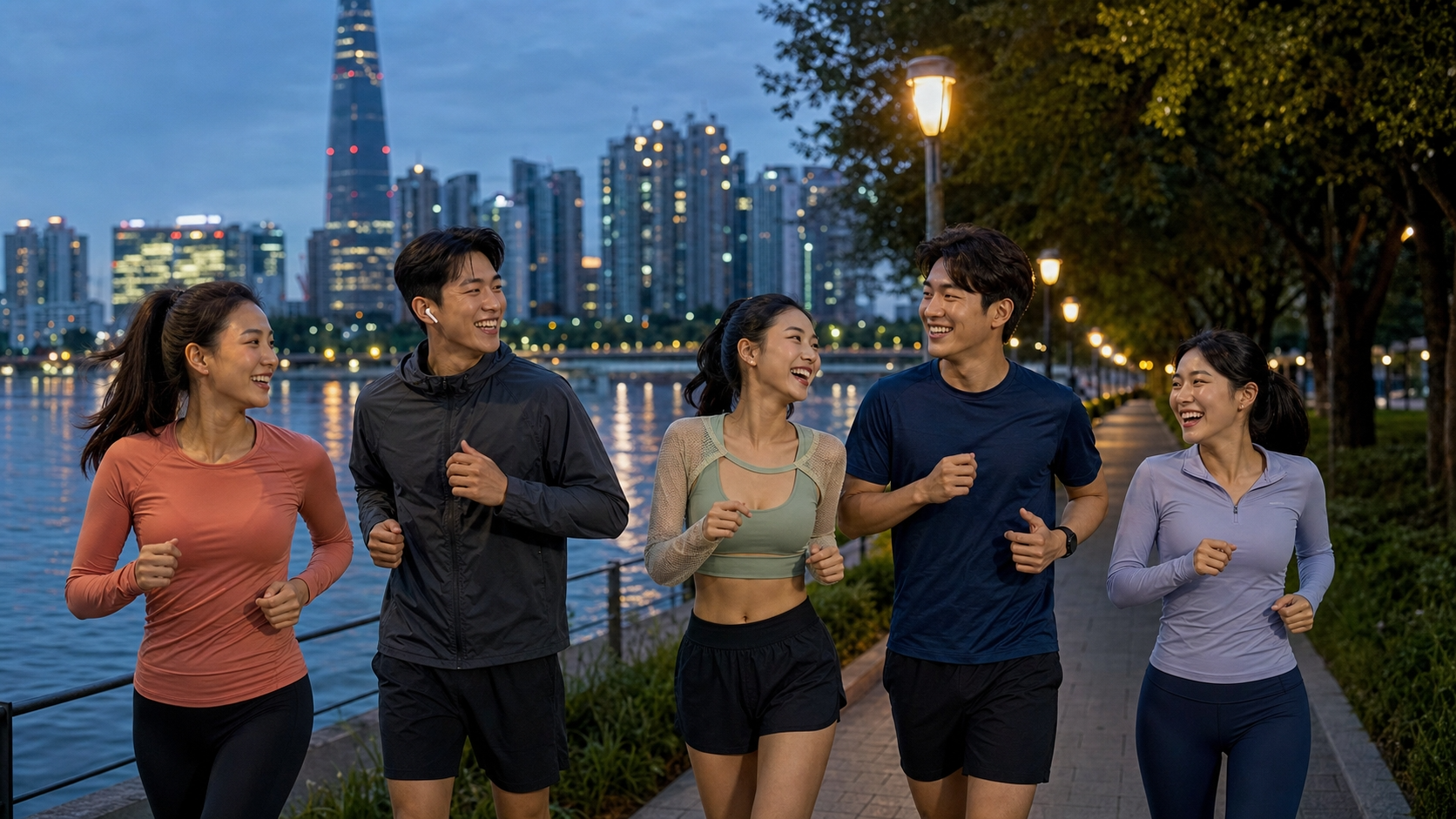
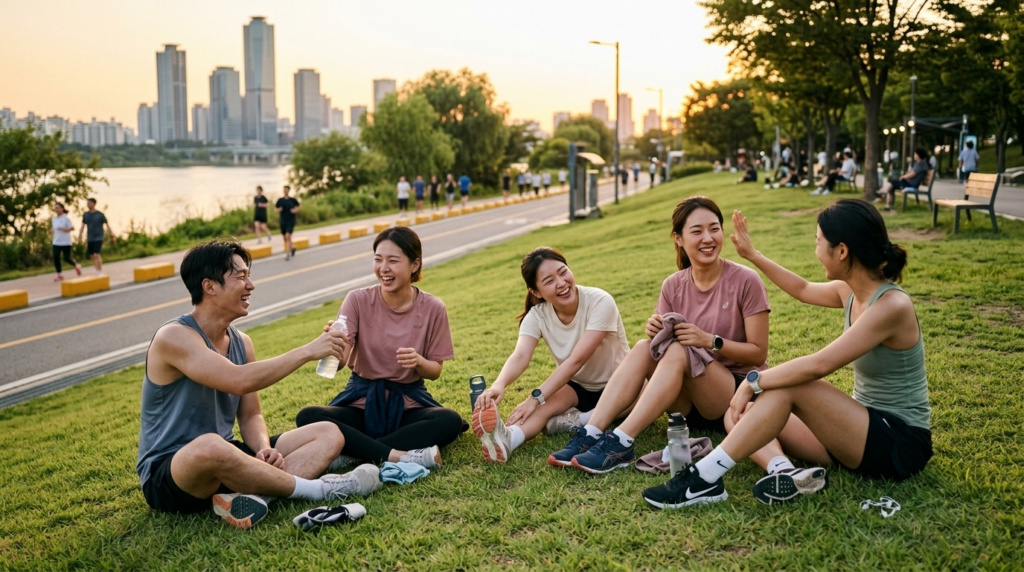
Honestly, I went through a phase of just swiping through dating app profiles until I got so tired of it I deleted the app. Even when a match happened, the conversation would fizzle out after a few messages, and eventually I started wondering, “Is this app actually for meeting people?” Then, on a whim, I showed up at a running crew meetup by the Han River — and somewhere between the sweat and the pace, I noticed how naturally the conversation started, and how little pressure there was to keep it going.
Turns out it wasn’t just me. A number of outlets have been reporting that among younger generations, the stage for dating and meeting people is shifting from online apps to offline running crews. People worn down by the fatigue of the phone screen are looking for more natural ways to connect — built around shared interests and physical health — and that shift is even showing up in spending: demand is migrating from dating-app subscriptions toward running gear and marathon events.
Some Numbers Out of the UK Make This Feel Less Abstract
A survey from British running brand Ronhill puts real numbers behind the trend: 22% of UK Gen Zers agreed that “running crews are the new dating app,” 72% said they join fitness groups specifically to meet new people, and 46% said they’d be open to a “workout first date.” Reading those numbers, I found myself thinking, “so it’s not just me.”
The shift shows up inside the apps themselves, too — mentions of “running” in UK Tinder bios reportedly doubled between 2023 and 2025. More people listing running as a hobby on their profile suggests running has become less of a pastime and more of a way to introduce yourself. UK outlet TechRound points to Gen Z’s fatigue with digital noise on social media as the backdrop — a craving for direct, offline connection over the kind of draining online interactions that never quite land.
In New York, It’s Already Grown Into a Real Community
CBS News recently profiled New York’s “Lunge Run Crew,” which was pretty striking — the group explicitly exists to connect singles, and what started with just 20 to 30 people has grown into a community of 400 to 500 in a short span of time.
Co-founder Steve Cole said the group grew to that size entirely through social media, without spending a cent on paid ads. People showed up on their own, told their friends, and the word spread. That part really stuck with me — the fact that it grew without anyone pushing hard to promote it feels like proof that this isn’t a passing trend but something people genuinely wanted.
I’ve noticed running crews near the Han River and Namsan getting noticeably bigger too, and after reading about the New York case, it makes a bit more sense why.
Why Running, of All Things? It’s Tied to App Fatigue
Think about it — dating apps put constant pressure on you to keep proving yourself to a stranger and keep the conversation going. Getting judged off a single photo or one line of text wears people down fast. A running crew works differently: the shared goal of “let’s run together” comes first, so the interaction happens naturally without anyone having to force small talk.
The rise of “godsaeng” culture — the drive to live a disciplined, high-achieving life — plays into this too. Waking up early to exercise and filling your day with purpose is exactly the mindset running taps into: health and self-management in one package. Add the side effect of meeting people, and it starts to feel like getting two things at once.
At the core of it, more people seem drawn to relationships that form naturally through moving your body together, rather than ones an algorithm assigns you.
The Money Is Shifting Too, Because How We Meet People Is Changing
The global dating app market is estimated at around ₩9 trillion. Compare that to the running gear market at roughly ₩67 trillion and the marathon and related events market at around ₩20 trillion. The subscription fees and in-app payments people used to spend on dating apps are increasingly going toward running shoes, athletic wear, and marathon entry fees instead.
These days, instead of opening a dating app, I check the weekend running crew announcements first. More people swapping the swipe for tying their laces feels like more than just a fitness trend — it might be a sign that the way people connect with each other is quietly shifting. If you’ve been feeling burned out on the meeting-people front lately, trying a neighborhood running crew instead of an app might be worth a shot.
Source: Junggi Economy (junggi.co.kr); Hypebeast Korea (hypebeast.kr)