Table of Contents
Why Memories of Blind Dates Are Fading
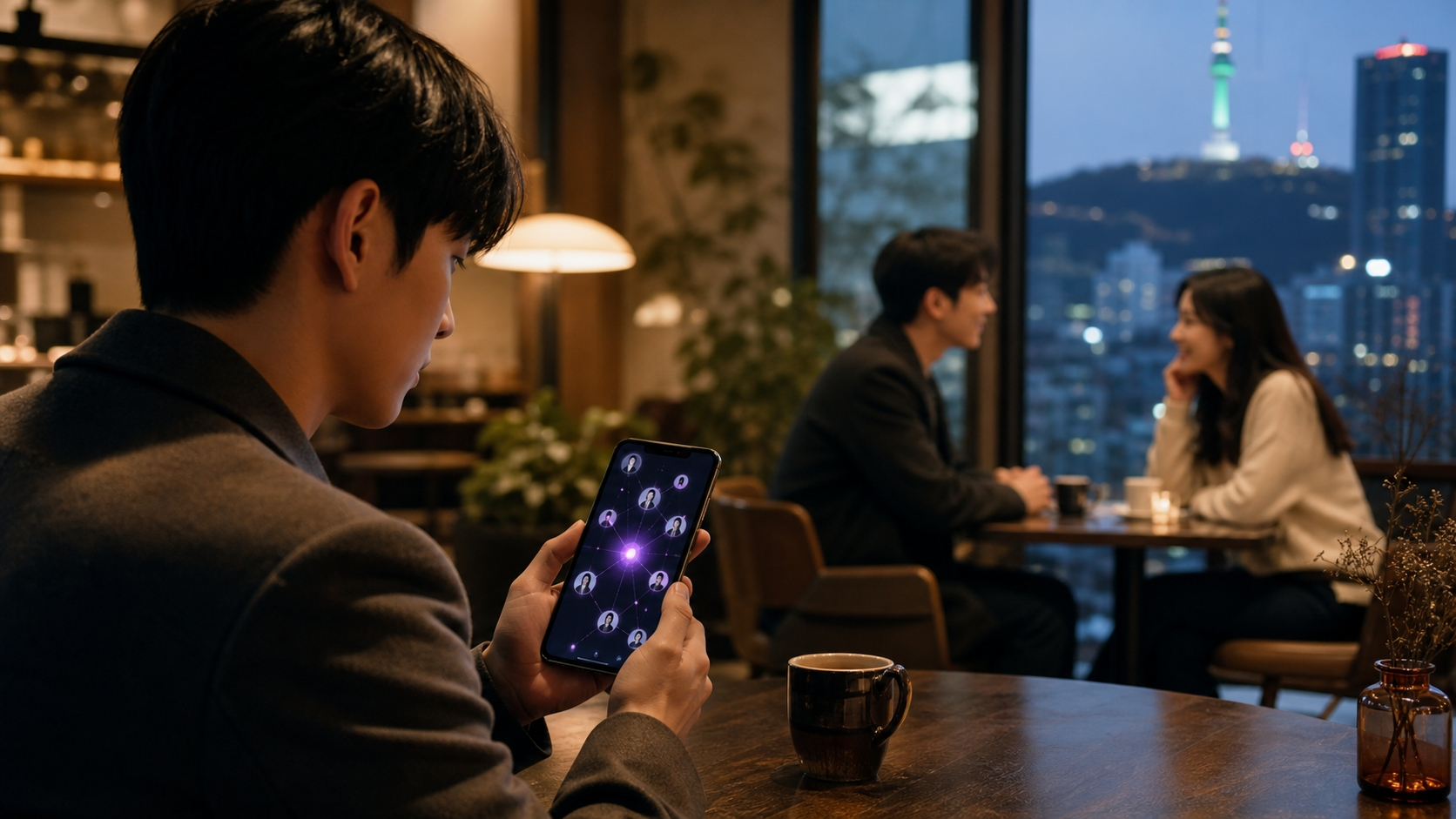
Blind dates, once a staple of South Korea’s dating culture, are losing their former status. While offline-centered meetings—connecting through a friend’s friend or a workplace senior—still exist, the first meeting style for the 2030 generation has already shifted its center of gravity to digital. And at the heart of that digital shift, AI-based matching services are starting to take root.
The pandemic accelerated this change. During times when in-person meetings were limited, a generation grew accustomed to online connections, and now they naturally embrace digital ways of finding relationships in daily life. For those without a wide network to set up blind dates, AI matching offers a far more accessible alternative.
How AI Designs Your Meetings
AI matching services go beyond simple photo and profile comparisons. Algorithms that analyze diverse data—values, lifestyle habits, hobbies, communication styles—to recommend someone who seems like a good fit are becoming increasingly sophisticated. They learn from in-app conversation patterns, response times, and choice tendencies to boost matching accuracy.
Some services go beyond just matching, offering AI coaching on how to develop a relationship after the first meeting—advising on topics to discuss or how to read the other person’s reactions. While this data-driven approach to dating raises eyebrows among some, for those lacking confidence in romance, it acts as a helpful guide.
Changing Speed and Expectations in Dating
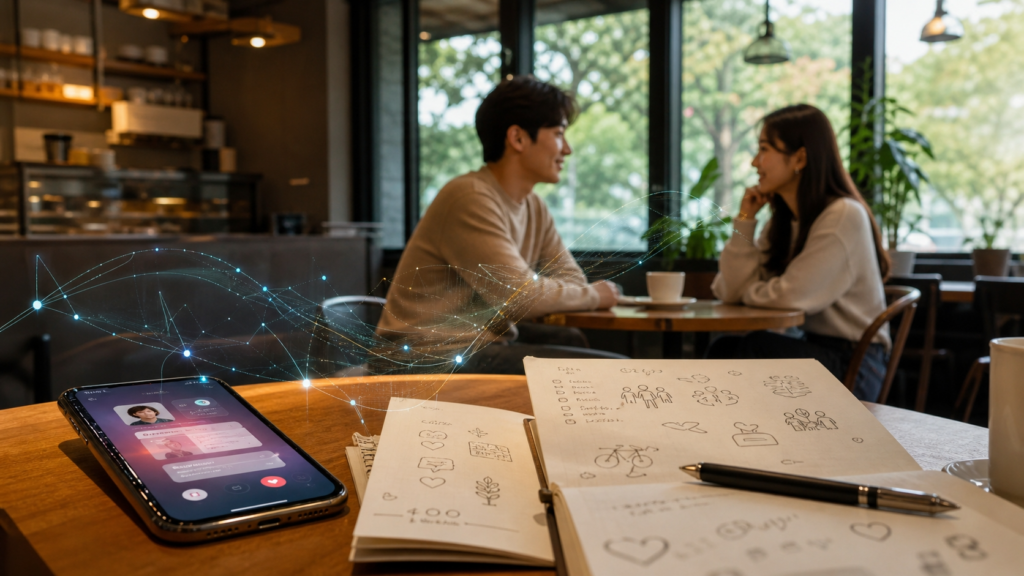
In the era of AI matching, both the speed and expectations of dating have transformed. An environment where you can swipe once to meet the next candidate creates a consumption pattern of quickly exploring multiple people rather than investing long hours in one. This has led to growing complaints about fatigue from easy connections and easy disconnections.
On the flip side, services emphasizing value-based matching are turning this fatigue to their advantage. Instead of random matching, they highlight a method of deep connection with one person after thorough vetting, targeting those seeking serious relationships. The market is splitting into two paths: fast encounters and cautious connections.
AI Matching Even Reaches the Marriage Market
The impact of AI matching extends beyond dating to the marriage market. AI-based marriage matching platforms are entering a field traditionally dominated by matchmaking agencies, shaking things up. Services boasting data-driven compatibility analysis, personality profiling through AI interviews, and video introductions are rapidly gaining recognition among younger generations.
Cost-wise, they’re often more accessible than traditional matchmaking agencies, earning praise for democratizing the marriage market. Of course, skepticism remains about whether AI algorithms can fully grasp the emotional chemistry between people, but it’s hard to deny that this market is growing.
What Technology Can’t Replace in Dating
Even as AI matching spreads, the essence of dating remains unchanged. No matter how sophisticated the algorithm, it can’t replace the moment two people meet in person, lock eyes, laugh together, or share a silence. AI can open the door to a meeting, but what happens inside that door is still up to people.
From blind dates to AI matching, the way we find connections has changed, but the desire to meet a good person hasn’t. As long as technology serves as a tool to support that desire, South Korea’s dating culture will keep evolving in new ways.
Source: Korea JoongAng Daily, industry reports, 2026.