
Table of Contents
46.7% of Visitors Are Young, and a Store’s Name Has Become a Look
People in their 20s and 30s made up 46.7% of visitors to Hyundai Department Store from January to September this year, up from 37% in 2020. Over the same stretch, a fashion term built on the store’s name, “Hyunbaek-core,” has spread among younger Koreans. According to the Korea Economic Daily, the phrase wasn’t invented by the company’s marketers. Young people came up with it themselves. The name of a shopping space now stands for a style and a way of carrying oneself.
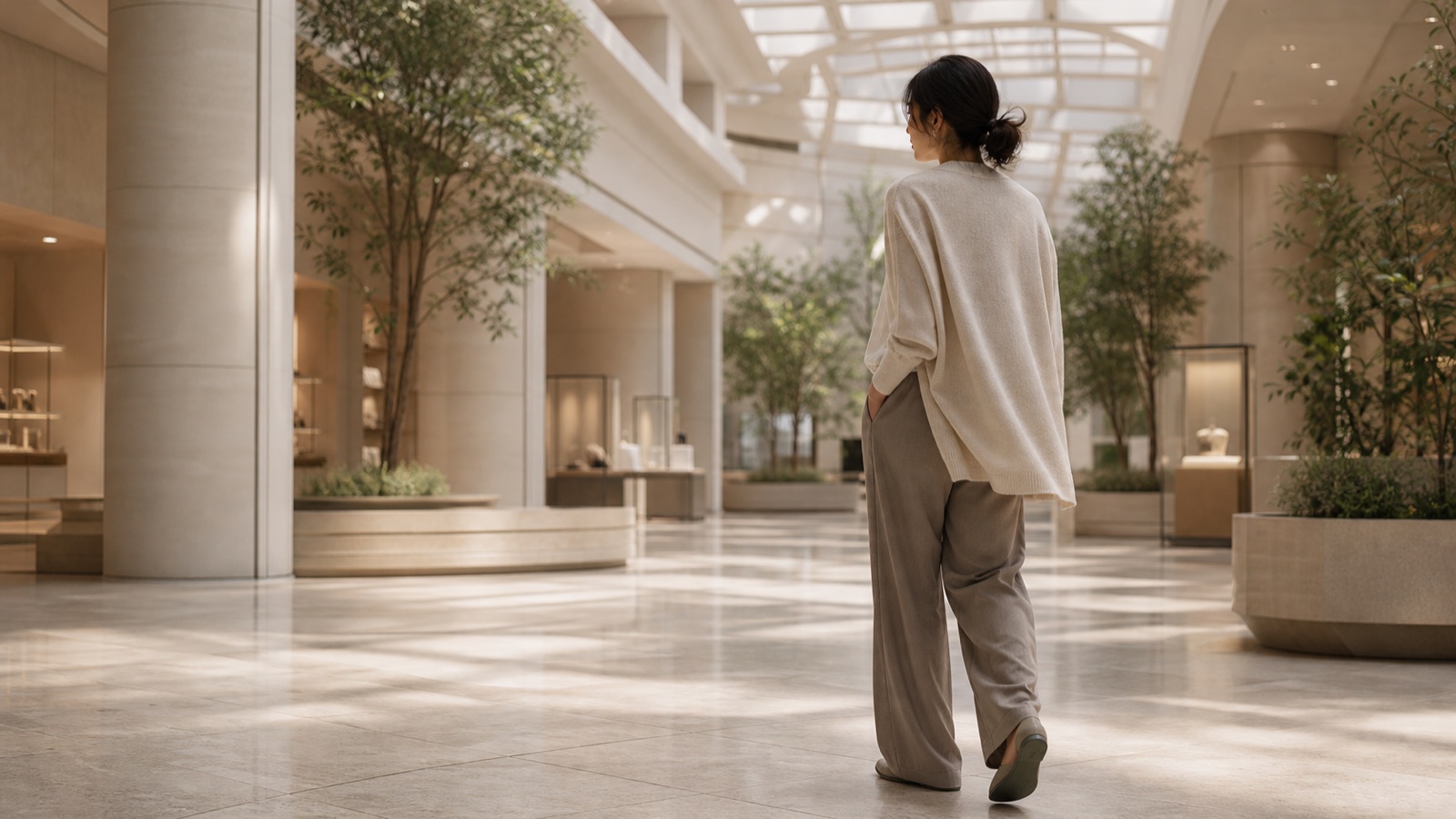
Hyunbaek-core combines “Hyunbaek,” short for Hyundai Baekhwajeom (Hyundai Department Store), with “core,” the suffix used for an aesthetic. The picture it calls up is the daughter of a well-off family wandering through the store, already owning what she needs and in no hurry to buy more. Instead of loud logos, the look relies on silk and cashmere worn loosely, as if not much thought went into it. The Korea Herald noted on October 19 that it is more casual and everyday than the “old money” look.
The trend is about more than how much the clothes cost. The attitude of not rushing to own more, because one already has enough, is read as part of the style. Some people simply enjoy it as fashion. Others criticize it for treating inherited comfort as something to aspire to. To understand Hyunbaek-core, it helps to start with the fabrics and loose shapes, then look at how one department store came to carry this image.
Since 2020, Young Customers Have Changed the Store’s Image
Figures reported by the Korea Economic Daily show the share of visitors in their 20s and 30s at Hyundai Department Store climbing from 37% in 2020 to 43.4% in 2021 and 45.9% in 2025. In the first nine months of this year it reached 46.7%. Young shoppers aren’t a passing blip. Their share has grown steadily for several years, and behind the word Hyunbaek-core is a change in which age group people picture when they think of the store.
The Hyundai Seoul in Yeouido sits at the center of that change. Hyundai Department Store has used it as its main draw for younger customers. For readers outside Korea, the useful context is that a department store here is not only a place to buy expensive things. It is also a cultural space people link to a certain way of living. Hyunbaek-core turns the image of the person who would be at home in that space into a way of dressing, so the mood matters more than any list of products.
Visiting and buying are worth separating. From January to September, customers in their 20s accounted for 10.4% of Hyundai Department Store’s total sales and those in their 30s for 31.6%. Both groups count as “young customers,” but they carry very different weight in revenue. Visitor numbers show how popular the space is, and sales numbers show who is actually spending. The retail industry’s interest in a younger image comes from where those two lines meet.
Fabric Over Logos, Comfort Over Formality
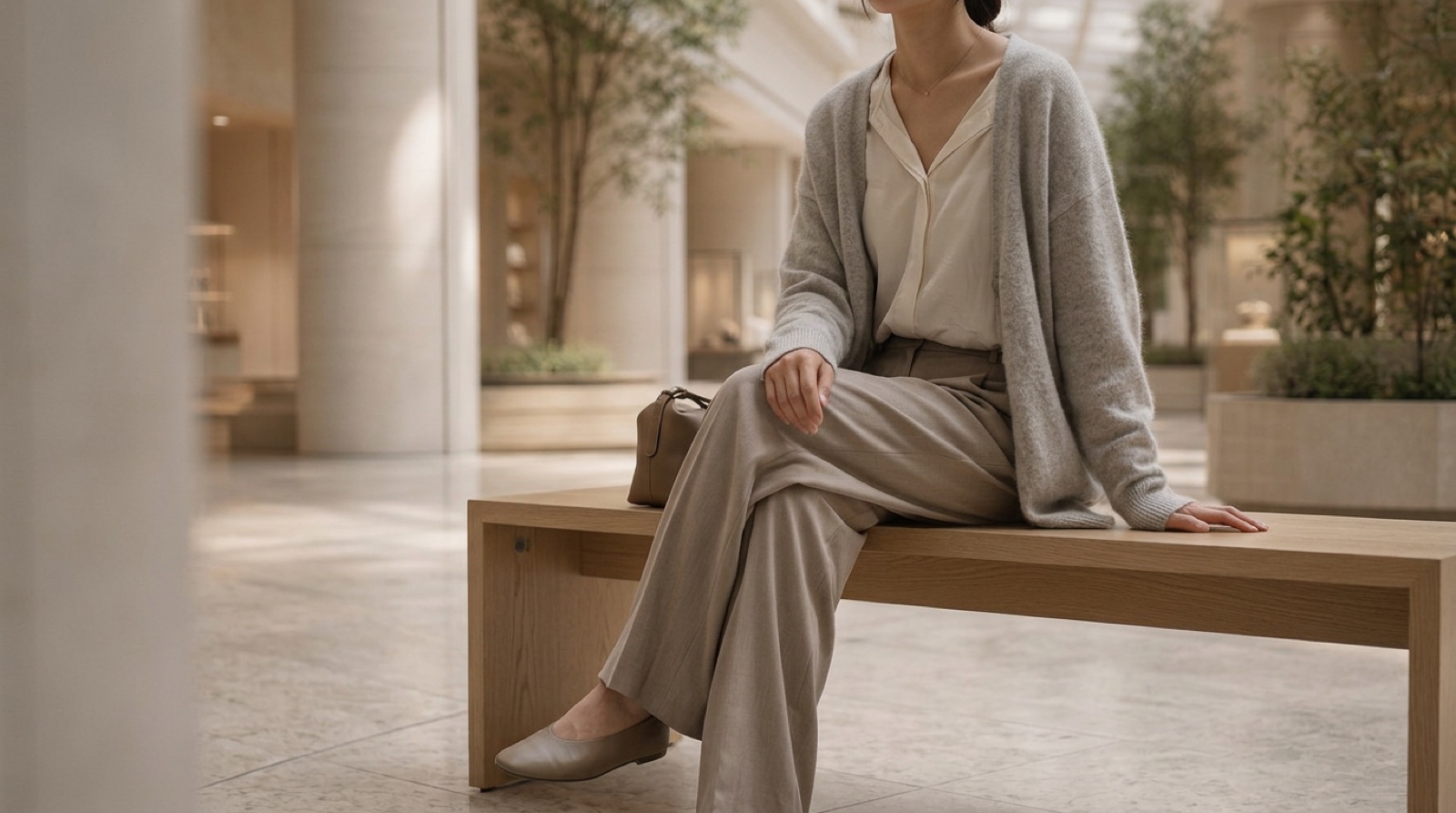
Hyunbaek-core starts close to “quiet luxury,” a style that signals quality through materials and restraint rather than visible brand marks. It also overlaps with the old money look, with its suggestion of inherited wealth and established upper-class circles. Hyunbaek-core, though, leans further toward relaxed everyday clothes than toward polished formality.
The Korean slang “kkuankku,” short for “dressed up but not dressed up,” captures the difference. The outfit looks unplanned, yet the overall impression is neat. What matters is less the silk or cashmere itself than the habit of wearing those fabrics on an ordinary day rather than saving them for occasions. Comfort with money shows through ease, not through a large logo.
Add to that a lack of hurry about shopping. Women’s News reported on October 6 that Hyunbaek-core conveys financial ease through facial expression and behavior as well as clothing. In that sense it is about more than putting together an outfit. It invites people to wonder not just what someone is wearing but why they look so relaxed. The image is a style effect, not proof of anyone’s actual wealth or family background.
When Comfortable Clothes Get a Class Label
From there, the discussion moved from fashion to social attitudes. The Hankook Ilbo wrote on October 14 that the trend reflects a belief among young people that it has become hard to move up through effort alone, along with a longing for wealth one is born with. On that reading, ease that comes from birth can look more appealing than success that has to be earned. It also explains why the trend’s vocabulary points to family background, as in “a rich family’s daughter,” rather than to careers or income.
What this reading centers on isn’t simply the ability to spend. The object of envy is not needing to buy anything or prove anything right now. A department store exists to sell things, yet the person Hyunbaek-core imagines feels no pressure to buy. Holding back from consumption inside a place built for consumption ends up reading as a sign of financial security.
Fashion is also a way to try on a mood one doesn’t otherwise have, and it’s fair to read Hyunbaek-core’s loose shapes and restraint as a matter of taste. The criticism is aimed less at the fabrics people wear than at the standards behind the style. The question is whether comfort and polish always have to be tied to the image of a wealthy household, and how fashion language quietly decides which lives look most desirable.
Between Personal Taste and Relative Deprivation
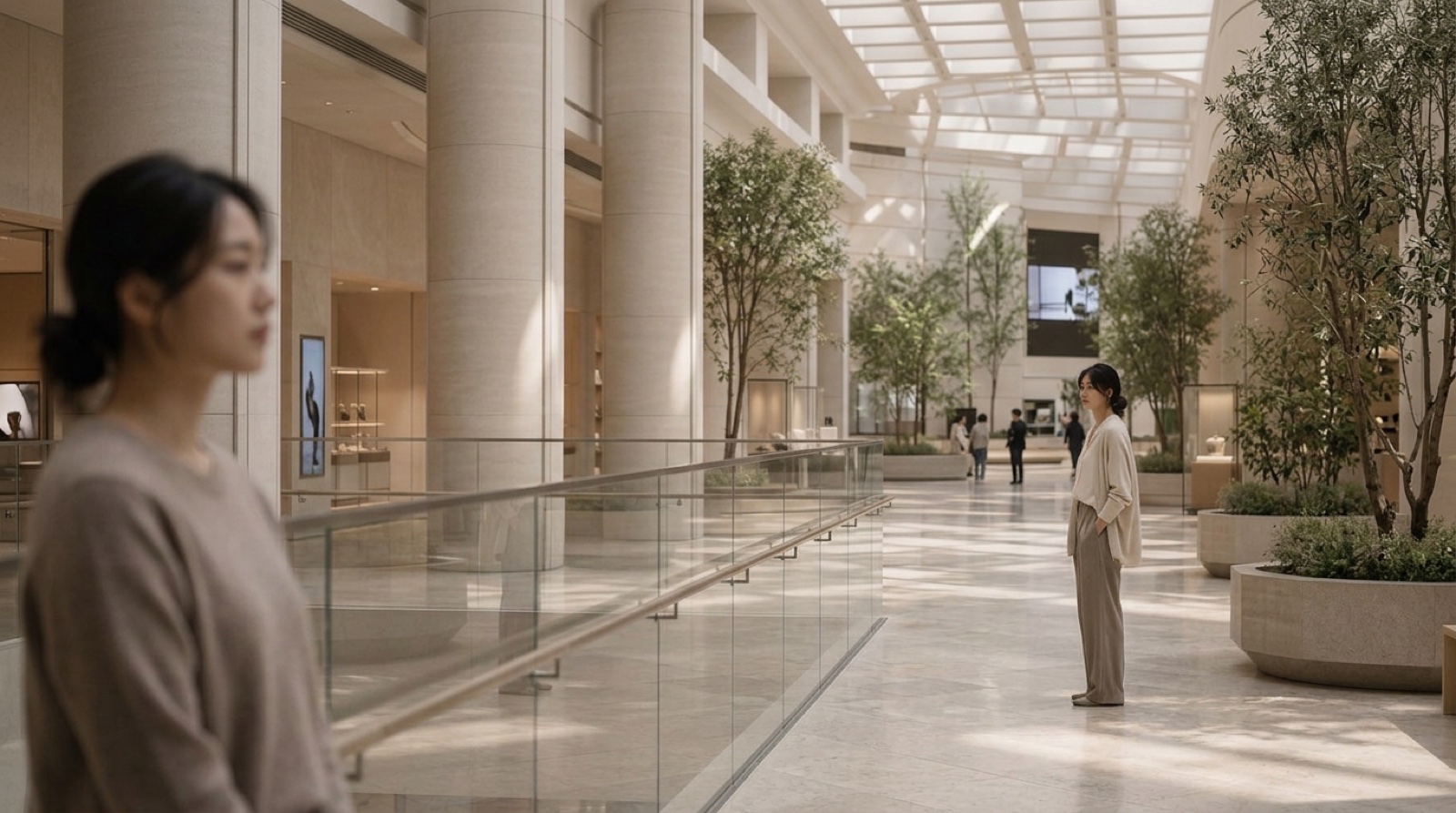
Women’s News also noted criticism that idealizing a wealthy image can push people to spend or deepen a sense of relative deprivation, the feeling of falling short when comparing oneself with others. With Hyunbaek-core, the comparison goes beyond a particular bag or coat. When an attitude free of money worries becomes the ideal, the thing people try to copy is a whole way of life.
On the other hand, if the focus is on dropping logos and showing off less, Hyunbaek-core can be read as a plain preference for understated clothes. The same outfit may express class envy for one person and simply be a choice of comfortable fabric and cut for another. That is why it is hard to judge someone’s finances or motives from what they wear. How people enjoy a trend and the social language used to analyze it don’t always line up.
In the end, the debate is less about whether wealth is displayed or hidden than about what counts as the standard picture of ease. Hyunbaek-core shows that a look with less show can still carry a class image. Even without luxury logos, silk, cashmere, and an unbothered manner can work as signs of money. A restrained appearance doesn’t by itself mean less social comparison.
Department Stores Now Compete on “Who Shops Here,” Not Just “What We Sell”
That brings the story back to retail strategy. The Korea Economic Daily contrasted Hyundai Department Store’s young, affluent image with Shinsegae Department Store’s classic luxury image and Lotte Department Store’s push for younger shoppers. Lotte’s use of BLACKPINK’s Jennie as a model was described in that context. Rather than saying anything about whether a given person represents a class, these moves can be read as brand strategy: a signal of which customers each store wants to be associated with.
Because Hyunbaek-core didn’t come from the company, it is an especially interesting case for the industry. Customers borrowed a store’s name to describe the mood they wanted. For department stores, competition is no longer only about stocking the right goods but about which customers and lifestyles people picture when they hear the name. Hyundai’s push for young shoppers, centered on The Hyundai Seoul, has lined up with language that consumers created on their own.
What to watch next is how long the image lasts. Hyunbaek-core may stay a name for comfortable fashion, or it may wear thin as a language of class envy. Drawing young customers is valuable for any department store, but becoming a symbol of a narrow social class is another matter. Where Hyunbaek-core goes from here will depend as much on who keeps identifying with the name as on changes in what people wear.
Sources: Korea Economic Daily, October 10, 2026. Hankook Ilbo, October 14, 2026. Women’s News, October 6, 2026. The Korea Herald, October 19, 2026.


