
Table of Contents
Notifications on Korean Food Reach Their Highest Level Since 2020
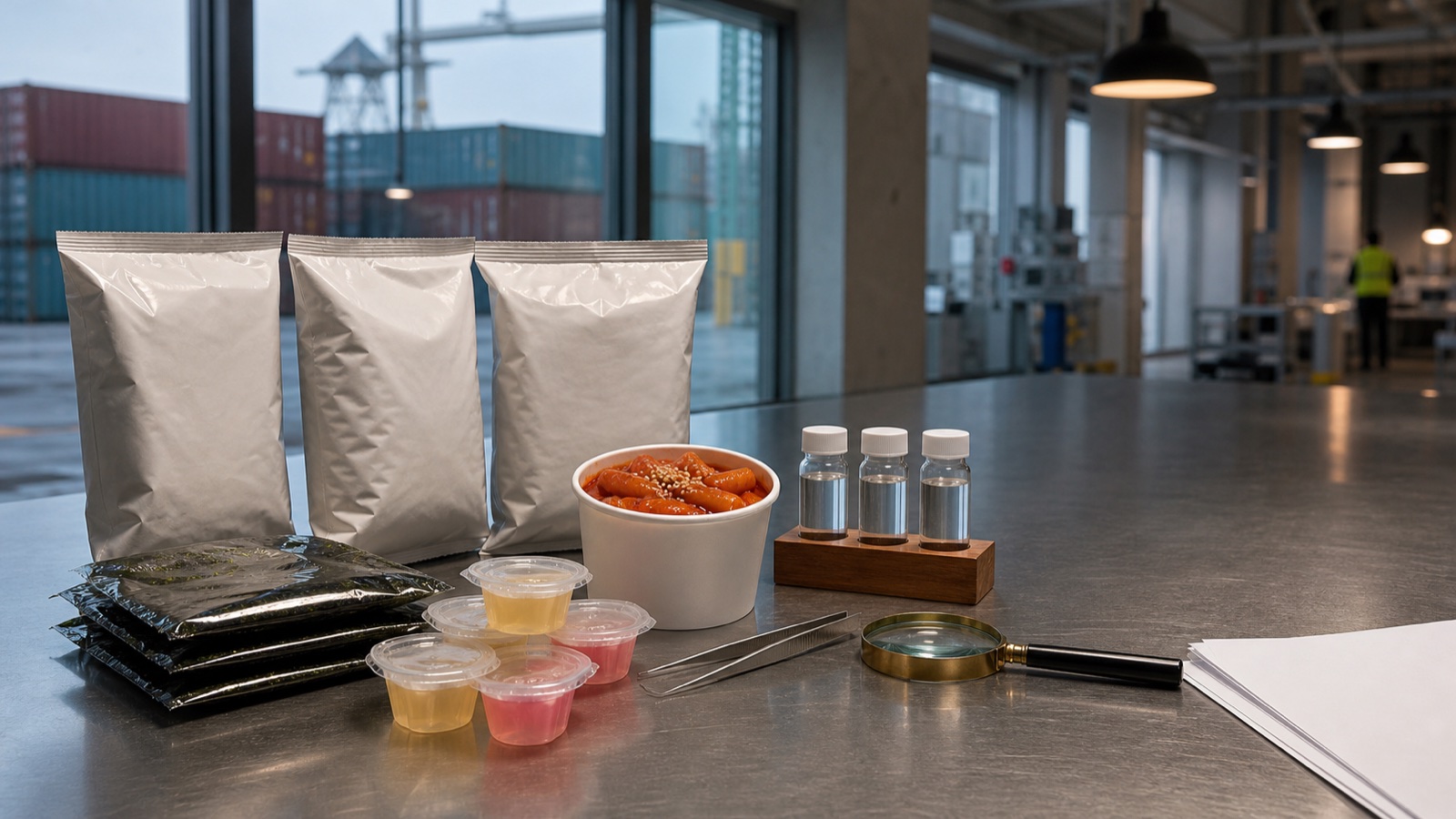
Korean food products have drawn 18 notifications this year on the European Union’s Rapid Alert System for Food and Feed (RASFF), the highest number since 2020, according to an October 20 report. Eight of them were classed as “alerts,” the category that calls for immediate action. The cases compiled by Maeil Business Newspaper range widely: instant noodles over a contaminant limit, seaweed snacks high in iodine, mini-cup jellies with an unapproved additive, and labeling violations. As K-food sells more in Europe, matching each product to local rules has become a pressing task.
RASFF is the network EU member-state authorities use to share information on food and feed risks quickly, so a notification from one country feeds into how others respond. The 18 notifications can’t tell us the overall failure rate for Korean food or whether inspections have become stricter. The reported figure is a count of individual notifications. What the cases do show, concretely, is that growing exports come with separate checks on ingredients, additives, labeling, and hygiene.
Noodles, Seaweed, and Jellies, Stopped for Different Reasons
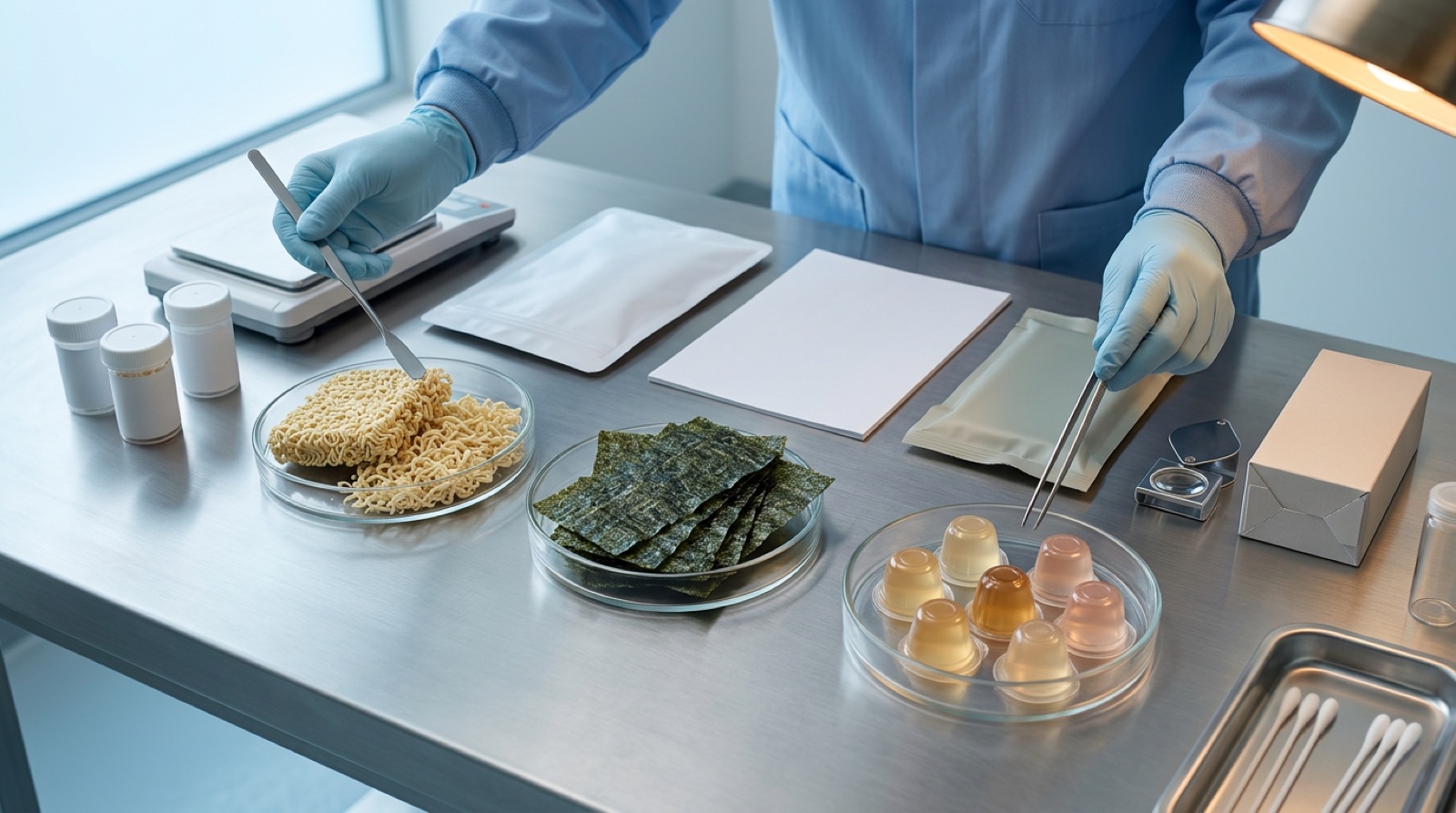
In July, Latvia refused entry to Korean instant noodles after glycidyl esters were detected at 2,229 µg/kg, more than double the 1,000 µg/kg limit cited in the report. These compounds can form when vegetable oil is refined at high temperatures, and the EU began applying revised rules on them on July 30. In Germany, the problem was too much iodine in seaweed snacks. Maeil Business Newspaper cited a German limit of 20 mg per kilogram of dry weight and noted that in August the German Federal Institute for Risk Assessment (BfR) recommended setting a legal maximum for iodine in seaweed and labeling its content.
Sweden flagged an unapproved additive in mini-cup jellies, a product type in which the EU restricts certain gelling agents because of the choking risk. Italian authorities seized five tons of Korean noodles over labeling violations, and Finland reported mold in Korean cup tteokbokki. The cases point to two kinds of problems: differences in what each market allows, and basic hygiene control. “Fine in Korea, not in Europe” describes the first kind, but differing standards don’t explain every case.
In Paris, New Products and Export Growth
Korean food companies were busy in Europe at the same time. At SIAL Paris 2026, held October 17 to 21 at Paris Nord Villepinte, 11 Korean companies ran a K-Food Leading Companies Pavilion with 87 booths. Nongshim showed Shin Ramyun Rosé to European buyers for the first time, and Binggrae introduced its Banana Flavored Milk to Europe. According to Food Today, 17 products from six of the companies won SIAL Innovation awards, and Ourhome’s Magic Soba took the frozen products award. The awards suggest Korean products are getting noticed for new ideas and concepts.
Exports are growing too. Agriculture ministry figures reported by Yonhap show K-food exports to the EU reached $728.38 million from January through September, up 23.5% from a year earlier. Heat-treated poultry jumped 492% to $7.24 million. The ministry also taught French school cafeteria staff how to cook Korean ingredients in large batches and ran a $4 million promotion across 40 Carrefour stores. The goal is to get Korean ingredients into school meals and restaurant kitchens, not only onto store shelves.
Why Products Made for Korea Can’t Simply Be Shipped As They Are
Exporters have more than one set of rules to check. They need to look at EU-wide regulations, individual member states’ standards, which additives are allowed, and labeling requirements, all together. Changing an ingredient, relabeling a package, and managing hygiene during production and distribution each call for a different response. The reports did not link the SIAL exhibitors to any of the notified products. Trade show awards and border notifications are two separate sides of selling food in Europe.
Maeil Business Newspaper relayed an industry view that products made to Korean standards and shipped unchanged are often stopped once they reach Europe. Small and midsize exporters without staff to track regulatory changes, in particular, are said to need more government information and pre-export testing support. Getting a product shown at an international fair is one step, and keeping it on European shelves is another. Growing exports in Europe means building product management around each buyer country’s rules, alongside new sales channels.
Sources: Maeil Business Newspaper, October 20, 2026. Yonhap News Agency, October 18, 2026. Food Today, October 21, 2026.


