
Table of Contents
Making something of your own in Bukchon
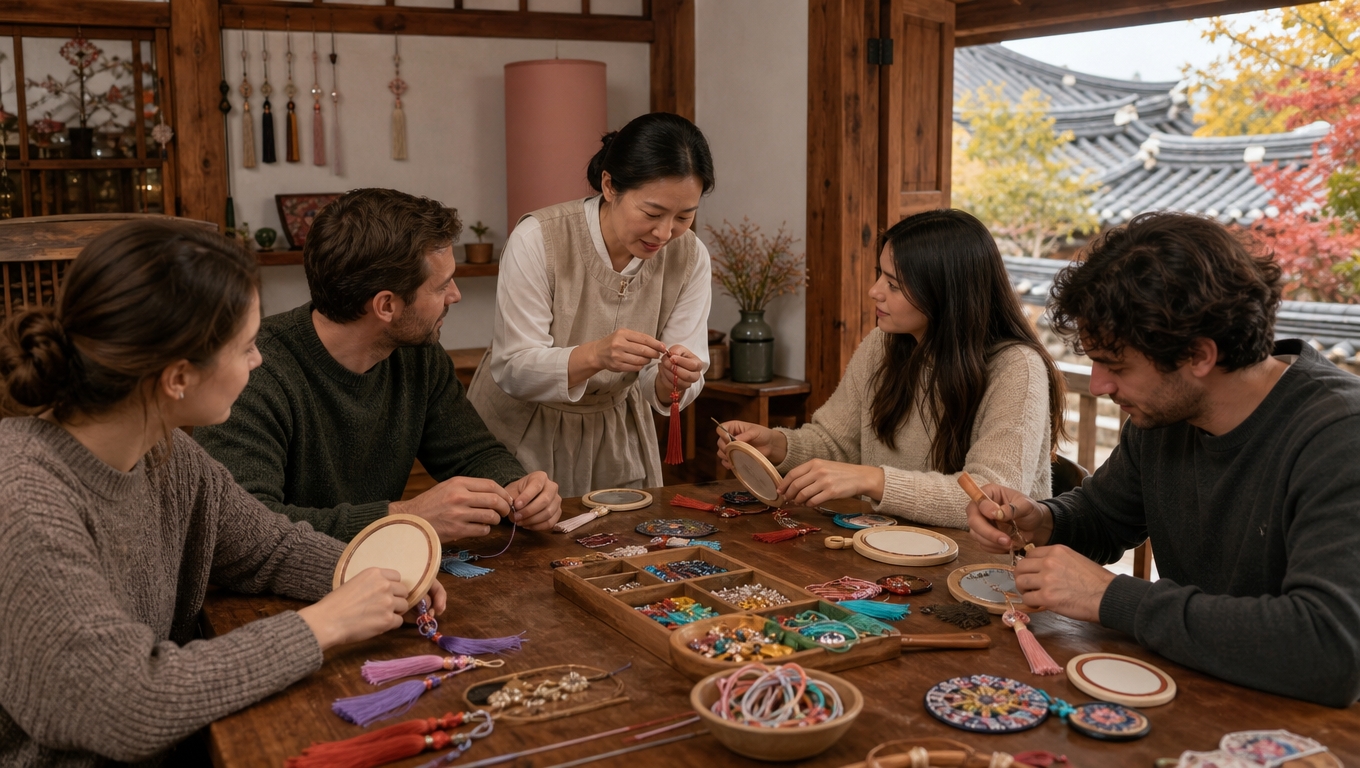
On November 16, foreign visitors at the Bukchon Traditional Crafts Experience Center will make hand mirrors and norigae, the decorative pendants traditionally worn with hanbok. Instead of looking at finished crafts behind glass, they spend part of their trip making one. This is a scene from the program the Seoul Metropolitan Government has announced for this year’s Seoul Travel Week, not a participant’s account. The change the city is aiming for shows up most clearly at small workbenches like this one, where people who usually admire cultural products get a seat in the making of them.
The 2026 K-Content Seoul Travel Week, announced by the city on November 3, runs for seven days, from November 14 to 20. It is aimed at international tourists and covers K-pop, beauty, food and traditional crafts at venues including Dongdaemun Design Plaza (DDP), Bukchon and Yongsan. On top of watching performances and visiting filming locations, visitors can now learn Korean makeup and cook Korean dishes. The lineup is built to show people who came for the Korean Wave what they can do in the city themselves. The Bukchon workshop is the day set aside for traditional culture.
The question behind the program is how to turn the popularity of Korean content into an actual travel experience. If dramas and music are what bring people to Seoul, learning and making things on site gives their stay more substance. Each program leaves something different behind: an object made in Bukchon, a makeup technique picked up in Yongsan, a dish learned in a cooking class. This year’s Travel Week splits the Korean Wave into separate activities rather than packaging it as one big show.
From last year’s spectacle to this year’s classes
Last year’s Seoul Travel Week leaned on large events: a parade, a media facade (video projected onto building exteriors) and fan events organized with Netflix Korea. This year the city has shifted the weight toward direct participation. The name is the same, but the visitor’s role has changed. People who would have watched stages and screens are now signing up for classes and tours, and that changes how a tourist’s day is put together.
The daily schedule reflects the shift. The opening weekend has a tourism booth tied to a music awards show. From Monday, each day is given to one theme: crafts, beauty, filming locations, food. The last day ends with a dance event anyone can join and a taekwondo performance. The programs are spread across different places and topics over the week instead of being packed into one venue, so tourists can pick what fits their travel dates and interests without treating the whole week as one package.
None of this guarantees longer stays or more repeat visits. The direction of the design is still clear. Instead of drawing attention with a single large event, the city has spread reasons to spend time across several days, and it chose activities like crafts, makeup and cooking, where the process matters. The idea is to add something to the experience of consuming content set in Seoul: learning from someone in the city and leaving with something you made.
Nov. 14 to 17: from an awards show to craft and beauty classes
On November 14 and 15, a Seoul tourism booth will run at Gocheok Sky Dome alongside the 2026 Melon Music Awards (MMA2026). It will offer an augmented reality (AR) experience of Seoul filming locations, which layers digital images over the real space, plus an AI photo booth and a quiz about tourist attractions. The booth uses a major concert venue to introduce other places in the city. Because these two days work differently from the hands-on classes that follow, the opening weekend is best treated as its own outing.
On Monday, November 16, the norigae and hand mirror workshop takes place at the Bukchon Traditional Crafts Experience Center. Traditional crafts sharing a week with K-pop events is worth noting. Pop culture may be what brought a visitor to Seoul, but the city has made the range of culture on offer wider than that. Here a craft object is something you can both look at in an exhibition and make yourself. Participants work with traditional patterns and everyday objects, and the session is the part of the week that links older traditions with current Korean content.
On Tuesday, November 17, beauty professionals will teach Korean makeup at Amorepacific’s headquarters in Yongsan. The point here is learning techniques, not buying cosmetics, so an interest in K-beauty turns into a lesson rather than a shopping trip. The Bukchon and Yongsan sessions are in different places and cover different subjects, so anyone hoping to attend both should check the details for each. The published schedule lists them as separate programs on separate days.
Nov. 18 to 20: filming sites, a kitchen and a dance floor
On Wednesday, November 18, actor Nam Jung-woo will lead a tour of drama and K-pop filming locations around DDP. A night photography session with professional photographers follows. Visitors match places they have seen on screen to the real streets and then take their own pictures of them. With a daytime location visit and an evening shoot in the same area, participants get to see the neighborhood at two different times of day.
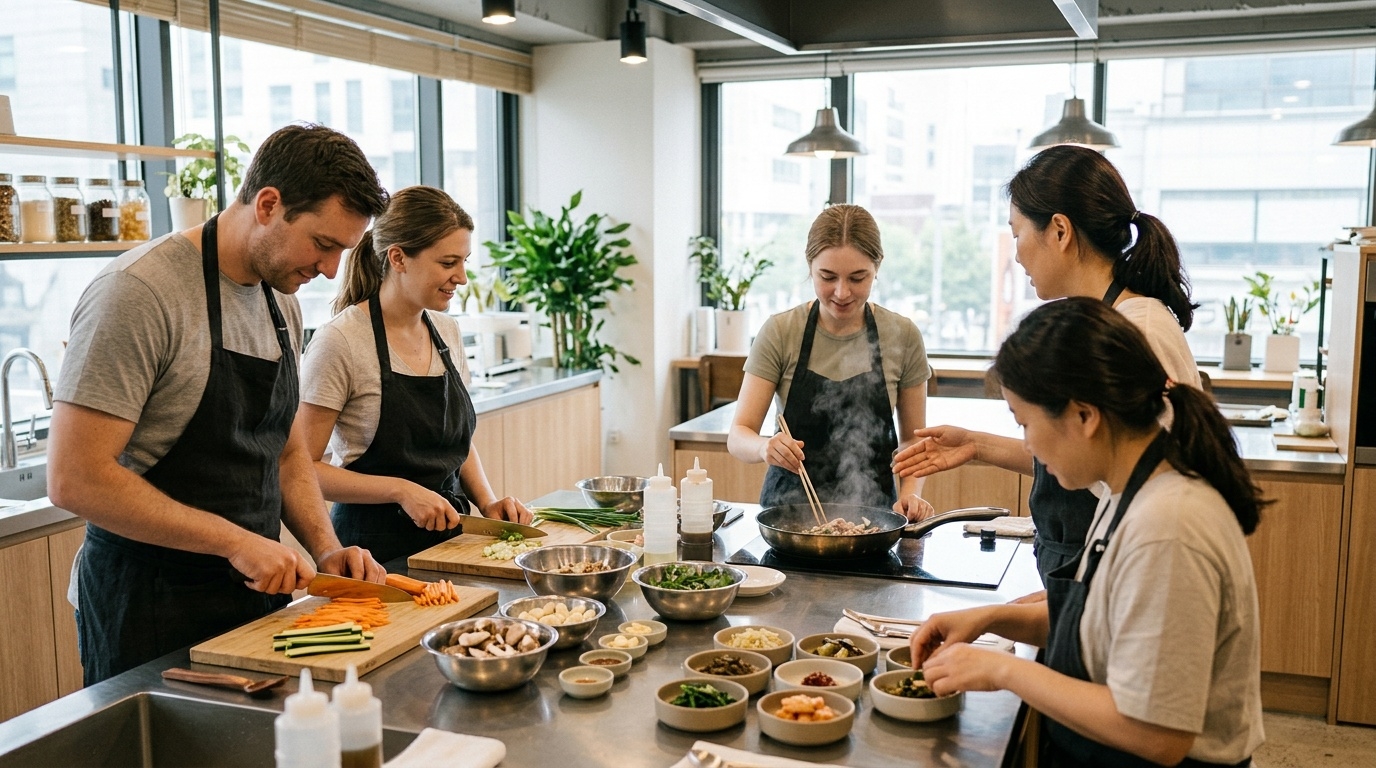
On Thursday, November 19, a cooking class at Ottogi’s O’Kitchen Studio lets participants make and taste Korean dishes. Ordering a finished meal at a restaurant is one experience; learning how it is cooked is another, and this class adds the second. Food becomes something visitors handle themselves, in the same spirit as the craft and beauty sessions earlier in the week. Menus and class conditions have not been detailed in the reports so far, so anyone planning to go should check the city’s official guide.
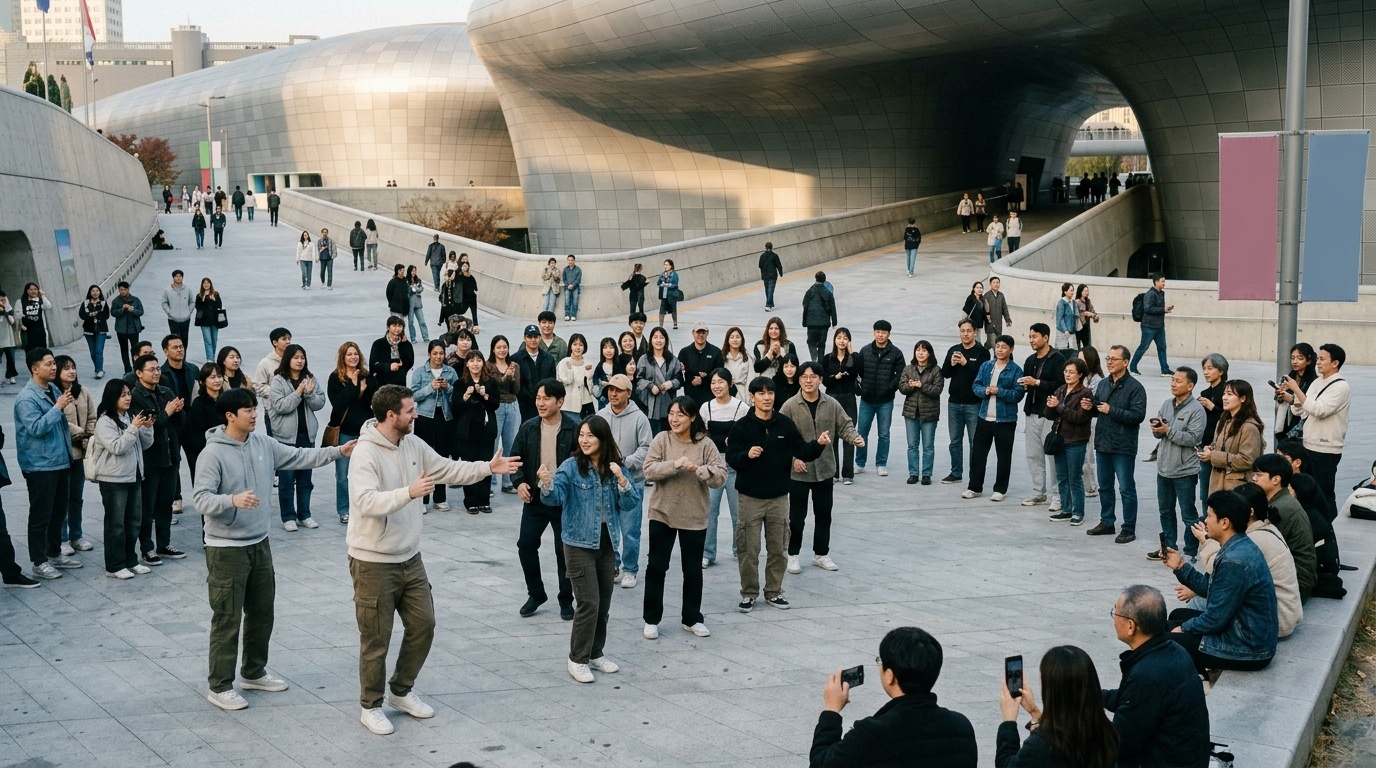
The final day, Friday, November 20, brings a K-pop random play dance and a special taekwondo performance to DDP’s Eoullim Square. In random play dance, songs play in random order and anyone who knows the choreography jumps in. A dance you take part in and a performance you watch share the same day. The city has not dropped spectating; it has given participation a bigger share. The week starts at a craft workbench, passes through a kitchen and ends with people dancing in a plaza.
Why length of stay and return visits matter as much as arrivals
The policy behind the event is the “3·3·7·7 Seoul Tourism Future Vision” the city announced in 2023. Its targets are 30 million foreign visitors, spending of 3 million won per person, an average stay of seven days and a 70 percent return rate. Two of those four numbers are about how long people stay and whether they come back, not just how many arrive. The city wants to shape what kind of trip visitors have, along with how many of them there are, and the push toward hands-on programs during Travel Week fits that goal.
Jo Seong-ho, director of Seoul’s tourism and sports bureau, said the city will expand programs that link K-content with Seoul’s own tourism resources so that visitors want to stay longer and return. His comment connects the city’s targets to the way the week is built. It explains why a visitor who loves music is offered crafts, beauty and cooking as well as a music event. Two people who come to Seoul for the same reason can end up doing very different things.
A seven-day festival is not the same thing as a seven-day average stay. The event does not expect anyone to attend the whole week. It gives visitors a reason to fit a particular day’s program into their plans and a chance to find an interest they did not arrive with. Whether that changes how long people stay or whether they return is something to look at after the event. What has changed already is the kind of activity on offer, which now includes learning and making things as well as watching.
Check each program once registration opens
Pre-registration for foreign visitors was set to open on Thursday, November 5, at 2 p.m., on a first-come, first-served basis, and some programs may fill up early. For anyone planning a trip now, the current registration status matters as much as the opening date. The week starts on the 14th, but places in a specific class have to be checked separately. The opening weekend booth and the weekday classes are run differently, so it makes sense to check the guidance for the program you actually want.
Fees, capacity, meeting times and application links are listed in the city’s official guide and are not covered here. It is safer not to assume every program runs on the same terms just because the dates and venues have been published. A practical approach is to pick the days of the programs you want first, then check their registration status and details. The venues, Bukchon, Yongsan and DDP, help with planning transport, and the program-specific instructions decide whether you can actually take part.
Back at the craft workbench in Bukchon, the kind of trip the city is proposing comes into view. Visitors who remember Seoul from a drama or a music video would also remember something they made there and a skill they learned. The same applies to the makeup class, the cooking session and the night photography walk. What remains to be seen is how easily these programs fit into a real traveler’s day. Seoul is trying to turn an audience into participants, and that is what this year’s Travel Week is about.
Source: The Korea Times, Nov. 3, 2026; Dongponews, Nov. 3, 2026; Seoul Metropolitan Government, “Seoul in My Hand,” September 2023 guide to the 3·3·7·7 Seoul Tourism Future Vision.


