
Table of Contents
A Scrub Towel Next to the Scarves
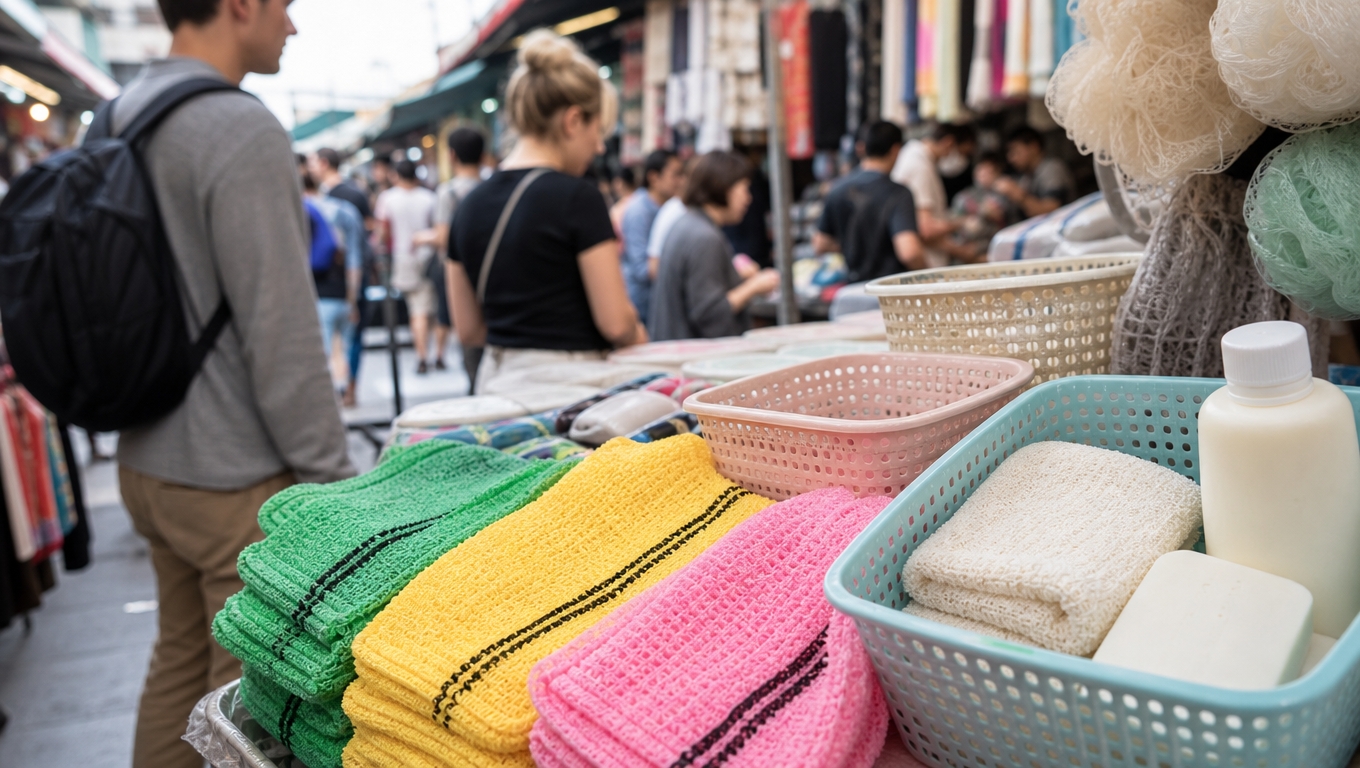
At Namdaemun Market, foreign visitors are not only buying scarves. They are also picking up scrub towels and small plastic bath baskets, the kind of things Koreans keep in the bathroom or carry to the neighborhood bathhouse. A tourism and spending report released by the Seoul Metropolitan Government on November 5 said these items took off on social media and became popular with foreign tourists and younger shoppers. Ordinary household goods have ended up on travel shopping lists in place of the usual souvenirs.
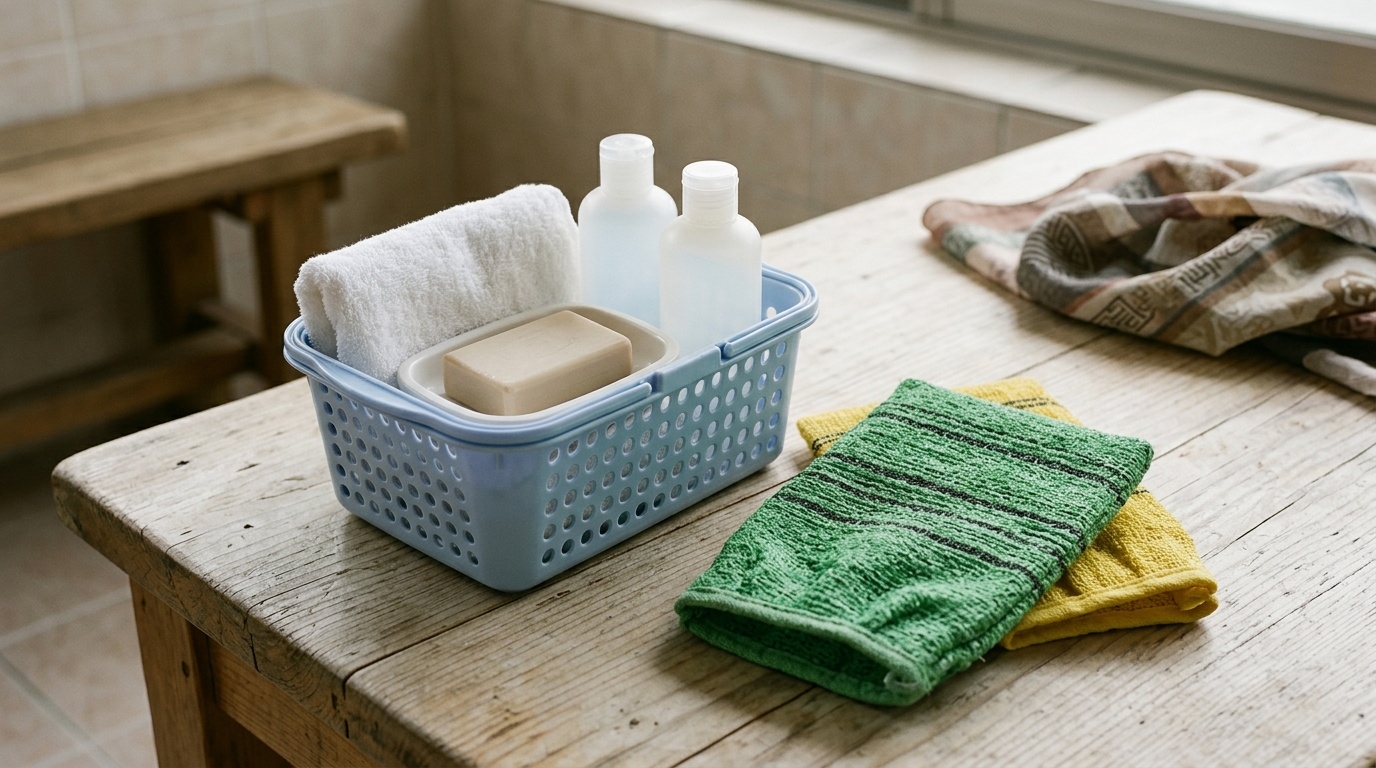
The scrub towel, called a ttaetawol in Korean and often nicknamed an “Italy towel,” is a coarse cloth used to rub dead skin off after a long soak. The bath basket holds soap, shampoo and a towel on the way to and from the tub. In Korea’s shared public bathhouses, packing that basket is as routine as the bath itself. For a traveler seeing it for the first time, the basket and the towel are a small, concrete way into how Koreans bathe.
The market’s pull goes beyond any one product. The city’s analysis points to the chance to browse everyday goods and clothing in one place. A visitor looking at scarves can come across bath supplies a few stalls away and start to picture how they are used at home. The way into Namdaemun is less about famous brands or big stores than about what ordinary things are for. The market’s recent changes show how this interest took shape.
First, the Walk Through the Market Changed
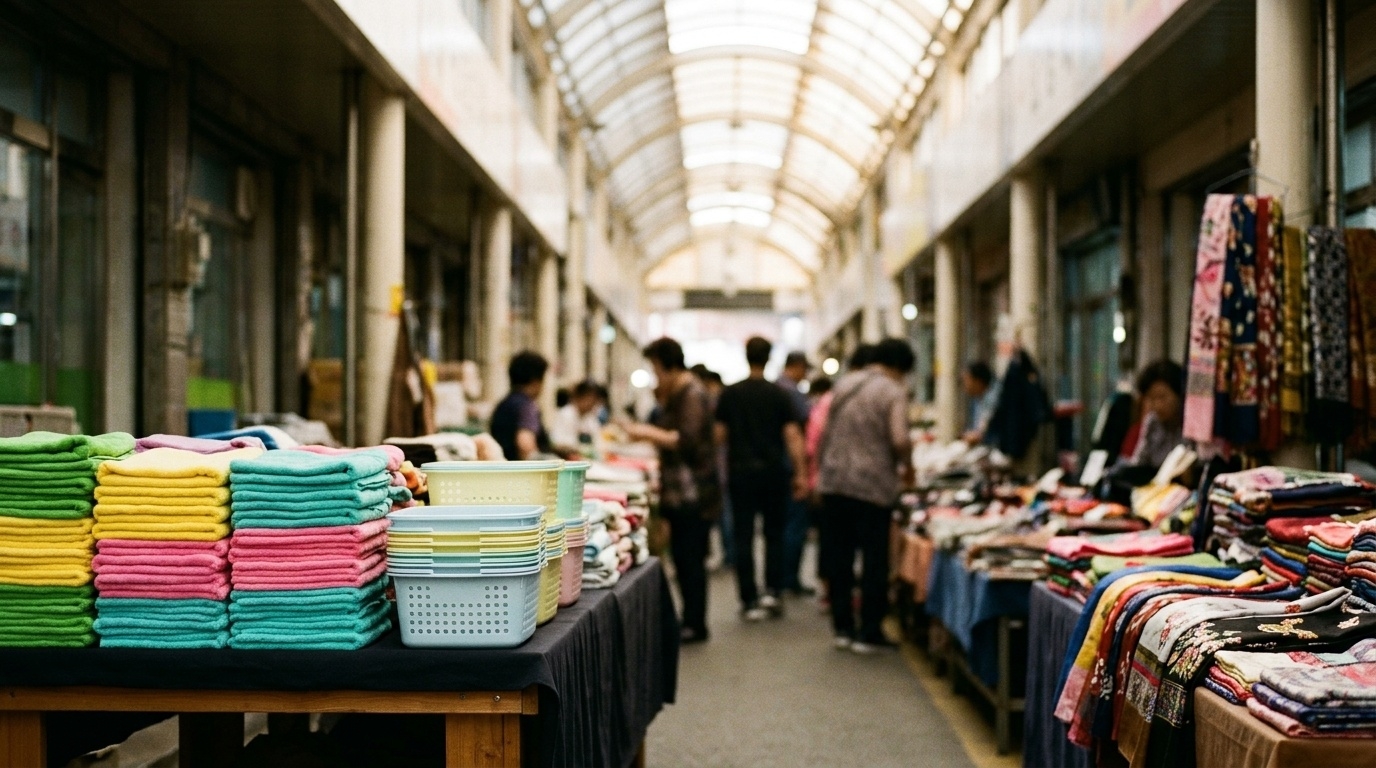
In November 2025, the Seoul Metropolitan Government and Jung-gu District put up a design arcade over a 135-meter stretch of the market’s main street. The arcade is a roof over the walkway between the shops. At Namdaemun it is shaped like the eaves of a hanok, the traditional Korean house, and keeps out rain and strong sun. Shoppers can now move from stall to stall whatever the weather, which bears directly on how the market feels to visit.
The roof was also designed with daylight and ventilation in mind, so it does more than cover the path. In a traditional market, where people compare goods across many small shops, the aisle is part of the shopping space. A visit is shaped by the walk between stores and the places people stop, as well as by what is on the shelves. That walking space matters in a market that runs from household goods to clothing.
The next step is linking the market to the streets around it. Seoul is pursuing a Namdaemun Market area project that includes a walkway with views of Sungnyemun Gate and a trail toward Namsan Mountain. The idea is to give shoppers a route to keep walking after they finish buying. The finished arcade and the planned links are at different stages, but both aim to stretch a market visit beyond individual shops into the surrounding area.
What This Year’s Card Data Shows
In 2026, younger shoppers show up clearly in card payment records. From January to August, weekend and holiday card transactions in the Namdaemun commercial district rose 44% among people in their 20s and younger and 53% among people in their 30s, compared with the same period in 2024. The comparison is with 2024, not last year. These are counts of purchases, not of visitors, but they point to more young people shopping at the market.
A separate figure tracks foreign visitors. Last year, average daily foreign foot traffic in the Namdaemun district was 30,132, up 9.9% from the year before. Foot traffic measures people moving through an area, while card transactions measure buying. The two numbers describe different sides of the same change: more foreigners passing through, and more spending by younger customers.
Against that background, household items that spread on social media have given people a specific reason to go. Once you know what a scrub towel and a bath basket are for, they point to Korean bathhouse culture, and a search for scarves leads into the mix of clothing and accessories around them. The city’s report names this one-stop browsing as part of the draw. A single viral product and a market built for wandering work together here.
What the November Report Says About Foreign Spending
The data released on November 5 shows the interest turning into card sales. According to Shinhan Card, sales in tourism-related businesses around the Jayu Sangga section of Namdaemun Market reached 109.18 billion won from January to September, up 7.5% from a year earlier. Foreign customers’ share of that rose from 9.51 billion won to 15.75 billion won, an increase of 65.6%. The figure covers card sales in one zone and in specific business types, not every transaction in the market.
Over the same period, card sales to Korean customers grew 1.5%, from 92.01 billion won to 93.42 billion won. The foreign share of total card sales rose from 9.4% to 14.4%. Domestic shoppers still account for most of the spending, while foreign spending is growing much faster. The tourists looking for everyday goods are not replacing the market’s regular customers. They are adding new demand to a district that has long sold a bit of everything.
Across Seoul, tourist spending is spreading to new places. From January to September, foreign card spending in the city’s neighborhood shopping streets reached 308.2 billion won, up 80.5% from a year earlier, and spending in traditional markets rose 48.8%. In the same data, the Seongsu area recorded 263.8 billion won, up 100.6%. What sets Namdaemun apart is that the new attention is going to goods it already sold and to the way a traditional market lays them out, rather than to new stores.
Everyday Goods as Souvenirs, and What Comes Next
Seoul plans to push more nighttime spending in traditional markets and neighborhood shopping streets. The Seoul Moonlight Night Market program, which pairs late-night food with culture and tourism events, has six locations now. The city plans to add 10 more next year and reach 25 by 2028. The plan is a city-level program, not one limited to Namdaemun, and it aims to carry daytime tourist shopping into evening food and entertainment.
Cho Seong-ho, director-general of Seoul’s Tourism and Sports Bureau, said tourist spending is spreading beyond major spots such as Myeong-dong and Gangnam into neighborhood shopping streets and traditional markets. At Namdaemun, that shift starts with small objects rather than big attractions. Bath gear that Koreans barely notice is, for foreign visitors, a way to understand daily life, and browsing clothes and sundries side by side becomes part of the trip. An old market is being found by a new set of customers.
The open question is whether interest that started on social media turns into repeat visits. Covered walkways, better links to nearby sights and a layout made for comparing goods will all play a part. For now, the people looking for scrub towels and bath baskets show where Namdaemun Market stands. Whether they come back depends on the products and also on how it feels to walk and shop there.
Source: Yonhap News, November 5, 2026 (citing Seoul Metropolitan Government tourism and spending data and Shinhan Card figures).


