Korea’s two major traditional holidays remain firmly anchored on the calendar for 2026 — Seollal (Lunar New Year) falls on February 17, with an official five-day holiday period running February 14 through 18, while Chuseok (Korean Thanksgiving) falls September 25, with a four-day holiday spanning September 24 through 27 — yet the specific folk customs Koreans practice around these holidays have narrowed considerably compared to earlier generations.
Historically, Korea observed a much broader calendar of traditional seasonal holidays (명절) tied to the agricultural cycle, but the shift from an agrarian to an industrial society, combined with the spread of Western-origin observances like Christmas, has left only Seollal and Chuseok retaining their full cultural weight as nationally significant holidays — most of the older, more minor seasonal observances having faded into largely forgotten historical practice.
Even within Seollal and Chuseok specifically, the range of associated folk customs has narrowed: the core practices of gathering as an extended family to perform ancestral memorial rites (차례, charye) and visiting family gravesites (성묘, seongmyo) around the holidays remain widely observed and culturally central, while numerous smaller associated customs have largely disappeared from contemporary practice.
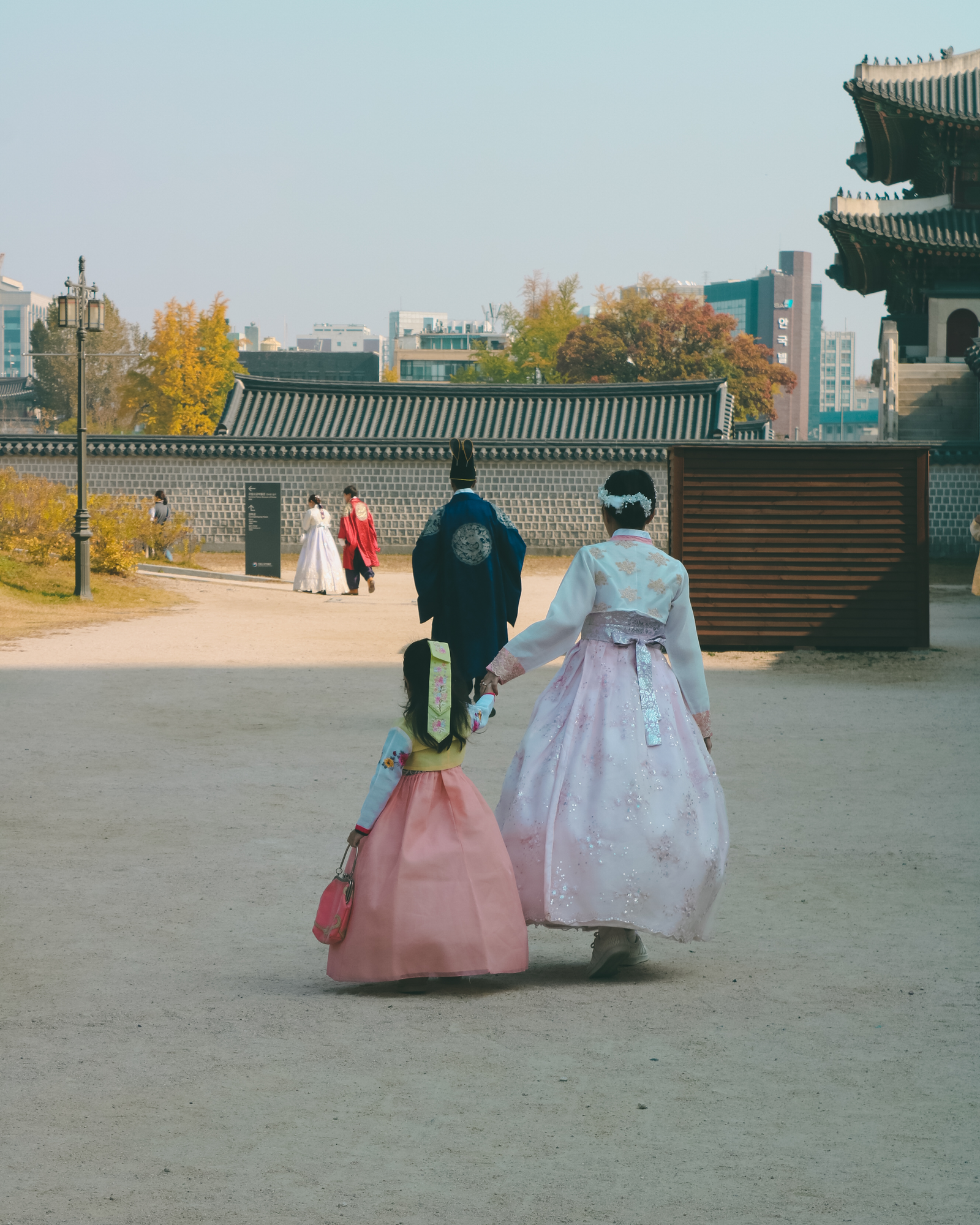
Among the customs that have fallen away: hand-sewing new holiday clothing (설빔, seolbim) for children ahead of Seollal has become essentially a historical reference rather than living practice, as has the custom of purchasing a “복조리” (bok-jori, a woven rice strainer symbolizing luck) to hang in the home, and the old folk belief-based practice of hanging a sieve by the front door on New Year’s Eve, based on the superstition that a night-wandering spirit (야광귀) would become distracted counting the sieve’s holes until dawn forced it away.
The narrowing of Korea’s holiday-custom repertoire down to its core elements — family gathering, ancestral rites, and gravesite visits — reflects a broader pattern common across many rapidly modernized societies, where the most emotionally and socially central practices of a tradition persist even as its more peripheral folk-belief elements gradually recede from everyday practice.
Source: Korean traditional holiday-culture reference material and 2026 Seollal/Chuseok calendar dates, Korean cultural-heritage documentation, 2026.