
Table of Contents
The Gim From Your Side-Dish Container Just Rewrote an Export Scorecard
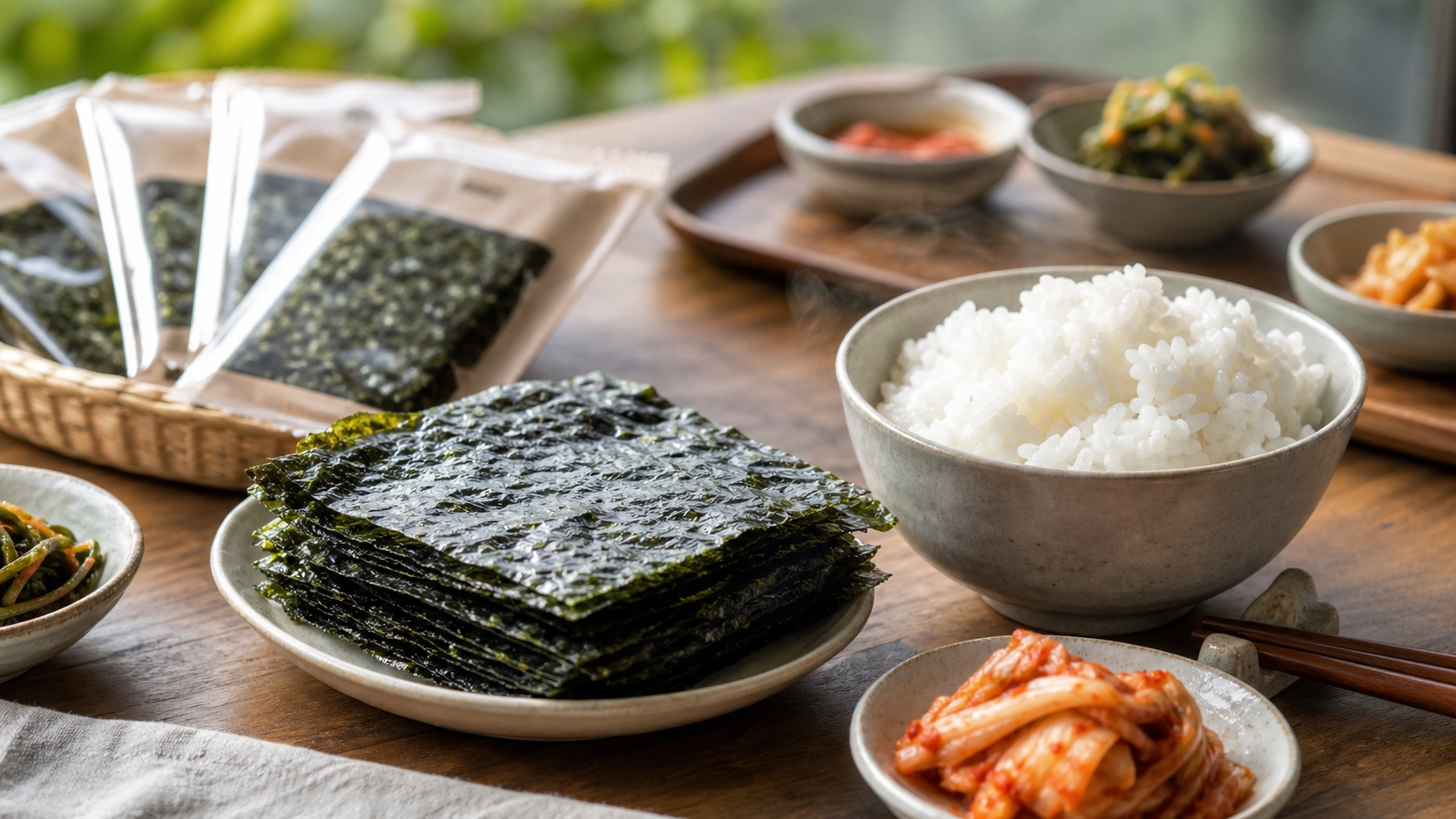
Seasoned gim sitting off to the side of the table is so familiar that it can stop feeling like anything special — that thin, crispy sheet you lay over hot rice and eat with soy sauce or kimchi. And yet, in 2025, seasoned gim exports came to $562.39 million, or roughly 844 billion won. That’s up 12.8% from the year before. Tearing open one small packet takes a few seconds, but the sum of all those packets landing in grocery stores, online carts, lunch boxes, and drinking snacks around the world adds up to something quite large.
The exact ranking is worth getting right. Among food industry export categories, ramyeon came in first at roughly 2.2 trillion won, ready-to-eat and convenience food came in second at roughly 1.1 trillion won, and seasoned gim came in third at roughly 844 billion won. So calling seasoned gim “the second-biggest export item after ramyeon” wouldn’t be accurate. But as a standalone flagship item, it still put up numbers at this scale, and it held onto the top spot among processed seafood exports. Gim, once a side dish, is resettling itself in global markets as a snack, an ingredient, and a companion to a light meal.
Abroad, People Eat Gim Without Any Rice at All
In Korea, seasoned gim travels around with rice. You wrap rice in it, crumble it over bibimbap, tuck it into a lunch box. Abroad, though, rice isn’t a requirement at all. It’s become common to open the bag and eat it straight, like a potato chip; crumble it over salad; pair it with soup; or pack it as a kid’s snack. The crispy texture and salty flavor fit right into the familiar grammar of snacking. Seaweed, an unfamiliar ingredient to a lot of people, lowered its own barrier to entry by showing up in packaging that’s thin, light, and doesn’t leave much residue on your hands.
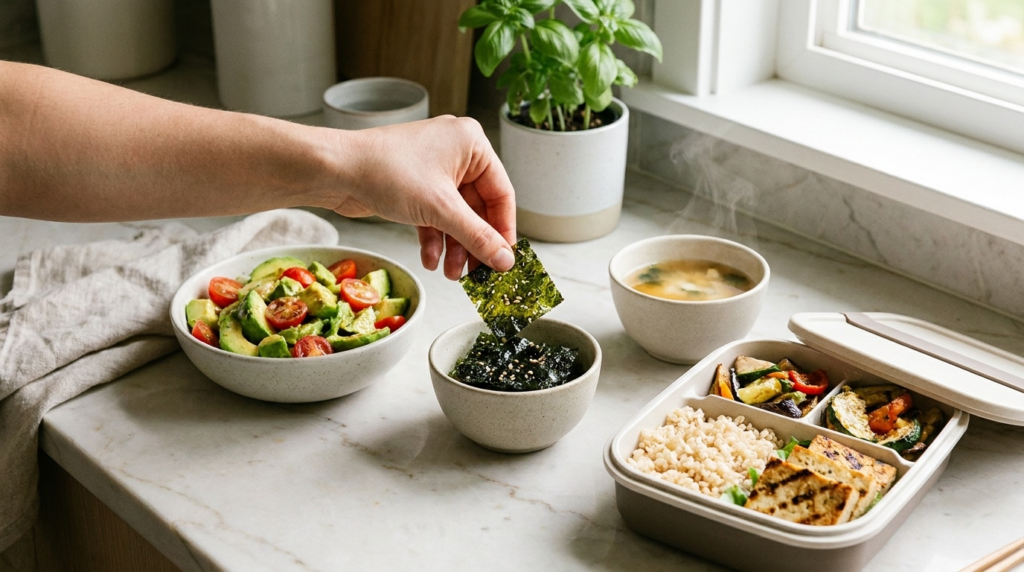
If you’re eating gim for the first time, it’s worth distinguishing seasoned gim from plain dried gim. Seasoned gim is usually roasted after being seasoned with oil and salt, so it’s easy to eat straight out of the bag. Plain dried gim comes close to having no oil or salt added at all, which makes it better suited for cooking into kimbap, soup, or seasoned side dishes. Worth being a little careful about the assumption that “gim is all a health food, so you can eat as much as you want” — seasoned gim products vary in how much oil and sodium they contain, so it’s a good habit to glance at the nutrition label and serving size.
Gim’s Strength Is Lightness and Crunch
The reasons seasoned gim does well overseas aren’t complicated. For one, it’s light. It’s easier to ship and store than a sauce in a glass jar or a refrigerated product, and it’s not a big commitment to buy a lot of it at once. It needs no cooking. It’s also not a food, like heavy spice or a fermented smell, that takes time to get used to — tear open the bag and the crunch is right there. It’s an easy product to explain to a busy office worker, a parent packing lunches, or a student hunting for a new snack.
That doesn’t mean gim only gets sold as some flavorless health snack, either. The options have kept multiplying — products with a strong sesame oil aroma, ones made with olive oil, ones with spicy or wasabi flavors added. Overseas shoppers need products that introduce the taste of a genuine Korean rice side dish, but they also need products that meet local, already-familiar snack preferences halfway. Some people love gim’s original flavor as it is; others do better starting with a more heavily seasoned version. Being able to test out several flavors in small packets is one of seasoned gim’s real advantages.
Because It Comes From the Sea, It Needs Extra Scrutiny
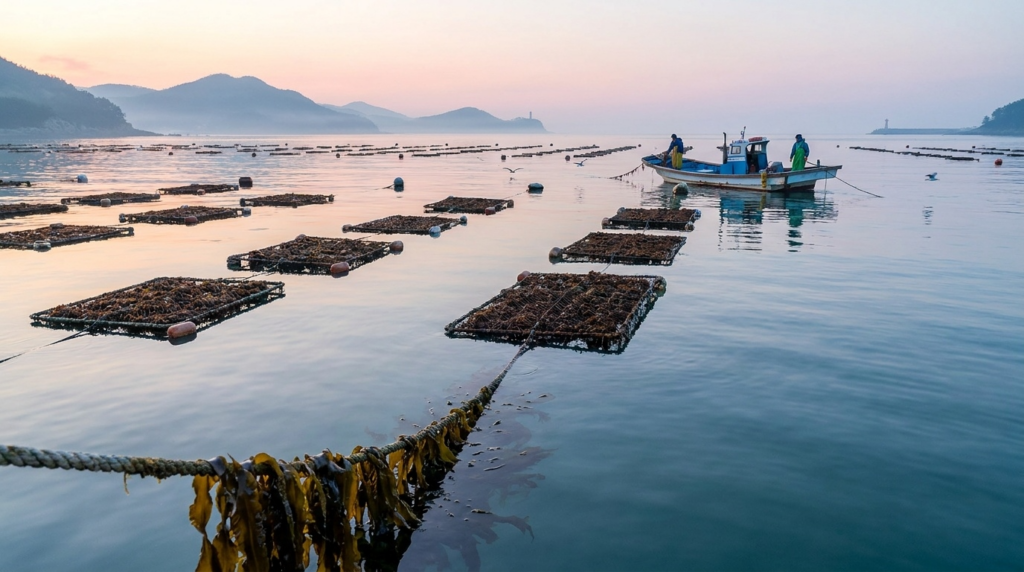
Gim is a seaweed that grows in the ocean. That’s why, when you’re talking about seasoned gim, the production base matters just as much as the export figures. Supplying good gim consistently requires the right aquaculture environment, water temperature and sea conditions, processing facilities, sanitation management, and packaging technology, all at once. As the overseas market grows, the label “Made in Korea” on its own stops being enough. Consistency of taste is a given, but exporters also have to carefully match each country’s food standards, allergen labeling, and country-of-origin and shelf-life information. Exporting, in the end, is a long process that starts in the ocean and ends on a store shelf.
From a shopper’s side, storage matters more than you’d think, too. Gim loses its crunch fast once it meets any moisture. If you’ve bought a large bundle, put it in a zip bag or airtight container after opening and keep it somewhere cool and dry. During monsoon season or on humid days, it’s better to open only as much as you’ll actually eat rather than tearing open several packets at once. Gim that’s lost its crunch can get some of its texture back with a very brief pan-toast, no oil needed, but the storage instructions on the package should always come first.
Seasoned Gim Keeps Moving — From Side Dish, to Ingredient, to Snack
If you want to try eating seasoned gim a little differently at home, it’s not complicated. Crumble it up and mix it with warm rice, sesame oil, and sesame seeds for a simple rice ball. It pairs well with avocado, egg, and rice too. If you’re adding it to a salad, toss the dressing in first and sprinkle the gim on last, so it stays crisp. The same goes for topping ramyeon or udon — add the gim too early and it soaks up the broth’s moisture and goes limp. A very small change in cooking order can shift how much use you actually get out of one packet.
The figure of 844 billion won shows that seasoned gim is no longer read as something that stays inside Korean dining tables. But the next chapter probably isn’t just about growing the export number further. What matters is whether production can stay stable while protecting ocean conditions, how the industry develops lower-sodium and more varied flavor options, and whether shoppers abroad keep coming back to gim in daily life instead of buying it once out of curiosity and stopping there. A taste that started with a single sheet of gim wrapped around rice has made its way into snack drawers around the world. It might be worth finding out for yourself, next time you’re at a store shelf, what way you’ll end up eating it.
Source: Ministry of Food and Drug Safety and Food Safety Information Service, 2025 Food Industry Production and Export Performance, May 29, 2026; Yonhap News Agency, May 29, 2026; The Kyunghyang Shinmun, May 29, 2026.