

Table of Contents
One or Two Weeks of Parental Leave, Starting August 20
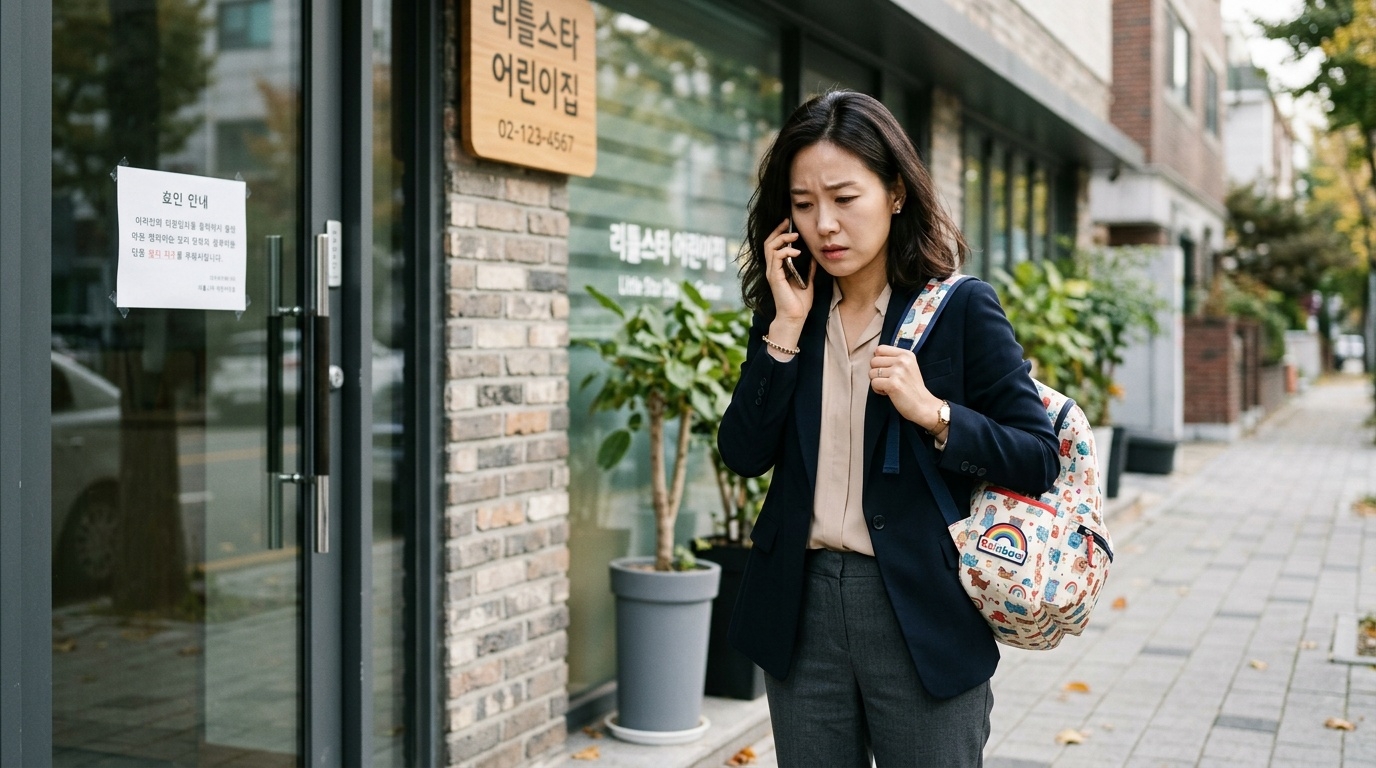
Starting August 20, 2026, workers in Korea with children age 8 or younger, or in second grade of elementary school or below, will be able to take one or two weeks of parental leave when urgent childcare needs arise. The newly implemented short-term parental leave covers hard-to-predict caregiving situations such as a daycare center or school closure, school vacation, hospitalization due to illness or injury, or quarantine and suspension of daycare or school attendance because of an infectious disease.
Short-term parental leave can be used once a year per child. That means parents with multiple children can use it once a year for each child. Workers choose either one consecutive week or two consecutive weeks; splitting it into single days or a couple of days at a time is not allowed. It applies to leave that begins on or after the system’s start date of August 20.
The biggest change is that workers can now receive parental leave benefits without taking a full month off. Previously, workers had to use at least 30 days of parental leave to qualify for benefits. Under short-term parental leave, workers can apply for benefits converted into 7-day or 14-day units after taking one or two weeks off. This is not a new system that allows day-by-day benefits or single-day leave.
A Caregiving Gap the Existing System Couldn’t Fill
Parental leave in Korea allows workers to take time off from work to care for young children and receive government-funded benefits during that period. The existing 30-day minimum worked well for the period right after childbirth or for long-term caregiving, but it didn’t always fit sudden, short-term care needs. Taking a full month off when a child is hospitalized for a week, or when a daycare center suddenly closes, can be a burden for both the worker and the workplace.
Relying on annual leave alone to fill the gap also has its limits. If a child’s treatment and recovery stretch beyond a week, parents may have to use up their annual leave all at once, and workers who have already used theirs have even fewer options. Families who can’t quickly turn to relatives or outside care services can end up in situations where one parent has to give up work or take unpaid time off.
Short-term parental leave recognizes this kind of period as formal parental leave rather than personal annual leave. It effectively fills the one-to-two-week gap that used to sit between long-term parental leave and annual leave. It broadens parents’ options to secure caregiving time especially in situations like a child’s illness or an infectious disease, where the timing and length of recovery are hard to predict in advance.
Deducted From the Overall Parental Leave Period
Short-term parental leave is not an entirely separate leave added on top of existing parental leave. The one or two weeks used are deducted from the total parental leave period a worker still has available. Taking short leave now reduces, by that same amount, the long-term parental leave available later. Parents need to weigh their current urgent caregiving needs against their future leave plans.
However, using short-term parental leave doesn’t count toward the number of times regular parental leave can be split up. This is meant to ensure that taking one week off in an emergency doesn’t reduce a worker’s future opportunities to split up long-term parental leave. The structure subtracts the days from the overall cap, while counting the number of splits separately.
Benefits, too, are paid based on the chosen leave period rather than on a daily basis. Workers apply for benefits converted into 7 days if they took one week, or 14 days if they took two weeks. This simply applies the existing parental leave benefit standard to a shorter period, so it doesn’t create a separate daily rate exclusive to short-term parental leave.
From ‘A Month or More’ to Real Caregiving Time
The significance of short-term parental leave lies in broadening the time units of parental leave to match real caregiving situations. A child’s illness, hospitalization, or a school suspension due to an infectious disease are hard to schedule precisely in advance. It means parents can now handle, through formal leave, periods that used to require scrambling for alternative care or burning through annual leave.
For the system to actually close the gap on the ground, workers need to know exactly how many times they can use it per child and how to apply for benefits, and workplaces need to be ready to handle a one-to-two-week staffing gap. It’s especially important to keep in mind that this isn’t a system that can be freely split into single days, and that the time used is deducted from the overall parental leave allowance.
The new option available to parents starting August 20 is essentially a scaled-down version of long-term parental leave. Workers who previously gave up on parental leave because of the existing 30-day minimum for benefits can now choose one or two weeks to match a child’s sudden illness or a daycare closure. How effective it turns out to be will depend on whether workers can actually use the system, without worrying about being penalized, exactly when they need it.
Source: Ministry of Employment and Labor press release; Yonhap News Agency, August 11, 2026.