Table of Contents
People Who No Longer Find Being Alone Uncomfortable
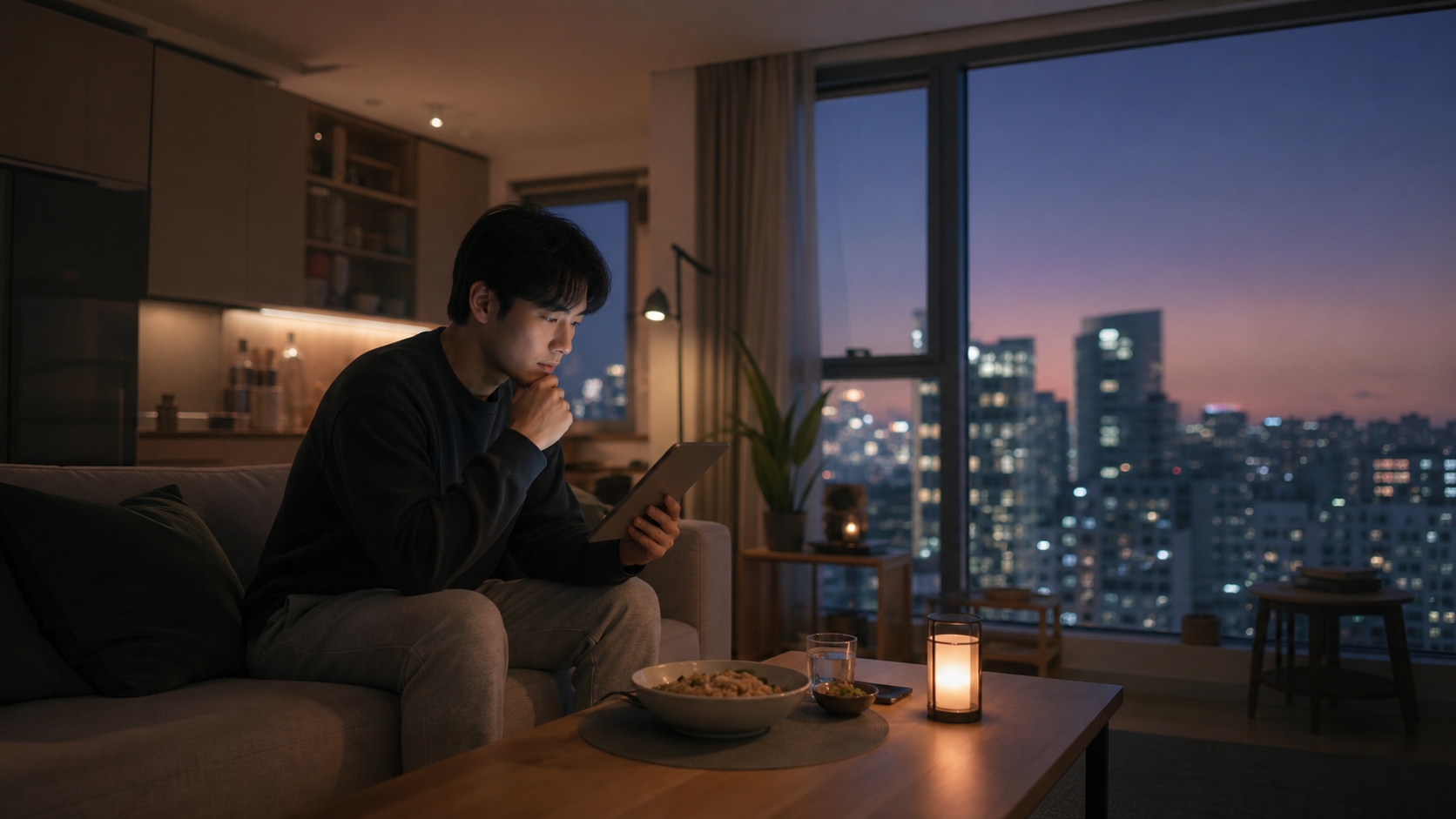
Deciding who to have dinner with, how to spend the weekend, or how to decorate an apartment on one’s own terms is no longer an unusual scene in Korea. In the “2026 Korea Single-Person Household Report” published on July 19, 2026 by the KB Financial Group Research Institute, 52.2 percent of single-person household respondents said they prefer to spend their leisure time alone. Just 30.0 percent said they preferred to split time between being alone and with others, and only 17.8 percent said they preferred spending leisure time with other people. That far more respondents actively chose to spend time alone than those who preferred company shows how much the perception of living alone has changed.
The numbers suggest that time spent alone is not synonymous with a lack of relationships. Being able to design one’s own schedule and habits according to personal taste is increasingly seen as a distinct value of single living in its own right. In the same report, 58.3 percent said they intend to continue living alone, and the most common reason, cited by 61.4 percent, was that “living alone is comfortable.” That implies the rise of single-person households cannot be fully explained simply as a byproduct of delayed marriage or cohabitation. As more people spend longer periods living alone, they are not just growing accustomed to the lifestyle — a clearer preference is emerging for an environment in which they can think and act independently.
8.045 Million Households: Korea’s Most Common Household Type
The shift in individual preference is intertwined with changes in Korea’s population and household structure. According to “2025 Single-Person Households by the Numbers,” released in December 2025 by Statistics Korea (the National Data Agency), the country had 8.045 million single-person households in 2024, surpassing 8 million for the first time. They accounted for 36.1 percent of all households, a record high. More than one in three Korean households is now a household of one. At this scale, single-person households can no longer be treated as a marginal phenomenon limited to a particular generation or a handful of cities — they have become a mainstream household type that must be factored into the design of everyday systems, from housing and consumption to finance and welfare.
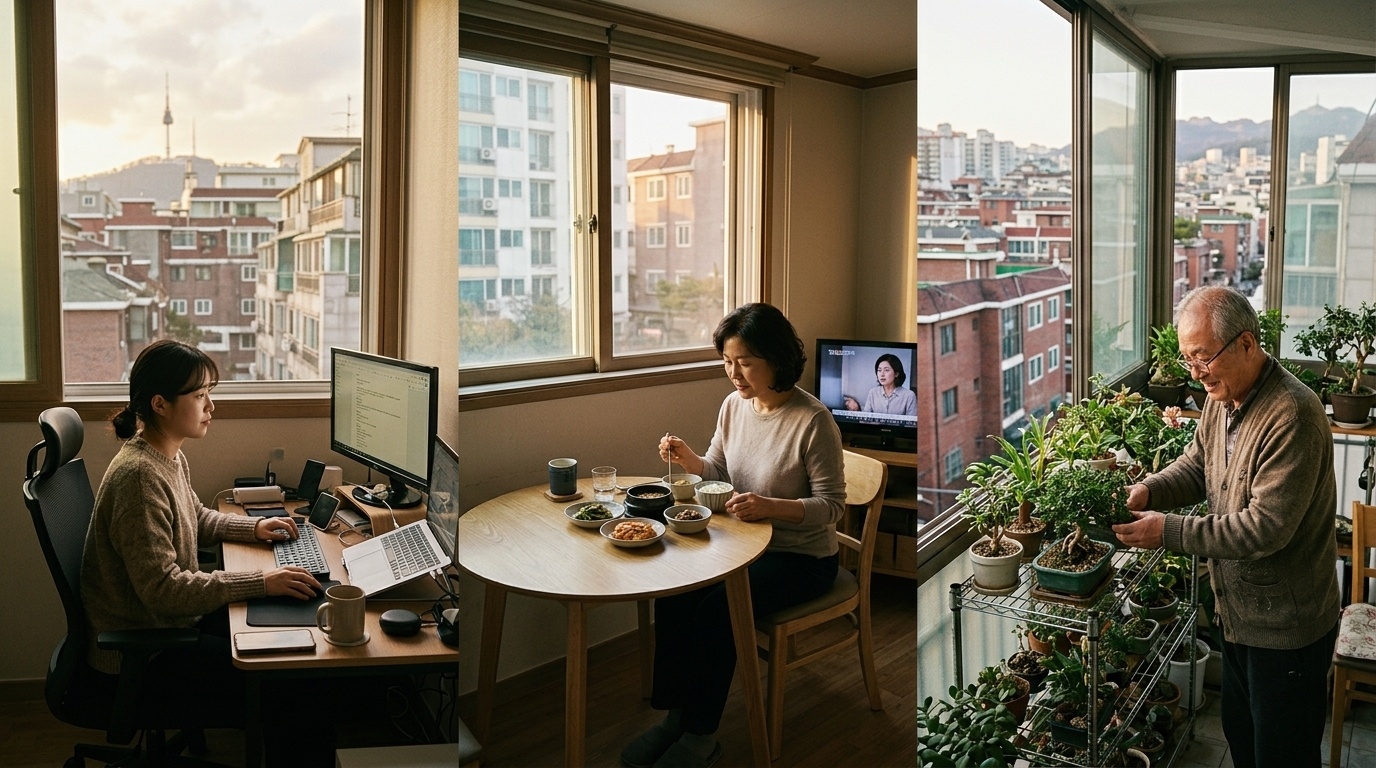
That is also why single-person households are difficult to understand merely as a stage young people pass through before marriage. In the Statistics Korea data, people aged 70 and older made up the largest share of single-person households at 19.8 percent, followed by those 29 and younger, people in their 60s, and people in their 30s. Living alone has become a common household form that emerges from very different points in life — youth independence, career and family changes in middle age, and bereavement in old age. Because the circumstances that lead people to live alone, along with the support they need and their plans for the future, differ by age and life stage, understanding what the statistics show requires looking at the differences within the single-person-household population rather than treating it as a single, uniform group.
Satisfaction Is Up, but Not Evenly Across the Board
According to the KB report, overall life satisfaction among single-person households stood at 73.5 percent, up 2.3 percentage points from the 2024 survey. Satisfaction with living space and surroundings was highest at 79.5 percent, followed by leisure life at 74.8 percent and personal relationships at 62.4 percent. The finding that people living alone can shape their own space and daily rhythm appears to be feeding into high satisfaction. The fact that housing and leisure ratings underpin the overall satisfaction score suggests the benefits of single living are not confined to an abstract sense of independence — the everyday experience of controlling one’s own time and space translates into concrete satisfaction.
Financial satisfaction, however, was the lowest among the categories surveyed, at 51.4 percent. Asked about their biggest concerns, respondents most often cited health going forward, at 25.7 percent, while the single biggest current worry was financial stability, at 24.0 percent. The structural burden of having to shoulder alone the risks of housing costs, living expenses, illness, or job loss remains separate from — and does not cancel out — the autonomy of single living. Being satisfied with one’s current life and worrying about the future are not contradictory: people can positively evaluate their present independence while simultaneously feeling uncertain about what happens if income falls or health problems arise, precisely because there is no one else to share the burden.
Financial Assets Moving From Savings to Investment
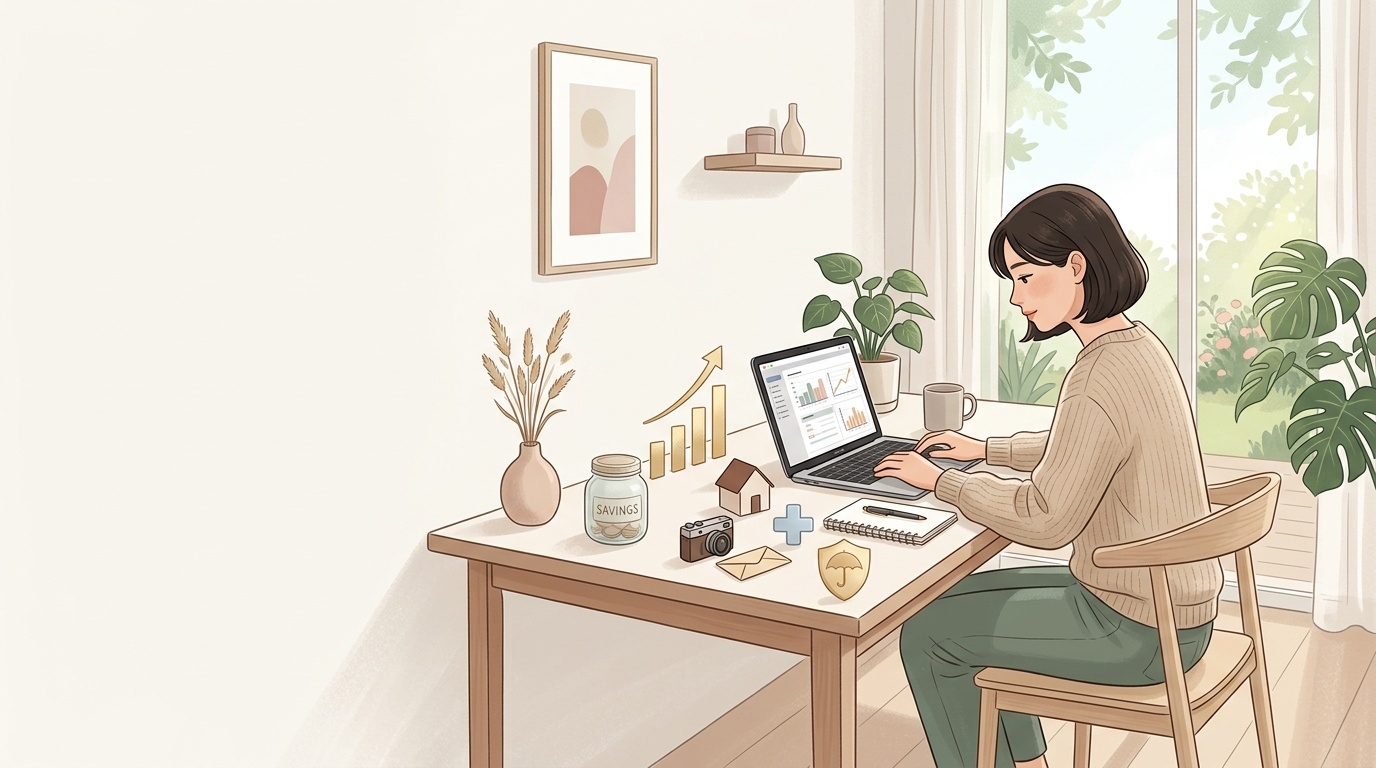
The way people are responding to that economic anxiety is also changing. Among single-person households’ financial assets, the share held in savings and time deposits fell to 28.3 percent, down 7.8 percentage points from two years earlier. Over the same period, the share held in stocks and ETFs rose to 21.1 percent, up 6.1 percentage points, while the share in crypto assets climbed to 3.5 percent, up 1.3 percentage points. Asset portfolios once concentrated on stable savings have shifted toward investment products. That means people are increasingly relying on a mix of financial instruments to prepare for the future rather than savings and deposits alone — a shift that also reflects how, for someone managing income and assets by themselves, even the task of growing wealth rests entirely on individual judgment and responsibility.
Expanding investment does not necessarily mean greater financial comfort. Among respondents who carry debt, 34.0 percent said they had invested borrowed money in financial products, up 5.2 percentage points from 28.8 percent in 2024. That can be read as the product of both a desire not to be left behind as asset prices rise and pressure to prepare for the future. It also points to a paradox: taking on greater financial risk in order to sustain an autonomous life. Because there is no other household member to help absorb a loss, investment decisions are tied not just to potential returns but directly to one’s own stability. That makes it hard to dismiss the rising share of investment as simply a passing trend in personal finance.
Six in Ten Have Taken on a Side Job
The strategy for boosting income has also expanded beyond a person’s main job. Participation in “N-jobbing” — taking on income-generating activities beyond one’s primary work — reached 59.6 percent, up 17.6 percentage points from 42.0 percent in 2022. That means roughly six in ten single-person households surveyed now juggle at least one side job or supplementary income activity. N-jobbing is no longer a niche career-management tactic for a select few; it has become an income strategy that a substantial share of single-person households actually use. Rather than relying on income from a single job to cover both current spending and future preparation, more people are looking to secure additional funds through supplementary activities.
Among those who took on a side job, 79.5 percent said they did so for their own voluntary reasons, and the most common motivation, cited by 40.4 percent, was building up extra or emergency funds. That makes it hard to view N-jobbing solely as a passive choice driven by immediate financial hardship. It also reflects single-person households building their own safety net and diversifying income sources to prepare for future uncertainty. Still, the fact that many started voluntarily does not mean there is no financial pressure involved. The very judgment that one needs to set aside emergency funds in advance can itself reflect the risk and responsibility that a person living alone feels.
Sticking to Personal Taste While Still Counting the Cost
Consumption patterns also showed both self-determination and practical calculation at once. 47.2 percent said they consume in a planned way, compared with 24.1 percent who preferred impulsive spending. 55.4 percent said they prioritize practicality and value for money, well above the 16.2 percent who prioritize quality and craftsmanship, and 51.1 percent said they prioritize personal taste, far outpacing the 19.0 percent who prioritize brand and trust. Taken together, these figures suggest single-person household spending cannot be reduced to a single pattern of either frugality or indulgence. What to buy is decided according to personal taste, but cost and value are weighed carefully in the actual purchasing process.
The findings make it difficult to simplify single-person households as impulsive spenders chasing trends. Because they decide alone, their personal preferences are clearly reflected in their choices, but because they must cover housing costs, living expenses, and future preparation on a limited income, they also scrutinize cost and value closely. They spend selectively on the categories that matter most to them while pursuing practicality in the rest. The fact that the person making the spending decision and the person paying for it are one and the same is another important piece of context for understanding this attitude: there is less need to coordinate with another household member, but the consequences of a poor choice or overspending also fall entirely on that one person.
Expanding Independence, and the Risks Carried Alone
The single-person households portrayed in the KB report are not a group defined by deprivation alone. They rate highly the comfort of living alone and the freedom of their leisure time, design their space and spending according to their own taste, and prepare for the future through investment and side jobs. The fact that both life satisfaction and intent to continue living alone rose together suggests that single living is not a temporary stage before moving into another type of household, but is becoming a viable way of life in its own right. The scale of the trend — 8.045 million households — reinforces that shift. What matters now is moving away from viewing life alone as abnormal or incomplete, and instead understanding it as a lifestyle that a large number of people are actually sustaining.
Behind that agency, however, remains the problem of individuals having to shoulder financial stability and health risks entirely on their own. The survey was conducted from February 25 to March 23, 2026, among 2,000 single-person households aged 25 to 59 living in major cities nationwide. It is also worth noting that older adults and rural residents were excluded from the survey. That means the high satisfaction and active investment and income activity the report describes cannot simply be extrapolated to all single-person households. Given that Statistics Korea data show those 70 and older make up the largest share of single-person households, the living conditions of the population outside the survey’s scope deserve separate attention.
Now that living alone has become the norm, the more pressing question is not whether to treat this choice as an exception, but how to redesign housing, financial, and health safety nets so that people living alone do not have to shoulder every risk by themselves. Respecting the independence and self-determination of single-person households and reducing the burden concentrated on individuals are not opposing goals. Only when people can maintain the comfort of living alone while also being able to respond to unexpected financial or health risks can single living move beyond a choice that depends on individual resilience and become a stable, sustainable way of life.
Source: KB Financial Group Research Institute, “2026 Korea Single-Person Household Report,” July 19, 2026; Statistics Korea, “2025 Single-Person Households by the Numbers,” December 9, 2025.