
Table of Contents
Walking In Alone, Finding Fleeting Friendships
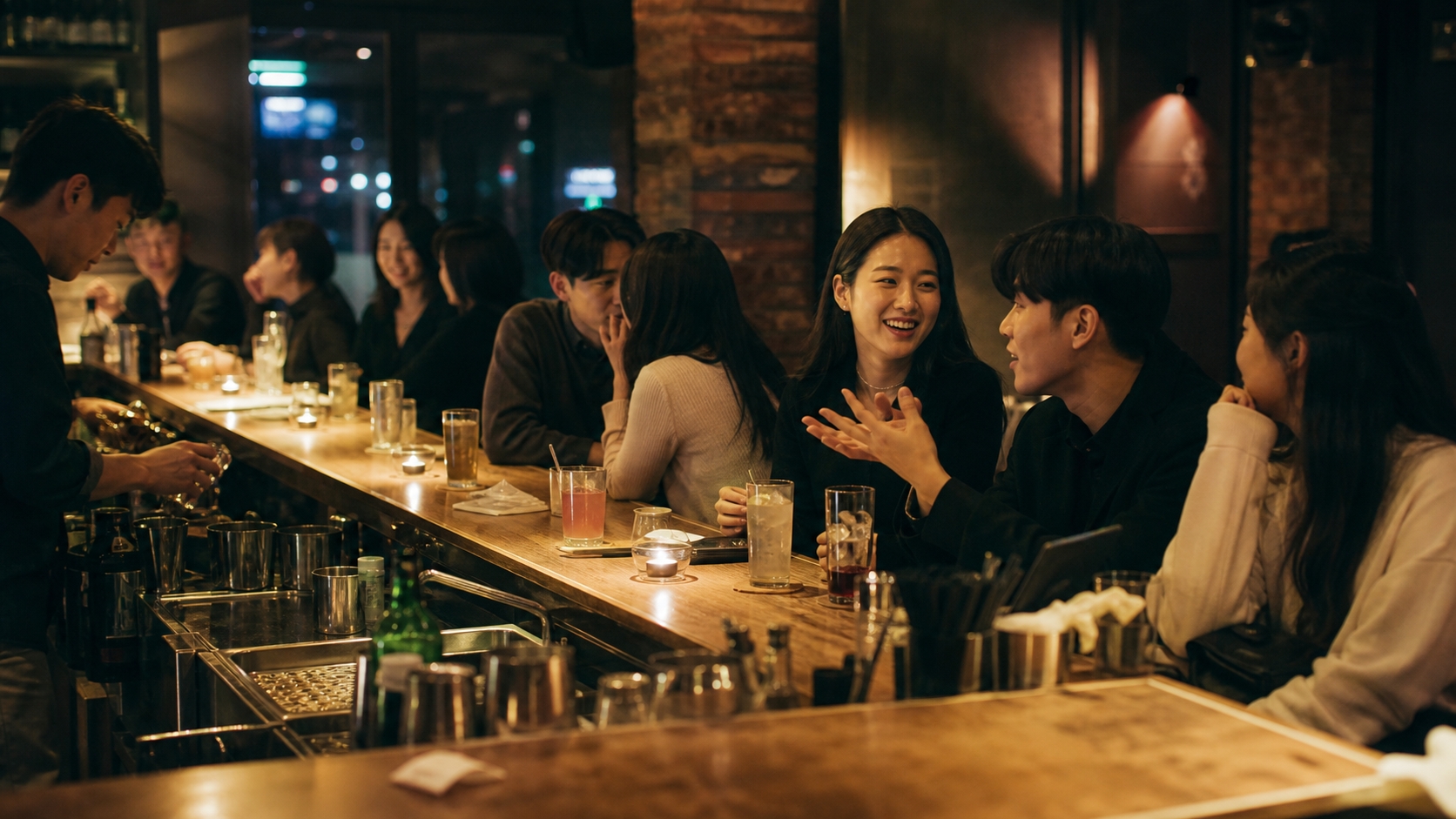
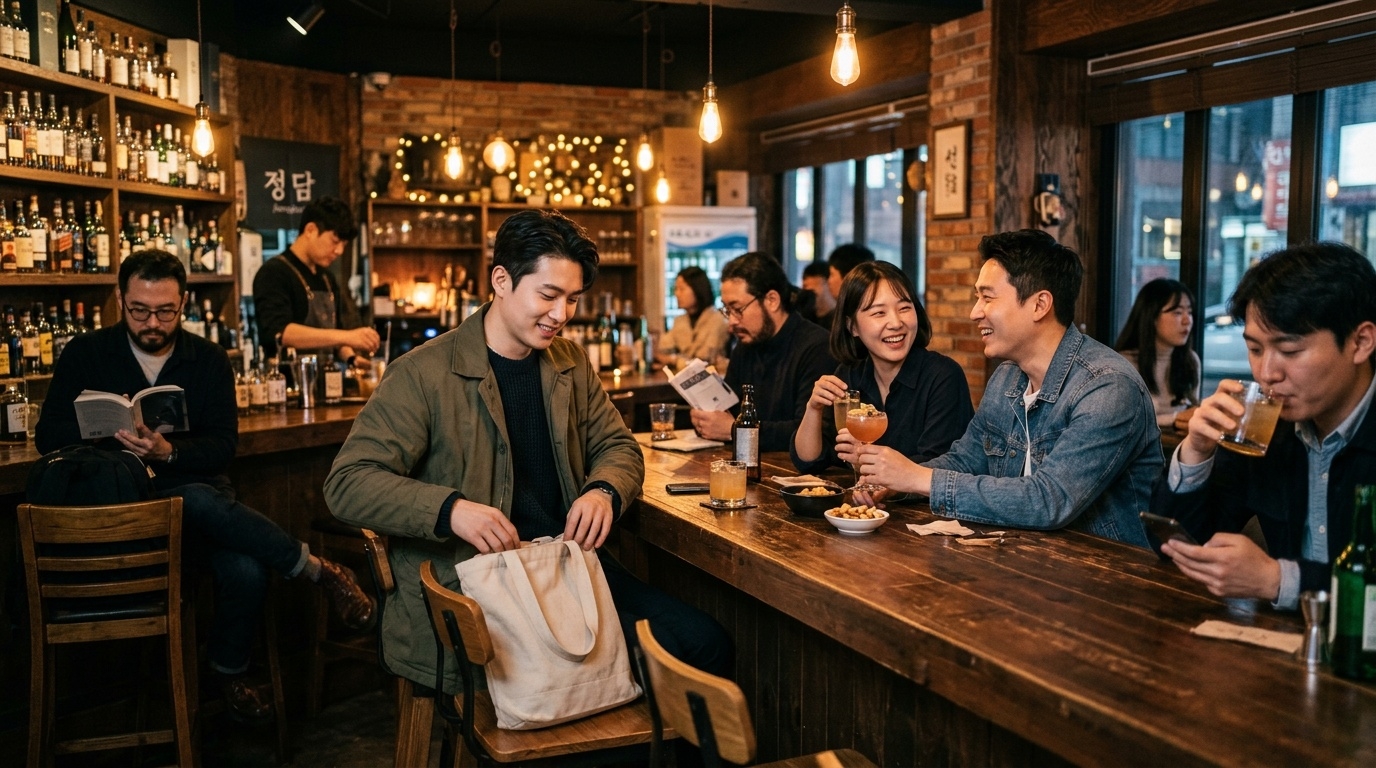
On August 12, 2026, at 9:00 PM, about 10 customers were sitting along an L-shaped counter with around 20 seats at a “honsool” (solo drinking) bar in Mapo District, Seoul. Customers who came alone chatted with the person next to them over highballs or cocktails priced around 10,000 won. Office workers and college students casually drop by to meet strangers, but these encounters don’t necessarily have to lead to future plans. They simply mix words because they happen to be sharing the same space that day, and when they leave, they return to their respective daily lives.
This scene, reported by the Korea JoongAng Daily on August 19, 2026, highlights the phenomenon of “fast friends”—lightweight social relationships formed over a short period. Drinking alone here doesn’t necessarily equate to isolation. Arriving solo actually creates the breathing room to naturally strike up a conversation with people nearby. You get to experience both time to yourself and interaction with others, all without the heavy promise of intimacy.
In typical social gatherings, people often decide in advance who they will meet, at what time, and for how long. At a solo drinking bar, this kind of prior coordination is completely skipped. Visitors walk in according to their own schedules and meet people to talk to right on the spot. If the conversation flows well, they stay a bit longer; if not, they can just finish their drink and leave. It’s a space where each person can relatively freely choose when to start and end an encounter.
The Solo Drinking Bars Clustered in Hongdae and Sangsu
Around the Hongdae and Sangsu areas, there is a dense cluster of about 20 branches of this type of solo drinking bar. One particular franchise operates 90 locations nationwide, with 28 in Seoul alone. This suggests that these spaces operate in similar formats across multiple regions, moving well beyond a micro-trend in a specific neighborhood. A solo drinking bar where you can visit alone and talk to strangers serves as both a quiet pub and a venue for casual, low-stakes encounters.
The price point is another clue to understanding the nature of this space. With highballs and cocktails hovering around 10,000 won, you can drop by for a bit without planning a grand night out. Visitors don’t need to coordinate multiple people’s schedules or clear out a long block of time in advance. You walk in alone, order a drink, and join a conversation if one sparks. If it doesn’t, you just spend some time by yourself and head out. The threshold for both jumping in and stepping away is remarkably low.
The fact that about 20 branches are concentrated in Hongdae and Sangsu shows that the solo drinking bar is no longer limited to the quirky operational style of just one specific establishment. Patrons are actively choosing an environment where they can not only drink alone but also feel completely comfortable arriving solo and, if they wish, interacting with others. The scale of a franchise with 90 branches nationwide also indicates that these spaces are thriving outside of just a few trendy commercial districts in Seoul. Coming in alone isn’t an exception here; it’s the fundamental premise of the space.
Socializing, Not Speed Dating
If you view the encounters at these solo bars in the same category as rotational speed dating, it’s easy to miss the core point. While speed dating involves meeting multiple partners in sequence to explore romantic potential, the “fast friends” culture at solo bars is not aimed at finding a romantic partner. Lightly conversing and hanging out for a bit with the person next to you is the main event itself. The defining difference lies in not framing the outcome of the meeting as romance or a lasting relationship.
The attitude required of participants shifts as well. In a setting built on the premise of dating, there can be immense pressure to evaluate the other person or actively sell yourself. In a solo bar that emphasizes friendship and socializing, an encounter isn’t deemed a failure just because the conversation doesn’t get deep. A brief chat is enough to make the day’s social experience complete. Trading contact info or committing to a next meeting is simply not a prerequisite for the connection from the start.
The “fast” in “fast friends” doesn’t just refer to how quickly people get close. It also implies that much less preparation and consensus are needed to initiate a connection. Rather than meeting after thoroughly verifying common ground, a conversation begins merely from the shared reality of visiting the same bar at the same time. There’s no reason to clearly define the relationship, either. Because people linger in the conversation of the moment without deciding whether it’s a budding romance or a long-term friendship, the pressure to produce a tangible result fades away.
Connecting Through Games Rather Than Conversation
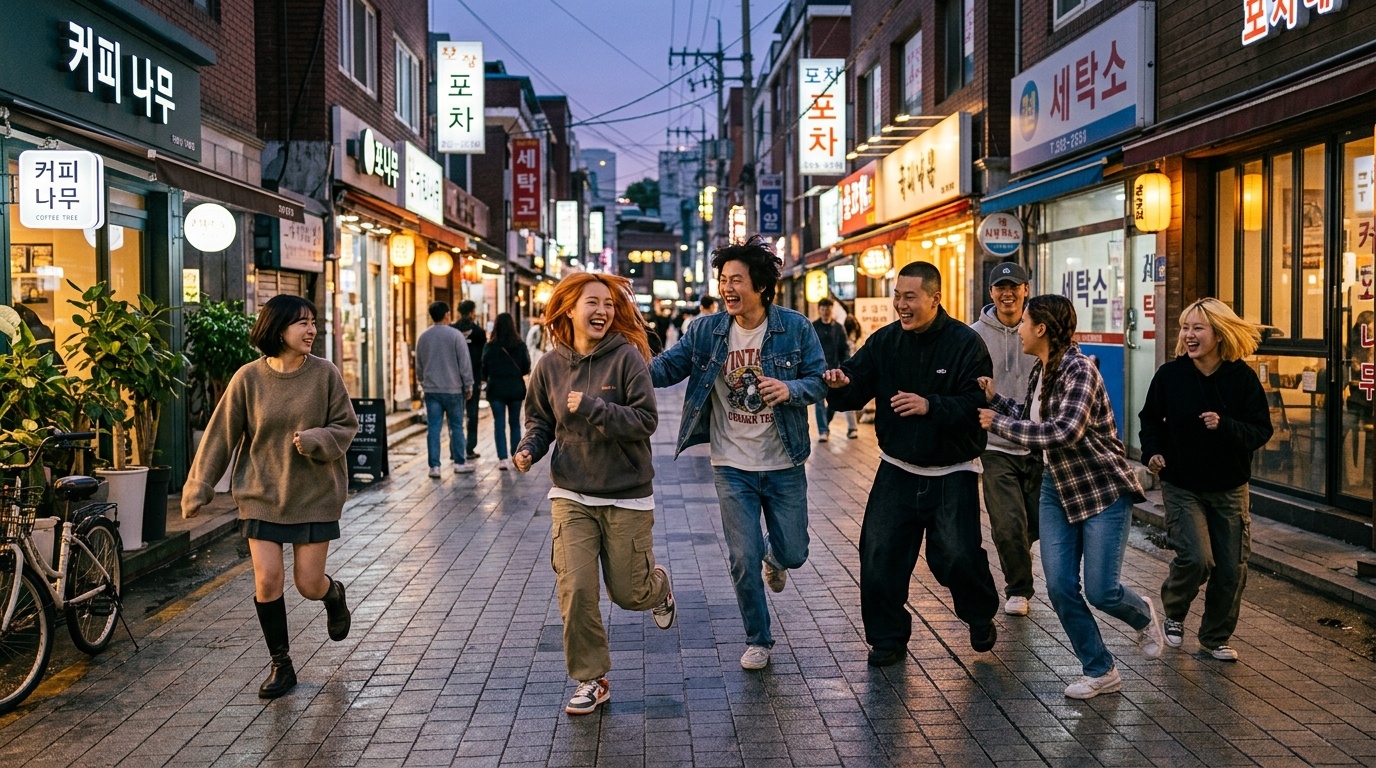
The casual socializing of younger generations is taking on different forms outside of bars, too. Some young adults in Korea are gathering through neighborhood apps like Karrot to play adult versions of “Cops and Robbers” on the streets. In these meetups, strangers jump right into the game together rather than having long conversations to get to know each other from the start. They aren’t playing a game after becoming friends; they perform a set activity and interact only as much as strictly necessary.
While solo drinking bars leave the door open for building relationships centered on conversing with strangers, street games place a much heavier emphasis on the shared activity itself. At a solo bar, the stories exchanged with a seatmate are a crucial part of the visit. In gaming meetups, participants can join the activity without knowing any details about anyone’s background. Both phenomenons provide opportunities to cross paths with strangers, but the degree to which they aim for a relationship and their methods of interaction differ greatly.
In game-centric gatherings, the pressure to sustain a long conversation completely vanishes. Instead of constantly searching for things to talk about, participants can focus on the shared rules and actions of “Cops and Robbers.” The inherent awkwardness between strangers doesn’t necessarily have to be solved with words. The process of gathering via apps, playing a game, and parting ways prioritizes the shared activity over the relationship itself. While its relationship orientation is lower than that of a solo bar, it serves as another compelling option for lightly connecting with others.
Relationship-Oriented Solo Bars, Activity-Driven Street Games
Lee Eun-hee, a professor of Consumer Science at Inha University, noted the trend of younger generations preferring the formation of “loose ties,” while sharply distinguishing between the nature of solo bars and “Cops and Robbers” games. Solo bars have a stronger drive to form connections through direct conversations with strangers compared to game meetups. Street games are centered on participating in a set activity rather than getting to know people. Rather than lumping both phenomenons together as the exact same type of relationship, it’s far more accurate to view them as having different levels of relationship orientation within the realm of loose connections.
At a solo bar, the very situation of sitting in the same space serves as a natural catalyst for conversation. Visitors exchange words with their seatmates and get to know them, however briefly. In street games, the rules and goals of the activity are what bind the participants together. The game seamlessly goes on without anyone needing to ask detailed questions about each other’s backgrounds. If a solo bar inches a bit closer toward a relationship through dialogue, a game meetup shares a group activity while actively minimizing the burden of relationship building.
It is hard to say that either format replaces the deep bonds formed with old friends or close colleagues. At a solo bar, people might not keep in touch after the conversation ends, and in game meetups, participants scatter back to their lives once the activity is over. However, solo bars carry a relatively clear inclination to directly build a rapport with the other person, even in that brief timeframe. Street games prioritize the shared experience of moving together over the depth of a personal connection.
Just because these encounters are “loose” doesn’t mean their goals and methods are identical. Someone visiting a solo bar might genuinely want the conversation itself without promising romance or long-term friendship. A game participant focuses intently on the activity and spending time with others, rather than building intimacy. Younger adults are essentially choosing the specific level of interaction they can handle, navigating between relationship-oriented encounters and activity-driven ones.
What “Fast Friends” Leave Behind
Two people who meet at a solo bar might chat over a drink and genuinely never see each other again. Game participants gathered through platforms like Karrot also seamlessly return to their separate lives once the activity concludes. Yet, the focal point of the two encounters differs. At a solo bar, the short conversation and the very act of making a connection remain at the core of the experience, whereas for game meetups, the fact that they engaged in a set activity alongside strangers is what firmly remains.
The concentration of about 20 branches around Hongdae and Sangsu, and one franchise operating 90 locations nationwide, demonstrates that the demand for relationship-oriented solo spaces is not confined to just one specific area. It also reveals a modern attitude that no longer views alone time and social activities as mutually exclusive choices. It’s a lifestyle of walking in solo, chatting with someone next to you, and embracing the day’s interaction for exactly what it was, even if the relationship goes no further.
A person stepping into a solo bar for the first time still orders a drink alone, but they don’t shut down the possibility of talking with those around them. A street game participant also joins a group activity without ever engaging in deep conversations with strangers. In both scenes, the socializing of the younger demographic refuses to settle into a single mold. They might create brief connections through conversation, or they might put the shared activity far ahead of relationship building.
What matters most in the “fast friends” culture of Korea’s twenty- and thirty-somethings is letting go of the heavy premise that every encounter must magically evolve into a deep, lasting relationship. Even within that framework, solo bars and street games offer distinctly different paths. A solo bar leans closer to a conversation meant to get to know someone, even if briefly, while a game meetup leans toward an activity that sheds the weight of conversation entirely. The “loose ties” chosen by young adults aren’t a single, rigid type of relationship. They are various, fluid modes of socializing that shift depending on the desired degree of interaction.
Source: Korea JoongAng Daily, August 19, 2026.