
Table of Contents
The first glance into another’s world
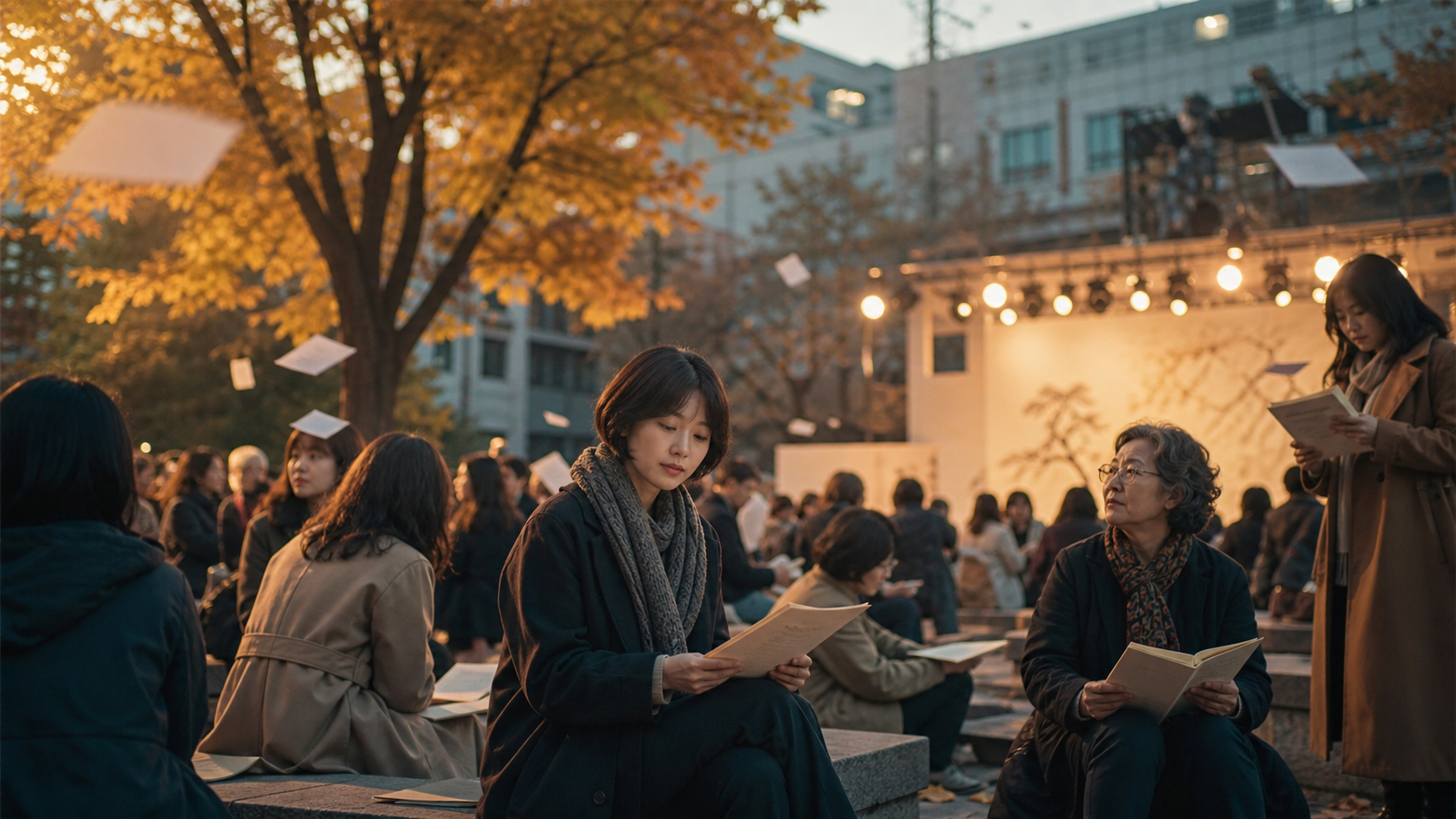
For five days starting September 16, Seoul’s Daehangno area, centered around Marronnier Park and the ARKO spaces, becomes a stage bridging generations of Korean literature. Hosted by the Arts Council Korea, Literature Week 2026 is built around the idea of “gyeotnunjil,” a sidelong glance. It’s a fitting frame for what literature does: look carefully, quietly, into lives we might otherwise hesitate to face head-on.
Running through September 20, the event includes 38 stage programs and 10 exhibition and hands-on programs. Add the 25 events linked to regional institutions nationwide and 58 gatherings at independent bookstores, and the festival totals 131 events. It isn’t confined to one venue in Seoul; it spreads the meetings between readers and writers into bookstores and cultural spaces across the country.
Opening day: finding footing in the words of Huh Su-kyung
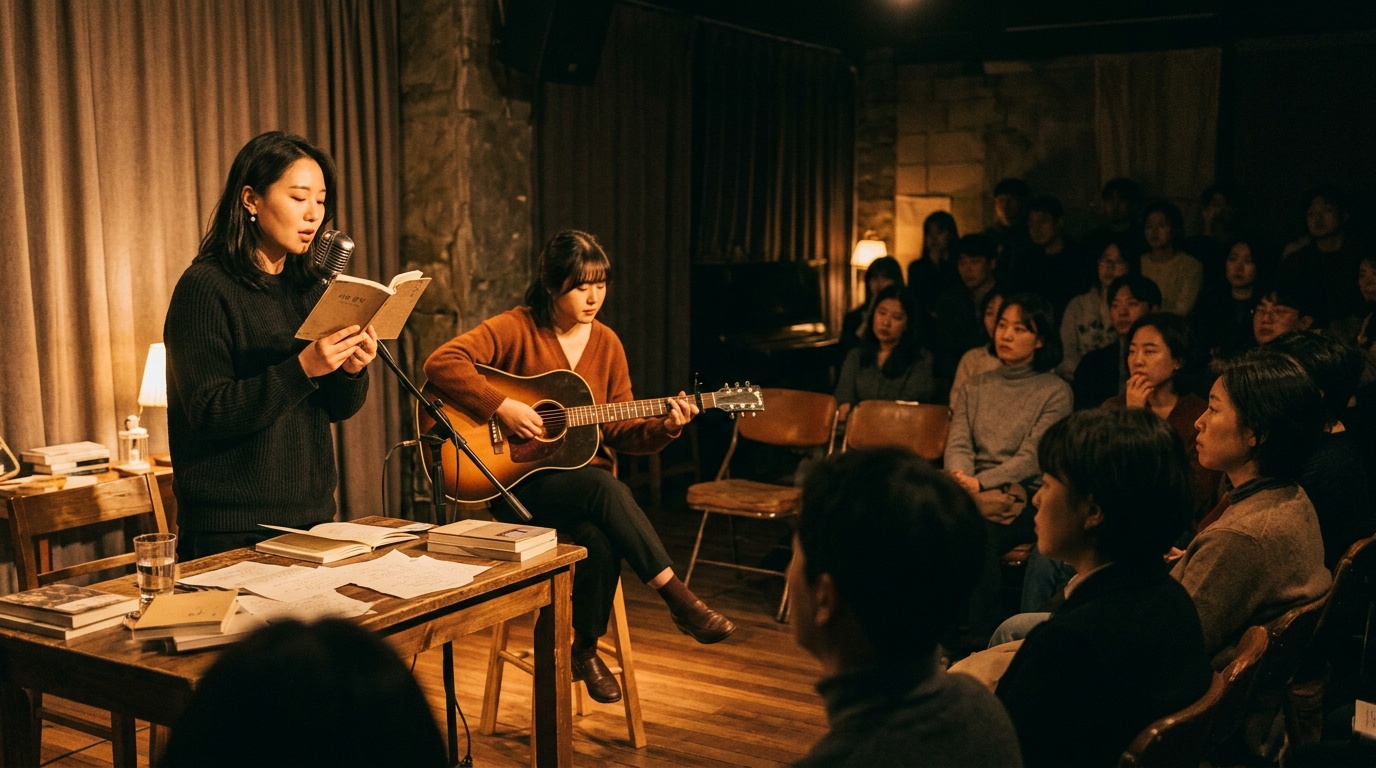
The festival opens with a tribute to poet Huh Su-kyung, who died in 2018. The opening program, held at 7:30 p.m. on September 16 at the ARKO Arts Theater Small Hall, is titled “The Word Huh Su-kyung Is Truly Lovely, Isn’t It.” Actor Go Ah-sung hosts, while poets Lee Min-ha, Kim Jin-sun, and Hong Ji-ho, along with singer-songwriter Kwak Ju-na, bring Huh’s writing to life through readings and music.
Huh Su-kyung wrote about home and migration, loss and longing, in a voice distinctly her own. Her years abroad in Germany, after leaving Korea to build her creative life there, gave her poetry its sense of distance and movement. The opening isn’t a simple retrospective. It’s built as a stage blending poetry and music, meant to bring her writing back through today’s voices and sensibilities.
That fits the theme of the sidelong glance. Readers look into the world of a writer they can no longer meet, through her poems and what she left behind. It’s a moment that starts with an absence and shows how her work still reaches the next generation of readers and writers.
Kim Hyesoon and Choi Seung-ja: long careers in poetry
After the opening, the festival turns to female poets who built distinct languages within modern Korean poetry. Kim Hyesoon, marking her 47th year since debut, is the focus of a reading event called “Ventriloquism in the Air.” Kim has written about the female body, death, and suppressed voices in ways that break from traditional lyrical form. Hearing her work read aloud brings out layered rhythms and voices that can get lost on the page.
Eight contemporary poets take part in “Choi Seung-ja, And So One Day, Oh Love,” built around Choi’s first selected-poems collection, published 47 years into her career. A selected collection gathers a writer’s defining work across their publishing history. Unlike a new book, it shows how a writer’s language has changed and held up over time.
Placing Kim Hyesoon and Choi Seung-ja together resists treating female poets as one generation or one trend. It shows how different the worlds they built really are, and gives readers a fresh look at writers who have long stood at the center of Korean poetry.
Bringing fading names back to the present
The festival’s timeline also reaches further back and closer to now. “Park Ji-ri: A Name to Remember,” marking the 10th anniversary of the novelist’s death, revisits a writer who left behind intense work in a short career. Rather than mourning, the program focuses on the questions her writing still raises for readers today.
There’s also an event honoring Kim Myeong-sun, regarded as one of Korea’s first modern female novelists. The program is titled “The Birth of Kim Myeong-sun, 130 Years Later.” She was born in 1896, so 2026 marks 130 years since her birth. Some promotional articles have referred to a “100th anniversary,” but going by her actual birth year, the program’s own figure of 130 years is the accurate one.
Looking again at Kim Myeong-sun means confronting how female writers were judged and pushed aside during the early years of modern Korean literature. Set her work against the prejudice of her time and the press coverage she faced, and it’s clearer why she was sidelined in literary history for so long. The sidelong glance, here, is a way of correcting a blind spot in the literary canon, not just a passing look at a forgotten name.
From spectators to creators
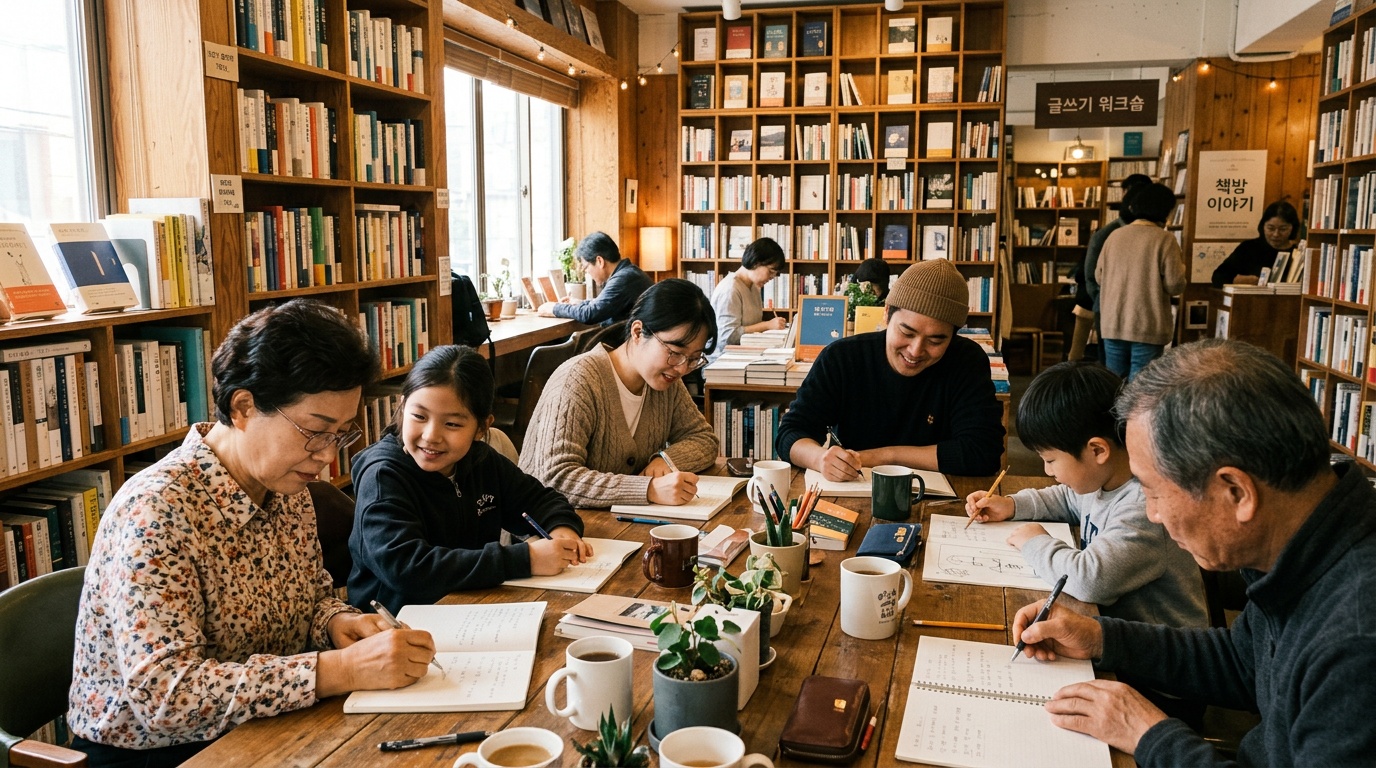
Beyond stages built for listening to authors, Literature Week 2026 has expanded its hands-on programs. New workshops include “Voices of Children’s Poems” for ages 10 to 14, an “Introduction to Playwriting Workshop” for adults, and “Writing the Dictionary of Glances,” where attendees redefine the festival’s theme in their own words.
This lineup doesn’t treat literature as something you only read. Participants write poetic lines, learn the basics of playwriting, and give a single word new, personal meaning. As children and adults go through that process themselves, the line between author and reader starts to blur.
That connection reaches well beyond the capital. Partner institutions and local bookstores nationwide run 83 affiliated programs, from small exhibitions to talks and performances. For readers abroad, it’s a chance to encounter Korean literature at the level of neighborhood bookshops and local reading groups, not just through major translations or famous authors.
Where fiction and music meet
The festival closes on September 20 with “In the Case of a Novel,” pairing novelist Choi Jin-young with the indie band 9 and the Numbers. The cross-genre performance builds around the song “Genesis,” which Choi listened to on repeat while writing her novel Gu’s Proof, and traces the connection between the two.
Opening with Huh Su-kyung’s poetry and music and closing with Choi Jin-young’s prose alongside a live band, the festival’s structure makes its intent clear: literature doesn’t have to stay bound inside a book. In between sit the long careers of Kim Hyesoon and Choi Seung-ja, voices remembering Park Ji-ri, and a fresh look at Kim Myeong-sun, born 130 years ago. Bringing together female writers from such different eras, in one space, shows Korean literature’s history isn’t a single dominant line but many branching voices.
All stage programs are free and can be booked in advance through Eventters. Walk-ins are welcome if seats remain. Full schedules and venue maps are on the official Literature Week website. The question this festival leaves isn’t which authors are already famous, but whose eyes we’ll borrow to find the voices that haven’t been heard closely enough yet.
Sources: Arts Council Korea’s Official Event Guide for Literature Week 2026; Yonhap News, August 19, 2026; Seoul Culture Today, August 2026.