
Table of Contents
A Tuesday Start for the Thirty-First Festival
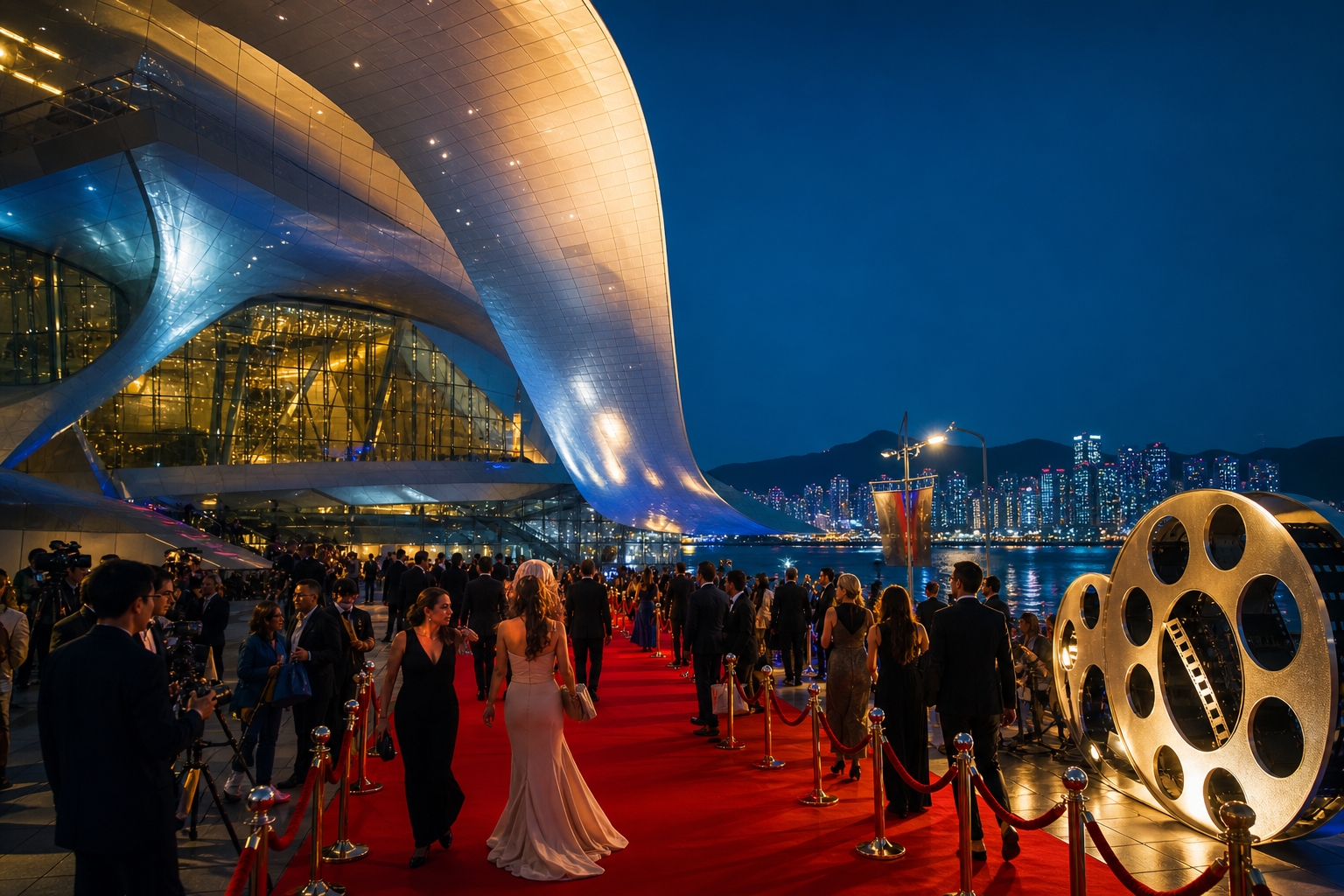
The 31st Busan International Film Festival (BIFF) will run from October 6 to 15 around the Busan Cinema Center. This year’s opening day moves up to Tuesday, a day earlier than the traditional Wednesday kickoff. The change gives festival-goers more flexibility, since many plan their trips and viewing schedules around opening week. To handle the peak crowds from Thursday to Sunday, daily screenings will also increase from four to five.
The festival has a lineup of 315 films across all programs, including 246 official selections from 59 countries, the largest official slate since 2019. That total includes 95 world premieres, and 105 films overall are having their first public screening once international premieres are counted. The festival is putting more weight on films debuting in Busan rather than ones already shown elsewhere on the international circuit.
Pivoting to a Competitive Program
Since its launch in 1996, BIFF has built a reputation for discovering emerging Asian directors and independent films and connecting them to the global market. For decades it ran as a non-competitive festival, a different approach from prize-driven festivals like Cannes, Berlin, and Venice. The focus stayed on showcasing a range of Asian cinema rather than ranking films against each other.
That changed in 2025, when BIFF introduced an official competition section, now in its second year. At a September 1 press conference, organizers announced that 14 films from South Korea, Japan, China, Taiwan, Iran, Uzbekistan, and Indonesia would compete for the Busan Award Grand Prize. The initial list included four debut features and four films directed by women.
The festival’s most recent official schedule lists 13 final selections for the competition, one fewer than originally announced. Anyone planning their festival schedule should check the latest screening timetable rather than the earlier announcement. The change in numbers doesn’t affect the broader goal: bringing new and established Asian directors together under one competitive program.
Earning A-List Status in March
As its competition section enters its second year, BIFF reached another milestone in March 2026, when it was officially designated an “A-list” festival by the International Federation of Film Producers Associations (FIAPF). That puts Busan in the same tier as Cannes, Berlin, and Venice. After three decades spent discovering Asian cinema and building international exchange, the festival’s operating standards now meet the same bar as the world’s most established festivals.
A-list status is about more than scale. It marks a shift from a regional showcase to a platform the global film industry recognizes as major. For BIFF, that means keeping its identity as a gateway to Asian cinema while also building out the competition and institutional backing of a full-scale festival.
The Busan Award’s New Pathway to the Oscars
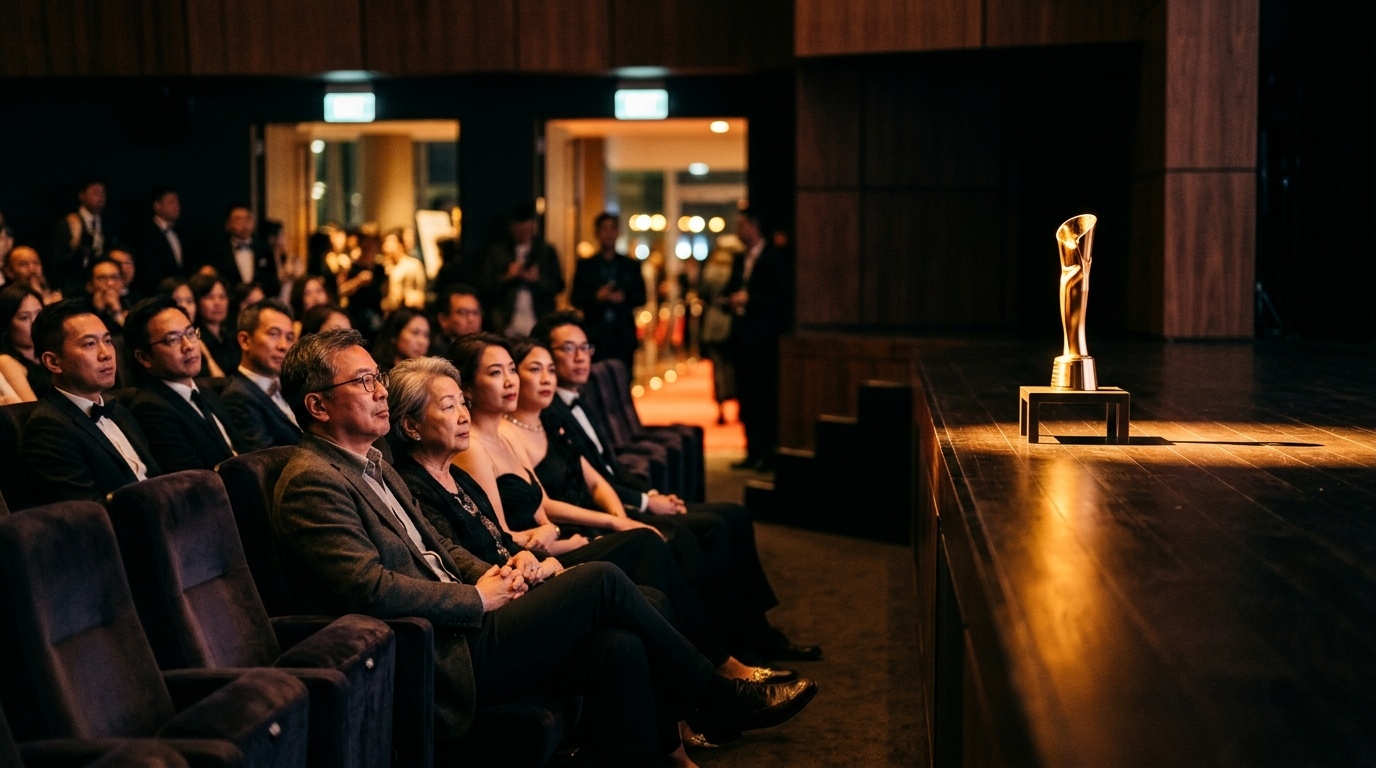
This year, the festival’s top prize carries new weight. According to BIFF, the winner of the Busan Award Grand Prize now qualifies for submission to the Academy Award for Best International Feature Film. Only six festivals worldwide carry that qualification: Cannes, Venice, Berlin, Sundance, Toronto, and now Busan. That gives acclaimed Asian films a direct route onto the global awards stage.
FIAPF’s A-list accreditation and Academy eligibility are separate systems and shouldn’t be treated as the same thing. A-list status reflects the festival’s overall standing and how it’s run, while Academy qualification applies specifically to the path the competition’s top winner can take internationally. Still, both changes landing in the same year shows how much BIFF’s international standing has grown.
A Broader Stage Driven by Animation and Global Guests
Animation has a bigger presence than usual in this year’s program. The festival put together a special exhibition of 13 animated features and shorts, and added a new “All-Night Animation” section inside its Midnight Passion program. Rintaro, the Japanese director behind the Galaxy Express 999 film, will also visit Busan. For a festival long centered on live-action film, giving animation its own space reflects how much influence it now has in Asia’s theatrical market.
The guest list spans several countries, with expected appearances by French actor Isabelle Huppert, Chinese actors Zhou Xun and Fan Bingbing, and Japanese actors Masami Nagasawa and Kento Yamazaki. These visits are less about star power and more about the festival’s role connecting different works and creators to Busan.
A New Test Beginning with Ticket Sales
Ticket sales rolled out in two phases depending on the program. Bookings for the opening and closing ceremonies, Open Cinema, Midnight Passion, Actor’s House, and Community BIFF opened at 2 PM on September 17. General screenings, master classes, and cine classes followed at 2 PM on September 21. Since the final competition lineup changed after the initial announcement, audiences should check the official website for the latest schedule and seat availability.
The bigger story of the 31st BIFF isn’t just a larger film roster. A festival that spent decades without a competition section built one, and in its second year picked up both A-list status and a path to the Oscars. What happens next is whether this new system actually finds Asian films that reach a global audience. How this year’s competition slate and premieres land with critics and audiences will be the first sign of that.
Source: Busan International Film Festival Press Releases, March, Sep 1, Sep 2, 2026; Yonhap News, Sep 1, 2026.