Table of Contents
Cosmetics Exports Jump 31.4%, Setting a New Monthly Record
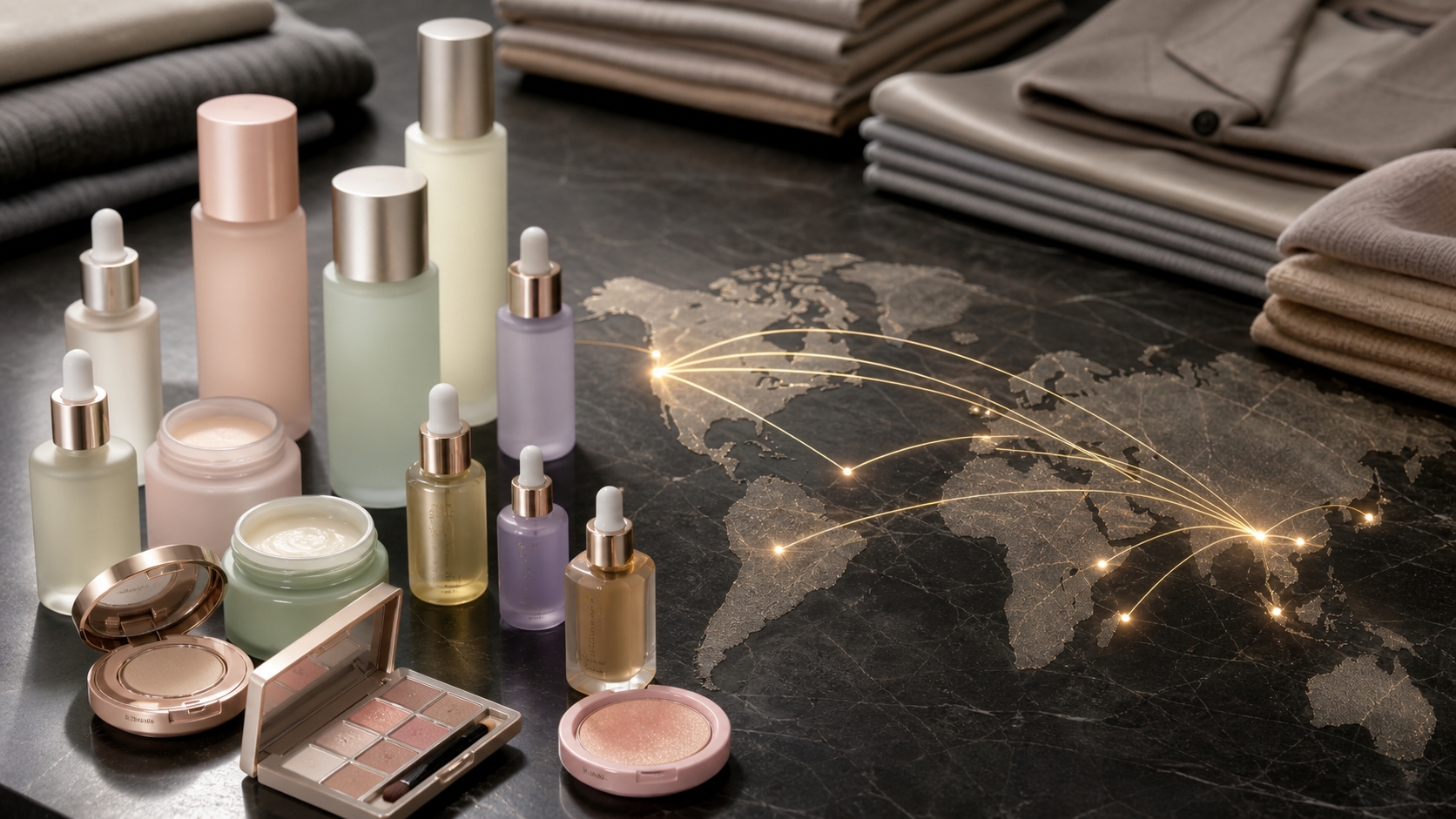
South Korea’s cosmetics exports hit $1.51 billion in September 2026, up 31.4% from the same month last year and marking the highest monthly total on record. In the same month, textile exports fell 6.8% to $880 million, and apparel exports dropped 2.9% to $203 million. Within the same broad consumer goods and fashion sector, cosmetics and textiles/apparel moved in sharply opposite directions. Cosmetics posted double-digit growth and a record high at once, while materials and finished apparel both came in below last year’s levels.
According to the September trade figures released by the Ministry of Trade, Industry and Energy on October 1, total exports reached $120.94 billion, up 83.5% from the same month a year earlier. It was the first time monthly exports topped $120 billion. Semiconductors drove much of the overall surge, but among consumer goods, cosmetics stood out. The sector surpassed the previous high of $1.35 billion set in April and July this year, setting a new record $160 million above that mark. Beyond the broader export boom, cosmetics showed its own independent expansion.
Growth Showed Up Across Several Major Markets at Once
The Ministry attributed the gain to broad-based growth in cosmetics exports across major regions including China, the United States, ASEAN, and the European Union. In provisional figures covering September 1 to 25, exports to the United States rose 21.9% year-on-year to $260 million, while exports to China grew 13.6% to $210 million. Exports to the European Union jumped 110.4% to $170 million, underscoring a shift toward more diversified markets. Growth in established core markets alongside a sharp rise in the EU together supported the month’s record.
The result matters because cosmetics export growth didn’t lean on any single country’s performance. Exports rose year-on-year in both the United States and China, while the European Union saw a particularly large jump. When demand expands across multiple regions at once, it spreads out the impact that any one market’s shift can have on overall exports. September’s figures point to K-beauty holding onto its major existing markets while opening up new areas of growth.
Textiles and Apparel Moved the Opposite Way
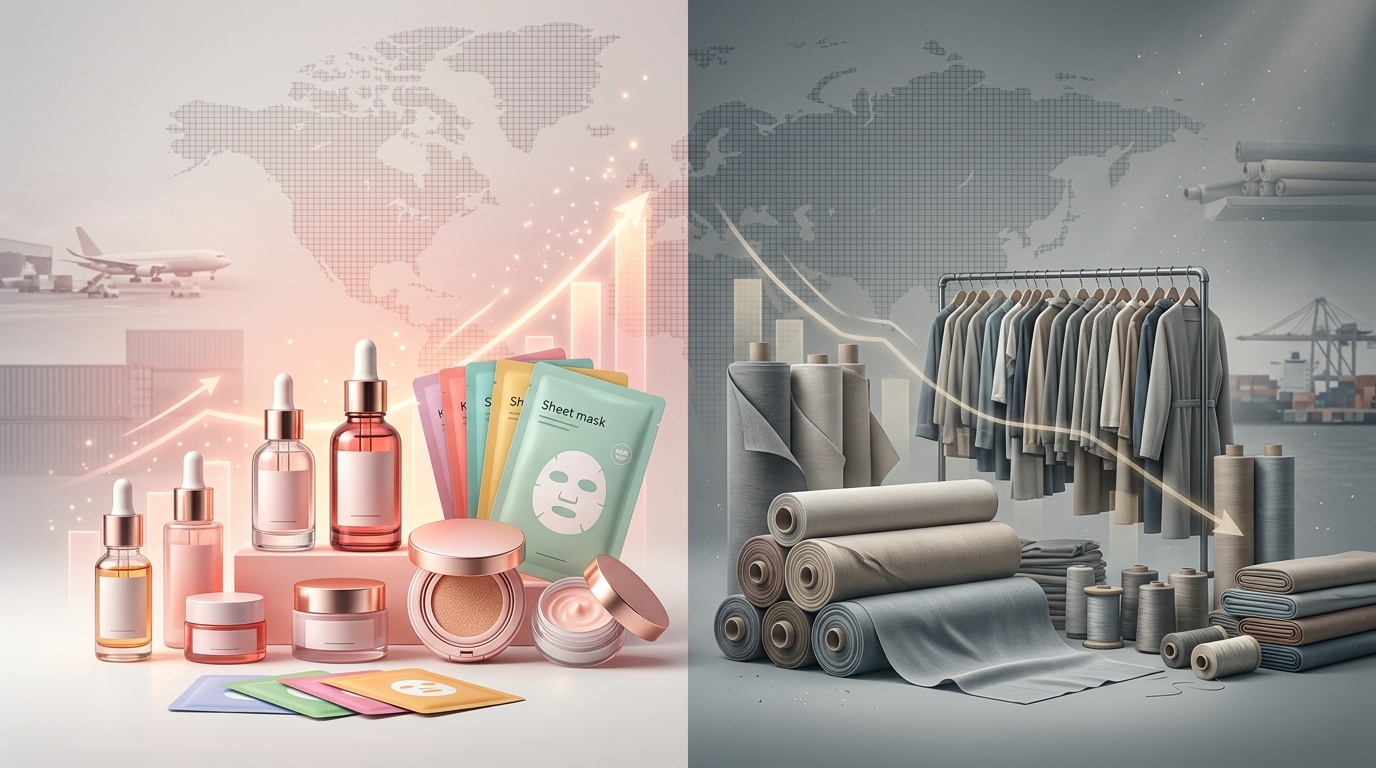
Unlike cosmetics’ record-setting growth, textile exports fell 6.8% year-on-year to $880 million in September. Apparel exports also slipped 2.9% to just $203 million. Among other promising consumer goods categories, September results were mixed, while cosmetics posted both a double-digit growth rate and a record export value at the same time. That contrast is exactly why the headline figure of record overall exports can’t be read as reflecting uniform strength across the entire consumer goods sector. In particular, cosmetics’ record performance shouldn’t be read as masking the weakness in textiles and apparel.
Textiles form an industry supplying materials used to make apparel, while apparel is closer to a finished product sold directly to consumers. Both segments declining in the same month shows that cosmetics’ growth momentum didn’t spread into the neighboring fashion category. Cosmetics, meanwhile, turned growth across the United States, China, ASEAN, and the European Union into a record monthly result. Even when grouped together under the same “K-consumer goods” label, demand and performance in overseas markets differ by category.
This divergence reveals that K-beauty’s overseas expansion doesn’t automatically translate into growth across Korea’s broader consumer goods sector. Cosmetics carved out an independent growth path by expanding demand across multiple regions, while textiles and apparel couldn’t avoid a decline in the same month. Judging industry trends requires looking at category-specific performance and market composition, not just the overall export total. Beauty and fashion may seem closely linked, but they aren’t moving at the same speed or in the same direction in overseas markets.
Major Shopping Events in Q4 Will Be the Next Test
The fourth quarter brings major shopping events including Black Friday in the United States and Singles’ Day in China. If the growth momentum confirmed in key markets translates into actual purchasing, cosmetics exports could get an additional boost. Given that exports to both the United States and China grew in September, these large shopping events in both markets represent an opportunity to extend that export momentum. Still, whether demand generated during discount events holds up afterward needs to be watched separately.
Whether the gap between cosmetics and textiles/apparel narrows in the fourth quarter is also worth watching. The core takeaway from September’s figures is that Korea’s consumer goods exports aren’t all moving in one direction. K-beauty set a new monthly record, while textiles and apparel both declined. How the year-end shopping season plays out will offer the next piece of evidence on whether this divide between industries is a temporary blip or a more persistent difference.
Source: Ministry of Trade, Industry and Energy, “September 2026 Trade Trends,” October 1, 2026; Cosin Korea, October 1, 2026.