Table of Contents
Seongsu-dong’s Excitement Revealed First at the Media Preview
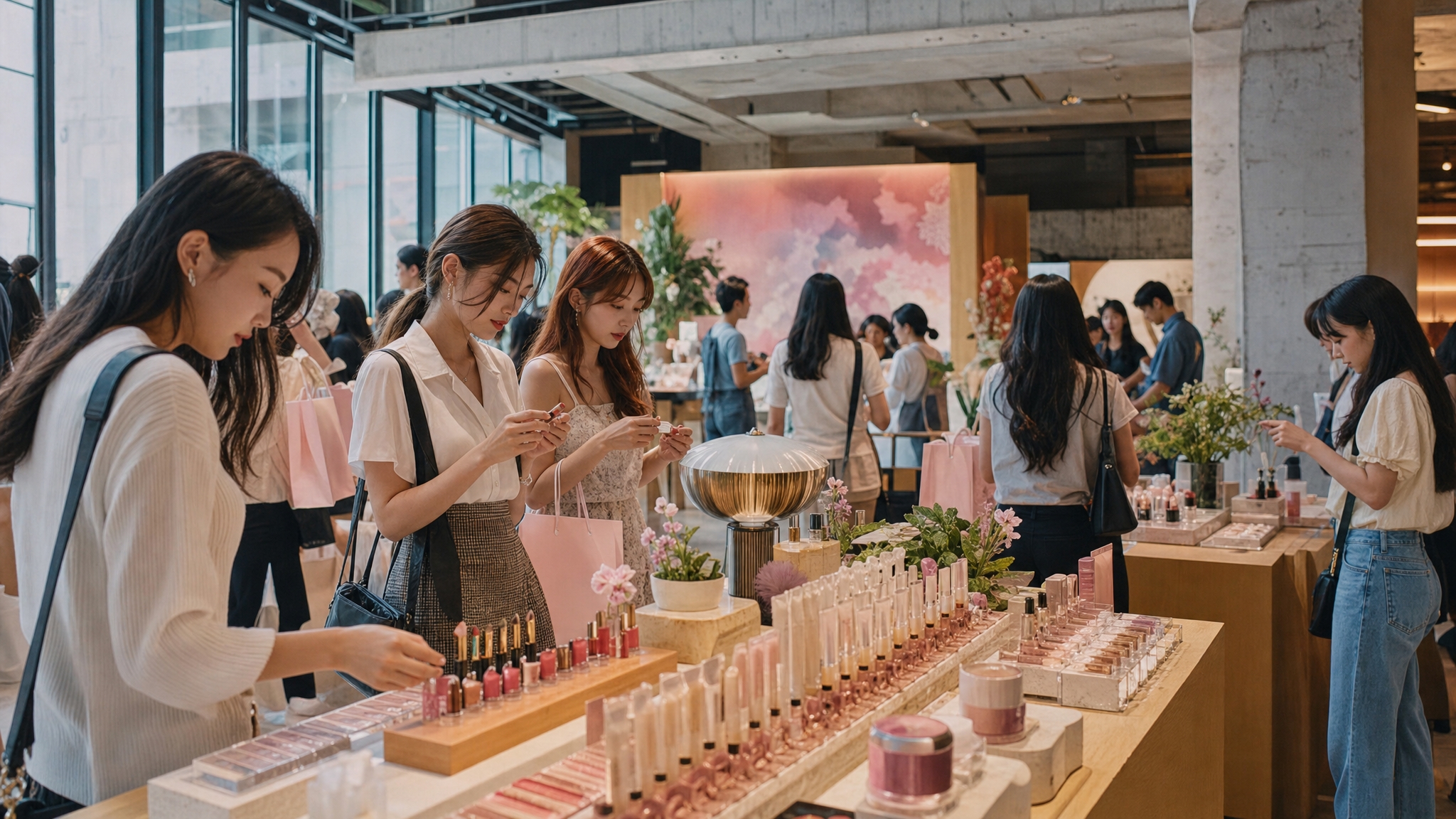
At the pre-release event for the media held in Seongsu-dong, Seongdong-gu, Seoul, on August 20, visitors carrying pink bags and event staff bustled between various spaces. Backs of hands were marked with traces of tested toner pads and lip products, and people lingered in front of booths to examine product textures and color payoffs. This was the media preview of the ‘Musinsa Beauty Festa in Seongsu,’ unveiled a day before the official opening for the general public. Reporters were given an early look at the main exhibition spaces, collaboration items, and emerging brand booths before the official event kicked off.
The official offline event ran for three days, from Friday, August 21, to Sunday, August 23. Marking its third anniversary this year, the event was centered around Seongsu-dong’s Mubyupe Hall and Next Beauty Hall. Therefore, the 20th was not the first day of the official viewing period, but rather a day to introduce the event spaces and participating brands to the press in advance. To accurately understand the event timeline, it is helpful to distinguish between the scenes reported from the media preview and the actual three-day schedule when general visitors were admitted.
At the preview, foreign visitors, including French beauty influencers, were notably visible. They were able to explore not only major brands already well-known overseas but also new Korean cosmetic brands that don’t even have their own physical stores yet, all in one place. The ability to hop between booths and compare products was highly useful even for visitors unfamiliar with the Korean beauty market. The crowd of pink bags showcased more than just an event scene; it highlighted a new retail frontier where online-native indie brands could meet domestic and international consumers face-to-face.
64 Beauty Brands Gather in Seongsu-dong
A total of 64 brands participated in this event. The core pop-up spaces consisted of Mubyupe Hall and Next Beauty Hall, with 15 brands—mainly color cosmetics—featured in the Next Beauty Hall. Visitors weren’t just looking at one brand’s flagship items; they could seamlessly compare skincare and makeup products across various brands along the same route. The core function of this offline event was allowing people to personally test scents, textures, and actual skin color payoffs that are difficult to gauge through a screen.
Over 80% of the 64 participating brands were indie brands. Here, ‘indie brands’ refers to small and medium-sized beauty brands that entered the market focusing on independent product planning and online sales, rather than relying on conglomerates or massive in-house distribution networks. This wasn’t a setup that used famous brands as bait to draw a crowd only to tack on a few startups; the very core of the event was built around indie brands. This explains why Musinsa described this event as a platform for discovering emerging brands.
Looking at the 64 participating brands, 4 out of 10 were newly launched within the last five years, and about 28% were less than three years old. Furthermore, more than 7 out of 10 did not have their own physical stores. This means that many brands, despite having great products or online recognition, find it challenging to run permanent retail locations. The event served as a temporary showroom for them to present their products directly to consumers without the burden of long-term rent and store operation costs. The opportunity to gauge immediate visitor feedback and questions on-site is an experience hard to come by through online sales alone.
A 650% Surge Confirmed in the Online Pre-Campaign
Before the offline pop-up opened, a separate online pre-campaign took place. The reported 650% increase in transaction volume does not refer to on-site sales from the offline event held from August 21 to 23. Rather, it compares the transaction volume of collaborating beauty brands during the online campaign (August 10 to 17) against the immediately preceding period (August 2 to 9). It’s important to view this as an achievement of the online sales period that led up to the official offline event.
During this period, the transaction volume of the participating collaborative beauty brands spiked by 650% compared to the prior period—effectively growing to 7.5 times its previous size. The strategy was to reveal collaboration products and build hype online before the offline pop-up doors opened, seamlessly transitioning into hands-on consumer experiences in Seongsu-dong. Separating the online sales performance from the offline event period makes it clear that this initiative was intentionally designed to flow from early exposure to purchase, and finally to on-site experience.
Since this figure stems from a short pre-campaign, it shouldn’t be misinterpreted as a brand’s long-term growth rate. Transaction volumes naturally see massive spikes when attention is heavily concentrated on an event and its collaborations. However, it successfully proves that Musinsa’s strategy of funneling its established fashion customer base toward beauty brands can effectively drive initial purchases. Consumers discovered collaboration items online, and later verified the shades and feel at the offline event, experiencing repeated touchpoints with the same brands.
Five Collaborations Bridging Fashion and Beauty
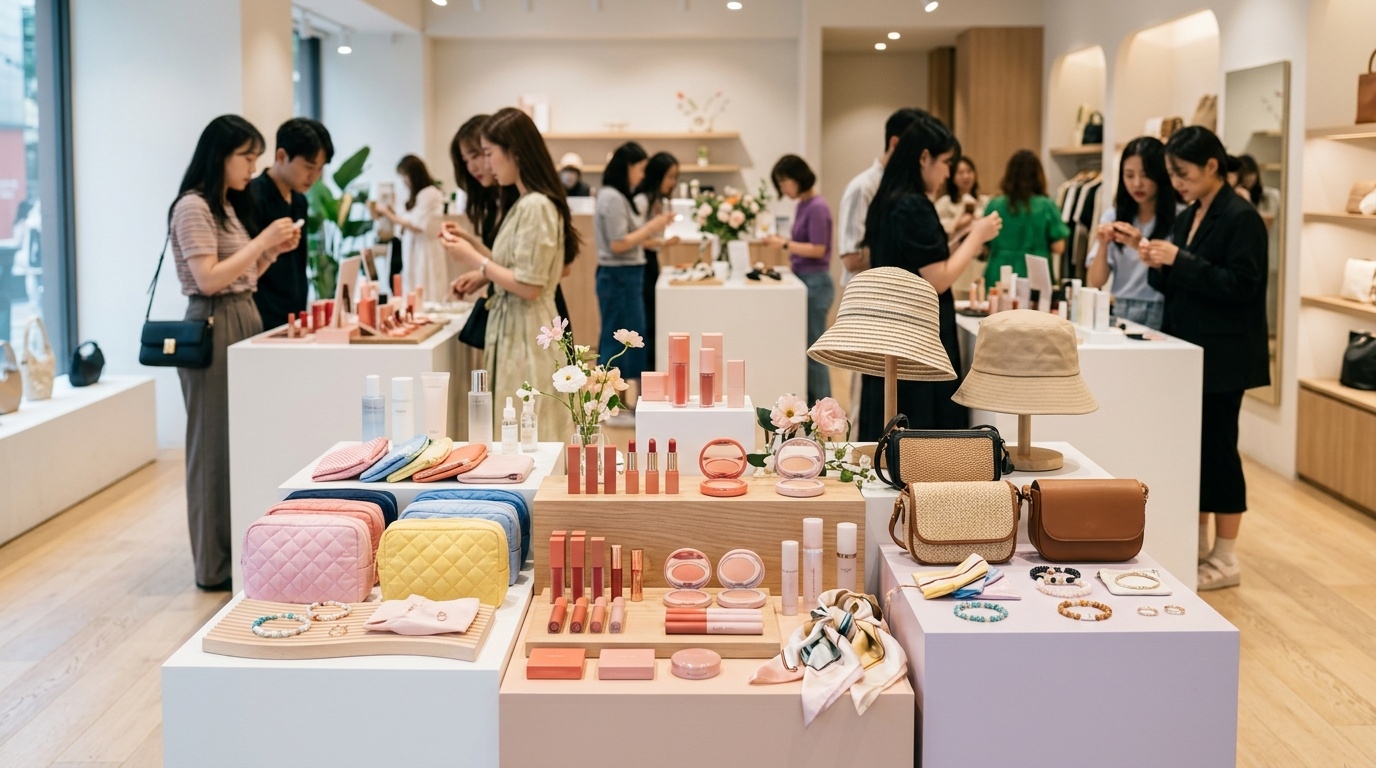
Musinsa’s core identity shone brightest at the ‘Only Musinsa Beauty Collab Zone.’ Here, five fashion brands and five beauty brands were paired one-to-one, presenting a total of five collaborative combinations. Rom&nd paired up with Rolalola, Javindeseoul with Kiho, Oddtype with Hug Yourskin, Feev with Have a Whale, and Berryway with Find Kapoor. Rather than just placing different products on the same shelf, they curated collaboration items carefully aligned with each brand’s image and their customers’ tastes.
Fashion and beauty share a commonality: they are both mediums through which consumers express their personal tastes and images. A consumer drawn to the colors and designs of a specific fashion brand is likely to take an interest in cosmetics with a similar vibe, and vice versa—customers introduced through beauty products might find themselves exploring the partnered fashion brand. By bundling distinct categories like cosmetics, bags, pouches, hats, and keyrings under a unified aesthetic, consumers experience the holistic style proposed by the brand, rather than just isolated products.
This approach can be particularly beneficial for lesser-known beauty brands. While it’s tough for startups to launch massive ad campaigns from the get-go, partnering with a fashion brand that already boasts a loyal customer base can expose their name and products to new consumers. Conversely, fashion brands can showcase their merchandise and designs to visitors who came specifically for makeup. By leveraging its brand-connecting prowess and deep understanding of consumer tastes accumulated as a fashion platform, Musinsa aimed to craft a unique discovery experience in the beauty market that sets it apart from other retail platforms.
‘The Secret Lab’: Connecting Manufacturing Support and Sales Channels
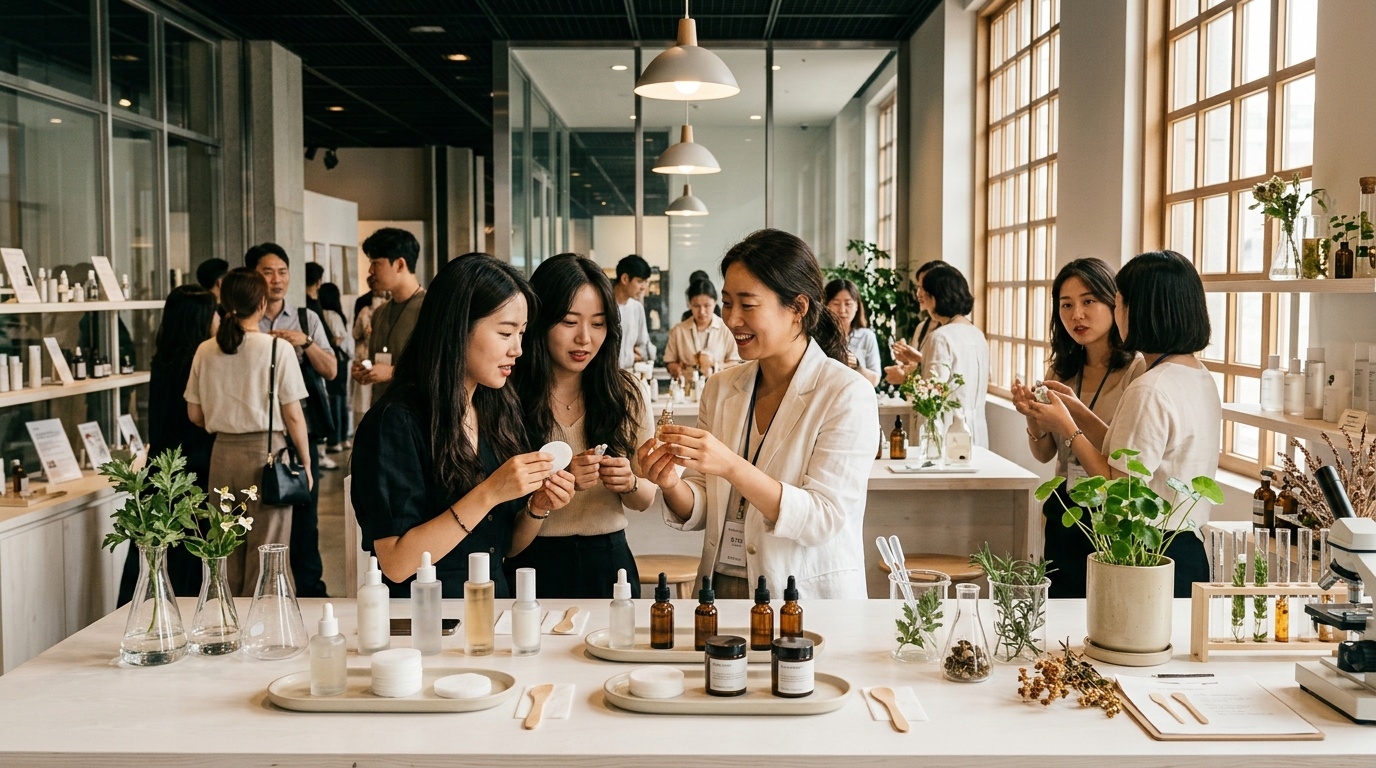
The Mubyupe Hall also featured a special zone called ‘The Secret Lab,’ co-organized by the Ministry of SMEs and Startups, Musinsa, and cosmetics R&D/manufacturing company Cosmax. This space showcased products from 20 emerging domestic beauty brands, each with an annual revenue of under 12 billion won. Out of the 64 participating brands, promising small-to-medium brands were spotlighted in this dedicated zone. Visitors could test and compare multiple products in one place without having to hunt down each brand’s individual shop.
For an indie beauty brand to secure a foothold in the market, a creative idea alone isn’t enough. They must develop formulations and ingredients, ensure consistent manufacturing quality, and secure a distribution network to market the finished product to consumers. For small companies lacking their own research facilities or offline stores, every step from manufacturing to PR and sales can pose a high barrier to entry. Even if a product is launched, a lack of physical locations for consumers to test it means the brand faces the uphill battle of earning trust purely through online ads.
When Cosmax provides support for product planning, R&D, and production, and Musinsa bridges the gap with online distribution and offline consumer touchpoints, brands can effectively test their products in the market despite limited resources. The special zone involving the Ministry of SMEs and Startups was less of a sales floor for already successful products and more of a support mechanism for growing brands, aiding them in both manufacturing and sales channels. Its spatial design underscored the reality that emerging brands need both the capability to create products and the opportunity to be discovered by consumers.
Will It Become a Gateway for Brands Without Physical Stores?
The industrial significance of the event is evident in the fact that over 7 out of 10 of the 64 participating brands lack their own physical offline stores. Because cosmetics are applied directly to the skin, it’s often difficult to make a purchasing decision based solely on online descriptions or photos. Events that gather multiple brands in one place give consumers the chance for comparative hands-on experiences, while providing brands with a touchpoint to gauge on-site reactions and answer questions. A firsthand trial is especially crucial for lowering the psychological barriers toward unfamiliar brands.
The attention from foreign visitors and beauty influencers also presents an additional opportunity for indie brands. Even if a brand doesn’t operate overseas stores, it can gain exposure to international consumers through visitors who experienced their products in Seongsu-dong. An event showcasing multiple fledgling brands in a single venue is also meaningful in communicating the vibrant diversity of the Korean beauty market. However, for the on-site buzz to translate into overseas distribution or repeat purchases, brands must continuously provide product information and accessible purchase routes even after the event ends.
A 650% transaction increase in a pre-online campaign and a packed event venue aren’t enough to guarantee the success of every participating brand. It can only be deemed a true gateway to success if these brands manage to secure repeat customers long after the temporary collaboration hype fades, and if brands without physical stores can maintain stable sales channels. The next key point to watch is whether Musinsa’s framework—which seamlessly bridges fashion fandoms with beauty consumption, online sales with offline experiences, and manufacturing support with new sales channels—will translate into sustainable growth for these emerging brands.
Source: Herald Economy, August 21, 2026; E-Today, August 20, 2026; Cosmetics News, August 21, 2026; Musinsa, August 2026.